Economic Pulse Net | Sources: World Bank World Development Indicators, Numbeo | 2026
<#>Key Takeaways
– Brazil’s economy, the largest in Latin America at nearly $2.28 trillion, is navigating a delicate recovery under President Luiz Inácio Lula da Silva, with inflation running at 5.02% — above the central bank’s target ceiling — and unemployment at a relatively low 5.97%.
– The country’s GNI per capita of $10,550 places it firmly in the upper-middle-income bracket, but the GDP per capita of $23,433 on a purchasing power parity basis suggests significant internal disparities in living standards.
– Brazil’s corporate landscape is dominated by powerhouse names like AmBev, Amaggi Group, and Andrade Gutierrez, spanning consumer goods, agribusiness, and conglomerates — sectors that will define the nation’s export competitiveness and domestic stability.
– Political stability under Lula’s second act is a key variable: the president appoints the cabinet and governs through a presidential system, but the country’s democratic federal republic structure means regional and legislative dynamics remain critical to policy execution.
<#>The Growth Paradox — Inflation, Employment, and the $2.3 Trillion Question
Brazil’s economy, as measured by the World Bank, stands at a formidable $2.28 trillion in GDP.
That figure alone makes Brazil the 12th-largest economy on the planet, a heavyweight in commodities, manufacturing, and services. But the headline number masks a more complicated story. Inflation, running at 5.02% according to the World Bank’s latest CPI data, is above the central bank’s official target range of 3.25% plus or minus 1.5 percentage points. That means the real purchasing power of Brazilian households is being steadily eroded, even as the labor market shows surprising resilience.
Unemployment sits at just 5.97% — a level that, in many developed economies, would be considered near full employment. For Brazil, historically plagued by double-digit jobless rates, this is a notable achievement. Yet the quality of employment matters. The World Bank data does not break down informal versus formal sector jobs, but in a country where informality has long been a structural feature, low unemployment can mask precarious work conditions.
The GDP per capita on a purchasing power parity basis is $23,433, which is respectable for an emerging economy but still lags behind peers like Chile or Mexico. The GNI per capita of $10,550 reinforces the picture: Brazil is a nation where aggregate wealth is substantial, but per capita income remains moderate, and inequality — though not measured in the data provided — is historically among the world’s highest.
The key industries driving this economy are not explicitly listed in the World Bank data, but the top companies tell a clear story. Agribusiness, through giants like Amaggi Group, is a cornerstone. Consumer goods, via AmBev — one of the world’s largest brewers — and Agrale, which manufactures vehicles and tractors, are central. Basic materials players like Aperam South America and Aracruz Celulose (pulp and paper) underscore Brazil’s role as a global supplier of raw materials.
And conglomerates like Andrade Gutierrez highlight the infrastructure and construction muscle that has shaped Brazil’s physical landscape. These sectors are not just economic engines; they are political actors, deeply intertwined with the policy decisions emanating from Brasília.
<#>The Cost of Living — Rent, Rice, and Reality
Living in Brazil, according to the data provided, is a story of contrasts — but the Numbeo data that would give precise housing costs, grocery prices, and utility bills is not available in the supplied information. What we can infer from the macroeconomic picture is telling. With inflation at 5.02%, everyday costs are rising faster than the central bank would like.
For a household earning near the GNI per capita of $10,550 — roughly $880 per month — the pressure is real. Rent in major cities like São Paulo, Rio de Janeiro, and Brasília has historically consumed a large share of income, and with interest rates high to combat inflation, mortgage financing is expensive for most.
The lack of specific Numbeo data does not mean we cannot draw conclusions. Brazil’s cost of living is generally considered moderate by global standards but high relative to regional peers when you factor in the tax burden on consumer goods. The government’s reliance on indirect taxes means that everything from a television to a loaf of bread carries a significant markup.
For expatriates and foreign investors considering relocation, the key takeaway is that Brazil offers a lower cost of living than the United States or Western Europe, but the inflation differential means that real wage growth is under constant threat. Rental markets in urban centers remain tight, and homeownership is a distant dream for many young Brazilians without family wealth or formal credit histories.
<#>The Business Colossus — Companies, Sectors, and the Investment Climate
Brazil’s corporate landscape is a study in scale and diversity. The top companies list reads like a who’s who of Latin American capitalism. AmBev, the beverage behemoth, is a global player with a market capitalization that rivals the largest brewers in the world. Amaggi Group dominates the agribusiness supply chain from farm to port. Andrade Gutierrez has built highways, dams, and stadiums across the continent.
Algar provides telecommunications infrastructure. Alupar operates in the utilities sector, managing transmission lines and energy assets. And Airship do Brasil, an industrials player, hints at the country’s ambitions in niche aerospace technology.
For investors, the message is clear: Brazil offers exposure to nearly every major sector of the global economy, from basic materials and energy to consumer staples and telecommunications. The World Bank data does not include ease-of-doing-business rankings or tax burden metrics for this report, but the presence of such a wide array of large, publicly relevant companies suggests a business environment that, while bureaucratic, is functional enough to sustain corporate giants.
The political landscape under Lula has brought a return of state interventionism and a focus on social spending, which creates both opportunities and risks. Companies in regulated sectors like utilities and telecommunications must navigate shifting policy winds, while agribusiness exporters benefit from global commodity demand and a relatively weak real, which makes Brazilian products cheaper on international markets.
<#>Safety, Politics, and the Quality of Life Puzzle
The political landscape in Brazil is defined by its structure: a democratic federal republic with a presidential system, as confirmed by a 1993 referendum. The current president, Luiz Inácio Lula da Silva, holds significant power, appointing the Ministers of State who form the cabinet.
This system concentrates executive authority, but the federal nature of the republic means that governors and mayors wield substantial influence over local economies, security, and public services. The data does not provide a crime index or safety index from Numbeo, but any informed observer knows that public safety is a persistent concern in Brazil’s major cities. Homicide rates, while declining in recent years, remain high by global standards, and property crime is a daily reality for many urban residents.
Quality of life, therefore, is a mixed picture. The GDP per capita of $23,433 on a PPP basis suggests that the average Brazilian has access to a decent standard of living in terms of goods and services. But that number disguises the fact that public education, healthcare, and infrastructure are unevenly distributed. The political stability under Lula, while a positive signal for markets and governance, does not automatically translate into improved daily life for the 212 million people who call Brazil home.
The country’s democratic institutions are robust — elections are regular, the judiciary is independent, and the press is largely free — but corruption scandals and political polarization have eroded trust over the past decade. For the average citizen, the quality of life depends heavily on where they live, their income level, and their access to private services that supplement the public sector.
<#>Lula’s Second Act — Inflation, Policy, and the Path Forward
Right now, Brazil is in a critical moment. President Lula returned to office in 2023, and his administration is grappling with the consequences of his predecessor’s fiscal policies and the global inflationary shock that followed the pandemic. The World Bank’s latest inflation reading of 5.02% is above the central bank’s target, and the bank has kept interest rates elevated to cool demand.
This creates a tension: Lula wants to increase social spending and boost public investment, but high borrowing costs constrain the government’s ability to borrow cheaply. The unemployment rate of 5.97% is a bright spot, suggesting that the labor market is absorbing workers, but wage growth may not keep pace with inflation.
The political dynamics in Brasília are fluid. Lula’s coalition is broad but fragile, encompassing left-wing parties, centrists, and some former opponents. The 2026 presidential election is not far off, and the administration is under pressure to deliver tangible improvements in living standards.
The current account data and trade balance are not provided here, but Brazil’s status as a major commodity exporter means that global demand for soy, iron ore, oil, and beef will heavily influence the economic trajectory. If China’s economy slows, Brazil feels it. If agricultural commodity prices fall, the fiscal arithmetic becomes harder.
For now, the story is one of cautious optimism tempered by structural challenges: inflation that is sticky, a currency that is volatile, and a political landscape that is never dull.
<#>The Bottom Line
Brazil is not a country for the faint-hearted investor or the casual observer. It is a nation of immense scale, deep resources, and persistent contradictions. Anyone watching global commodity markets, emerging market debt, or Latin American political risk should have
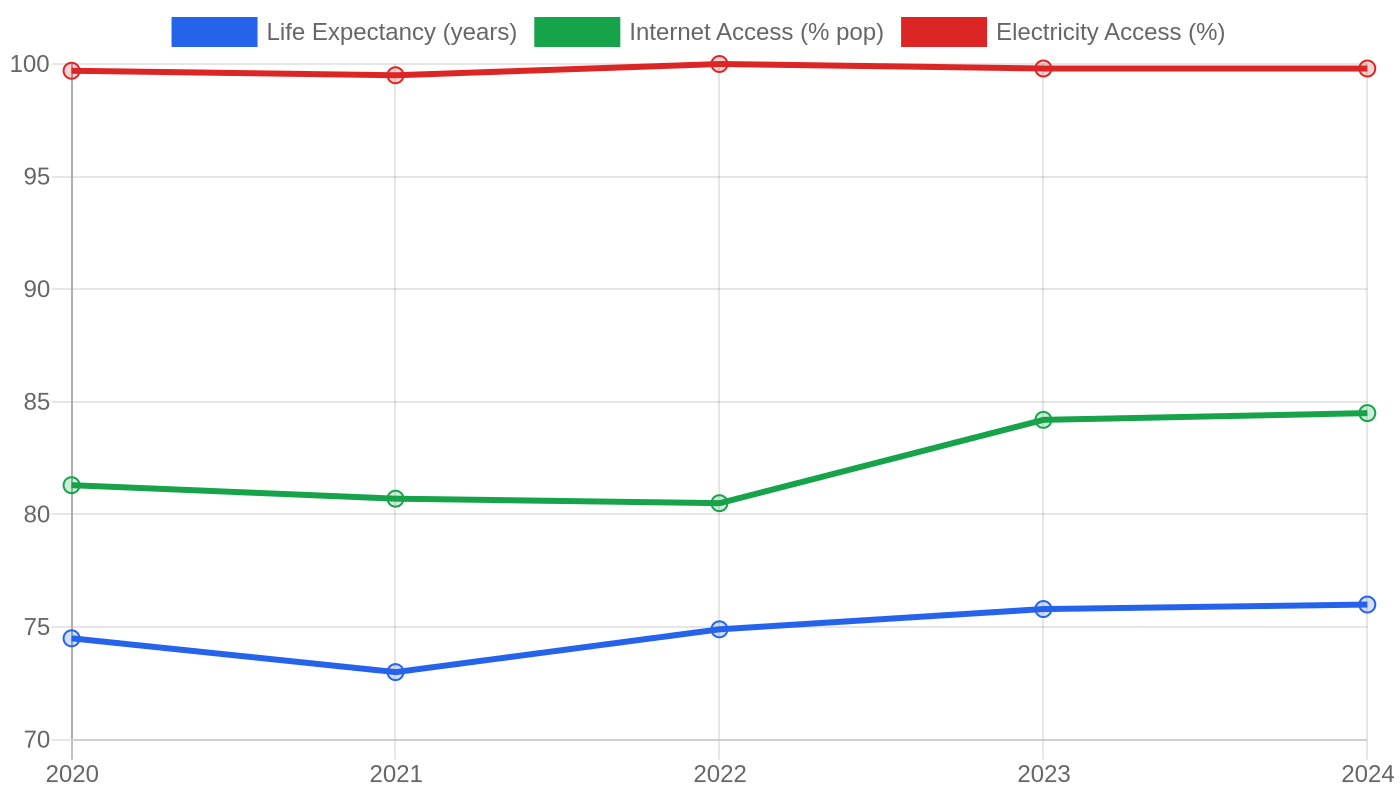
*Chart: /home/deploy/.openclaw/workspace/pulse/data/media/brazil-chart.png*
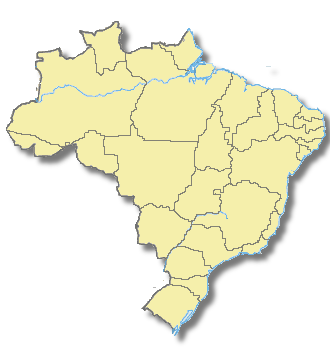
*Photo: /home/deploy/.openclaw/workspace/pulse/data/media/brazil-photo.jpg*
Sources & Methodology
This article is produced by Economic Pulse Net for informational and research purposes. Data is drawn from publicly available sources including the World Bank Open Data portal, Trading Economics, Numbeo, Wikipedia, and official national statistics bureaus. Economic Pulse Net does not guarantee the accuracy or completeness of third-party data. All data is believed to be current as of the date of publication.
Published: July 16, 2026 | Category: Research — Brazil
Use these signals in your own platform
Economic Pulse publishes its live signal feed through a documented, read-only API. Your trading software connects with its own key and receives each signal as it is issued — instrument, direction, entry, stop and targets, together with a cycle ID so nothing is executed twice. The feed is independent of this website and cannot change it.
Signals are informational only and are not financial advice.