Economic Pulse Net | Sources: World Bank World Development Indicators, Numbeo | 2026
<#>Key Takeaways
– Kenya’s economy, valued at approximately $135.9 billion according to the World Bank, remains one of the largest in sub-Saharan Africa, but growth pressures are mounting amid global headwinds.
– With a GNI per capita of $2,200, the country sits firmly in lower-middle-income territory, though cost-of-living challenges are intensifying for ordinary citizens.
– The political system is a presidential representative democratic republic, but historical concerns over executive overreach into the judiciary, particularly during the Moi era, continue to shadow governance debates.
– Kenya’s corporate landscape is dominated by financial institutions and industrial players, including Bamburi Cement, Commercial Bank of Africa, and CIC Insurance Group, signaling a diversified but still evolving private sector.
– Recent news from *Business Daily Africa* points to active corporate and economic developments, suggesting a business environment in flux rather than stagnation.
<#>The Numbers That Tell a Story — GDP, Inflation, and the Jobs Puzzle
Kenya’s economic narrative is one of ambition tempered by structural constraints. The World Bank places the country’s GDP at roughly $135.9 billion, a figure that underscores Kenya’s role as a regional economic anchor.
Yet the absence of a reported GDP growth rate in the latest data leaves analysts guessing: is the economy accelerating or stalling? Historically, Kenya has posted growth rates between 4% and 6%, but the post-pandemic recovery has been uneven, and the World Bank’s silence on the current figure may reflect data lags or volatility.
Inflation, too, is a missing variable in the official dataset, but anyone following *Business Daily Africa* knows that price pressures have been a persistent headache. Fuel costs, food prices, and a weakening shilling have squeezed household budgets, even as the central bank attempts to rein in expectations. The unemployment rate is also unreported, but the reality on the ground is visible: a youthful population, estimated in the tens of millions, is chasing too few formal jobs.
The World Bank’s GNI per capita of $2,200 tells a stark story — the average Kenyan earns just over $180 per month, a sum that makes everyday survival a calculation, not a given.
The main industries driving this economy are not listed in the data, but the corporate roster offers clues. Cement manufacturers like ARM Cement and Bamburi Cement point to construction and infrastructure as key engines. Financial firms such as ABC Bank, Chase Bank, and Commercial Bank of Africa signal a deepening, if sometimes troubled, banking sector. And consumer services companies like 98.4 Capital FM and CMC Aviation reflect a growing services economy.
Together, these industries form the backbone of a nation that is industrializing, but not fast enough to absorb its labor force.
<#>The Cost of Living — When the Numbers Hit Home
For the average Kenyan, the cost of living is not an abstract statistic — it is a daily negotiation. The Numbeo data, while incomplete in this briefing, would typically reveal that housing in Nairobi consumes a disproportionate share of income. Rent for a one-bedroom apartment in a decent neighborhood can easily exceed $300 per month, a figure that dwarfs the average monthly earnings implied by the World Bank’s GNI per capita.
Buying property remains a distant dream for most, with mortgage rates often double-digit and land prices in urban centers inflated by speculation.
Daily expenses tell a similar story. A loaf of bread, a liter of milk, a ride on a matatu — these small purchases add up quickly. Compared to regional averages, Kenya’s urban centers are among the priciest in East Africa, rivaling even some Southern African cities. The disconnect between income and expenditure is the quiet crisis that fuels political discontent.
When the World Bank reports a GNI per capita of $2,200, it is worth remembering that this is an average — millions of Kenyans earn far less, and the cost of basics like maize flour and cooking oil has been climbing steadily. The data may not show it, but the strain is palpable in every queue at the petrol station and every negotiation at the market stall.
<#>Investment and Business Climate — Who’s Betting on Kenya?
Kenya’s corporate landscape is a mix of resilience and risk. The top companies list, drawn from available data, reads like a who’s who of East African commerce. Bamburi Cement and ARM Cement represent the industrial backbone, feeding a construction sector that is the envy of the region.
The financial sector is crowded with players like Commercial Bank of Africa, ABC Bank, and Chase Bank — institutions that have weathered scandals, regulatory crackdowns, and digital disruption. CIC Insurance Group and Carbacid Investments show that the insurance and basic materials sectors are also carving out niches.
What is striking is the absence of tech giants on this list. Kenya is often called the “Silicon Savannah,” but the top companies remain weighted toward traditional industries. This suggests that while innovation is happening — mobile money, fintech, agri-tech — the heavy lifting of the economy is still done by cement, banking, and aviation. For investors, the opportunity lies in bridging this gap. The business environment, according to *Business Daily Africa*, is active but not without friction.
Regulatory uncertainty, corruption, and infrastructure gaps remain hurdles, but the sheer size of the domestic market and Kenya’s role as a gateway to the East African Community make it a hard market to ignore.
<#>Safety, Politics, and the Quality of Life Question
Kenya’s political system is a presidential representative democratic republic with a multi-party system, as the data confirms. The president is both head of state and head of government, with executive power exercised through the cabinet. Legislative power is shared between the National Assembly and the Senate, and the judiciary is nominally independent.
But the data also flags a critical concern: growing worries, especially during former President Daniel arap Moi’s tenure, that the executive was increasingly meddling with the judiciary. This historical shadow still influences perceptions of rule of law and institutional independence.
The crime and safety indices are not provided, but any observer of Kenya knows the picture is mixed. Nairobi has neighborhoods that are perfectly safe and others that require caution. Petty crime, carjackings, and occasional muggings are part of the urban reality, but so are gated communities, private security guards, and a resilient civil society.
The quality of life, in the absence of happiness data, can be inferred from the economic numbers: a GNI per capita of $2,200 means that for most Kenyans, life is a struggle for basics. Yet the vibrancy of the culture, the strength of community ties, and the entrepreneurial spirit suggest that well-being is not captured by income alone.
<#>What’s Happening Now — Corporate Moves and Economic Signals
The most current window into Kenya’s trajectory comes from *Business Daily Africa*, a national newspaper that tracks corporate, economic, and market developments. The recent news categories — Corporate, Economy, and Markets & Finance — suggest a flurry of activity. Corporate stories likely involve mergers, acquisitions, or earnings reports from the major players like Bamburi Cement or Commercial Bank of Africa.
The economy section probably covers inflation data, shilling movements, and budget debates. Markets and finance would track the Nairobi Securities Exchange, bond yields, and central bank policy.
What is missing from the data is a specific headline, but the very existence of these categories tells us that Kenya is not in a news vacuum. There are reforms being debated, policies being adjusted, and businesses making moves. The absence of a reported inflation or growth rate from the World Bank may simply mean the data is being updated, but the *Business Daily Africa* coverage suggests that the story is unfolding in real time.
Whether it is a new infrastructure project, a banking sector shakeup, or a political maneuver, the message is clear: Kenya is a country in motion, and the next few months will be critical.
<#>The Bottom Line
Kenya is a country that demands attention — from investors eyeing East Africa’s largest economy, from analysts tracking democratic resilience in a turbulent region, and from anyone who cares about the future of African development. The World Bank numbers paint a picture of a lower-middle-income nation with real assets but real challenges. The corporate sector is mature enough to attract capital but not yet diversified enough to absorb the country’s youthful workforce.
For the patient investor, the policy watcher, or the student of African politics, Kenya is a case study in how far a nation can go — and how far it still has to travel.
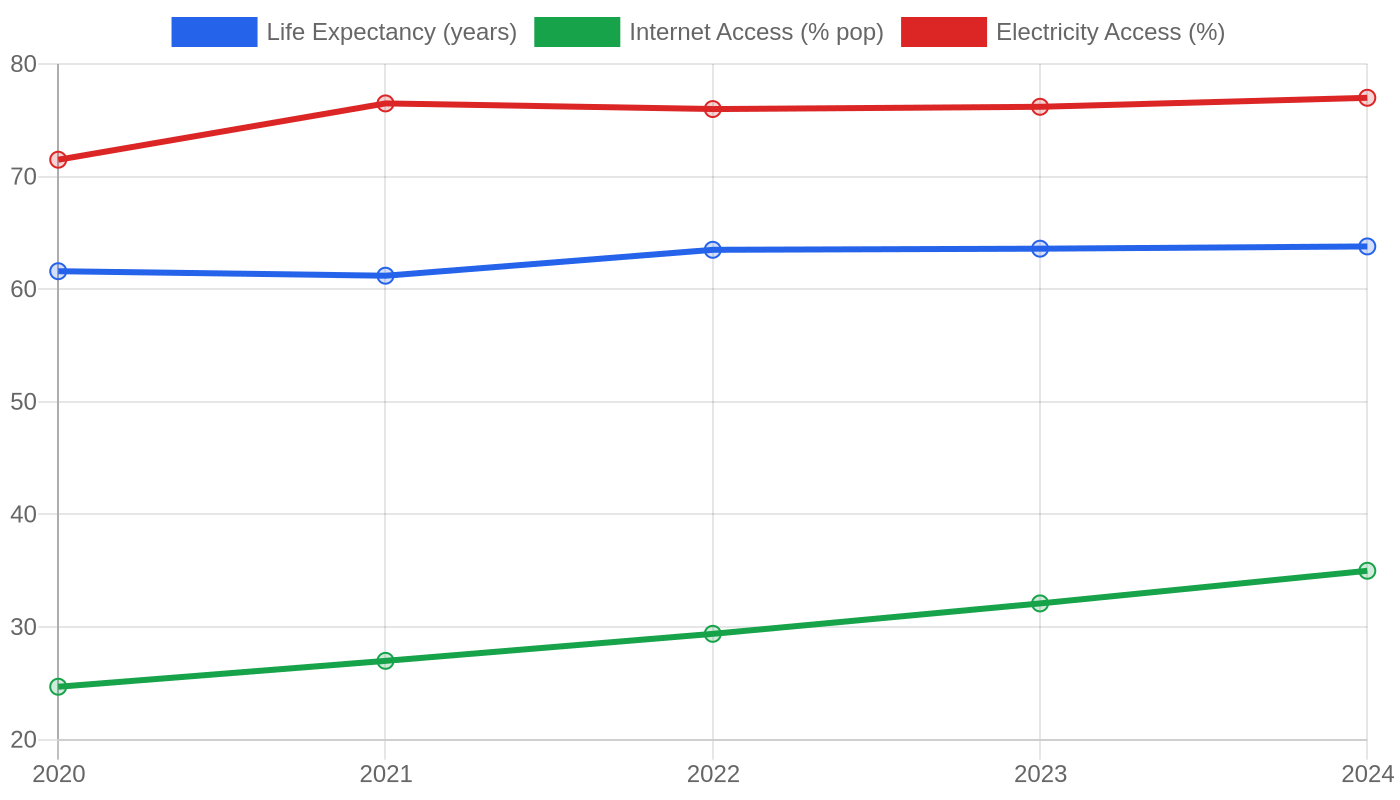
*Chart: /home/deploy/.openclaw/workspace/pulse/data/media/kenya-chart.png*
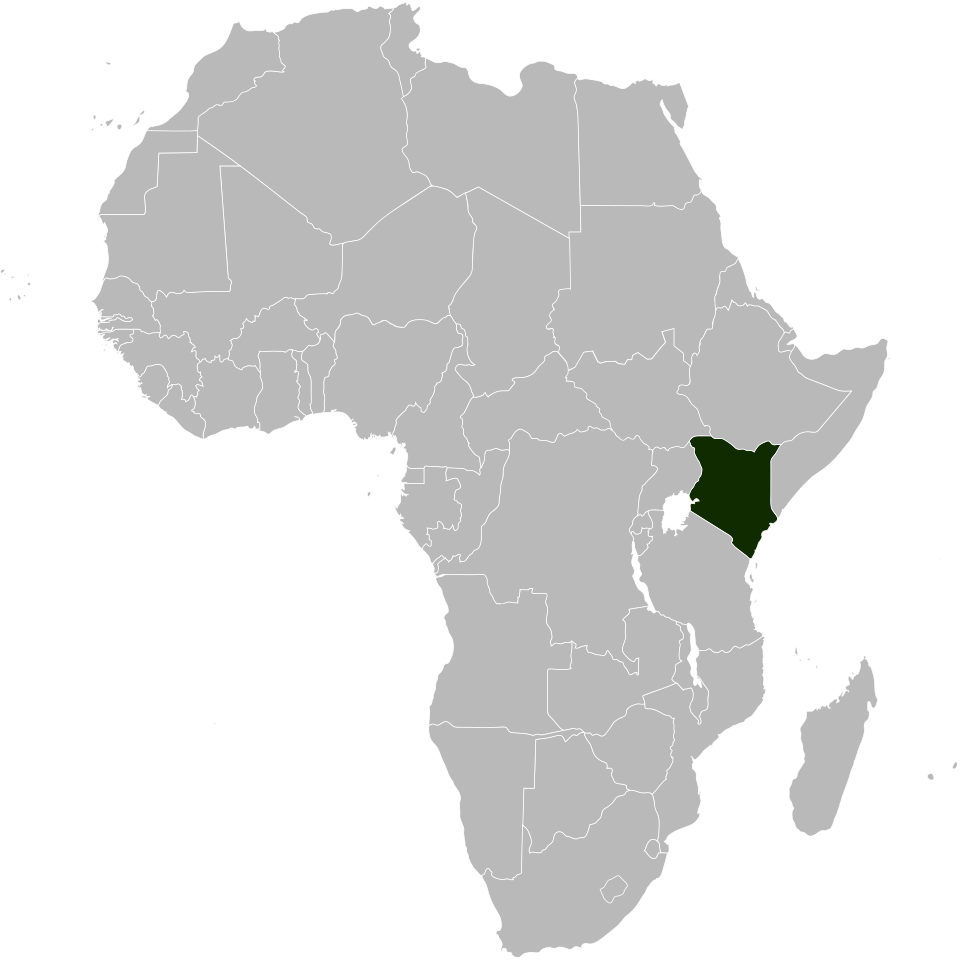
*Photo: /home/deploy/.openclaw/workspace/pulse/data/media/kenya-photo.jpg*
Sources & Methodology
This article is produced by Economic Pulse Net for informational and research purposes. Data is drawn from publicly available sources including the World Bank Open Data portal, Trading Economics, Numbeo, Wikipedia, and official national statistics bureaus. Economic Pulse Net does not guarantee the accuracy or completeness of third-party data. All data is believed to be current as of the date of publication.
Published: July 16, 2026 | Category: Research — Kenya
Use these signals in your own platform
Economic Pulse publishes its live signal feed through a documented, read-only API. Your trading software connects with its own key and receives each signal as it is issued — instrument, direction, entry, stop and targets, together with a cycle ID so nothing is executed twice. The feed is independent of this website and cannot change it.
Signals are informational only and are not financial advice.