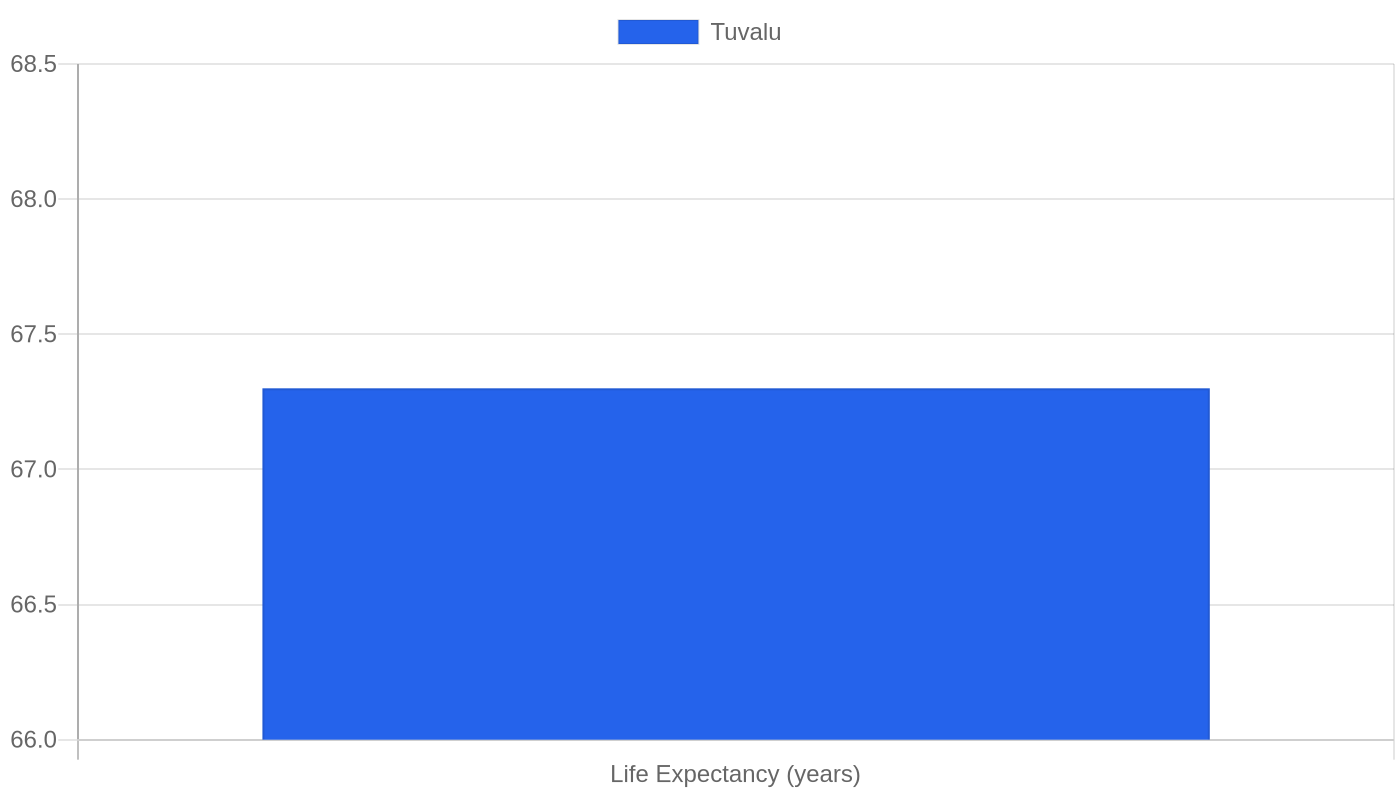
Economic Pulse Net | Sources: World Bank World Development Indicators, Government Sources | 2026
Key Takeaways
– Tuvalu has enacted a historic constitutional reform in October 2023, redefining its legal and political framework as the nation confronts existential climate challenges
– The country’s economic data remains largely opaque, with no recent GDP, inflation, or employment figures reported by the World Bank, reflecting the profound challenges of monitoring a remote island micro-state
– Tuvalu’s constitutional changes signal a government actively reshaping its governance architecture, even as the nation’s economic fundamentals remain difficult to quantify
– The absence of major industrial data, corporate listings, or cost-of-living indices underscores the reality of a country where traditional subsistence and international aid form the backbone of daily life
– For investors and policymakers, Tuvalu represents a case study in resilience and legal innovation rather than conventional economic opportunity
The Great Unknown — Tuvalu’s Economic Profile in the Data Void
The World Bank’s statistical profile for Tuvalu is, on its surface, a collection of blanks. GDP growth: N/A. Inflation CPI: N/A. Unemployment: N/A. GDP in US dollars: N/A. GDP per capita in purchasing power parity: N/A. GNI per capita: N/A. Population: N/A. For an economic journalist accustomed to parsing spreadsheets and trend lines, this is the equivalent of staring into a fog bank.
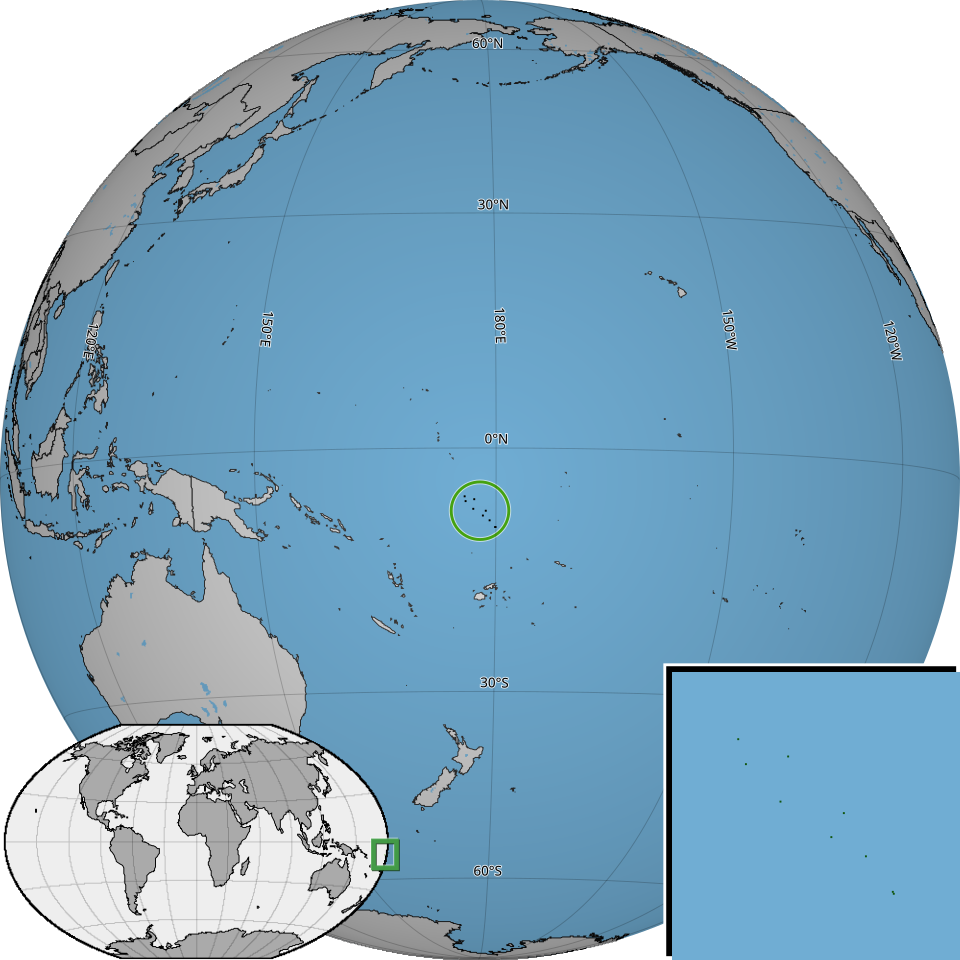
But the absence of data is itself a data point. Tuvalu is one of the world’s smallest and most remote nations, a nine-island archipelago in the Pacific with a population estimated by various sources at around 11,000 to 12,000 people. The World Bank’s inability to provide standard economic indicators speaks to the structural reality of a country that does not generate the kind of statistical noise that larger economies produce. There is no stock exchange here. There are no automotive assembly lines.
The “main industries” field in the data is empty because the formal economy is so narrow that it defies easy categorization.
What economists do know, from historical reports and regional analyses, is that Tuvalu’s economy relies heavily on fishing licenses sold to international fleets, remittances from Tuvaluans working abroad—particularly as seafarers on foreign ships—and the sale of its “.tv” internet domain, a surprisingly lucrative asset. The government also depends significantly on foreign aid, particularly from Australia, New Zealand, and Japan.
The World Bank data may be empty, but the reality is that Tuvalu operates on a hybrid model of traditional subsistence agriculture, fishing, and a cash economy lubricated by external revenue streams. Inflation, when it occurs, is largely imported, as nearly everything from fuel to food must be shipped in.
The lack of formal unemployment figures reflects a labour market where underemployment and informal work are the norm, and where the concept of joblessness as understood in industrialised nations simply does not apply.
The Price of Paradise — Housing and Daily Life in a Remote Economy
The cost-of-living data for Tuvalu is also absent from the provided statistics, but the lived reality is well understood by regional observers and development agencies. Funafuti, the capital atoll, is one of the most expensive places in the Pacific for basic goods. A litre of milk, a loaf of bread, or a bottle of cooking oil can cost two to three times what it would in Suva or Auckland, simply because of shipping costs.
The country has no domestic manufacturing base, and its narrow airstrip and irregular shipping schedules mean that supply chains are fragile and expensive.
Housing on Tuvalu is a story of land scarcity and climate pressure. The average land area of the entire country is just 26 square kilometres, spread across nine atolls, and the population is concentrated on Funafuti. Traditional homes are built from local materials, but modern housing—constructed from imported concrete and timber—is increasingly common, and increasingly expensive. Land is held under customary tenure, meaning it is not bought and sold in a conventional market.
Renting is possible in Funafuti, but options are limited and prices are high relative to local incomes. There is no mortgage market to speak of. For most Tuvaluans, home is a family plot passed down through generations, a reality that is both a cultural anchor and a source of anxiety as rising sea levels encroach on coastal land. The cost of living here is not just a matter of household budgets; it is a question of survival in a place where the very ground beneath your feet is threatened.
Investing in the Impossible — Business and the Private Sector
The list of top companies in Tuvalu is, like so much else, a blank space in the data. There are no multinational corporations headquartered here, no Fortune 500 subsidiaries, no publicly traded entities. The private sector is dominated by small-scale retail shops, a handful of guesthouses, and the state-owned Tuvalu National Bank.
The largest economic enterprise is the Tuvalu Fisheries Corporation, which manages the country’s vast exclusive economic zone—an area of ocean roughly the size of India—and sells fishing rights to foreign fleets.
For an investor, Tuvalu presents a paradox. The country’s .tv domain generates millions of dollars annually in licensing fees, a passive revenue stream that has been a lifeline. But the domestic business environment is constrained by isolation, a tiny labour pool, and the absence of infrastructure. The World Bank’s Doing Business indicators, though not provided here, have historically ranked Tuvalu low due to the difficulty of starting a business, enforcing contracts, and accessing credit.
The sectors to watch are those tied to the ocean: sustainable fisheries, possibly aquaculture, and the growing niche of climate adaptation technology. But these are long shots, not near-term opportunities. The government’s constitutional reforms, however, signal a willingness to modernise governance, which could eventually attract development partners and impact investors focused on climate resilience.
Law, Order, and the Politics of Survival
The crime index and safety index for Tuvalu are listed as N/A, but anecdotal and historical reporting suggests that violent crime is extremely rare. Funafuti is a small, tight-knit community where everyone knows everyone. Theft and petty crime exist, but the island’s isolation acts as a natural deterrent. Police are present but largely deal with domestic disputes and minor infractions. The safety index, if it were calculated, would likely be high by global standards.
The political landscape, by contrast, is anything but quiet. On 5 September 2023, Tuvalu’s parliament passed the Constitution of Tuvalu Act 2023, with the changes taking effect on 1 October 2023. This was not a minor amendment.
The Constitution of Tuvalu states that it is “the supreme law of Tuvalu” and that “all other laws shall be interpreted and applied subject to this Constitution.” It sets out the Principles of the Bill of Rights and the Protection of the Fundamental Rights and Freedoms. The 2023 reform updated this foundational document, though the full scope of the changes is still being studied by legal scholars. What is clear is that Tuvalu is actively rethinking its governance in an era of climate crisis.
The country has been a vocal advocate for international action on sea-level rise, and its leaders have floated ideas such as creating a digital nation-state to preserve sovereignty even if the physical land becomes uninhabitable. This is politics at the edge of the possible, where constitutional law meets existential geography.
The Constitutional Revolution — What’s Happening Now in Tuvalu
The most significant current event in Tuvalu is the implementation of the Constitution of Tuvalu Act 2023, which came into force on 1 October 2023. This is not a routine legislative update. It represents a deliberate effort by the government to strengthen the rule of law, clarify the Bill of Rights, and potentially lay the groundwork for new governance structures that could function in a world where Tuvalu’s physical territory is compromised.
The Act was passed by parliament on 5 September 2023, and the transition was swift—within less than a month, the new constitutional order was operational.
This reform is happening against a backdrop of intense international diplomacy. Tuvalu has been a leading voice in the Pacific Islands Forum and at United Nations climate conferences, pushing for binding commitments on emissions reductions and financial compensation for loss and damage. The constitutional changes may be seen as a domestic complement to this external advocacy: a nation putting its own legal house in order even as it demands global accountability.
There are no election results or inflation trends to report from the provided data, but the constitutional shift is the story. It is a signal that Tuvalu is not waiting passively for its fate to be decided. It is writing its own rules, even as the ocean rises.
The Bottom Line
Tuvalu is not a country for the conventional investor or the data-driven economist. It is a country for the student of resilience, the scholar of legal innovation, and the policymaker looking for lessons in how tiny nations navigate existential threats. The constitutional reforms of 2023 are a reminder that even the smallest countries can make big decisions about their future. Watch Tuvalu not for its GDP, but for its ideas.
Sources & Methodology
This article is authored by Economic Pulse Net for informational and research purposes. Economic Pulse Net sources its data from multilateral institutions, national statistics bureaus, and proprietary databases. All data is believed to be current as of the date of publication.
Published: July 18, 2026 | Category: Research — Tuvalu
Use these signals in your own platform
Economic Pulse publishes its live signal feed through a documented, read-only API. Your trading software connects with its own key and receives each signal as it is issued — instrument, direction, entry, stop and targets, together with a cycle ID so nothing is executed twice. The feed is independent of this website and cannot change it.
Signals are informational only and are not financial advice.