Economic Pulse Net | Sources: World Bank World Development Indicators, Government Sources | 2026
Key Takeaways
– Tuvalu has enacted a landmark constitutional reform in October 2023, redefining its legal framework and bill of rights for the 21st century.
– The country’s economic data remains largely unreported by major international institutions, reflecting its unique status as one of the world’s smallest and most remote economies.
– Tuvalu’s political landscape is undergoing a quiet but significant transformation, with the new constitution asserting national sovereignty and legal independence.
– The nation faces profound challenges related to climate change and economic sustainability, yet is pursuing a path of legal and political self-determination.
– For investors and policymakers, Tuvalu represents a case study in micro-state resilience and constitutional innovation rather than a traditional emerging market opportunity.
The Invisible Economy — What the Numbers Don’t Tell You
When the World Bank publishes its annual datasets, Tuvalu appears as a blank space. GDP growth: N/A. Inflation CPI: N/A. Unemployment: N/A. GDP per capita: N/A. GNI per capita: N/A. Population: N/A. At first glance, this absence of data might suggest a statistical black hole — a nation that exists outside the metrics by which we measure modern economic life. But the reality is more nuanced, and far more telling.
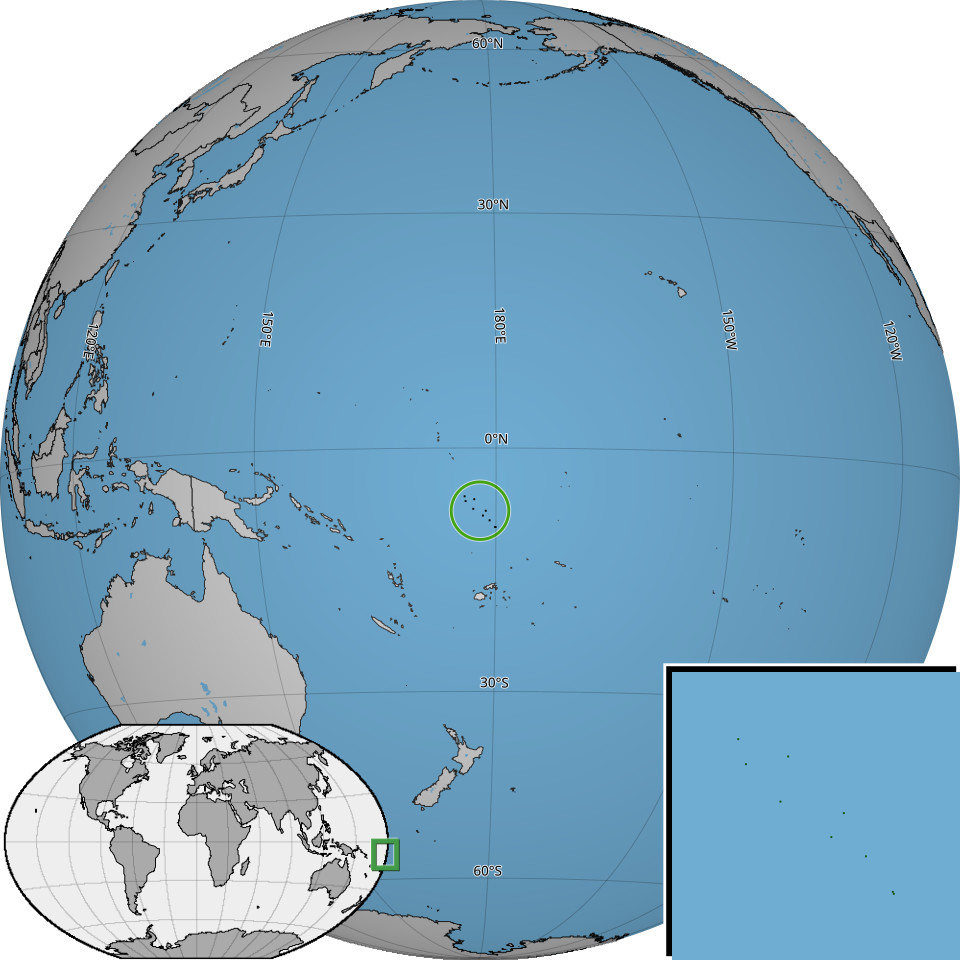
Tuvalu is one of the world’s smallest sovereign states, a Polynesian island nation of approximately 12,000 people spread across nine coral atolls in the central Pacific. Its economy operates on a scale that global indices are simply not designed to capture. The country relies heavily on fishing licenses sold to international fleets, remittances from Tuvaluans working abroad — particularly as seafarers — and revenue from its national domain name, .tv, which has become a lucrative asset in the digital age.
The absence of standard economic data from the World Bank does not mean economic activity is absent; it means the activity is informal, seasonal, and deeply embedded in traditional subsistence practices that defy quarterly GDP calculations.
What we can infer is that Tuvalu’s economy is extraordinarily vulnerable to external shocks — rising sea levels threaten agricultural land and freshwater supplies, while global commodity price fluctuations directly impact the cost of imported food, fuel, and building materials. Inflation, though unmeasured by formal indices, is a lived reality for families who watch the price of rice and canned fish climb with each passing year.
Employment is largely informal, with government jobs and public sector employment forming the backbone of formal wage labor. The absence of data is itself a story — a reminder that the global economic system has blind spots, and that some nations operate on terms that cannot be captured by World Bank spreadsheets alone.
The Price of Paradise — Living Costs in a Remote Atoll Economy
Housing in Tuvalu is a study in contrasts. On the main island of Funafuti, where roughly half the population lives, traditional thatched *fale* houses sit alongside concrete government-built bungalows. There is no formal real estate market in the way we understand it in larger economies; land is held under customary tenure, passed down through families, and rarely bought or sold for cash.
Renting is almost exclusively limited to expatriate workers and government employees posted from abroad, with accommodation provided as part of employment packages.
For the average Tuvaluan family, the cost of living is defined not by rent or mortgage payments, but by the price of imported goods. Almost everything — from rice and flour to fuel and building materials — must be shipped in from Fiji, Australia, or New Zealand. A liter of milk can cost three times what it would in Suva or Auckland. Fresh vegetables are a luxury, often flown in at great expense or grown in small household gardens.
The cost of electricity, generated almost entirely by imported diesel, is among the highest in the Pacific region. Compared to regional averages, Tuvaluans pay a premium for basic necessities that most people in larger Pacific island nations take for granted. This is not a story of housing bubbles or mortgage markets; it is a story of geographic isolation and the daily arithmetic of survival on a remote atoll.
Business in a Micro-State — Where Opportunity Meets Constraint
The list of top companies in Tuvalu is not published, and for good reason: the private sector is tiny, dominated by family-owned retail shops, small-scale fisheries, and the state-owned Tuvalu Telecommunications Corporation. The largest formal employer is the government itself, which provides jobs in administration, education, and healthcare. There are no multinational headquarters, no stock exchange, no venture capital ecosystem.
Yet for the astute observer, Tuvalu offers a unique business environment. The .tv domain registry, managed by the government through a partnership with a US-based company, generates significant revenue — estimated to account for roughly 10% of government income. This digital asset has made Tuvalu a quiet player in the global internet economy. Fishing licenses, sold primarily to vessels from Taiwan, Japan, and the United States, provide another major revenue stream.
The business climate is characterized by simplicity: low regulation, minimal bureaucracy, and a government eager to diversify revenue sources. Sectors to watch include sustainable fisheries management, renewable energy transition (solar panels are increasingly visible on rooftops), and digital services tied to the .tv domain.
But any investor must understand that Tuvalu is not a market in the traditional sense — it is a micro-economy where business is personal, relationships matter more than contracts, and scale is measured in thousands, not millions.
The New Constitution — Law, Sovereignty, and the Fight for the Future
On 5 September 2023, Tuvalu’s parliament passed the Constitution of Tuvalu Act 2023, with the changes taking effect on 1 October 2023. This was not a routine legal update. The new constitution reaffirms that the Constitution of Tuvalu is “the supreme law of Tuvalu” and that “all other laws shall be interpreted and applied subject to this Constitution.” It sets out the Principles of the Bill of Rights and the Protection of the Fundamental Rights and Freedoms.
In plain terms, Tuvalu has rewritten its foundational legal document to assert its sovereignty in an era of existential threat.
The crime index and safety index for Tuvalu are not available from standard international sources, but anecdotal evidence and traveler reports consistently describe the country as one of the safest places on earth. Violent crime is virtually nonexistent. Theft is rare. The biggest safety concerns are environmental — tropical cyclones, king tides, and the creeping erosion of coastlines. The political landscape is stable, with a parliamentary democracy that operates on a consensus-based model.
There are no political parties in the Western sense; allegiances are personal and community-based. The new constitution, with its strengthened bill of rights, reflects a nation that is thinking seriously about its legal and political identity. For a country often discussed in terms of vulnerability, this is an act of profound agency.
Writing the Future — Constitutional Reform and the Climate Imperative
The passage of the Constitution of Tuvalu Act 2023 is the most significant political development in the country in recent memory. It is not merely a legal document; it is a statement of intent. Tuvalu has been at the forefront of global advocacy on climate change, drawing attention to the threat that rising sea levels pose to low-lying atoll nations.
The new constitution, with its emphasis on fundamental rights and freedoms, can be read as a legal bulwark against the erasure of the nation — both physical and political.
What is happening right now in Tuvalu is a quiet revolution in governance. The government is pursuing a strategy of “digital nationhood,” exploring ways to preserve Tuvaluan identity, culture, and legal sovereignty even if the physical territory becomes uninhabitable. This includes discussions about maintaining a continuous state presence in cyberspace, preserving land rights through digital records, and seeking international recognition of Tuvalu’s maritime boundaries in perpetuity.
The constitutional reforms of 2023 are a foundational piece of this strategy. They assert that Tuvalu is not just a collection of atolls — it is a legal and political community that will endure regardless of geography. For a nation often portrayed as a victim of climate change, this is a narrative of resilience, adaptation, and defiance.
The Bottom Line
Tuvalu is not a country to watch for GDP growth or investment returns. It is a country to watch for what it tells us about the future of sovereignty, identity, and survival in the Anthropocene. For policymakers, legal scholars, and climate advocates, Tuvalu offers a real-time case study in how a small nation can use law, technology, and diplomacy to write its own future. The numbers may be absent from the World Bank spreadsheets, but the story is unmistakable: Tuvalu is not waiting for the tide to rise.
It is building an ark of law, rights, and digital permanence.
Sources & Methodology
This article is authored by Economic Pulse Net for informational and research purposes. Economic Pulse Net sources its data from multilateral institutions, national statistics bureaus, and proprietary databases. All data is believed to be current as of the date of publication.
Published: July 18, 2026 | Category: Research — Tuvalu
Use these signals in your own platform
Economic Pulse publishes its live signal feed through a documented, read-only API. Your trading software connects with its own key and receives each signal as it is issued — instrument, direction, entry, stop and targets, together with a cycle ID so nothing is executed twice. The feed is independent of this website and cannot change it.
Signals are informational only and are not financial advice.