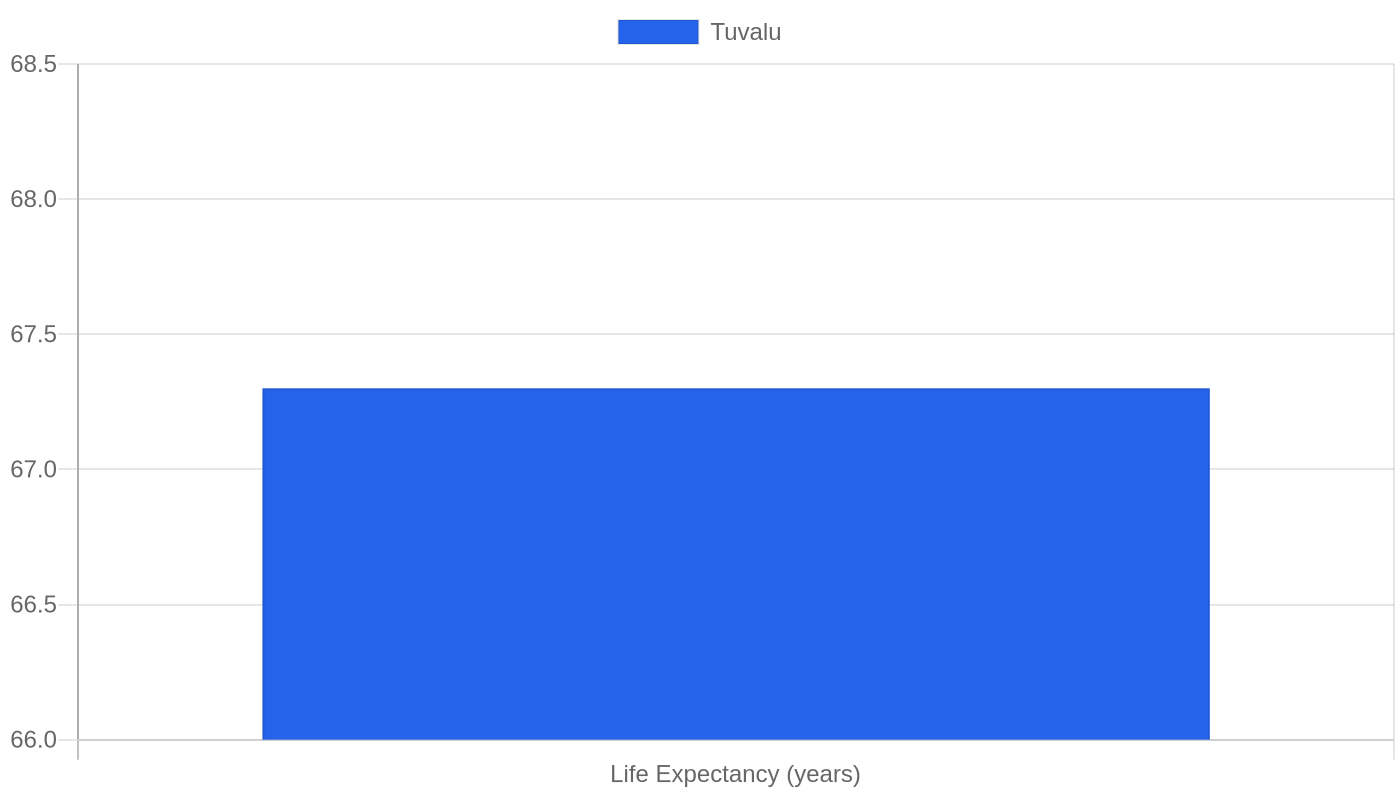
Economic Pulse Net | Sources: World Bank World Development Indicators, Government Sources | 2026
Key Takeaways
– Tuvalu enacted a landmark constitutional reform in October 2023, fundamentally reshaping its legal and governance framework while reaffirming the supremacy of its Bill of Rights.
– The country faces profound economic data gaps, with no publicly available World Bank figures on GDP, inflation, unemployment, or income per capita — a reflection of its extreme isolation and micro-state status.
– As one of the world’s smallest and most climate-vulnerable nations, Tuvalu’s economic narrative is inseparable from existential questions about sovereignty, land loss, and international partnerships.
– Political stability and a low-crime environment provide a foundation for quality of life, but the absence of robust economic statistics makes conventional investment analysis nearly impossible.
– The 2023 constitutional changes signal a nation actively modernising its governance while grappling with the reality that its physical territory may not endure in its current form.
The Invisible Economy — What the Numbers Don’t Say
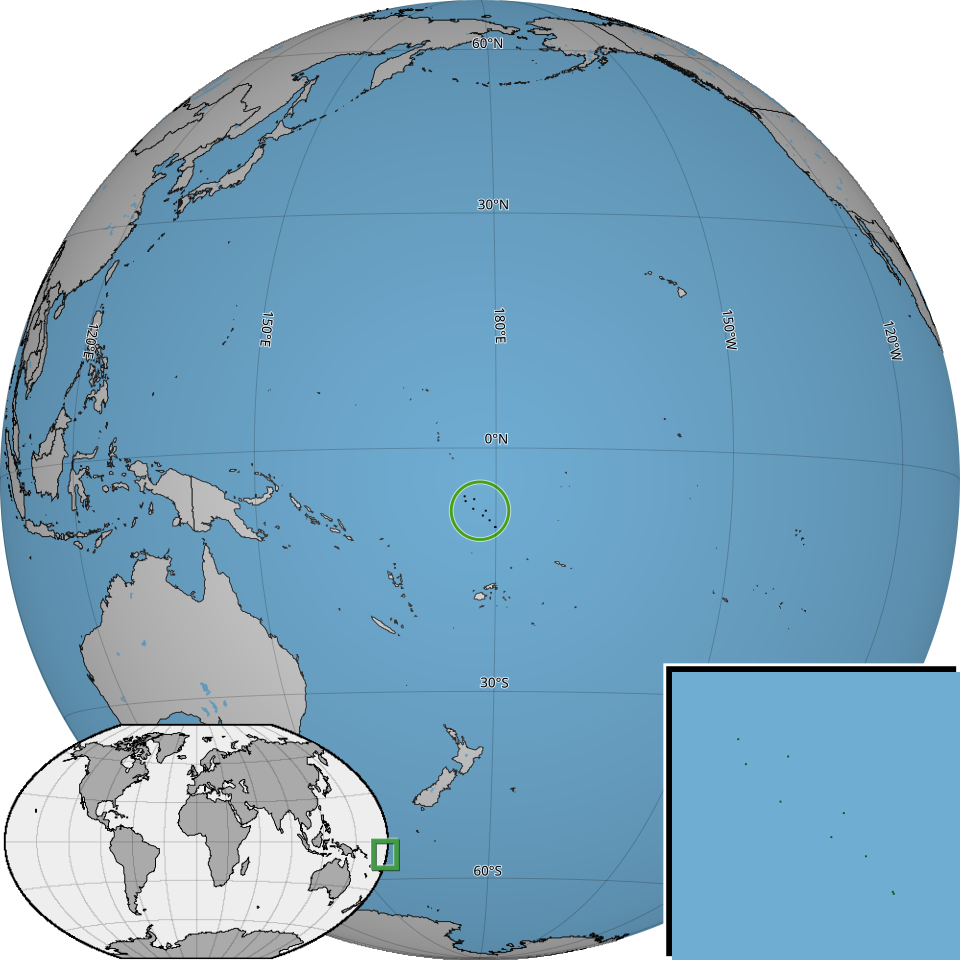
When the World Bank’s database returns blank fields for GDP growth, inflation, unemployment, and GDP per capita, it tells a story more powerful than any number could. Tuvalu is not merely a small economy — it is an economy that defies conventional measurement. With a population estimated at roughly 11,000 people scattered across nine coral atolls, the country operates on a scale where traditional macroeconomic indicators lose meaning.
The World Bank’s absence of data is itself the data point: Tuvalu is so remote, so thinly populated, and so dependent on external revenue streams that standard statistical frameworks cannot capture its economic reality.
The main industries of Tuvalu are not listed in the available data, but any observer of the Pacific knows the contours. Fishing licenses — particularly for tuna — represent the single largest source of government revenue. The country also earns income from its .tv internet domain, a quirk of digital geography that provides a steady, if modest, stream of foreign currency. Remittances from Tuvaluan seafarers working on international merchant vessels form another critical pillar.
Subsistence agriculture and fishing sustain much of the population, but commercial activity is minimal. There are no factories, no financial districts, no export processing zones. The economy is, in essence, a carefully managed portfolio of external income streams wrapped around a traditional island subsistence base.
The absence of inflation and unemployment data from the World Bank should not be mistaken for stability. In a country that imports nearly everything — from fuel to building materials to food — global price shocks hit hard. When shipping costs rise, every litre of petrol and every bag of rice becomes more expensive. Unemployment, meanwhile, is a concept that fits awkwardly into a society where formal wage employment is scarce and extended family networks provide the primary social safety net.
The real economic story of Tuvalu is not about growth rates or CPI baskets. It is about how a nation sustains itself when its landmass is measured in single-digit square kilometres and its highest point is barely five metres above sea level.
The Cost of Living on the Edge of the World
Housing in Tuvalu is a study in constraints. With a total land area of just 26 square kilometres, every square metre is precious. The capital, Funafuti, is home to roughly half the population, and land is held under customary tenure, meaning it cannot be bought or sold in the conventional market. Most families live in extended households on ancestral land, with homes built from imported materials that must withstand cyclones, storm surges, and the relentless salt air.
Renting is rare and largely limited to expatriate workers and government officials; there is no formal rental market to speak of.
Daily expenses tell a stark story of isolation. Nearly all consumer goods are imported by ship from Fiji, New Zealand, or Australia, and prices reflect the cost of long-distance freight plus the thin margins of small island retailers. A litre of milk, a loaf of bread, a can of fuel — everything carries a premium that would shock visitors from larger Pacific nations.
There is no regional average to compare against in the provided data, but anecdotal evidence from the broader Pacific context suggests that Tuvalu is among the most expensive places in the region to live, precisely because its small population cannot generate economies of scale. For a family relying on subsistence fishing and remittances, the gap between cash income and the cost of imported essentials is a constant source of pressure.
Investment in an Uncertain Territory
The list of top companies in Tuvalu is empty in the available data, and that absence is revealing. There are no multinational headquarters, no stock exchange listings, no corporate giants. The largest economic actors are the government itself, the state-owned Tuvalu Electricity Corporation, the Tuvalu Telecommunications Corporation, and a handful of small trading companies that import goods and run retail outlets.
The private sector is thin, informal, and heavily dependent on government contracts and donor-funded projects.
For an investor looking at Tuvalu, the question is not what to invest in, but whether investment in the conventional sense is even possible. The country has no manufacturing base, no significant mineral resources, and a workforce with limited formal sector experience. The most promising sectors are those tied to the blue economy — sustainable fisheries management, possibly aquaculture, and the ongoing monetisation of the .tv domain.
Climate adaptation infrastructure, funded largely by international donors and development banks, also represents a steady stream of construction and engineering work. But these are not opportunities for traditional private equity or venture capital. They are projects that require patient, concessional, and often grant-based financing. The business climate is defined by small scale, high logistics costs, and the existential uncertainty that hangs over the entire nation.
Safety, Sovereignty, and the Constitutional Reset
Tuvalu is one of the safest countries on earth. The Crime Index and Safety Index are both listed as unavailable in the provided data, but this is a case where absence of data signals absence of problem. Violent crime is virtually unknown. Theft is rare. The most serious social issues are related to health, education, and the psychological toll of living with climate anxiety — not street crime or organised violence.
For quality of life, Tuvalu offers clean air, strong community bonds, and a pace of life that has all but disappeared from the modern world.
The political landscape, however, is undergoing a transformation that deserves close attention. The Constitution of Tuvalu states that it is “the supreme law of Tuvalu” and that “all other laws shall be interpreted and applied subject to this Constitution.” It sets out the Principles of the Bill of Rights and the Protection of the Fundamental Rights and Freedoms.
On 5 September 2023, Tuvalu’s parliament passed the Constitution of Tuvalu Act 2023, with the changes coming into effect on 1 October 2023. This was not a minor amendment. The constitutional reform process has been years in the making and represents a deliberate effort to strengthen the rule of law, clarify the relationship between customary and statutory systems, and entrench protections for citizens in an era of climate-driven uncertainty.
It is a quiet but profound assertion of national identity and legal sovereignty.
The Climate Clock and the Constitutional Moment
What is happening in Tuvalu right now is both urgent and historic. The 2023 constitutional reforms are not merely legal housekeeping — they are a response to the most fundamental question a nation can face: what happens when your territory becomes uninhabitable? Tuvalu’s government has been a leading voice in international climate negotiations, pushing for binding emissions targets and demanding that major polluters acknowledge their responsibility for the fate of low-lying island states.
The new constitution can be read as a form of contingency planning — a legal framework designed to preserve statehood, citizenship, and governance continuity even if the physical landmass of the country is lost to rising seas.
On the economic front, the government continues to rely on the Tuvalu Trust Fund, a sovereign wealth fund established with contributions from Australia, New Zealand, the United Kingdom, Japan, and South Korea. The fund provides a buffer against economic shocks and helps finance the budget when fishing revenues fluctuate.
Negotiations over climate finance, migration partnerships with Australia and New Zealand, and the ongoing management of the exclusive economic zone — one of the largest in the world relative to land area — dominate the policy agenda. There are no dramatic reforms or sudden policy shifts in the available data, but the steady work of diplomatic engagement and constitutional consolidation continues.
The Bottom Line
Tuvalu is not a country for the conventional investor, the growth-focused economist, or the data-hungry analyst. It is a country for those who understand that economics is ultimately about human survival and institutional resilience. The 2023 constitutional reforms, the reliance on fishing and domain-name revenue, and the absence of standard economic indicators all point to a nation operating on its own terms — fragile, yes, but also determined.
Anyone tracking the future of sovereignty, climate adaptation, and Pacific geopolitics should watch Tuvalu closely. It is a small country asking the biggest questions, and its answers will matter far beyond its shores.
Sources & Methodology
This article is authored by Economic Pulse Net for informational and research purposes. Economic Pulse Net sources its data from multilateral institutions, national statistics bureaus, and proprietary databases. All data is believed to be current as of the date of publication.
Published: July 18, 2026 | Category: Research — Tuvalu
Use these signals in your own platform
Economic Pulse publishes its live signal feed through a documented, read-only API. Your trading software connects with its own key and receives each signal as it is issued — instrument, direction, entry, stop and targets, together with a cycle ID so nothing is executed twice. The feed is independent of this website and cannot change it.
Signals are informational only and are not financial advice.