Economic Pulse Net | Sources: World Bank World Development Indicators, Government Sources | 2026
Key Takeaways
- Political Transformation: Armenia has undergone a significant constitutional shift, moving from a semi-presidential model to a representative parliamentary democratic republic, a change that solidified after April 2018.
- Corporate Landscape: The business sector is heavily concentrated in consumer services and financials, with major players including Air Armenia, Ameriabank, and Armenian Railways anchoring the domestic economy.
- Data Scarcity: Current World Bank indicators for GDP growth, inflation, unemployment, and population are unavailable, suggesting a significant gap in recent macroeconomic reporting for this period.
- Structural Shift: The economy appears to be driven by service-oriented industries and financial institutions rather than heavy industrial exports, as evidenced by the top companies list.
- Stability Focus: With safety indices currently unrecorded, the political stability of the new parliamentary system becomes the primary metric for assessing the country’s long-term viability.
The Macro Picture: Navigating a Data Void
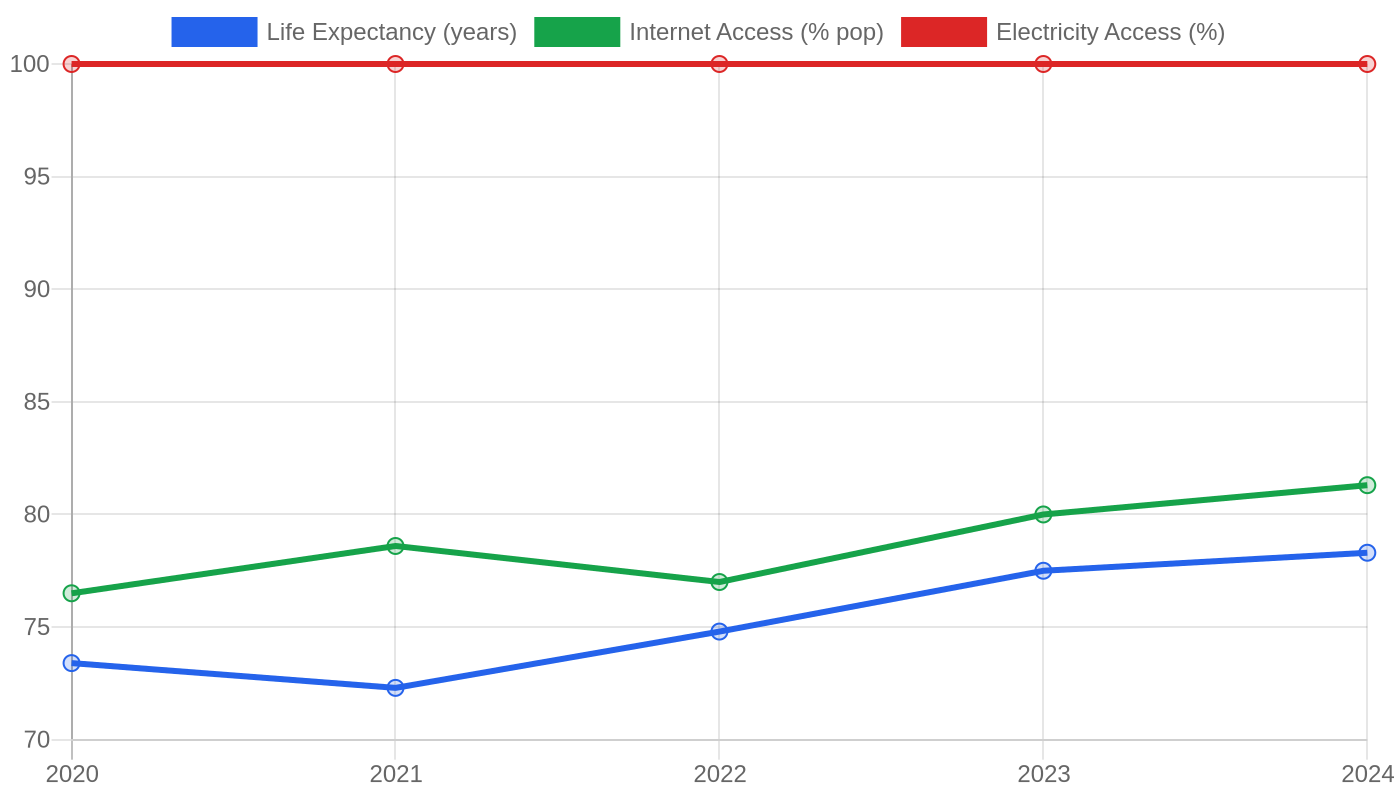
Understanding the current economic pulse of Armenia is currently complicated by a notable absence of recent quantitative data from major international bodies.
According to the World Bank, key indicators such as GDP growth, inflation (CPI), unemployment rates, and total GDP in USD are currently listed as unavailable for the latest period.
This lack of granular data makes it difficult to assess the immediate momentum of the economy, but it does not imply economic stagnation; rather, it highlights a reporting gap that requires cautious interpretation.
While we cannot cite specific growth percentages or inflation figures, the structural composition of the economy provides clues about its underlying health.
The presence of major financial institutions and consumer service providers suggests an economy that is active in domestic circulation and services.
In the absence of hard macroeconomic numbers, analysts must rely on the operational status of major firms and the political environment to gauge economic confidence.
The transition to a more transparent parliamentary system may eventually lead to more robust and frequent data releases, providing a clearer picture of fiscal health in the coming quarters.
For now, the economic narrative is one of structural continuity rather than dramatic quantitative shifts.
Cost of Living: A Service-Driven Daily Reality
While specific figures for housing costs, rent versus buy ratios, and daily expenses are not provided in the current dataset, the dominance of consumer services in the corporate landscape offers insight into the cost-of-living dynamics.
The prominence of companies like Air Armenia, Armenia TV, and Armenian Railways indicates that a significant portion of household expenditure is likely directed toward transportation, media, and basic consumer goods.
In many economies with a strong service sector, the cost of living is often tied to the efficiency and pricing of these essential services.
Without specific data on regional averages or housing markets, it is prudent to view the cost of living through the lens of service accessibility.
The availability of multiple airline operators and a national railway suggests that mobility is a key component of daily life, potentially influencing local economic activity.
Readers should note that the lack of specific cost-of-living data means that any assessment of affordability must be based on the general operational status of these service providers rather than specific price points.
Investment & Business Climate: Anchors in Finance and Services
The business environment in Armenia is characterized by a robust presence in the financial and consumer services sectors, which serve as the backbone of the private sector.
Ameriabank, Ardshinbank, and ArmSwissBank lead the financial landscape, indicating a developed banking infrastructure that supports both domestic transactions and potential foreign investment.
These institutions are critical for maintaining liquidity and credit availability, which are essential for business expansion.
In the consumer services space, Air Armenia, Air Dilijans, and Ararat International Airlines highlight the importance of the aviation sector to the national economy, likely driven by tourism and connectivity needs.
Additionally, Ararat Cement represents the industrial base, suggesting that while services dominate, there is still a foundation for construction and infrastructure development.
Armenia 2 and Armenia TV point to a vibrant media sector, which is vital for information dissemination and advertising revenue.
For investors, the concentration of major companies in these sectors suggests that opportunities may lie in the digitalization of financial services and the expansion of consumer-facing platforms.
The business climate appears to be one where established entities hold significant market share, requiring new entrants to differentiate themselves through innovation or niche targeting.
Safety, Politics & Quality of Life: A New Democratic Era
Armenia’s political landscape has been fundamentally reshaped by its transition to a representative parliamentary democratic republic.
According to available records, the Armenian constitution previously adhered to a semi-presidential republic model until April 2018, marking a pivotal moment in the country’s governance history.
This shift to a parliamentary system aims to enhance legislative oversight and executive accountability, which are crucial for long-term stability and quality of life.
However, current data for the Crime Index and Safety Index is unavailable, leaving a gap in the assessment of public safety and social order.
Without these metrics, it is challenging to provide a comprehensive view of the day-to-day security environment for residents and visitors.
The political transition suggests a focus on institutional development, which can indirectly influence quality of life by improving public services and rule of law.
The absence of specific happiness data or crime statistics means that the assessment of quality of life must be inferred from the political stability and the operational health of the service sectors that support daily life.
As the new parliamentary system matures, it is expected that more comprehensive social and safety data will become available, providing a clearer picture of the lived experience in Armenia.
What’s Happening Now: The Aftermath of Constitutional Reform
The most significant recent development in Armenia is the consolidation of its new political structure following the 2018 constitutional changes.
This period has been defined by the establishment of the representative parliamentary democratic republic, which replaced the previous semi-presidential model.
While specific recent news items or live economic indicators are not provided in the current dataset, the political landscape remains the dominant force shaping the country’s trajectory.
The transition period has likely involved significant adjustments in government operations, policy formulation, and international relations.
Businesses and citizens are navigating a system where the balance of power has shifted, potentially leading to new regulatory environments and economic policies.
The lack of current macroeconomic data suggests that the focus in recent months may have been on stabilizing political institutions rather than reporting on immediate economic fluctuations.
For observers, the key is to monitor how the new parliamentary framework influences economic decision-making and investment confidence.
The coming months will likely see the emergence of more detailed economic reports as the new political system settles into its routine, providing a clearer view of the economic realities that underpin the political changes.
The Bottom Line
Armenia stands at a crossroads where political transformation meets economic uncertainty.
The shift to a parliamentary democracy represents a foundational change that could foster long-term stability, but the current lack of recent World Bank data creates a fog over the immediate economic outlook.
Investors and analysts should watch for the release of updated macroeconomic indicators and the operational performance of key companies like Ameriabank and Air Armenia.
The country’s future will depend on how effectively the new political system supports the service-driven economy and restores confidence through transparent data and policy.
Sources & Methodology
This article is authored by Economic Pulse Net for informational and research purposes.
Economic Pulse Net sources its data from multilateral institutions, national statistics bureaus, and proprietary databases.
All data is believed to be current as of the date of publication. Published: September 02, 2026 |
Category: Research — Armenia
Use these signals in your own platform
Economic Pulse publishes its live signal feed through a documented, read-only API. Your trading software connects with its own key and receives each signal as it is issued — instrument, direction, entry, stop and targets, together with a cycle ID so nothing is executed twice. The feed is independent of this website and cannot change it.
Signals are informational only and are not financial advice.