Economic Pulse Net | Sources: World Bank World Development Indicators, Government Sources | 2026
Key Takeaways
– Laos remains a one-party communist state, classified as an “authoritarian regime” by The Economist’s Democracy Index, ranking lowest among the 9 ASEAN nations studied in 2016.
– The country’s economy is dominated by state-linked utilities and consumer companies, with Electricite du Laos, Nam Theun 2 Power Company, and Lao Brewery Company among the top firms.
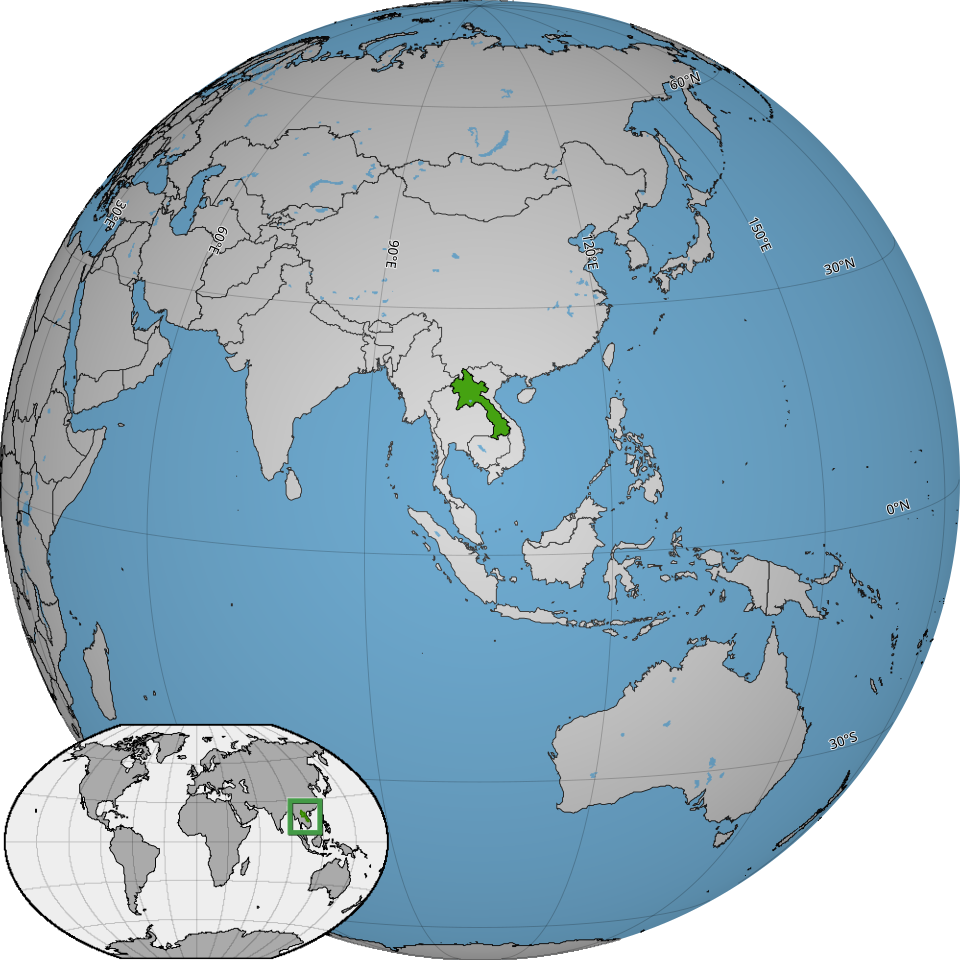
– Despite its small population and limited global profile, Laos sits at a strategic crossroads in Southeast Asia, heavily dependent on hydropower exports and regional trade ties.
– The government officially describes itself as a “people’s democratic state” with a stated goal of transitioning from capitalism to socialism, then to communism.
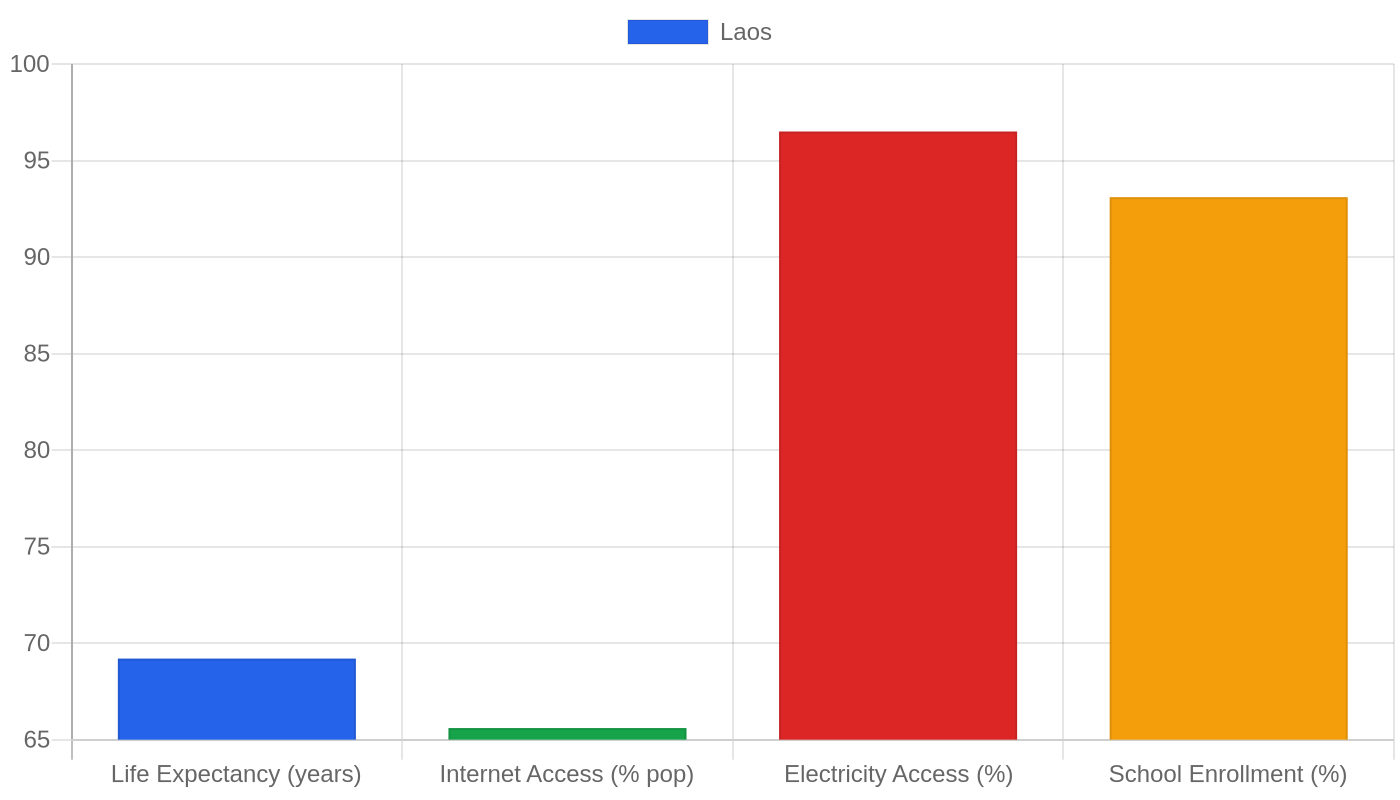
– Available economic data from the World Bank shows significant gaps, making independent assessment challenging, but the country’s development trajectory remains closely tied to Chinese and ASEAN investment.
The Mekong’s Powerhouse — What the Numbers (Don’t) Tell Us
The Lao People’s Democratic Republic presents a paradox for any economic journalist: the World Bank, one of the most authoritative sources on global development, reports no current data for GDP growth, inflation, unemployment, GDP per capita, or GNI per capita. This absence is itself a story. In an era of real-time economic tracking, Laos remains something of a statistical black box — a nation where economic activity flows through channels that formal measurement systems struggle to capture.
What we do know, from the available World Bank data, is that Laos has structured its economy around a handful of dominant state-linked enterprises. The utilities sector stands out as the backbone of formal economic activity, with Electricite du Laos, Nam Theun 2 Power Company, and Lao Holding State Enterprise all ranking among the country’s top companies. This is no accident.
The Mekong River, which carves through the country’s mountainous terrain, has been harnessed for hydropower generation — electricity that Laos exports to its more developed neighbours, particularly Thailand and Vietnam. The Nam Theun 2 project alone represents one of the largest foreign-invested infrastructure ventures in the country’s modern history.
The consumer sector tells a different story. Lao Brewery Company, a joint venture that produces the ubiquitous Beerlao, sits alongside three airlines — Boun Oum Airways, Lao Airlines, Lao Central Airlines, and Lao Skyway — as the country’s most prominent consumer-facing enterprises.
This mix suggests a dual economy: a state-driven utilities sector generating export revenue, and a domestic consumer market still small enough that a single brewery and a handful of regional airlines dominate the corporate landscape. The absence of manufacturing, technology, or financial services giants from the top companies list speaks volumes about where Laos sits in the regional division of labour.
Without World Bank data on GDP growth or inflation, we cannot quantify whether the economy is expanding or contracting, whether prices are stable or spiralling. But the structure of the corporate sector suggests a country that remains heavily dependent on natural resource extraction and regional trade — vulnerable to weather patterns that affect hydro output and to the economic health of its neighbours.
Where the Kip Doesn’t Go Far — Living in Laos
Housing costs in Laos, while not captured in formal indices, can be inferred from the broader economic picture. In a country where the top companies are either state utilities or a handful of consumer brands, and where formal employment is concentrated in these sectors, the housing market is likely segmented between a small urban middle class and a much larger rural population.
Vientiane, the capital, sits on the banks of the Mekong and has seen significant Chinese investment in recent years, including new hotels, commercial complexes, and residential developments. For the minority of Laotians employed by companies like Electricite du Laos or Lao Airlines, formal-sector housing may be attainable. But for the majority working in agriculture or the informal economy — which the World Bank’s data gaps suggest is substantial — housing remains a basic, often substandard, proposition.
Rent versus buy decisions in Laos are shaped by the same factors that constrain the broader economy: limited access to formal credit, a banking sector that remains underdeveloped, and a currency — the Lao kip — that has historically been volatile against the US dollar and Thai baht. Daily expenses for basics like rice, vegetables, and transport are likely lower than in neighbouring Thailand or Vietnam, but so are incomes.
Without formal inflation data from the World Bank, we cannot say whether the cost of living is rising, but the structure of the economy — dependent on imports for many manufactured goods — suggests vulnerability to external price shocks.
Betting on the Mekong — Investment and Business Climate
For investors looking at Laos, the landscape is defined by the companies that dominate the top of the corporate pyramid. Electricite du Laos and Nam Theun 2 Power Company are not just businesses; they are instruments of state policy in a country that officially describes itself as transitioning from capitalism to socialism. The Lao Holding State Enterprise further underscores the government’s central role in directing economic activity.
The consumer sector offers a narrower but potentially interesting play. Lao Brewery Company has achieved something rare in a small, developing economy: it has built a brand — Beerlao — that is genuinely popular across the region, not just domestically. The airline sector, with four carriers serving a population that the World Bank does not quantify, suggests either significant overcapacity or a market that is more connected to regional travel patterns than domestic demand alone would justify.
The business environment in Laos is shaped by its political structure. As The Economist’s Democracy Index classified Laos as an “authoritarian regime” in 2016 — the lowest ranking among the 9 ASEAN nations studied — the rule of law, property rights, and contract enforcement are subject to political considerations. For foreign investors, this means that success often depends on relationships with the ruling party and state enterprises, rather than on transparent market mechanisms.
The utilities sector, in particular, is likely to remain closed to full private ownership, with state enterprises maintaining their dominant positions.
Life Under the One-Party State — Safety, Politics, and Daily Reality
The political landscape of Laos is unambiguous. The country is, according to the data provided, a “unitary communist state” that self-designates as a “people’s democratic state.” Its stated goal is to transition from capitalism to socialism, and then from socialism to communism. This ideological framework is not merely rhetorical; it shapes every aspect of economic and social life.
The Economist’s Democracy Index 2016 classified Laos as an “authoritarian regime,” placing it at the bottom of the 9 ASEAN nations included in the study. This ranking reflects the absence of political competition, restricted civil liberties, and a media environment that is tightly controlled by the state.
For the average Laotian, daily life is shaped by this political reality: there are no opposition parties, no independent media of significance, and no mechanism for holding the government accountable through elections.
Crime and safety data from the available indices show no available figures, which in itself is notable. In many authoritarian states, crime statistics are either not collected systematically or not released publicly. The absence of data does not necessarily mean Laos is unsafe — indeed, tightly controlled societies often have lower rates of street crime — but it does mean that independent verification is impossible.
For expatriates and foreign workers considering Laos, safety likely depends more on avoiding political trouble than on worrying about common crime.
The Chinese Shadow and the ASEAN Tightrope — What’s Happening Now
The most significant current development in Laos is one that the available data points to indirectly: the country’s deepening integration with China’s Belt and Road Initiative. The Laos-China Railway, which connects Vientiane to Kunming, began operations in recent years and has fundamentally altered the country’s economic geography. For a landlocked nation that has historically depended on Thai and Vietnamese ports, the railway offers a direct link to Chinese markets — and Chinese influence.
This relationship is visible in the corporate landscape. The dominance of state utilities like Electricite du Laos and Nam Theun 2 Power Company reflects Chinese-financed hydropower projects that have transformed the country into the “battery of Southeast Asia.” But this comes at a cost. Laos has taken on significant debt to finance these infrastructure projects, and the terms of Chinese loans have raised concerns about sovereignty and long-term economic independence.
Within ASEAN, Laos occupies an awkward position. As the lowest-ranked democracy in the bloc according to The Economist’s 2016 index, it stands in contrast to more open members like Indonesia, Malaysia, and Thailand. Yet the country’s political stability and strategic location make it a valuable partner for both China and its ASEAN neighbours.
The current moment in Laos is one of careful balancing: maintaining the ideological purity of the one-party state while opening the economy enough to attract the investment it desperately needs.
The Lao Brewery Company’s continued dominance suggests that domestic consumption remains resilient, while the four airlines indicate that regional connectivity — whether for business, tourism, or the movement of goods — is a growing priority. But without current World Bank data on GDP growth or inflation, we cannot say whether these sectors are thriving or merely surviving.
The Bottom Line
Laos is a country that defies easy categorisation: a communist state that depends on capitalist investment, an authoritarian regime that sits within the ASEAN framework of consensus and non-interference, a small economy that is building infrastructure on a massive scale. For investors willing to navigate the political risks, the utilities sector — particularly hydropower — offers exposure to one of Southeast Asia’s most strategic resources.
For those interested in the future of authoritarian development models, Laos is a laboratory worth watching. But the absence of basic economic data from the World Bank should give any observer pause: in Laos, what you don’t know can hurt you.
Sources & Methodology
This article is authored by Economic Pulse Net for informational and research purposes. Economic Pulse Net sources its data from multilateral institutions, national statistics bureaus, and proprietary databases. All data is believed to be current as of the date of publication.
Published: July 21, 2026 | Category: Research — Laos
Use these signals in your own platform
Economic Pulse publishes its live signal feed through a documented, read-only API. Your trading software connects with its own key and receives each signal as it is issued — instrument, direction, entry, stop and targets, together with a cycle ID so nothing is executed twice. The feed is independent of this website and cannot change it.
Signals are informational only and are not financial advice.