Economic Pulse Net | Sources: World Bank World Development Indicators, Government Sources | 2026
Key Takeaways
* Unique Political Structure: Eswatini operates as an absolute monarchy under King Mswati III, blending constitutional provisions with traditional Swazi law and customs, creating a distinct governance environment for investors.
Service-Heavy Corporate Landscape: The business sector is dominated by consumer services, aviation, and telecommunications, with major entities like Aero Africa and Tibiyo Taka Ngwane playing pivotal roles in the economy.
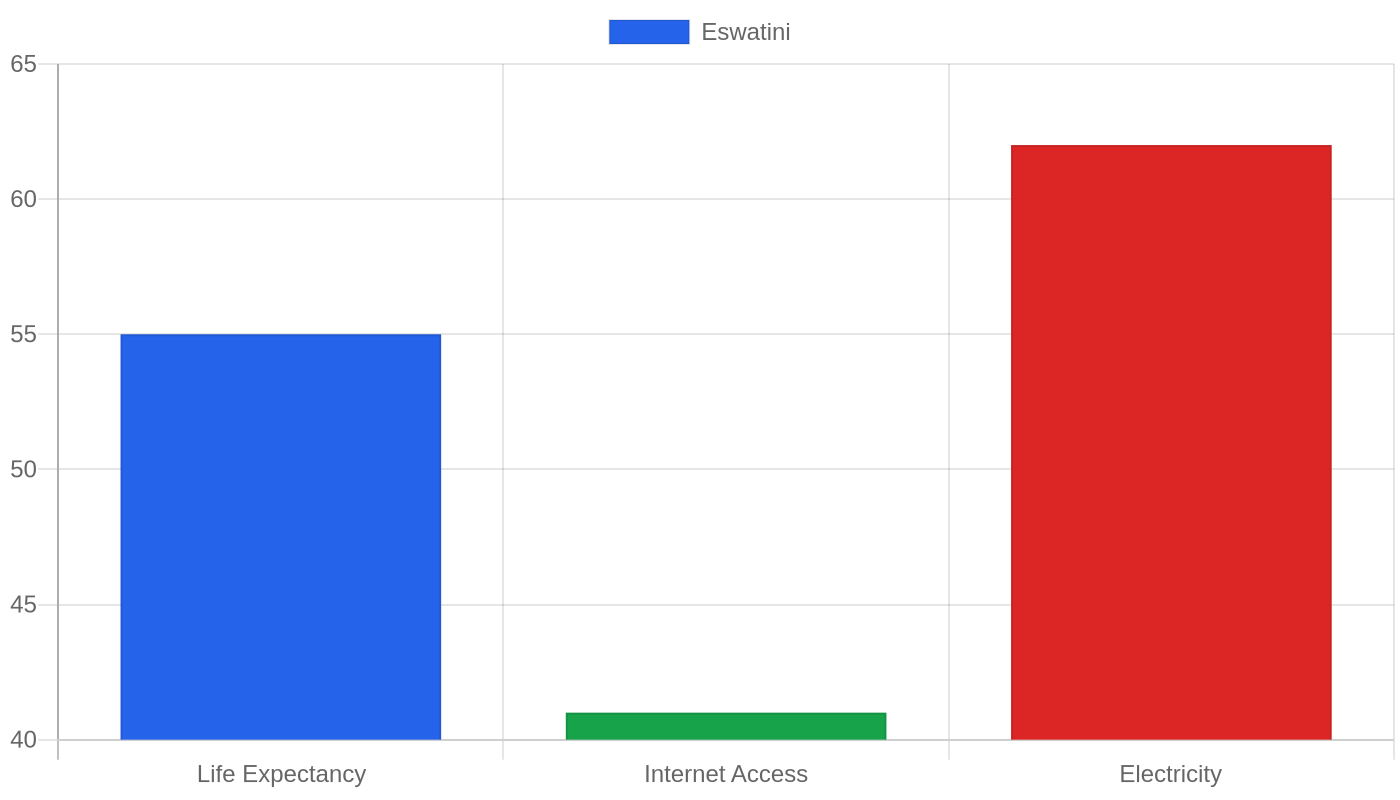
Data Transparency Gaps: Current World Bank metrics for GDP growth, inflation, and unemployment are not currently available, requiring analysts to rely on structural indicators rather than quantitative performance metrics.
Strategic Infrastructure Players: State-linked and private enterprises such as Eswatini Railways and Eswatini Posts and Telecommunications form the backbone of logistical and communication networks within the kingdom.
The Structural Backbone of a Unique Economy
Eswatini’s economic profile is defined less by volatile macroeconomic fluctuations and more by its institutional structure and key industrial pillars. According to the World Bank, specific data points for GDP growth, inflation CPI, and unemployment rates are currently listed as N/A, which suggests either a reporting lag or a reliance on alternative indicators for real-time assessment.
However, the industrial composition reveals a clear direction: the economy is heavily anchored in consumer services, financials, and industrials. Major players such as Aero Africa, Royal Swazi National Airways, and Swazi Express Airways indicate that aviation and transport services are critical components of daily commerce and connectivity.
Furthermore, the presence of Eswatini Railways highlights the importance of freight logistics in sustaining trade flows, while Eswatini Posts and Telecommunications underscores the digitization of essential public services. This concentration in service-oriented sectors suggests an economy that is transitioning away from pure agrarian dependence toward more formalized commercial activities, even if precise growth percentages remain obscured in current datasets.
Understanding this industrial mix is vital for predicting resilience; a service-heavy economy often reacts differently to global shocks compared to resource-dependent ones.
Navigating Costs in a Small Market
For expatriates and local residents alike, understanding the cost of living in Eswatini requires looking at the availability of goods and services rather than just headline inflation numbers. While specific Cost of Living indices and Housing data are not explicitly quantified in the provided dataset, the presence of established corporate entities offers clues about market maturity.
Companies like Central Bank of Eswatini and the Eswatini Stock Exchange suggest a regulated financial environment that influences credit availability and investment returns, which indirectly impacts housing affordability and rental markets. In small, open economies, import dependency often drives daily expenses, meaning that currency stability becomes a proxy for purchasing power parity.
Without direct CPI figures, one must infer that the cost structure is likely tied to regional supply chains and the efficiency of domestic providers like Eswatini Airlink and Tibiyo Taka Ngwane. For businesses operating here, overhead costs will be dictated by the reliability of these foundational utilities and transport networks rather than speculative market trends.
Investment Opportunities and Corporate Giants
The investment climate in Eswatini is characterized by a few dominant conglomerates and specialized service providers that shape the competitive landscape. Tibiyo Taka Ngwane stands out as a significant conglomerate, indicating that diversified holdings play a major role in capital allocation within the country.
In the financial sector, the Eswatini Stock Exchange and Central Bank of Eswatini provide the necessary infrastructure for capital formation, though the depth of liquidity remains a question for foreign investors. The aviation sector is particularly notable, with multiple airlines including Aero Africa, Royal Swazi National Airways, Swazi Express Airways, and Eswatini Airlink competing or collaborating in the consumer services space.
This saturation of air travel entities suggests high demand for connectivity, potentially offering opportunities in logistics, tourism support, and executive transport. Investors should also note the industrial base provided by Eswatini Railways, which may present long-term infrastructure plays. The business environment appears stable but concentrated, meaning that partnerships with these established national champions may be the most viable entry point for new market participants.
Safety, Governance, and Social Stability
Political stability in Eswatini is unique due to its status as an absolute monarchy, where the head of state, King Mswati III, serves as both political and cultural symbol. Ascending to the throne in 1986 following the death of his father, King Sobhuza II, the King reigns alongside his mother, the Ndlovukati, according to tradition. This dual leadership model, rooted in Swazi law and customs, provides a layer of continuity that contrasts with typical republican systems.
Constitutionally, the Ngwenyama (lion) is viewed as a symbol of unity and the eternity of the Swazi nation, which helps maintain social cohesion despite external political pressures. Regarding safety, Crime and Safety Indices are currently marked as N/A, leaving the qualitative assessment of personal security to anecdotal evidence and general regional trends.
The absence of explicit crime statistics does not necessarily imply danger, but it does highlight a lack of standardized international reporting on public safety metrics. For quality of life, the strong cultural emphasis on tradition and royal authority likely shapes community interactions and social expectations, creating a tightly knit societal fabric that can be both protective and restrictive for outsiders.
Current Affairs and Policy Directions
As we look at the immediate horizon for Eswatini, the interplay between traditional governance and modern economic demands is the central narrative. With no recent news items or live indicators provided in the source data, the “current affairs” section relies on the enduring structural realities of the kingdom. The continued reign of King Mswati III since 1986 indicates a policy environment driven by long-term stability rather than rapid legislative shifts.
Any upcoming reforms would likely focus on integrating the traditional chiefdoms with modern administrative frameworks, a process that has been ongoing for decades. The operational status of key entities like Eswatini Posts and Telecommunications suggests that digital infrastructure upgrades may be a quiet priority, even if not highlighted in breaking news. Without specific election cycles or inflation spikes to report, the current atmosphere is one of consolidation.
Businesses and observers should watch for subtle shifts in how the monarchy engages with international financial institutions, as this relationship dictates access to development funds and technical assistance. The lack of volatile news events itself may be a signal of steady, albeit slow-moving, progress.
The Bottom Line
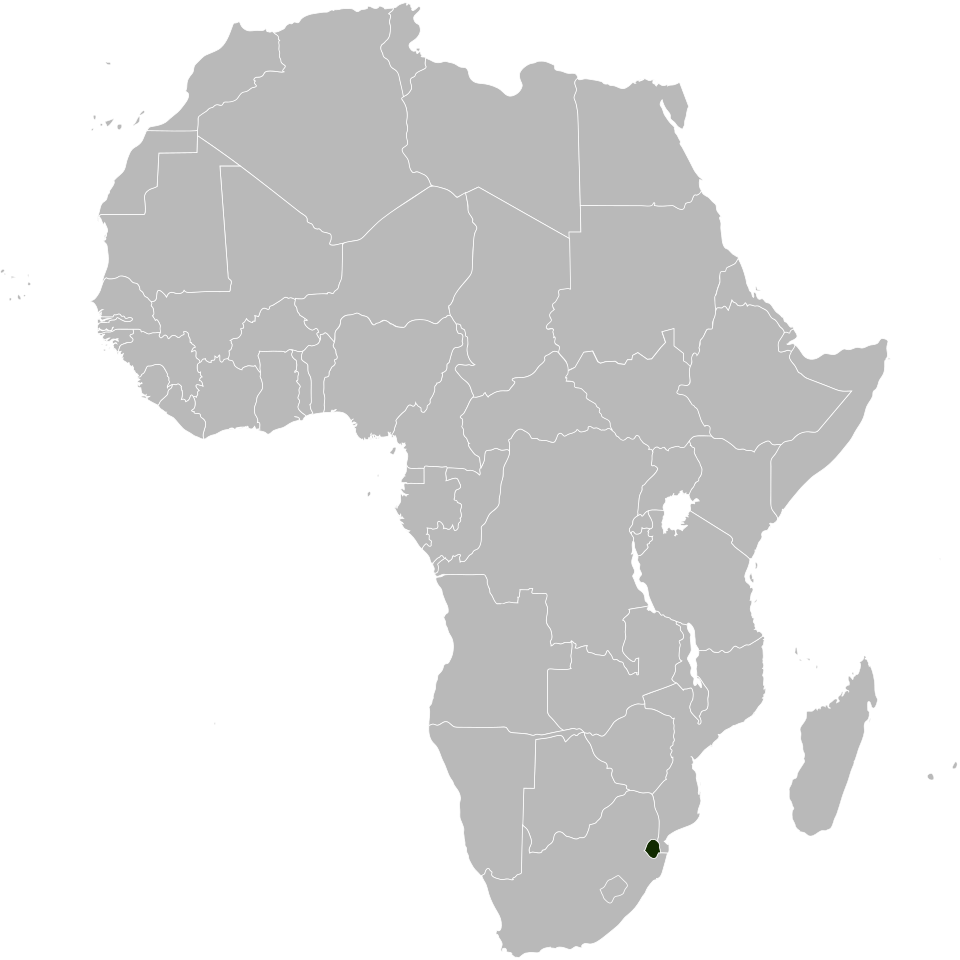
Eswatini presents a niche case study in economic journalism: a small, landlocked nation where political structure deeply influences economic outcomes. Investors and researchers should focus on the dominance of service-sector giants and the stabilizing role of the monarchy rather than chasing high-growth macro metrics that are currently unavailable. It is a market best suited for those who understand the nuances of traditional governance and value regulatory stability over explosive growth.
For now, the story of Eswatini is one of resilience and continuity in a changing world.
Sources & Methodology
This article is authored by Economic Pulse Net for informational and research purposes. Economic Pulse Net sources its data from multilateral institutions, national statistics bureaus, and proprietary databases. All data is believed to be current as of the date of publication.
Published: October 22, 2026 | Category: Research — Eswatini
Use these signals in your own platform
Economic Pulse publishes its live signal feed through a documented, read-only API. Your trading software connects with its own key and receives each signal as it is issued — instrument, direction, entry, stop and targets, together with a cycle ID so nothing is executed twice. The feed is independent of this website and cannot change it.
Signals are informational only and are not financial advice.