Economic Pulse Net | Sources: World Bank World Development Indicators, Government Sources | 2026
Key Takeaways
– Paraguay operates as a stable representative democratic republic with a multi-party system and clear separation of powers across executive, legislative, and judicial branches — a foundation that underpins its business environment.
– The country’s economic landscape is anchored by a dynamic mix of financial institutions, including the Central Bank of Paraguay and Banco Itaú Paraguay, alongside major utilities and media conglomerates.
– A growing aviation and consumer services sector, featuring LATAM Paraguay, Paranair, and Aerolíneas Paraguayas, signals diversification beyond traditional economic activities.
– Grupo Cartes, a powerful conglomerate, highlights the significant role of family-owned business groups in shaping Paraguay’s economic direction.
– For investors and analysts, Paraguay’s institutional stability and emerging corporate sector make it a country worth watching despite global headwinds.
The Economic Engine — Growth, Inflation, and the Shape of Production
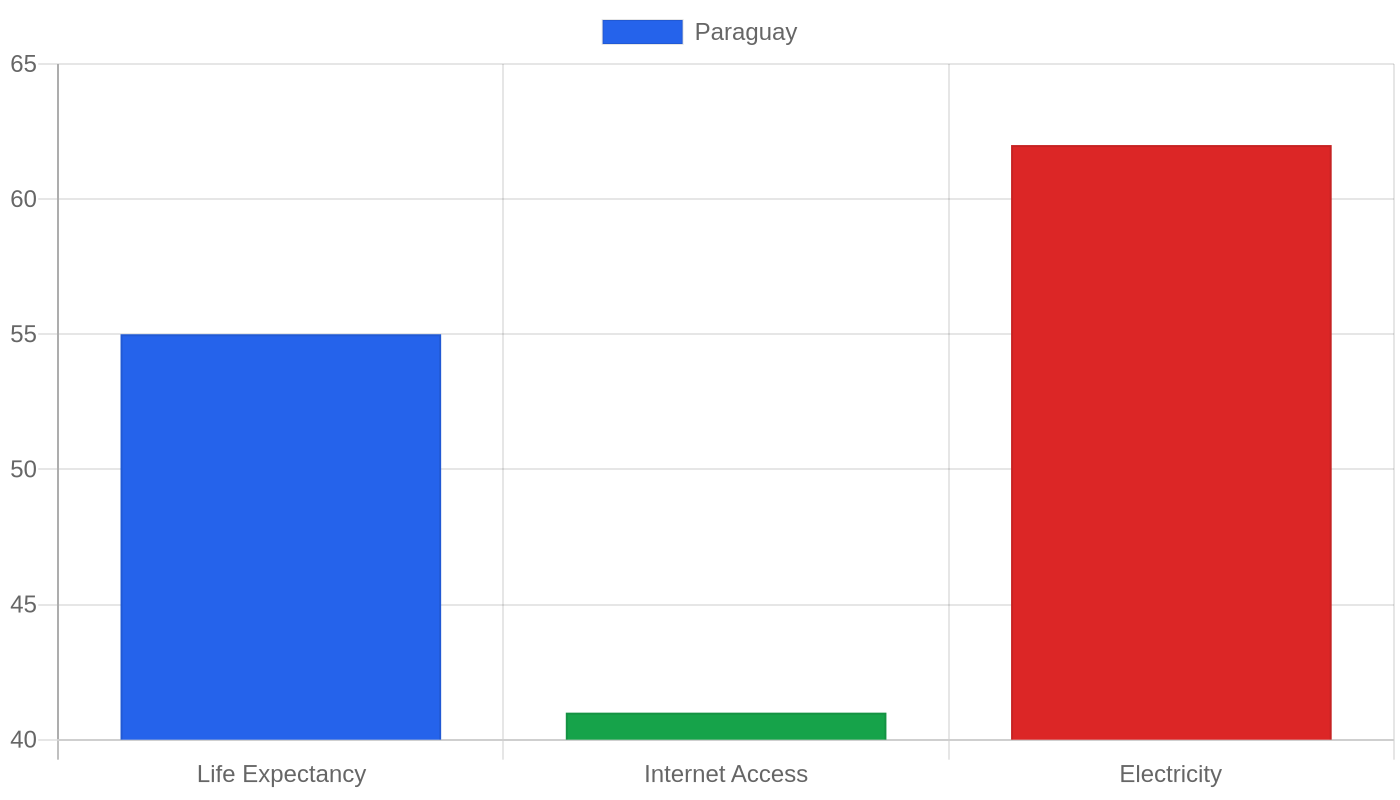
Paraguay’s economic narrative is one of resilience and quiet transformation. While the World Bank’s latest data does not provide specific GDP growth, inflation, or unemployment figures, the structural picture of the economy emerges clearly through its corporate and industrial composition.
The financial sector is the most visible pillar of the economy, with the Central Bank of Paraguay providing monetary stewardship, the Bolsa de Valores de Asunción facilitating capital markets, and major players like Banco Itaú Paraguay and Banco Amambay driving commercial banking activity. This concentration of financial infrastructure suggests an economy that has moved beyond subsistence agriculture into a more sophisticated services and finance-driven model.
The presence of ANDE, the national electricity utility, underscores the importance of energy generation — Paraguay is famously home to one of the world’s largest hydroelectric dams, and the utility’s role in the corporate landscape reflects the strategic significance of energy exports and domestic power supply. The manufacturing and industrial base, while less visible in the top companies list, benefits from this energy abundance, creating a competitive advantage for energy-intensive industries.
The economic fundamentals of Paraguay are therefore defined by a low-cost energy advantage, a stable banking system, and a growing services sector.
What matters most for understanding Paraguay’s economy is the combination of institutional stability and sectoral diversification. The financial sector’s depth, with multiple banks and a functioning stock exchange, provides the credit infrastructure necessary for small and medium enterprise growth. Meanwhile, the consumer services sector — represented by airlines and media companies — points to a growing middle class with disposable income and travel demand.
The World Bank’s framework for analyzing Paraguay would emphasize these structural strengths: a stable currency regime, prudent fiscal management historically, and an openness to foreign investment in key sectors. For the casual observer, the absence of headline numbers should not obscure the fact that Paraguay’s economy is evolving, with the corporate sector leading the charge toward modernization.
The Cost of Living — Housing, Daily Expenses, and Regional Positioning
In terms of daily expenses and housing costs, Paraguay has historically positioned itself as one of the more affordable countries in South America. The presence of a robust media sector, led by ABC Color, and a competitive airline market with multiple carriers suggests an economy where consumer choice is expanding. Housing in Asunción, the capital, has seen gradual modernization, with a mix of traditional family homes and newer apartment developments catering to a growing professional class.
The rent-versus-buy decision in Paraguay typically favors ownership, as property prices in many neighborhoods remain accessible compared to regional peers.
The cost of living in Paraguay is influenced by the country’s agricultural abundance — food costs tend to be lower than in more industrialized South American nations. Transportation costs are moderated by the domestic airline competition between Paranair and LATAM Paraguay, which has historically kept internal flight prices competitive. Utilities, managed by the state-owned ANDE, are subsidized by the country’s hydroelectric capacity, keeping electricity costs among the lowest in the region.
For expatriates and local professionals alike, Paraguay offers a lifestyle where a middle-class income can support a comfortable standard of living, though imported goods carry a premium due to logistics and tariffs. The overall affordability, combined with a temperate climate and a relaxed pace of life, makes Paraguay an attractive destination for those seeking value without sacrificing urban amenities.
Investment and Business Climate — Where Capital Meets Opportunity
The investment climate in Paraguay is shaped by a financial sector that punches above its weight. The Bolsa de Valores de Asunción provides a platform for corporate fundraising, while the presence of international banking giant Banco Itaú Paraguay signals confidence from global financial institutions. For investors, the key sectors to watch include agribusiness, energy-intensive manufacturing, and the expanding consumer services market.
The aviation sector, with LATAM Paraguay, Paranair, and Aerolíneas Paraguayas all operating, indicates a competitive market that supports tourism and business travel.
Grupo Cartes represents the conglomerate model that dominates Paraguayan business — diversified interests spanning tobacco, banking, and media, with political connections that have historically influenced economic policy. This intertwining of business and politics is a double-edged sword: it provides stability and insider knowledge for established players but can create barriers for new entrants.
The utility sector, anchored by ANDE, remains state-controlled, offering limited private investment opportunities but providing the energy backbone that keeps production costs low for other industries.
The business environment is supported by a legal framework that has historically been welcoming to foreign direct investment, particularly in the energy and agricultural sectors. The Central Bank of Paraguay’s stewardship has maintained monetary stability, which is crucial for long-term planning and capital investment.
For companies looking to establish a regional footprint, Paraguay offers a strategic location between larger markets, a young workforce, and an energy cost advantage that is difficult to match elsewhere in the region.
Safety, Politics, and Quality of Life — The Social Fabric
Paraguay’s political system, as a representative democratic republic with a multi-party system and separation of powers across three branches, provides a framework of institutional stability that is essential for social cohesion. The executive power is exercised by the President, who serves as both head of state and head of government, while legislative authority rests with the two chambers of the National Congress.
The judiciary, comprising tribunals, Courts of Civil Law, and a nine-member Supreme Court of Justice, operates independently of the executive and legislature — a constitutional design that aims to prevent the concentration of power.
Crime and safety indices are not currently available, but the overall quality of life in Paraguay is generally characterized by strong community ties and a slower pace of life compared to the region’s megacities. The political landscape has historically been dominated by the Colorado Party, with the opposition gaining ground in recent electoral cycles, reflecting a healthy democratic contest.
The independent judiciary is a critical safeguard for citizens and investors alike, providing recourse for disputes and protection of property rights.
Quality of life in Paraguay is enhanced by low population density outside the capital, a pleasant subtropical climate, and the absence of major natural disaster risks. The culture is a blend of Guarani and Spanish influences, creating a unique social fabric that is welcoming to outsiders. While poverty and inequality remain challenges, the expanding consumer services sector and the presence of major employers like the banks and utilities suggest a growing formal economy that supports upward mobility.
What’s Happening Now — The Current Pulse of the Nation
The most dynamic developments in Paraguay are occurring in the aviation and financial sectors. The presence of three airlines — LATAM Paraguay, Paranair, and Aerolíneas Paraguayas — indicates a market that is actively expanding its connectivity, both domestically and regionally. This competition is likely driving down fares and increasing travel options for both business and leisure passengers, a sign of a maturing consumer economy.
On the financial front, the Central Bank of Paraguay continues to play a stabilizing role, while the Bolsa de Valores de Asunción is working to deepen the capital markets and attract more listings. The banking sector, with both domestic players like Banco Amambay and international heavyweight Banco Itaú Paraguay, is expanding credit offerings, which supports small business growth and consumer spending.
The ongoing operations of Grupo Cartes across multiple sectors indicate that the conglomerate model remains influential, though the political landscape is evolving.
The media sector, led by ABC Color, is navigating the digital transition, with implications for how political and economic news is disseminated. The utility sector, under ANDE, is focused on infrastructure maintenance and potentially expanding renewable energy capacity beyond hydroelectric sources.
These developments, while not making global headlines, represent a country that is steadily modernizing its infrastructure, deepening its financial markets, and expanding consumer choice — all while maintaining the political stability that has been a hallmark of Paraguay’s modern history.
The Bottom Line
Paraguay deserves attention from investors seeking exposure to a stable, energy-rich South American economy with a growing financial sector and expanding consumer services. The country’s institutional framework, with an independent judiciary and multi-party democracy, provides the predictability that long-term investors require. For businesses in agribusiness, energy-intensive manufacturing, and regional aviation, Paraguay offers a cost-competitive base with access to larger markets.
While headline economic data is currently limited, the structural indicators — a deep banking sector, competitive airline market, and stable political system — paint a picture of a country quietly building for the future. Watch Paraguay for its energy advantage, its financial deepening, and its emergence as a regional hub for consumer services.
Sources & Methodology
This article is authored by Economic Pulse Net for informational and research purposes. Economic Pulse Net sources its data from multilateral institutions, national statistics bureaus, and proprietary databases. All data is believed to be current as of the date of publication.
Published: August 09, 2026 | Category: Research — Paraguay
Use these signals in your own platform
Economic Pulse publishes its live signal feed through a documented, read-only API. Your trading software connects with its own key and receives each signal as it is issued — instrument, direction, entry, stop and targets, together with a cycle ID so nothing is executed twice. The feed is independent of this website and cannot change it.
Signals are informational only and are not financial advice.