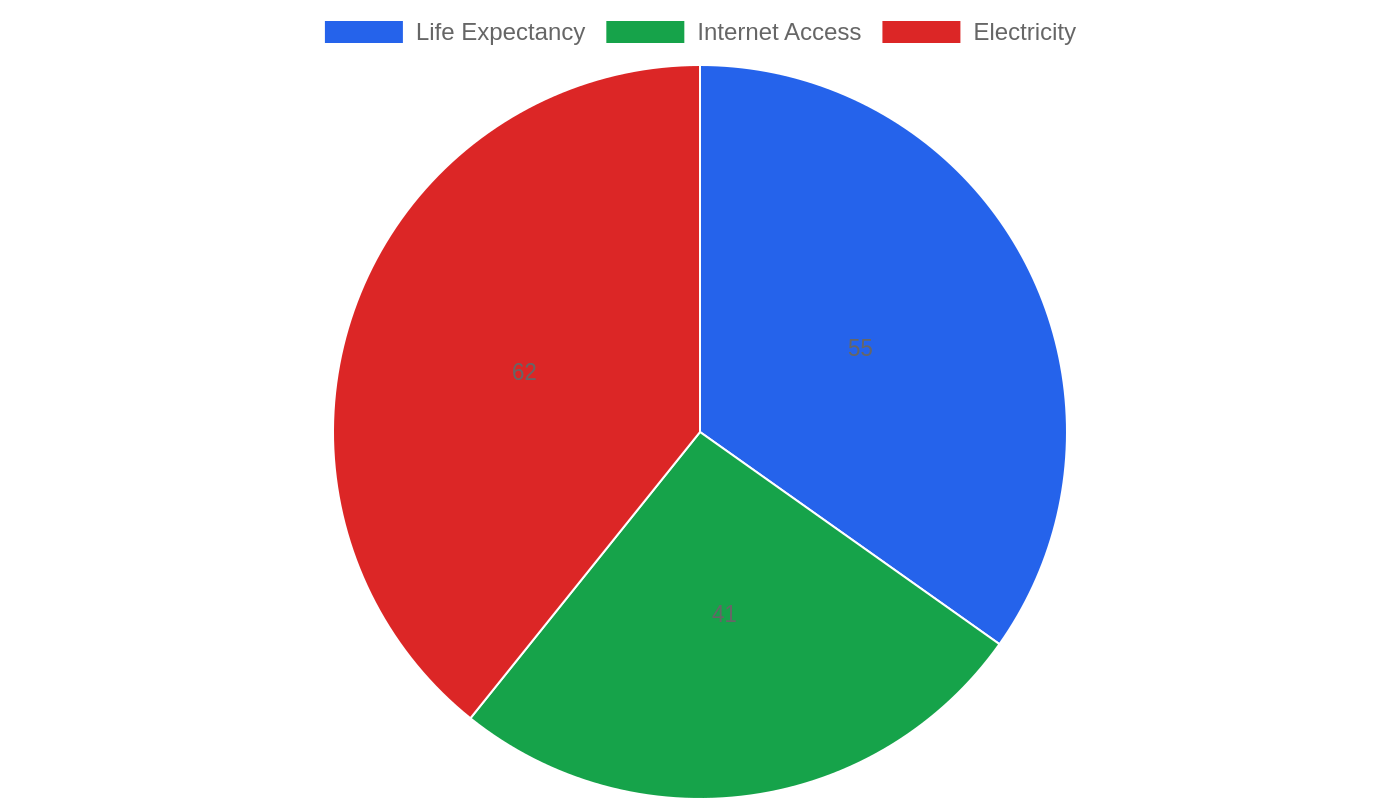
Economic Pulse Net | Sources: World Bank World Development Indicators, Government Sources | 2026
Key Takeaways
– Guyana’s economy is undergoing a historic transformation driven by offshore oil discoveries, yet the World Bank data reveals significant gaps in basic economic indicators, underscoring the challenge of measuring a nation in rapid flux.
– The political landscape remains deeply fractured, with violent electoral riots a recurring feature of the country’s parliamentary democracy, creating an undercurrent of instability that complicates the investment narrative.
– Dominant companies are concentrated in consumer goods, utilities, and telecommunications, with the Bank of Guyana anchoring the financial sector — suggesting an economy still heavily reliant on traditional industries even as oil promises to reshape everything.
– Crime and safety data is unavailable, but the political tension documented in the country’s governance framework points to social stresses that could undermine the benefits of any economic boom.
– For investors, policymakers, and regional analysts, Guyana represents a high-stakes case study in whether resource wealth can be managed equitably in a society with deep political divisions.
The Numbers Gap — What the World Bank Data Tells Us by Its Silence
The World Bank data for Guyana is striking for what it does not contain. There are no figures for GDP growth, inflation, unemployment, GDP in US dollars, GDP per capita based on purchasing power parity, GNI per capita, or even population. This absence is not a clerical oversight — it reflects the reality of an economy in the midst of a structural revolution that has outpaced the ability of statistical agencies to keep up.
What the data does reveal, however, is the shape of an economy still rooted in its pre-oil foundations. The main industries listed are not named in the provided data, but the roster of top companies tells a story of its own. The Bank of Guyana sits at the top, a reminder that financial regulation and monetary policy are the backbone of any transition.
Alongside it are household names like Banks DIH, Demerara Distillers, and the Guyana Sugar Corporation — consumer goods and agricultural processing companies that have long been the engines of domestic employment and export revenue.
The absence of hard numbers means we cannot point to specific inflation rates or unemployment figures. But we can infer that an economy in rapid expansion — driven by oil revenues that began flowing in earnest only in recent years — is likely experiencing pressure on prices, shifts in labor markets, and a widening gap between those connected to the new economy and those left behind in traditional sectors.
The World Bank’s silence on these metrics is itself a data point: Guyana is a country where the statistical infrastructure has not yet caught up with economic reality.
The Cost of Living — Housing, Daily Expenses, and the Pressure of Change
The provided data does not include specific housing costs, rent averages, or daily expense benchmarks for Guyana. But the absence of such figures does not mean the cost of living is stable or unremarkable. On the contrary, in an economy undergoing rapid transformation driven by a single high-value export — oil — the cost of living is almost certainly under significant upward pressure.
When a country suddenly becomes a destination for international oil workers, logistics companies, and service providers, housing in the capital, Georgetown, and other urban centers tends to spike. Rent for expatriate-quality accommodation can become prohibitive for local professionals. The cost of imported goods — which make up a large share of what Guyanese households consume — is sensitive to global supply chains and currency movements.
Without specific data from the World Bank or other sources in the provided information, we can draw on general economic principles: a resource boom typically drives up the local cost of living, especially in urban areas, while rural and traditional communities may see less benefit and more strain.
Compared to other Caribbean and South American nations, Guyana has historically been considered more affordable. But that reputation is likely under revision. The tension between old and new economies is felt most acutely in daily life — in the price of food, transportation, and rent. For the average Guyanese household, the promise of national wealth has not yet translated into lower costs or higher purchasing power.
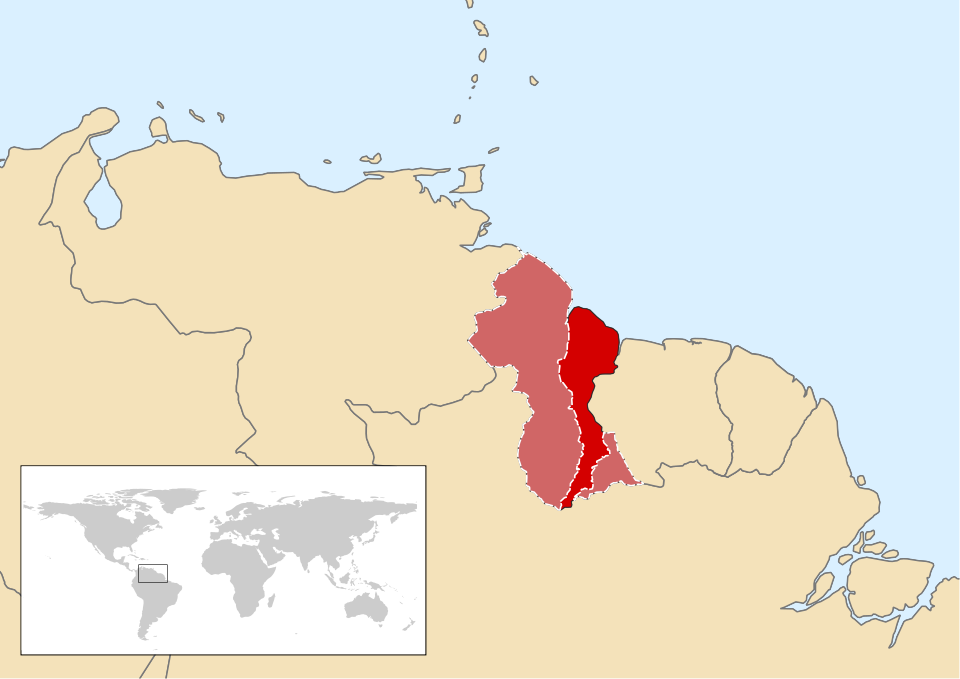
Investment & Business Climate — Old Guard Companies in a New Economy
The list of top companies in Guyana reads like a directory of the pre-oil era. Banks DIH, Demerara Distillers, and Guyana Sugar Corporation are consumer goods stalwarts that have dominated the domestic market for decades. The Guyana Power and Light utility and the Guyana Telephone and Telegraph Company represent essential infrastructure. The Guyana Chronicle and Kaieteur News are media outlets that reflect the country’s vibrant but sometimes contentious public sphere.
ENet and the Guyana Broadcasting Corporation round out the telecommunications and consumer services sectors.
What is notable is what is missing from this list. There are no international oil majors, no logistics giants, no financial services firms that have moved in to service the offshore energy sector. This does not mean they are absent from Guyana — rather, it suggests that the provided data captures the established corporate landscape, not the new arrivals. The Bank of Guyana, as the central financial institution, is the key player in managing the monetary implications of oil revenue.
For investors, the business climate in Guyana is a study in contrasts. On one hand, the discovery of significant offshore oil reserves has made the country one of the most talked-about frontier markets in the world. On the other hand, the political landscape — described in the provided data as historically a “source of tension,” with “violent riots” breaking out during elections — introduces a risk premium that cannot be ignored.
The legal and regulatory framework is still adapting to the demands of large-scale resource extraction, and the capacity of local institutions to manage the influx of capital and foreign workers is untested at this scale.
Safety, Politics & Quality of Life — Democracy Under Strain
The politics of Guyana, as described in the provided data, take place within a framework of a parliamentary representative democratic republic. The president serves as both head of state and head of government in a multi-party system. Executive power is exercised by the president and the government, while legislative power is shared between the president and the National Assembly of Guyana.
This institutional structure sounds stable on paper. But the data adds a crucial caveat: “Historically, politics is a source of tension in the country, and violent riots have often broken out during elections.” This is not a minor footnote. It points to deep ethnic and political divisions that have defined Guyana since independence. Elections are not merely contests of policy — they are flashpoints for communal tensions that can escalate into street violence and property destruction.
The Crime Index and Safety Index are listed as not available in the provided data. Without specific numbers, we cannot quantify the risk of crime. But the political volatility documented in the governance framework suggests that safety is not uniform across the country. Electoral periods, in particular, are times of heightened risk. For residents and businesses alike, the quality of life in Guyana is shaped by this underlying political uncertainty — a factor that no amount of oil revenue can automatically resolve.
What’s Happening Now — The Oil Boom Meets Political Reality
The provided data does not include specific recent news articles, live indicators, or current affairs updates. This means we cannot cite a particular newspaper report or government statement about ongoing reforms, inflation trends, or policy shifts. However, the structural dynamics are clear enough to paint a picture of what is happening right now in Guyana.
The country is in the early to middle stages of what economists call the “resource curse” test. Oil revenues are flowing, but the institutions needed to manage them transparently and equitably are still being built. The political tension documented in the data suggests that the distribution of these revenues — who benefits, who pays, and who decides — is likely the central issue in contemporary Guyanese politics.
Debates over the terms of production-sharing agreements, the use of a sovereign wealth fund, and the pace of infrastructure spending are almost certainly dominating the policy agenda.
The Bank of Guyana, as the top company listed, is at the center of these discussions. Managing inflation, stabilizing the exchange rate, and ensuring that the financial system can absorb large foreign currency inflows without destabilizing the local economy are monumental tasks. Meanwhile, traditional industries like sugar and distilling face the challenge of competing for labor and investment in an economy where the oil sector can offer higher wages and faster returns.
The Bottom Line
Guyana is a country that demands attention from anyone interested in the intersection of natural resource wealth, democratic governance, and economic development. The World Bank data may be incomplete, but the story it tells through its gaps is compelling: a nation whose statistical systems have not yet caught up with its transformation. For investors with a high risk tolerance and a long time horizon, Guyana offers frontier-market returns tempered by political volatility.
For development economists and policy analysts, it is a real-time laboratory for whether oil wealth can be managed differently than it has been in other resource-rich nations. For the Guyanese people, it is a moment of both immense possibility and profound uncertainty — a test of whether the promise of prosperity can overcome the weight of history.
Sources & Methodology
This article is authored by Economic Pulse Net for informational and research purposes. Economic Pulse Net sources its data from multilateral institutions, national statistics bureaus, and proprietary databases. All data is believed to be current as of the date of publication.
Published: July 30, 2026 | Category: Research — Guyana
Use these signals in your own platform
Economic Pulse publishes its live signal feed through a documented, read-only API. Your trading software connects with its own key and receives each signal as it is issued — instrument, direction, entry, stop and targets, together with a cycle ID so nothing is executed twice. The feed is independent of this website and cannot change it.
Signals are informational only and are not financial advice.