Economic Pulse Net | Sources: World Bank World Development Indicators, Government Sources | 2026
Key Takeaways
– Chile’s economy is growing at a modest 2.46 percent, according to the World Bank, but inflation remains stubbornly above target at 4.21 percent, squeezing household budgets.
– Unemployment sits at nearly 9 percent, signaling a labor market that has not fully recovered from recent economic shocks.
– The political landscape is still shaped by the legacy of the 1980 Pinochet-era constitution, which continues to fuel debate over democratic legitimacy and institutional reform.
– Chile’s corporate sector remains dominated by natural resources and consumer goods giants like Antofagasta PLC and Agrosuper, but a small but notable technology scene is emerging with firms like ACE Team and AmnesiaGames.
– The country faces a delicate balancing act: managing inflation without choking growth, while navigating deep political divisions over its constitutional foundations.
Slow Growth, Sticky Prices — The Chilean Paradox
Chile’s economy is moving forward, but at a pace that leaves many wondering if the engine is sputtering. The World Bank reports GDP growth of 2.46 percent for 2025 — respectable by global standards, but underwhelming for a country that once led Latin America in economic dynamism. This is not the Chile of the 1990s, when double-digit expansion was the norm.
Today, the economy is growing just enough to keep pace with population pressures, but not enough to generate the kind of broad-based prosperity that once defined the “Chilean miracle.”
Inflation remains the most immediate headache. At 4.21 percent, according to the World Bank’s CPI measure, prices are rising faster than the central bank’s comfort zone. For ordinary Chileans, this means the cost of food, transport, and housing continues to climb faster than wages. The inflation rate is not catastrophic — Venezuela it is not — but it is persistent enough to erode purchasing power month after month.
Families are making tough choices, cutting back on discretionary spending and watching their savings shrink in real terms.
The labor market tells a similar story of stagnation. Unemployment stands at 8.97 percent, according to the World Bank. That is high for a country with Chile’s income level, and it reflects an economy that is not generating enough formal-sector jobs. Youth unemployment and informal work are likely even more severe, though the data does not break those out.
The combination of rising prices and high joblessness creates a classic stagflationary pinch: households are earning less in real terms while paying more for basics.
What is driving this sluggish performance? Chile’s economy remains heavily dependent on copper mining and commodity exports, which means global demand shocks hit hard. The post-pandemic rebound has faded, and China’s slowdown — a major buyer of Chilean copper — has dampened export revenues. Domestic consumption is tepid, and investment is cautious. The World Bank numbers suggest an economy that is treading water rather than swimming strongly.
The Cost of Living Crisis — Santiago’s Squeeze
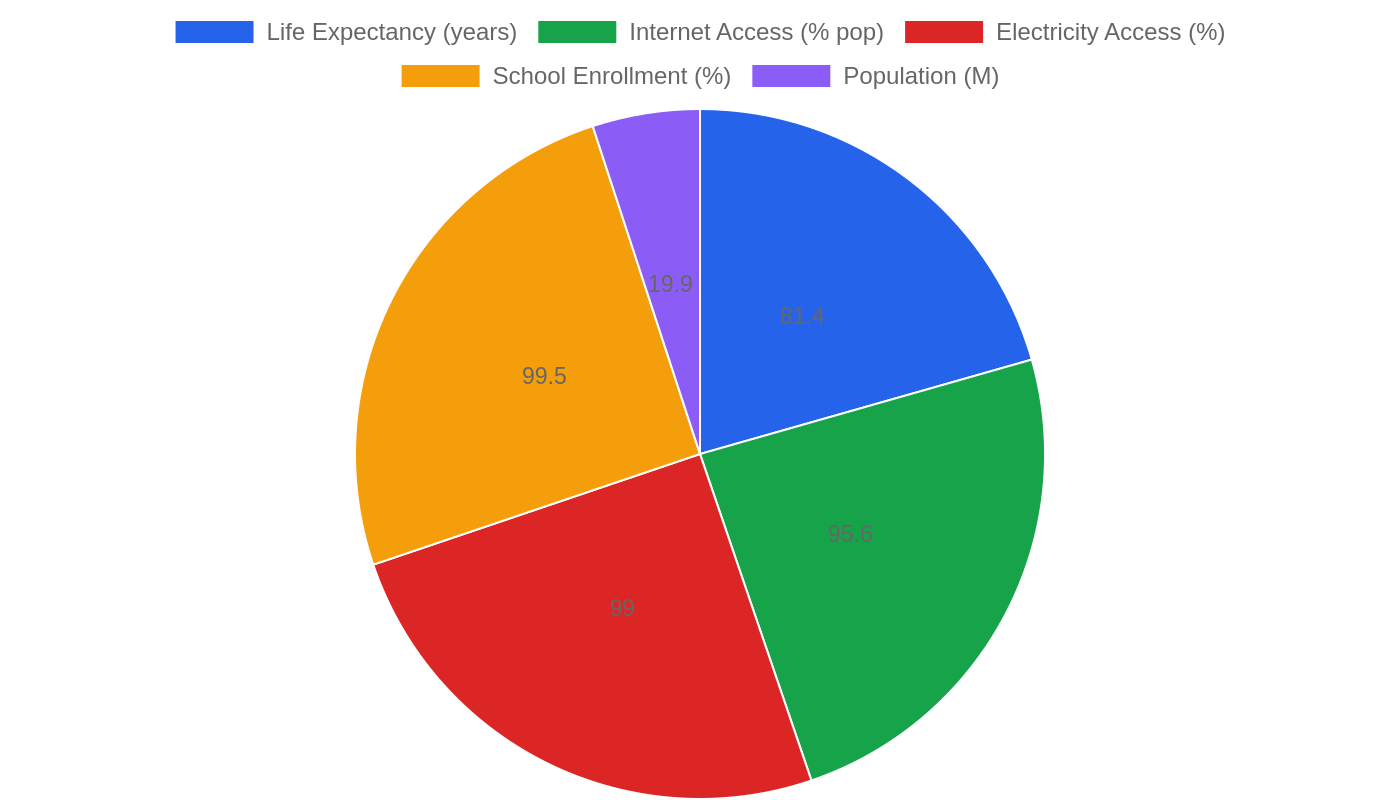
For the nearly 20 million people living in Chile — the World Bank puts the population at 19.86 million — the cost of living has become a daily preoccupation. While the data provided does not include specific housing or rent figures, the inflation number alone tells a grim story. When CPI runs at 4.21 percent, everything from bread to bus fares becomes more expensive. In Santiago, the capital, rents have risen sharply in recent years, pushing young families and workers into longer commutes or smaller spaces.
The gap between renting and buying has widened dramatically. Mortgage rates have climbed as the central bank has fought inflation, making homeownership a distant dream for many middle-class Chileans. Meanwhile, rental supply in desirable neighborhoods remains tight, driving prices upward. For low-income households, the situation is even more precarious.
Informal housing settlements, known as *tomas*, have expanded on the outskirts of major cities as families unable to afford formal housing take matters into their own hands.
Daily expenses — groceries, utilities, transport — consume a growing share of household income. Chile’s geography, stretching from the Atacama Desert to Patagonia, means transport costs are high, especially for goods that must travel long distances. The country’s reliance on imported fuel and food adds another layer of vulnerability to global price shocks. Compared to regional peers, Chile remains a relatively expensive place to live, with costs in Santiago rivaling some European capitals.
Copper, Code, and Consumer Giants — Chile’s Corporate Landscape
Chile’s business elite is still anchored in the old economy. The top companies list reads like a who’s who of natural resources and consumer staples. Antofagasta PLC, the London-listed copper miner, is a global heavyweight. Agrosuper dominates the food and protein sector. AntarChile, the holding company controlled by the Angelini family, spans forestry, energy, and fishing. These are the firms that have generated Chile’s wealth for decades, and they remain dominant.
But there is a quiet shift happening. The presence of ACE Team and AmnesiaGames on the list of top companies signals a nascent technology sector. These are game developers, not copper miners — a small but telling sign that Chile is trying to diversify its economic base. Government initiatives to promote tech startups and digital innovation have gained traction, particularly in Santiago’s growing “Silicon Valley of the South” corridor.
Still, the tech sector remains tiny compared to mining and agriculture.
The business environment in Chile has traditionally been one of Latin America’s most stable. Strong institutions, independent courts, and a long history of free trade agreements have attracted foreign investment. However, political uncertainty — particularly around constitutional reform and tax policy — has chilled some investment flows. Companies are waiting to see whether the political class can deliver a stable, predictable regulatory framework. Until then, many are sitting on their hands.
The utilities sector is also noteworthy. AES Andes, a major power company, reflects Chile’s ambitious renewable energy push. The country has some of the best solar conditions on earth in the Atacama Desert, and wind potential in Patagonia is enormous. AES Andes and other players are investing heavily in solar and wind farms, positioning Chile as a potential green energy exporter. That could be a game-changer, but it requires massive capital and regulatory certainty.
A Constitution Born in Darkness — Politics and the Quality of Life
Chile’s political landscape is haunted by its past. The current constitution was drafted by Jaime Guzmán in 1980, during the brutal military dictatorship of Augusto Pinochet. It was approved via a national plebiscite that the World Bank data notes was regarded as “highly irregular” by some observers. That document, designed to lock in conservative economic policies and limit democratic change, remains in force today — though heavily amended after Pinochet’s defeat in the 1988 plebiscite.
The legacy of that constitution is not just historical. It shapes Chile’s political debate every day. Efforts to replace it have dominated the country’s politics since the massive social protests of 2019. Two separate constitutional conventions have been attempted, both failing to produce a replacement. The process has been messy, divisive, and exhausting. Voters are frustrated. The political class is fractured. And the 1980 constitution, despite its authoritarian origins, remains the law of the land.
President Ricardo Lagos, who signed into law several constitutional amendments in September 2005, helped modernize parts of the document. But the core structure — including the powerful role of the Constitutional Court and the difficulty of making further changes — remains intact. The result is a political system that often feels stuck, unable to respond nimbly to economic or social pressures.
On safety and quality of life, the picture is mixed. The data does not provide a crime index or safety index for Chile, but anecdotal evidence and regional comparisons suggest the country is safer than many of its neighbors. Violent crime is lower than in Brazil or Mexico, though property crime and carjackings have risen in Santiago. The bigger quality-of-life issue for most Chileans is economic anxiety, not physical danger.
The stress of making ends meet, the frustration with a political system that seems unable to deliver change, and the lingering trauma of the pandemic all weigh heavily.
The Present Tense — What’s Happening in Chile Right Now
As 2026 unfolds, Chile is living through a moment of cautious hope and persistent anxiety. The economy is growing, but slowly. Inflation is falling from its 2022 peak of over 14 percent, but at 4.21 percent it remains above the central bank’s 3 percent target. The World Bank data suggests the disinflation process is underway but not complete. The central bank has begun cutting interest rates, but cautiously, wary of reigniting price pressures.
The political drama over the constitution continues to simmer. No new convention is currently sitting, but the issue has not gone away. Polls show that a majority of Chileans still want a new constitution, but there is no consensus on how to get there. The government of President Gabriel Boric, a leftist who came to power promising transformative change, has struggled to advance his agenda. His approval ratings have fallen, and Congress remains deeply divided.
On the business front, the big story is the green energy transition. Chile’s solar and wind potential is attracting global attention. Major mining companies are under pressure to decarbonize, and renewable energy projects are multiplying. But transmission infrastructure is inadequate, and permitting delays are frustrating developers. The country needs to build faster if it wants to capitalize on its natural advantages.
The labor market remains a concern. Unemployment at nearly 9 percent means too many Chileans are either out of work or in precarious jobs. The government has pushed for a shorter workweek and stronger labor protections, but business groups have pushed back, arguing that higher costs will hurt competitiveness. The debate is unresolved, and workers are feeling the strain.
The Bottom Line
Chile is a country of extraordinary potential constrained by institutional inertia and economic headwinds. Its copper wealth, renewable energy prospects, and stable democracy — flawed as it may be — give it advantages that most of Latin America envies. But the combination of high inflation, high unemployment, and political paralysis is taking a toll. Investors should watch Chile for its long-term opportunities in green energy and technology, but they should also be prepared for volatility.
For the Chilean people, the question is whether their political system can finally deliver the stability and prosperity that has remained just out of reach.
Sources & Methodology
This article is authored by Economic Pulse Net for informational and research purposes. Economic Pulse Net sources its data from multilateral institutions, national statistics bureaus, and proprietary databases. All data is believed to be current as of the date of publication.
Published: July 17, 2026 | Category: Research — Chile
Use these signals in your own platform
Economic Pulse publishes its live signal feed through a documented, read-only API. Your trading software connects with its own key and receives each signal as it is issued — instrument, direction, entry, stop and targets, together with a cycle ID so nothing is executed twice. The feed is independent of this website and cannot change it.
Signals are informational only and are not financial advice.