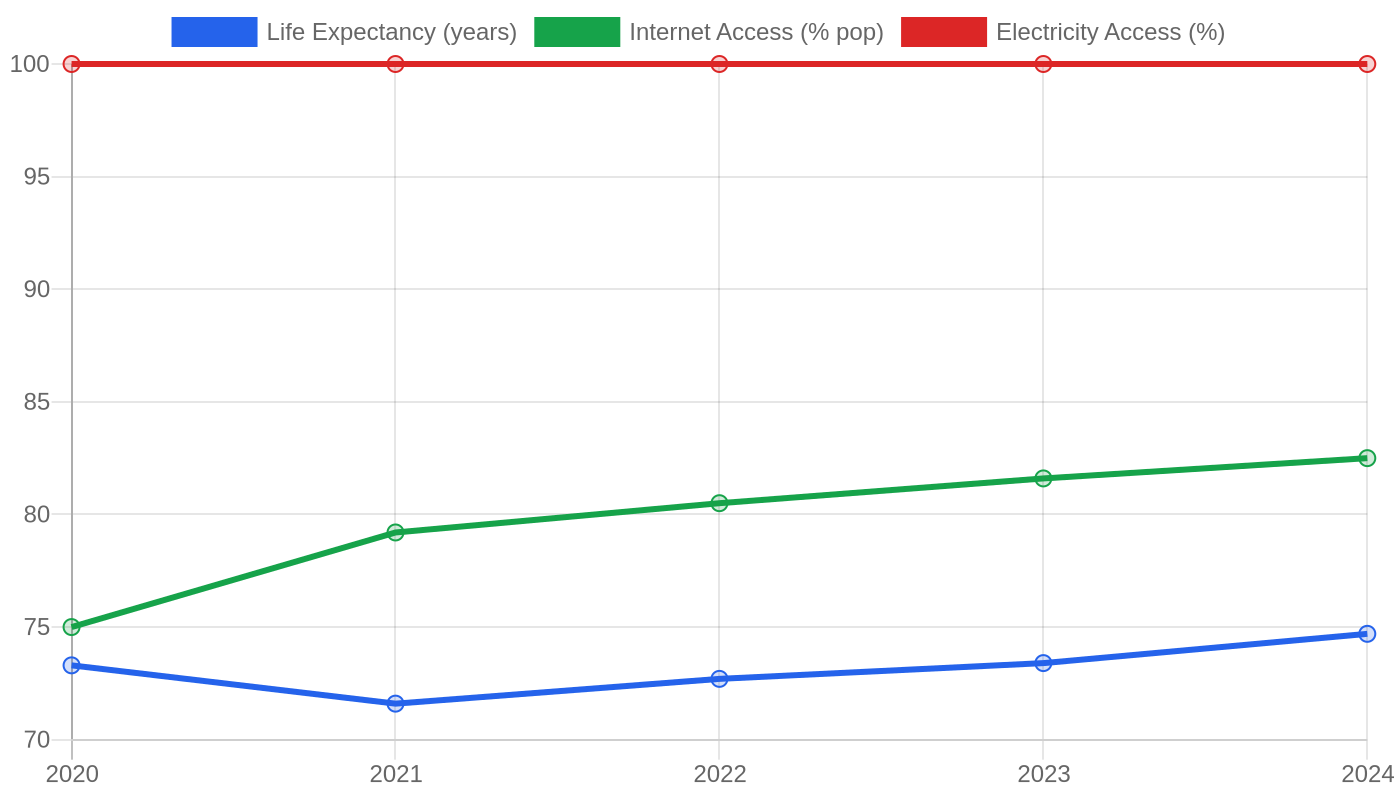
Economic Pulse Net | Sources: World Bank World Development Indicators, Government Sources | 2026
Key Takeaways
– Ukraine’s economy is showing surprising resilience with GDP growth of 1.82% in 2025, defying expectations for a nation still navigating the aftermath of full-scale war.
– Inflation remains a stubborn challenge at 12.73%, eroding household purchasing power and complicating the central bank’s policy calculus.
– Unemployment stands at 9.83%, reflecting a labour market still scarred by displacement and wartime disruption, though the figure masks significant regional variation.
– The country’s industrial backbone, including giants like Azovstal Iron and Steel Works and Antonov, is struggling to rebuild while consumer-facing firms like ATB-Market and Amstor adapt to shifting demand patterns.
– With a GNI per capita of just $5,510 and a population of roughly 39 million, Ukraine remains a lower-middle-income economy with vast reconstruction needs and long-term potential.
The Reconstruction Paradox — Growth Amidst the Rubble
When the World Bank reported that Ukraine’s economy expanded by 1.82% in 2025, the number might appear modest by global standards. But context is everything. This is an economy that has been fighting for survival — literally. The positive growth rate, recorded by the World Bank, signals that Ukraine’s economic engine is not only still running but is beginning to find traction despite the immense pressures of war.
Inflation, however, remains the dark companion to this recovery story. At 12.73% according to the World Bank’s CPI measure, price pressures are squeezing Ukrainian households hard. Food, energy, and housing costs have all risen sharply, and the central bank has been forced into a delicate balancing act — raising rates enough to contain inflation without choking off the fragile recovery. For ordinary Ukrainians, this means their hryvnia buys less each month, even as the economy technically grows.
The labour market tells a similarly complex tale. Unemployment at 9.83%, per World Bank data, is high by historical standards but lower than many analysts feared during the darkest days of the conflict. The figure reflects a workforce that has been dramatically reshaped: millions displaced internally or abroad, entire industries shuttered in occupied territories, and a massive mobilisation effort pulling workers from civilian sectors.
Yet the fact that nearly 90% of the labour force remains employed speaks to an economy that is adapting under fire.
Ukraine’s GDP per capita, measured at $18,904.98 on a purchasing power parity basis by the World Bank, places it in the company of middle-income nations. But the GNI per capita figure of $5,510 tells a different story — one of a country where average incomes remain painfully low by European standards. The gap between these two numbers reflects both the scale of wartime destruction and the enormous potential that reconstruction could unlock.
The Cost of Living — Survival Wages in a War Economy
For the average Ukrainian, the cost of living has become a daily battle. With inflation running at 12.73%, the price of basic necessities — bread, milk, cooking oil, utilities — has climbed relentlessly. Housing costs, in particular, have become a flashpoint. In cities like Kyiv, Lviv, and Dnipro, rents have surged as internally displaced people flood into safer western and central regions, competing for limited housing stock.
The rent-versus-buy calculation has shifted dramatically. With mortgage rates elevated due to the central bank’s inflation-fighting measures and property values uncertain in a war zone, renting has become the default option for most urban Ukrainians. However, rental supply is tight, and landlords increasingly demand payment in foreign currency or upfront for extended periods, adding to the financial strain on households.
Daily expenses across Ukraine now consume a far larger share of average incomes than before the war. The GNI per capita of $5,510 — roughly $459 per month — means that even a modest rise in food or energy prices can push families toward hardship. Compared to regional neighbours in Eastern Europe, Ukrainian living costs are lower in absolute terms, but the gap in incomes is even wider, making the relative burden heavier. For the millions of pensioners and displaced persons, the situation is particularly acute.
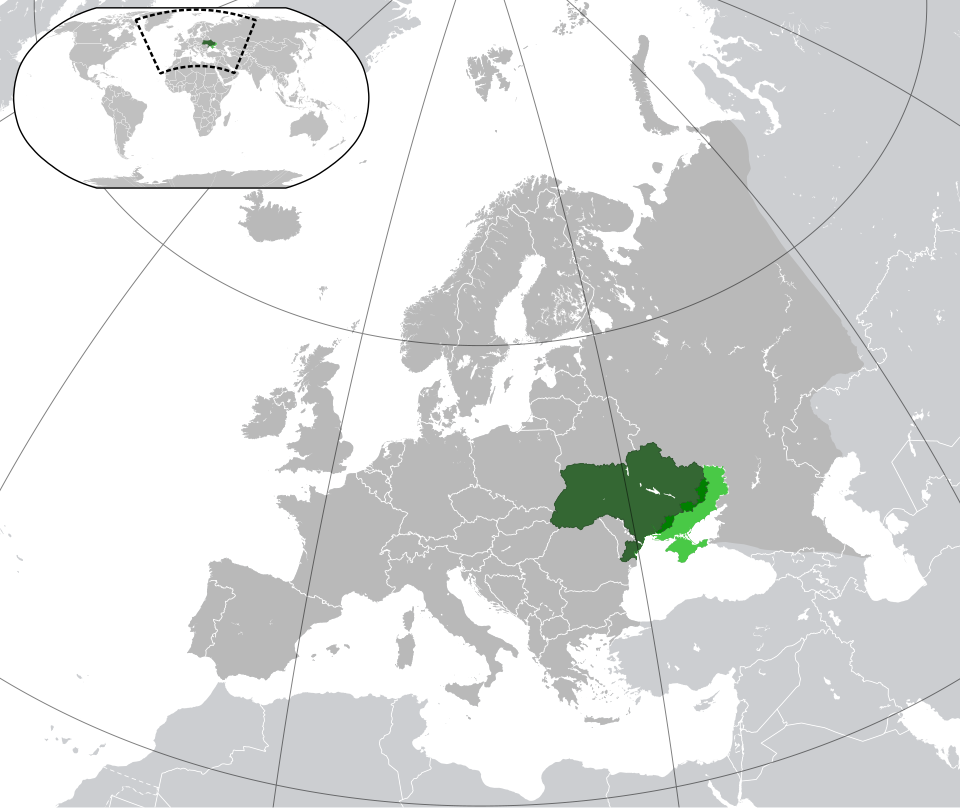
Business and Investment — Giants in the Shadow of War
Ukraine’s corporate landscape is a study in contrasts. On one side stand the industrial titans: Azovstal Iron and Steel Works, once the pride of Mariupol, now largely destroyed but symbolically vital; Antonov, the aerospace manufacturer whose cargo planes have become icons of Ukrainian ingenuity; and the Bogdan group, a sprawling industrial conglomerate. These companies, listed among Ukraine’s top firms, represent the country’s heavy industrial heritage — steel, machinery, aviation.
On the other side are the consumer-facing survivors: ATB-Market, the supermarket chain that has kept shelves stocked across much of the country; Amstor, another retail giant; and the financial sector players like APEKS-BANK, ASKA Insurance Company, and BG Capital. These firms have had to reinvent their operations overnight, shifting supply chains, managing cash flow amid currency volatility, and serving a customer base that is both traumatised and dispersed.
For investors, the question is one of timing and risk tolerance. Ukraine offers extraordinary long-term opportunities in reconstruction — steel for rebuilding, energy infrastructure, agribusiness, and IT services. The country’s tech sector, while not captured in the top companies list, has been a wartime success story. But the immediate business environment remains fraught with logistical challenges, security risks, and regulatory uncertainty.
The semi-presidential political system provides a degree of institutional stability, but the war’s trajectory remains the dominant variable for any investment decision.
Safety, Politics, and the Quality of Life Under Siege
Ukraine’s political landscape, as defined by the World Bank data, is a republic operating under a semi-presidential system with separate legislative, executive, and judicial branches. This structure has proven remarkably resilient during wartime, with President Volodymyr Zelenskyy’s government maintaining democratic continuity even under martial law. Parliament continues to function, courts operate, and local governance persists — a fact that distinguishes Ukraine from many conflict-affected states.
The quality of life for Ukrainians is, by any measure, under severe strain. While specific crime and safety indices are not available in the data, the lived reality is one of daily risk from missile strikes, power outages, and the constant psychological toll of war. Yet paradoxically, many Ukrainians report a heightened sense of national purpose and community solidarity. The social fabric, while tested, has not broken.
Safety is not uniform. Western regions like Lviv and Ivano-Frankivsk are relatively calm, while eastern and southern areas near the front lines face constant danger. This internal divide shapes every aspect of life — where people live, work, send their children to school, and plan for the future. For the 39 million Ukrainians recorded by the World Bank, the concept of “normal life” has been redefined entirely.
What’s Happening Now — The War Economy in Real Time
As of early 2026, Ukraine’s economy is operating in what might be called “wartime normalisation.” The 1.82% GDP growth reported by the World Bank for 2025 suggests that the initial shock of the full-scale invasion has passed, and a grinding, adaptive recovery is underway. But the 12.73% inflation figure is a flashing warning light — the central bank cannot ease monetary policy without risking a wage-price spiral, yet keeping rates high risks slowing the very growth the country needs.
The industrial sector faces a critical moment. Azovstal’s destruction in Mariupol was a devastating blow, but the broader steel and metals industry is gradually relocating production to safer areas. Antonov continues to operate, leveraging its global reputation for heavy-lift aircraft. The consumer sector, led by ATB-Market and Amstor, is adjusting to a population that has shrunk, dispersed, and become far more price-sensitive.
On the policy front, the government is grappling with the enormous challenge of reconstruction financing. With GNI per capita at just $5,510, Ukraine cannot fund its own rebuilding. International aid, frozen Russian assets, and private investment are all part of the calculus.
The political system, while stable, faces the constant pressure of wartime governance — balancing military needs with civilian welfare, maintaining democratic norms under emergency conditions, and planning for a post-war future that remains uncertain.
The Bottom Line
Ukraine is not a country for the faint-hearted investor or the casual observer. It is a nation fighting for its existence while simultaneously trying to build an economic future. The 1.82% growth rate is a testament to resilience, but the 12.73% inflation is a reminder of fragility. For those with long-term horizons, reconstruction capital, and a tolerance for geopolitical risk, Ukraine offers opportunities few other markets can match.
For the 39 million Ukrainians themselves, the bottom line is simpler: survival today, and the hope of a rebuilt tomorrow.
Sources & Methodology
This article is authored by Economic Pulse Net for informational and research purposes. Economic Pulse Net sources its data from multilateral institutions, national statistics bureaus, and proprietary databases. All data is believed to be current as of the date of publication.
Published: July 18, 2026 | Category: Research — Ukraine
Use these signals in your own platform
Economic Pulse publishes its live signal feed through a documented, read-only API. Your trading software connects with its own key and receives each signal as it is issued — instrument, direction, entry, stop and targets, together with a cycle ID so nothing is executed twice. The feed is independent of this website and cannot change it.
Signals are informational only and are not financial advice.