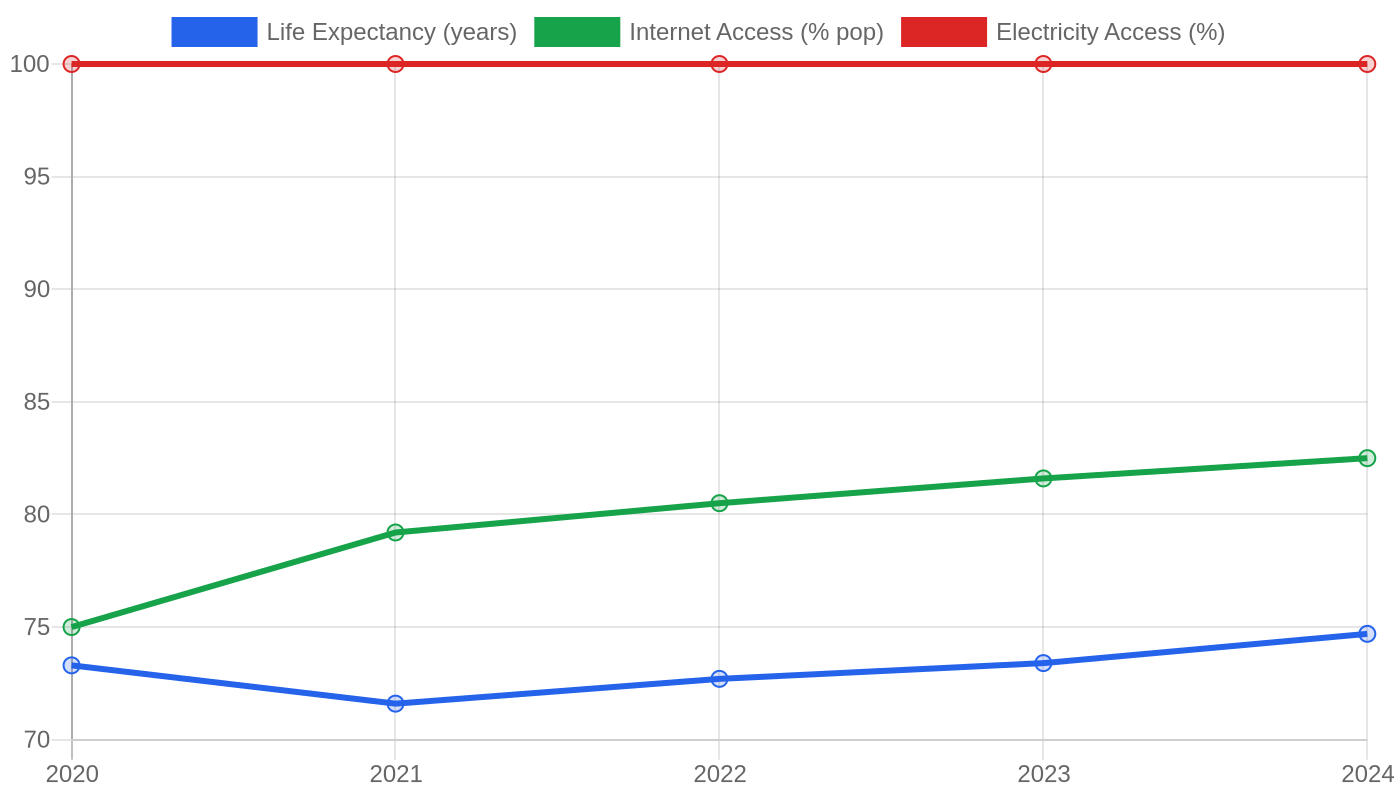
Economic Pulse Net | Sources: World Bank World Development Indicators, Government Sources | 2026
Key Takeaways
– Ukraine’s economy operates under extraordinary wartime conditions, with a GDP per capita (PPP) of $18,905 and a GNI per capita of $5,510, according to the World Bank — figures that mask deep regional disparities and the immense cost of conflict.
– Unemployment stands at 9.834% (World Bank data), a relatively contained figure given the scale of displacement and destruction, suggesting both resilience and the absorption of labor into military and essential services.
– The industrial backbone remains dominated by heavy industry and financial services, with companies like Azovstal Iron and Steel Works and Antonov representing Ukraine’s pre-war industrial might, much of it now damaged or relocated.
– A semi-presidential political system provides the framework for governance amid martial law, with legislative, executive, and judicial branches formally separate but operating under extraordinary wartime powers.
– The cost of living data is not available in the provided dataset, but the combination of war, inflation pressures, and population decline to 38.98 million (World Bank) paints a picture of a nation under profound economic and demographic stress.
The Anvil of War — GDP, Jobs, and the Price of Survival
The World Bank’s data on Ukraine tells a story of a nation whose economic metrics are both incomplete and profoundly revealing. GDP growth figures are listed as unavailable — a statistical silence that speaks volumes. In a country where entire cities have been reduced to rubble, where industrial plants have become battlegrounds, and where millions have fled, traditional economic measurement becomes almost secondary to the brute reality of survival.
Yet the numbers that do exist offer a window into Ukraine’s peculiar economic paradox.
With a GDP per capita adjusted for purchasing power parity of $18,904.98, according to the World Bank, Ukraine sits in a strange middle ground. This figure suggests a country that, before the war, had genuine middle-income aspirations — a European nation with skilled labor, a strong agricultural sector, and a tech industry that was the envy of the region.
The GNI per capita of $5,510 tells a different, harsher story: when you strip away purchasing power adjustments, the actual income available to the average Ukrainian is modest by European standards, reflecting a war economy where state spending, international aid, and military mobilization have fundamentally reshaped how money moves.
Unemployment at 9.834% (World Bank) is, on its face, a surprisingly moderate figure. In any normal economy, a war that displaces millions and destroys countless businesses would send joblessness soaring into the double digits. What explains the relative containment? The answer lies in the nature of total war. Millions of working-age Ukrainians have been absorbed into the military, removing them from the civilian labor force.
Others have fled abroad, counted in the populations of Poland, Germany, and other host nations rather than Ukraine’s unemployment rolls. And those who remain have often shifted from formal employment into the informal economy, the black market, or subsistence agriculture. The official unemployment figure, in other words, is a statistical artifact of a society that has fundamentally reorganized itself for survival.
The main industries data provided is sparse, but the list of top companies fills in crucial details. Ukraine’s economic identity has long been built on heavy industry — steel, iron, machinery, and aerospace. The presence of Azovstal Iron and Steel Works among the top companies is a painful reminder: that plant in Mariupol became a global symbol of Ukrainian resistance, its defenders holding out for months before the facility was destroyed.
Antonov, the aerospace giant famous for the world’s largest cargo plane (the AN-225 Mriya, also destroyed early in the war), represents Ukraine’s high-tech industrial heritage. These are not just companies; they are national institutions, and their fates are inextricably tied to the war’s outcome.
The Roof Over Their Heads — Housing in a Nation Under Siege
The cost of living data for Ukraine is not available in the provided World Bank dataset, which is itself a telling gap. In a country where entire residential districts in cities like Mariupol, Bakhmut, and Avdiivka have been leveled, where Kharkiv’s northern suburbs are ghost towns of shelled apartment blocks, and where Kyiv endures regular drone and missile attacks, the concept of a “housing market” has been fundamentally disrupted.
What does rent even mean when your building may not exist tomorrow?
What we can infer is that Ukraine’s housing situation has bifurcated into two stark realities. In western Ukraine — cities like Lviv, Ivano-Frankivsk, and Uzhhorod — the population has swelled dramatically with internally displaced persons (IDPs) fleeing the front lines. This has driven up rents and property prices in a region that was already the country’s most affordable. In the east and south, where fighting is heaviest, the housing market has essentially collapsed.
Properties that are still standing sell for pennies on the dollar, but there are few buyers willing to invest in a war zone. The national picture, compared to pre-war regional averages, would show extreme divergence: booming costs in the relative safety of the west, a frozen market in the center, and a destroyed market in the east.
Daily expenses for Ukrainians are shaped by wartime realities. Food prices have risen as supply chains are disrupted, farmland is mined, and ports are blockaded. Fuel costs fluctuate with the security situation — a missile strike on an energy facility can send prices soaring overnight. For the 38.98 million people the World Bank records as Ukraine’s population, the cost of living is not merely an economic statistic; it is a daily calculation of risk, scarcity, and survival.
The gap between those who can afford to flee abroad and those who must stay is perhaps the most profound economic divide in the country today.
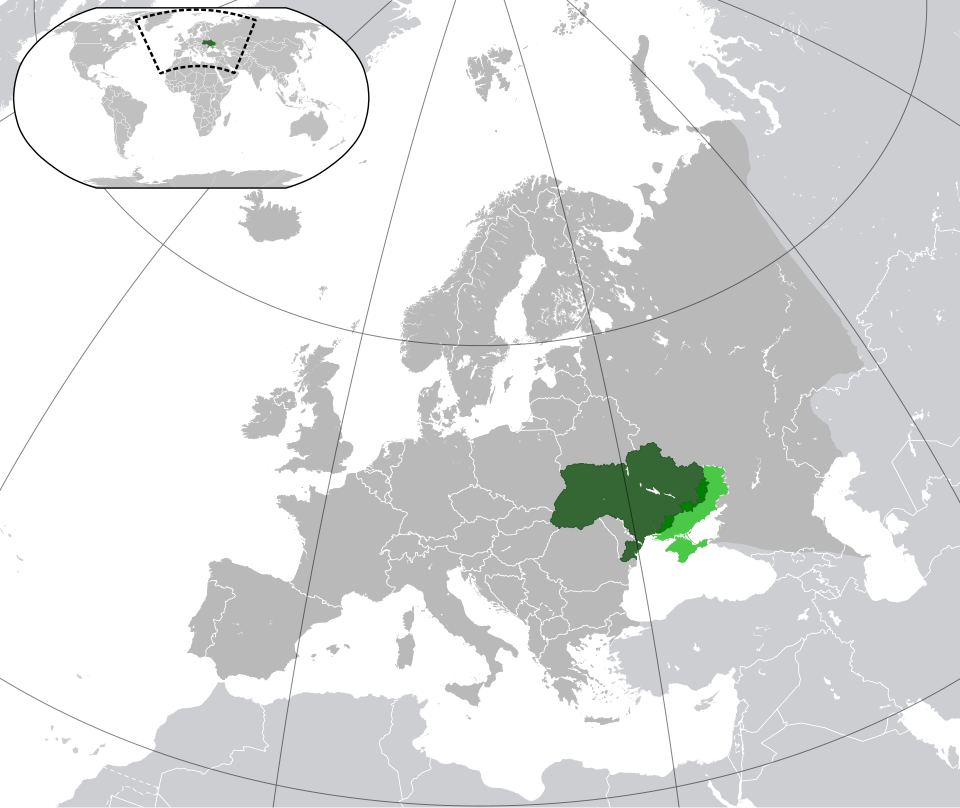
Titans of Industry — Investment and Business in Wartime Ukraine
The list of Ukraine’s top companies, as provided in the data, reads like a roll call of the nation’s economic DNA. Aeros and Antonov in industrials represent Ukraine’s aerospace and defense manufacturing heritage. Azovstal in basic materials embodies the steel and metallurgy sector that was the country’s industrial heartland. ATB-Market and Amstor in consumer services show that even in war, Ukrainians still need to buy groceries and household goods.
And the financial sector — APEKS-BANK, ASKA Insurance Company, BG Capital — demonstrates that Ukraine’s banking system, despite the war, continues to function, processing payments, distributing pensions, and, crucially, channeling international aid.
For investors watching Ukraine, the landscape is one of extraordinary risk and potential long-term reward. The business environment is shaped by martial law, currency controls, and the constant threat of infrastructure destruction. Yet there are sectors that are not just surviving but thriving in wartime. Defense technology has become a booming industry, with Ukrainian drone manufacturers, electronic warfare specialists, and military software developers attracting both domestic and international investment.
Agriculture, despite the blockade of Black Sea ports, has shown remarkable adaptability, finding new export routes via rail and road through Europe. And the IT sector, Ukraine’s pre-war tech success story, has proven resilient, with many developers continuing to work for international clients from bomb shelters and power-outage-ridden apartments.
The data does not provide foreign direct investment figures or ease-of-doing-business rankings, but the qualitative picture is clear: Ukraine is not a normal investment destination. It is a war economy where the state plays an outsized role, where security considerations override commercial ones, and where the ultimate return on investment depends on the outcome of a conflict that shows no signs of ending soon.
For the boldest investors — those willing to buy distressed assets, partner with the defense sector, or bet on a post-war reconstruction boom — the opportunities are enormous. For everyone else, the risks are simply too high.
Living Under the Shadow — Safety, Politics, and Daily Life
The crime and safety indices for Ukraine are listed as unavailable in the provided data, and this absence carries its own meaning. In a country at war, the traditional categories of crime — theft, assault, homicide — are subsumed into the larger violence of conflict. The primary threat to personal safety is not a mugger on a street corner but a missile strike, a drone attack, or an artillery barrage.
Ukraine’s cities have become places where air raid sirens are as routine as traffic noise, where the question “is it safe to go outside?” depends not on the crime rate but on whether the air defense systems are holding.
The political landscape, as described in the data, is that of a “republic under a semi-presidential system with separate legislative, executive, and judicial branches.” This formal description, drawn from the country’s constitution, remains technically accurate, but the reality is that Ukraine operates under martial law. Elections have been postponed. The president holds extraordinary powers.
The parliament continues to function, but its agenda is dominated by war legislation — mobilization bills, defense budgets, and international treaty ratifications. The judiciary, like every other institution, has been strained by the conflict, with courts in occupied territories shuttered and judges in government-controlled areas handling cases of collaboration, war crimes, and the endless legal fallout of war.
Quality of life in Ukraine is, for most citizens, defined by the war. The World Bank’s population figure of 38.98 million represents a decline of several million from pre-war levels, reflecting both refugees abroad and casualties. For those who remain, daily life is a grind of power outages, air raid alarms, and the constant awareness that the war could arrive at their doorstep at any moment.
Yet Ukrainians have shown a remarkable capacity for normalcy under fire — cafes remain open in Kyiv, children attend school in underground metro stations, and the country’s cultural life, from literature to music to art, has experienced a wartime renaissance. Happiness data is not available, but the resilience of the Ukrainian people is perhaps the most important economic indicator of all.
The War Economy in Motion — What’s Happening Now
The current moment in Ukraine is defined by the grinding reality of a war that has entered its third year. The economy is operating on a war footing, with the government prioritizing defense spending above all else. International aid — from the European Union, the International Monetary Fund, and bilateral partners — continues to flow, keeping the state solvent and allowing it to pay pensions, salaries, and social benefits. But there are signs of strain.
The mobilization of more troops to counter Russian offensives is removing additional workers from the civilian economy, creating labor shortages in agriculture, construction, and services.
Inflation remains a persistent threat. While the data does not provide a current CPI figure, the pressures are evident: disrupted energy infrastructure, damaged transport links, and the depreciation of the hryvnia all feed into higher prices for basic goods. The central bank has maintained relative stability through currency controls and interest rate policy, but the war creates constant upward pressure on prices.
Food inflation is particularly acute in areas near the front lines, where supply is uncertain and demand is driven by displaced populations.
On the business front, Ukraine’s private sector continues to adapt. Companies like ATB-Market have expanded their logistics networks to serve both military and civilian customers. The tech sector has seen a surge in defense-related contracts, with Ukrainian startups developing everything from reconnaissance drones to battlefield management software.
And the agricultural sector, despite the loss of access to deep-water ports, has found alternative export routes through the Danube River and overland to European markets. The reconstruction of destroyed infrastructure — housing, energy, transport — has already begun in liberated territories, creating a nascent construction boom that is drawing in both domestic firms and international contractors.
The political dynamics are evolving as well. Ukraine’s path toward European Union membership, once a distant aspiration, has accelerated dramatically, with candidate status granted and accession negotiations underway. This process is reshaping the country’s economic legislation, regulatory environment, and institutional standards, even as the war continues.
For Ukrainians, the EU perspective is not just a diplomatic goal; it is an economic lifeline, a promise that their country will one day be part of Europe’s prosperous core rather than a battle-scarred buffer zone.
The Bottom Line
Ukraine is a country where the normal rules of economics have been suspended by the brute force of war. The World Bank data tells a story of a middle-income nation with industrial heritage and human capital, but the reality on the ground is one of survival, adaptation, and extraordinary resilience.
For investors, policymakers, and analysts, Ukraine represents both a humanitarian tragedy and a bet on the future — a nation that, if it survives and rebuilds, could emerge as one of Europe’s most dynamic economies. The risks are immense, but so is the potential reward. Watch Ukraine not for what it is today, but for what it could become tomorrow.
Sources & Methodology
This article is authored by Economic Pulse Net for informational and research purposes. Economic Pulse Net sources its data from multilateral institutions, national statistics bureaus, and proprietary databases. All data is believed to be current as of the date of publication.
Published: July 18, 2026 | Category: Research — Ukraine
Use these signals in your own platform
Economic Pulse publishes its live signal feed through a documented, read-only API. Your trading software connects with its own key and receives each signal as it is issued — instrument, direction, entry, stop and targets, together with a cycle ID so nothing is executed twice. The feed is independent of this website and cannot change it.
Signals are informational only and are not financial advice.