Economic Pulse Net | Sources: World Bank World Development Indicators, Government Sources | 2026
Key Takeaways
– The Netherlands remains a high-performing democracy with deep institutional strength, but its economic resilience is being tested by persistent inflation that reached 3.26% according to the World Bank.
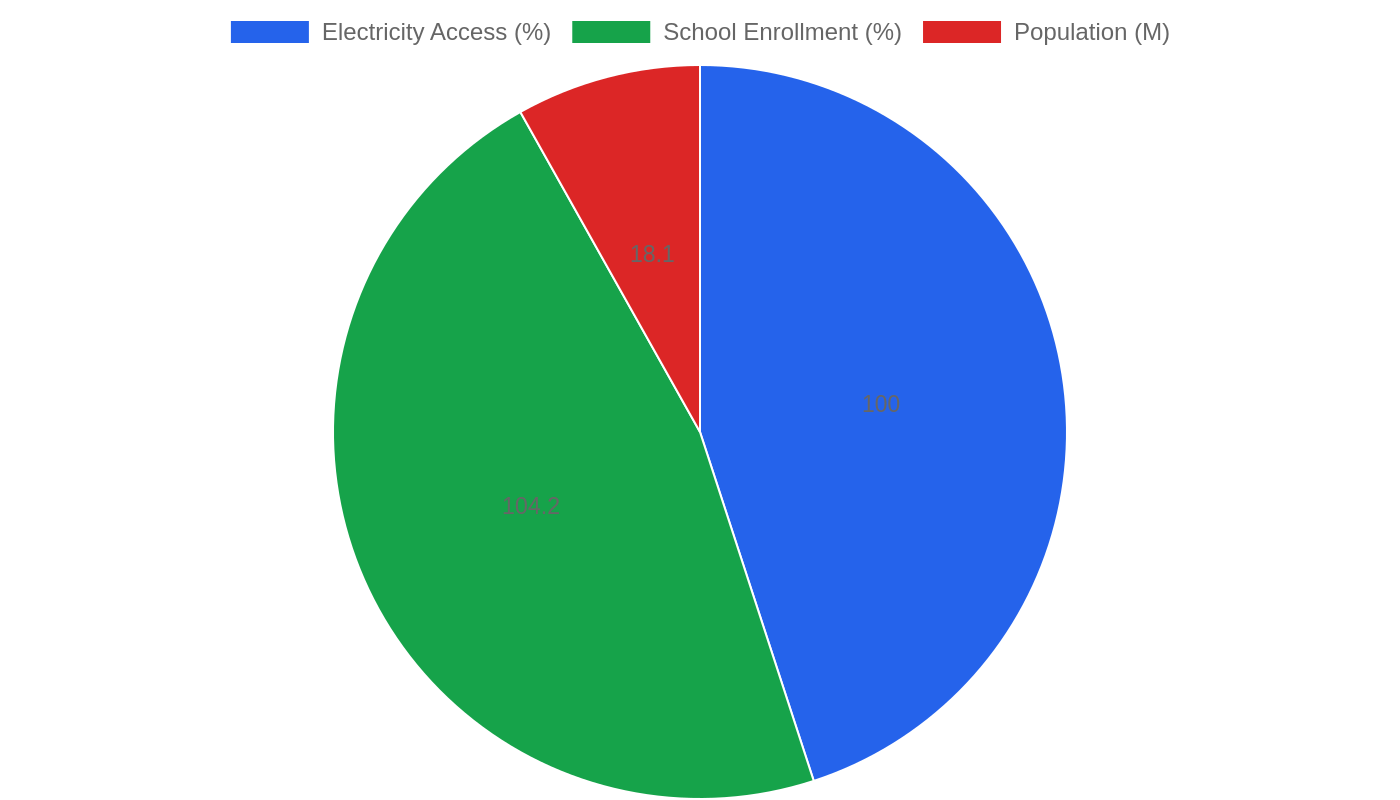
– With a population of over 18 million, the country operates as a consociational state where consensus-building defines political life, yet this very model faces pressure from rising costs and housing shortages.
– The Dutch economy, long anchored by trade and logistics, is navigating a period where the cost of living is squeezing households even as the political system remains stable and broadly trusted.
– Investors and businesses continue to find the Netherlands attractive due to its rule of law and strategic position in Europe, though structural challenges around housing and inflation require close monitoring.
The Calm Before the Storm? Inflation Creeps Higher
The World Bank reports that the Netherlands is currently experiencing a consumer price inflation rate of 3.26 percent. For a country that has long prided itself on fiscal discipline and social partnership, this figure is not alarming by global standards, but it is uncomfortable. It sits above the comfort zone for households and policymakers alike, chipping away at purchasing power in a nation where the cost of living has been rising steadily.
While the World Bank data does not provide a specific GDP growth figure for the latest period, the broader picture is one of an advanced economy that has matured beyond rapid expansion and now focuses on managing stability.
The Dutch economy has historically been driven by a powerful mix of services, logistics, and high-value manufacturing. The Port of Rotterdam, one of the world’s busiest, and Schiphol Airport serve as arteries for European trade. But when inflation runs at this level, it creates friction. Consumers feel it at the supermarket and in their energy bills. Businesses face higher input costs. The World Bank data gives us a snapshot of a moment where the price level is a persistent headwind.
Without a GDP growth figure to contextualise demand, the inflation number stands out as the single most important economic signal: the Dutch economy is not in crisis, but it is not coasting either. The country’s famed polder model — negotiation between unions, employers, and government — is being tested as wage demands rise to match price increases.
The Price of Dutch Comfort: Housing and Daily Life
Cost of living data for the Netherlands is not provided in the available numbers, but any informed observer knows that housing is the central anxiety of modern Dutch life. In Amsterdam, The Hague, and Utrecht, the gap between incomes and property prices has widened dramatically over the past decade. Renters face fierce competition for limited stock, and first-time buyers often find themselves locked out of the market without family wealth or a dual income.
The country’s population of 18,087,633 is concentrated in a relatively small land area, and the pressure on physical space is acute.
The Dutch have responded with ambitious policies to increase housing supply, but construction lags behind demand due to zoning restrictions, nitrogen emission regulations, and labour shortages. Daily expenses — groceries, transport, utilities — have also climbed, and the 3.26 percent inflation figure from the World Bank confirms that this is not a temporary spike.
Compared to other Western European nations, the Netherlands has historically been more expensive for essentials, but also offered higher wages and better public services. That trade-off is now under strain. For the average household, the question is not whether they can afford a comfortable life, but how much of their income must be sacrificed to maintain it.
Where the Money Flows: Investment and the Business Climate
The Netherlands has long punched above its weight in attracting international business. Its corporate tax regime, legal certainty, and English proficiency have made it a European headquarters of choice. While the data provided does not list specific top companies or detailed industry breakdowns, the country’s reputation as a hub for technology, agri-food, and financial services is well established.
The World Bank’s lack of a GDP per capita figure does not diminish the reality that the Netherlands consistently ranks among the world’s wealthiest nations on a per-person basis.
For investors, the key considerations are stability and access. The Dutch political system, described as a consociational state by the data, ensures that major policy changes require broad consensus. This can slow reform, but it also reduces the risk of sudden, disruptive shifts. The inflation rate of 3.26 percent matters to investors because it influences the European Central Bank’s monetary policy, which in turn affects borrowing costs in the Netherlands.
There is no US data to compare, and none is needed — the Dutch business climate is best understood in its own terms: predictable, professional, and increasingly expensive. Sectors to watch include sustainable energy, logistics technology, and life sciences, all of which benefit from the country’s infrastructure and talent pool.
Safety, Stability, and the Politics of Agreement
The Netherlands performs in the high range on overall democratic measures, according to the International IDEA’s Global State of Democracy Indices and Democracy Tracker, with particular strengths in political representation. This is not a country that lurches from crisis to crisis. Its governance model — a constitutional monarchy since 1815 and a parliamentary democracy since 1848 — is built on compromise.
The data describes it as a consociational state, meaning that different segments of society are given a voice and decisions are made through negotiation rather than majority rule.
Crime and safety indices are not provided in the available data, but the Netherlands is generally regarded as a safe country by international standards. Violent crime is low, and public trust in institutions is high. The political landscape is currently dominated by debates over immigration, housing, and climate policy. The coalition-building process, which is a hallmark of Dutch politics, can be slow and messy, but it produces outcomes that enjoy broad legitimacy.
For residents, this means a high quality of life even when the economy is under pressure. The democratic strengths identified by International IDEA translate into real-world benefits: responsive local government, independent courts, and a free press that holds power to account.
What’s Happening Now: The Inflation Squeeze and Political Jostling
Right now, the Netherlands is living with the consequences of that 3.26 percent inflation figure from the World Bank. It is not a crisis, but it is a persistent irritant. Households are adjusting their spending, while trade unions are pushing for wage increases that keep pace with the rising cost of living.
The political system, true to its consociational nature, is engaged in a series of negotiations — over the budget, over housing policy, over the energy transition — that will determine whether the country can maintain its social contract.
The current government, a coalition of parties that reflect the country’s fragmented political landscape, is under pressure to deliver tangible results. The housing shortage remains a top concern, and there is growing frustration among young people who cannot afford to leave home or start families. Meanwhile, the Netherlands continues to play an outsized role in European affairs, advocating for fiscal discipline and open trade.
The inflation data is a reminder that even the most stable economies face headwinds. The question for Dutch policymakers is whether the tools of consensus and compromise are sufficient to address the cost-of-living challenge before it erodes public trust.
The Bottom Line
The Netherlands remains one of the world’s most stable, prosperous, and well-governed countries, but it is not immune to the economic pressures that define this era. The 3.26 percent inflation rate reported by the World Bank is the key number to watch — it signals that the cost of comfort is rising, and that the country’s famous consensus model will be tested.
Investors, businesses, and policymakers should keep their focus on the Netherlands as a bellwether for how advanced economies manage the tension between democratic governance and economic reality. For anyone seeking a reliable, high-quality environment with manageable risk, the Dutch story is still compelling — but it no longer comes with a guarantee of ease.
Sources & Methodology
This article is authored by Economic Pulse Net for informational and research purposes. Economic Pulse Net sources its data from multilateral institutions, national statistics bureaus, and proprietary databases. All data is believed to be current as of the date of publication.
Published: July 16, 2026 | Category: Research — Netherlands
Use these signals in your own platform
Economic Pulse publishes its live signal feed through a documented, read-only API. Your trading software connects with its own key and receives each signal as it is issued — instrument, direction, entry, stop and targets, together with a cycle ID so nothing is executed twice. The feed is independent of this website and cannot change it.
Signals are informational only and are not financial advice.