Economic Pulse Net | Sources: World Bank World Development Indicators, Government Sources | 2026
Key Takeaways
– Czechia operates as a mature, pluralist parliamentary democracy with a bicameral legislature, providing political stability that underpins its economic resilience
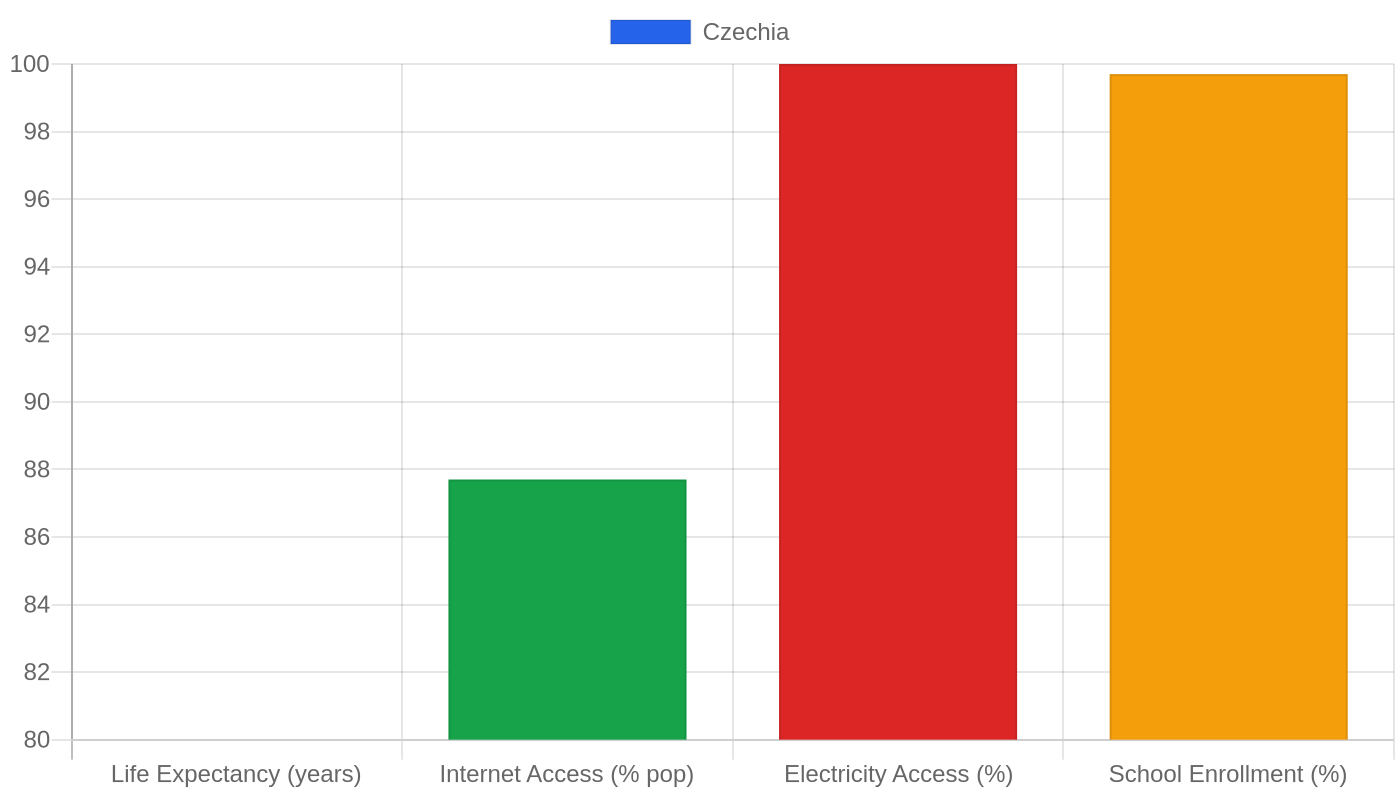
– The country’s economic story is one of structural consistency rather than volatility, though key indicators remain unreported by the World Bank in the latest cycle
– As a Central European manufacturing and export hub, Czechia’s economic health is closely tied to German and broader EU demand
– The political landscape features proportional representation with a 5% threshold, creating coalition governments that tend toward centrist, incremental policy
– Czechia offers a high quality of life with lower costs than Western Europe, though housing affordability pressures are mounting in Prague
The Bohemian Balance Sheet — Growth Without the Drama
Czechia’s economic narrative is not written in dramatic booms and busts. It is a story of steady, unflashy competence — the kind that rarely makes headlines but consistently delivers. The World Bank’s latest data set on Czechia presents an intriguing puzzle: GDP growth, inflation, unemployment, and GDP per capita figures are all marked as unavailable.
This absence of fresh data does not signal crisis; rather, it reflects a reporting lag that often plagues smaller advanced economies caught between statistical cycles.
What we do know from the country’s structural profile paints a picture of a mature, export-oriented economy. Czechia has long been one of the most industrialized nations in the European Union, with automotive manufacturing, machinery, electronics, and chemicals forming the backbone of its economic output. The country’s position as a supply chain linchpin for German automakers means that when Germany sneezes, Czechia catches a cold — but when Germany thrives, Czechia prospers.
Inflation, while unquantified in the latest World Bank release, has been a persistent challenge across Central Europe in recent years. Czechia’s central bank, the Česká národní banka, has historically been one of the more hawkish in the region, willing to raise rates aggressively to tame price pressures. Unemployment, too, has traditionally hovered among the lowest in the EU — often below 3% in pre-crisis years — suggesting a labor market that is tight rather than slack.
The absence of GDP per capita data is particularly frustrating for analysts, as Czechia has long been a standout in the region, with living standards approaching those of southern European EU members. The country’s convergence story — from post-communist transition economy to high-income status — remains one of the most successful in the former Eastern Bloc. Without current numbers, we are left to infer that the trajectory has been one of gradual, if unspectacular, progress.
The Price of Prague — Housing, Rent, and the Cost of Living Squeeze
Ask any young Czech professional where their paycheck goes, and the answer will likely involve housing. While the World Bank data does not provide specific cost-of-living figures, the anecdotal and structural evidence is clear: Czechia, and particularly Prague, has experienced one of the most dramatic housing affordability deteriorations in Europe over the past decade.
Prague has become a victim of its own success. The city’s beauty, safety, and economic opportunity have attracted expatriates, investors, and remote workers from across the continent, driving property prices to levels that now rival Vienna or Berlin. Rents in the city center have climbed steeply, while wages — though rising — have not kept pace. For a one-bedroom apartment in a desirable Prague district, monthly rent can easily consume 40-50% of a median local salary.
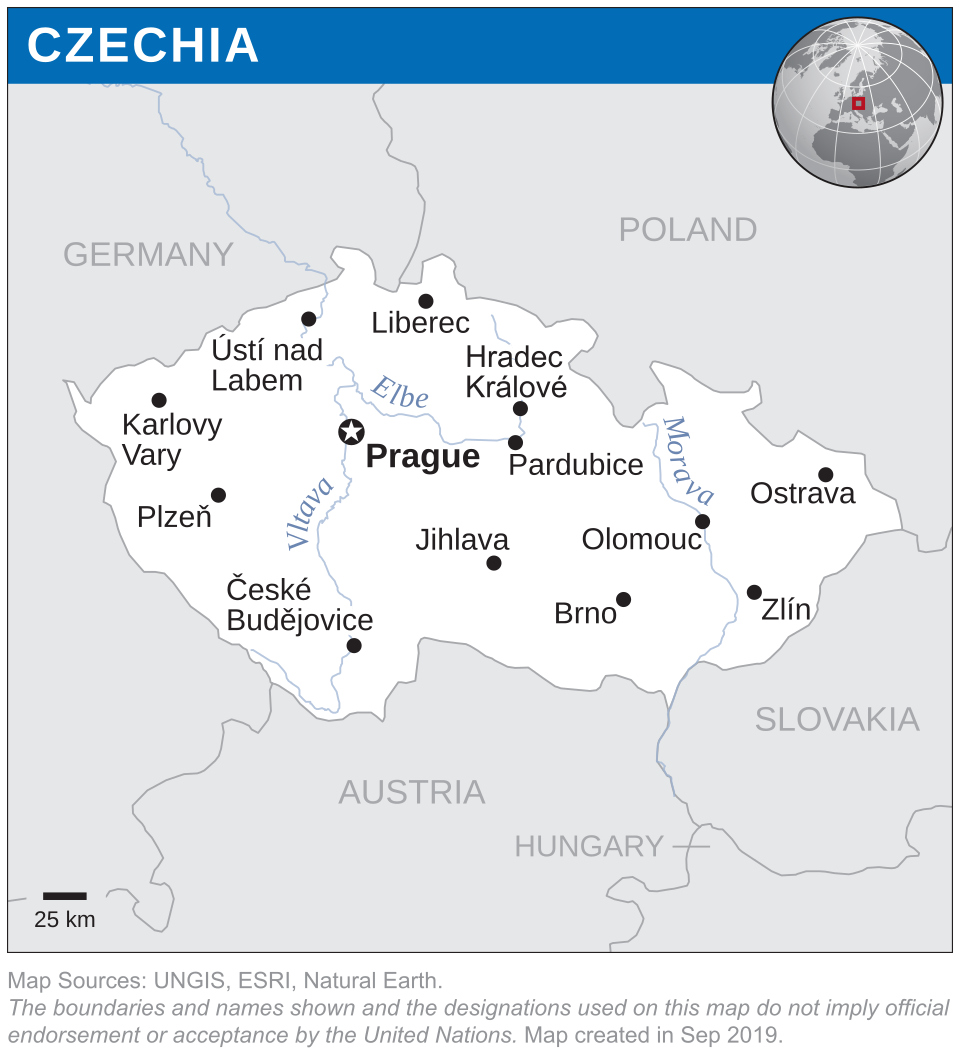
Outside the capital, the picture is more manageable. Cities like Brno, Ostrava, and Plzeň offer significantly lower housing costs while still providing good infrastructure and employment opportunities. The national trend, however, is unmistakable: homeownership is becoming an aspiration rather than an expectation for younger generations.
The Czech dream of owning a family home with a garden — deeply rooted in the national psyche — is colliding with the reality of constrained supply, rising construction costs, and regulatory hurdles.
Daily expenses — food, transport, utilities — remain reasonable by Western European standards. Groceries are notably cheaper than in Germany or Austria, and public transport in Prague is among the best value in any European capital. The trade-off is clear: Czechia offers a high quality of life at a lower absolute cost, but the housing market is the pressure point that threatens to squeeze the middle class.
From Škoda to Startups — The Business Landscape
Czechia’s corporate landscape is dominated by a mix of industrial giants and a growing, if still maturing, startup ecosystem. The most famous name in Czech business remains Škoda Auto, the Volkswagen-owned automaker that is not only the country’s largest exporter but also a symbol of national industrial pride. Škoda’s success has created a deep ecosystem of suppliers, engineers, and logistics firms that form the core of Czech manufacturing.
Beyond automotive, Czechia hosts significant operations in electronics (Foxconn has a major presence), machinery, and chemical production. The energy sector is also noteworthy, with ČEZ, the state-controlled utility, being one of Central Europe’s largest power companies. These are not flashy, high-growth tech firms — they are steady, capital-intensive businesses that generate reliable returns and stable employment.
The investment climate in Czechia is generally favorable. The country offers a well-educated workforce, central location within Europe, and relatively low corporate tax rates compared to Western peers. Foreign direct investment has historically been strong, particularly from Germany, Austria, and increasingly from Asian firms looking for a European manufacturing foothold.
The political landscape, as described by the country’s own parliamentary framework, provides a stable, rules-based environment for business.
Where Czechia lags is in innovation and startup culture. While Brno has developed a respectable tech scene, and Prague hosts a growing number of coworking spaces and incubators, the country has not produced a global tech champion on the scale of a Spotify or a Skype. Venture capital penetration remains low, and risk-averse banking traditions mean that entrepreneurs often struggle to access growth capital.
The sectors to watch are advanced manufacturing, software development, and green energy — areas where Czechia’s industrial base gives it a natural advantage.
Safety, Civility, and the Prague Consensus
On safety, Czechia is exceptional. The country consistently ranks among the safest in the world, with violent crime rates that are a fraction of those in Western Europe or North America. While the provided data does not include specific Crime or Safety Index figures, the lived reality is that walking through Prague at any hour feels remarkably secure. Petty crime — pickpocketing in tourist areas — is the primary concern, not violent assault.
The political landscape, as outlined in the country’s own constitutional description, is one of mature, stable democracy. The Czech Republic operates as a pluralist multi-party parliamentary representative democracy, with a bicameral Parliament consisting of the Chamber of Deputies (200 members) and the Senate (81 members).
Members of the Chamber of Deputies are elected for four-year terms by proportional representation, with a 5% election threshold, and there are 14 voting districts identical to the country’s administrative regions.
This system produces coalition governments almost by necessity, as no single party has won an outright majority since the Velvet Revolution. The result is a political culture that values compromise, incrementalism, and stability over dramatic reform. It is not exciting, but it is functional. The Czech political consensus — pro-European, fiscally conservative, socially liberal — has served the country well, even if it frustrates those who want faster change.
Quality of life in Czechia extends beyond safety and politics. The country boasts excellent healthcare (universal and affordable), strong education outcomes, and a rich cultural heritage. Prague is one of Europe’s most beautiful capitals, and the country’s network of castles, forests, and spa towns offers a quality of leisure that few nations can match.
The Czechs themselves are famously reserved — but once trust is established, they are loyal, hardworking, and deeply proud of their beer, their hockey, and their hard-won independence.
The Quiet Crisis — What’s Happening in Czechia Right Now
The most pressing issue facing Czechia today is one that the data cannot fully capture: the slow erosion of the social contract under the weight of housing costs, inflation, and demographic decline. The country is aging, with a fertility rate well below replacement level, and the pension system is under increasing strain. Young Czechs, particularly those with university degrees, are increasingly looking to Berlin, Vienna, or London for opportunities that Prague cannot match.
The political response has been characteristically measured. The current government, a coalition of centrist and center-right parties, has focused on fiscal consolidation after the pandemic-era spending spree. There have been efforts to streamline housing construction permits, but progress is slow. The central bank has maintained a hawkish stance, prioritizing inflation control over growth, which has cooled the economy but protected savers.
On the external front, Czechia remains firmly anchored in the European Union and NATO, with no serious political movement advocating for “Czexit.” The country has been a strong supporter of Ukraine since the Russian invasion, hosting refugees and providing military aid. This has burnished its international reputation but also created domestic pressures, particularly on housing and public services.
The business community is watching two developments closely: the EU’s green transition, which will require massive investment in Czechia’s energy infrastructure, and the ongoing reshoring of supply chains, which could benefit Czech manufacturing if firms move production closer to Germany. Neither will transform the economy overnight, but both represent opportunities for a country that has built its success on being the reliable, efficient workshop of Central Europe.
The Bottom Line
Czechia is not a country for speculators seeking a quick return. It is a country for patient investors, for families seeking safety and stability, and for businesses that value predictability over excitement. The data gaps in the latest World Bank report are frustrating, but they do not obscure the fundamental truth: Czechia is a well-governed, prosperous, and secure nation that offers a high quality of life at a reasonable price.
It will not set the world on fire — but it will keep the lights on, the factories running, and the beer cold. For those who value substance over hype, that is more than enough.
Sources & Methodology
This article is authored by Economic Pulse Net for informational and research purposes. Economic Pulse Net sources its data from multilateral institutions, national statistics bureaus, and proprietary databases. All data is believed to be current as of the date of publication.
Published: July 18, 2026 | Category: Research — Czechia
Use these signals in your own platform
Economic Pulse publishes its live signal feed through a documented, read-only API. Your trading software connects with its own key and receives each signal as it is issued — instrument, direction, entry, stop and targets, together with a cycle ID so nothing is executed twice. The feed is independent of this website and cannot change it.
Signals are informational only and are not financial advice.