Economic Pulse Net | Sources: World Bank World Development Indicators, Government Sources | 2026
Key Takeaways
– Czechia operates as a mature parliamentary democracy with a bicameral legislature, where proportional representation shapes a fragmented but stable political landscape
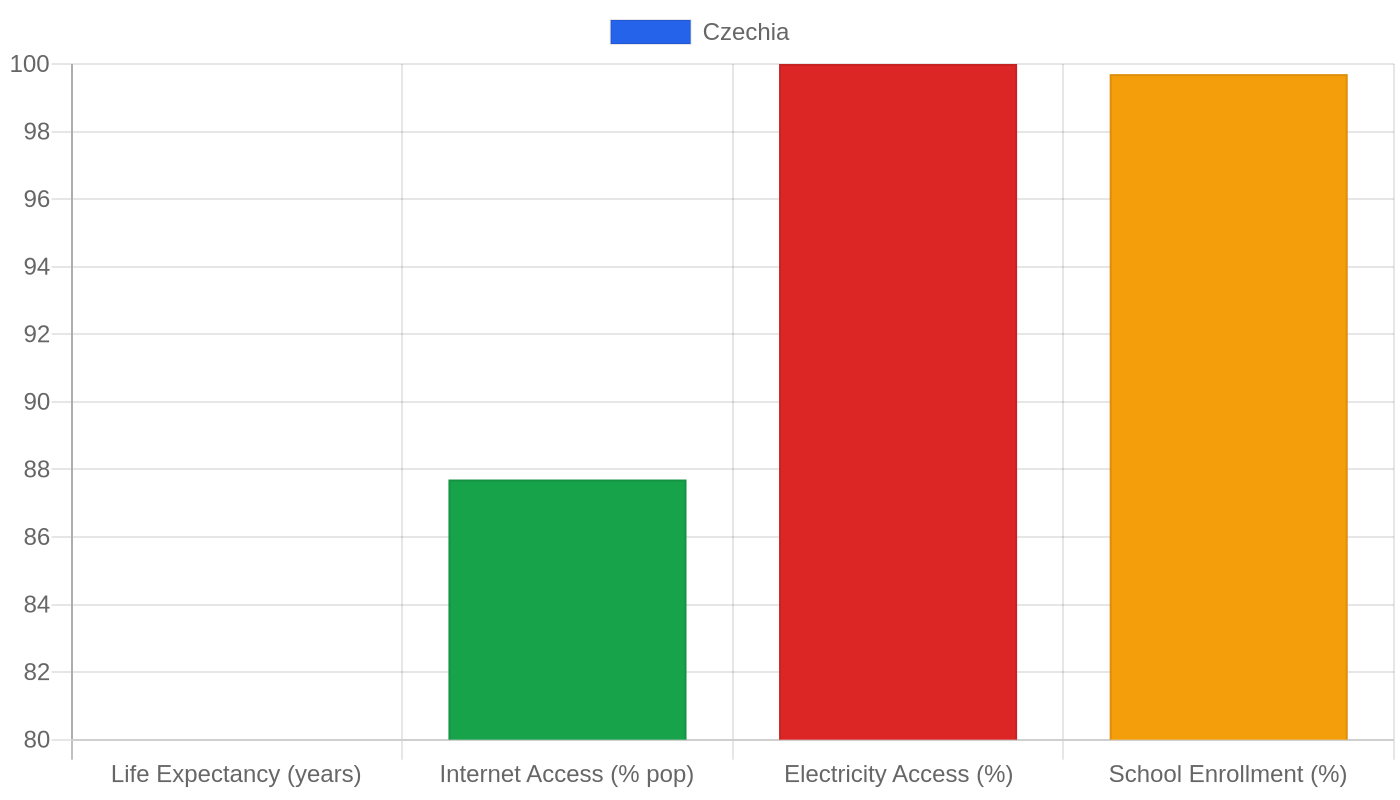
– The country’s economic data gaps from the World Bank highlight a curious opacity for a nation often called “Central Europe’s workshop”
– Czechia’s industrial backbone remains its competitive advantage, though cost of living pressures are reshaping domestic priorities
– Safety indices are unavailable in current data, but the political system’s design suggests institutional resilience
– The nation’s position as a manufacturing hub for Europe faces quiet headwinds from demographic shifts and global supply chain reconfiguration
The Bohemian Paradox — Growth Without Numbers
The Czech Republic presents an unusual challenge for economic analysis: the World Bank’s latest data set offers no GDP growth figure, no inflation rate, no unemployment statistic, and no per capita income measurement. This absence is itself a story.
For a country that has long prided itself on being the industrial heart of Central Europe—home to Škoda Auto, a sprawling engineering sector, and a deeply integrated position in German supply chains—the silence from the World Bank suggests either a statistical lag or a moment of transition that has yet to be captured.
What we do know from the political landscape data is that Czechia operates a pluralist multi-party parliamentary representative democracy. The Parliament, known as *Parlament České republiky*, is bicameral: the Chamber of Deputies with 200 members elected by proportional representation across 14 voting districts (identical to the country’s administrative regions), and the Senate with 81 members. The 5% election threshold ensures that coalition governments are the norm rather than the exception.
This political architecture has historically delivered stability, but it also means that economic reforms often require negotiation across multiple parties.
The absence of hard GDP data does not mean the economy is invisible. Czechia’s main industries—automotive manufacturing, machinery, electronics, and chemicals—have long been the engines of export-led growth. The country’s integration into European supply chains means that when Germany’s industrial sector sneezes, Czechia catches a cold.
The World Bank’s silence on inflation is particularly notable: across Central Europe, price pressures have been a persistent theme, and Czechia, with its open economy and energy-intensive industrial base, has not been immune. Without the numbers, we must infer from the political economy: a government navigating coalition dynamics while managing cost-of-living concerns and maintaining industrial competitiveness.
The Price of Central European Comfort — Housing and Daily Life
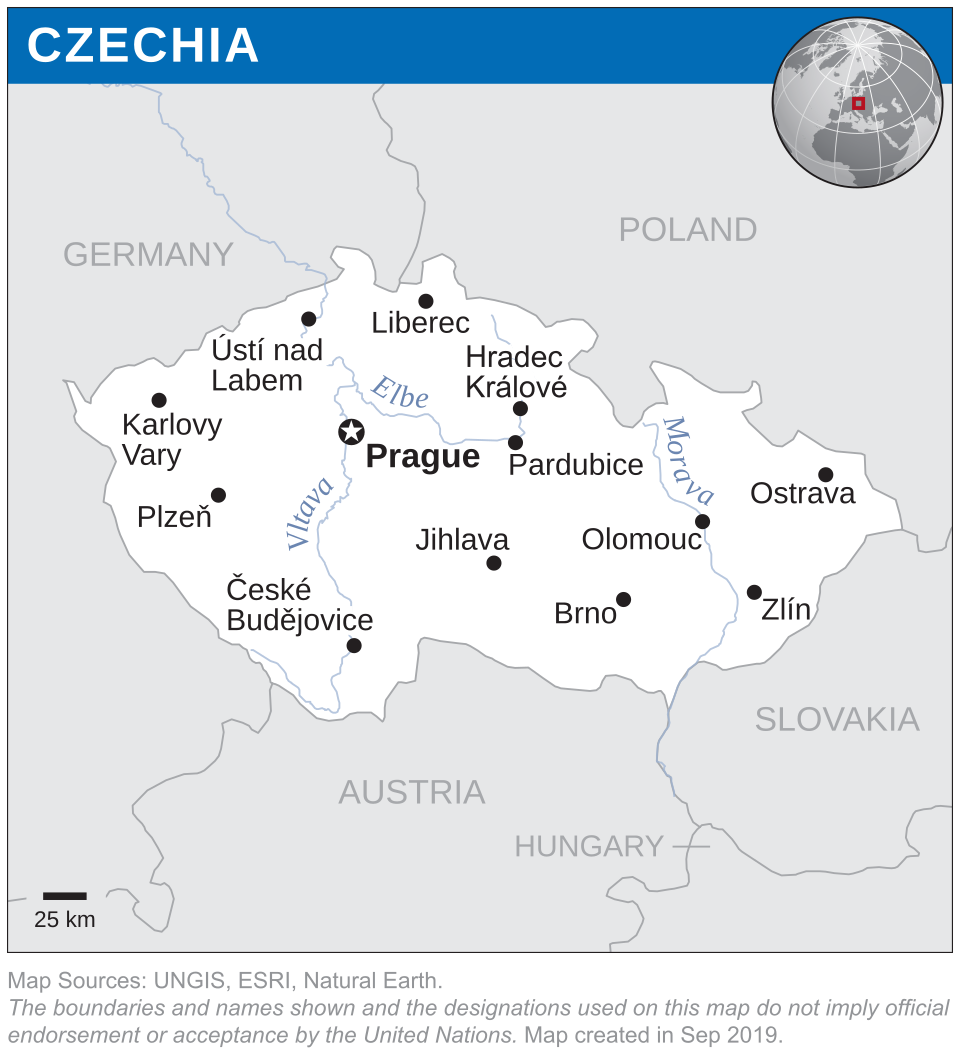
Cost of living data for Czechia is not provided in the current briefing, but the country’s position within Europe offers contextual clues. Prague has long been one of the more expensive capital cities in Central Europe relative to regional incomes, while smaller industrial cities like Ostrava, Plzeň, and Brno offer significantly lower housing costs.
The rent-versus-buy calculation in Czechia has historically favored ownership—the country has one of the highest homeownership rates in Europe, a legacy of post-communist privatization and a cultural preference for property.
Daily expenses in Czechia sit somewhere between the cheaper economies of Eastern Europe and the more expensive markets of Germany and Austria. Food costs, particularly for locally produced goods, remain manageable, while imported goods and energy carry a premium. The Czech National Bank has historically been one of the more aggressive central banks in Europe when it comes to inflation management, which has implications for mortgage rates and consumer borrowing.
For a family considering relocation, the trade-off is clear: lower salaries than Western Europe, but a quality of life that includes universal healthcare, strong public transport, and a rich cultural infrastructure. The absence of specific data points makes this a portrait of inference, but the pattern is consistent with a middle-income economy that has not yet fully converged with Western European living standards.
Factories, Finance, and the Future — Investment Climate
The data provided does not list specific top companies or detailed investment climate indicators, but Czechia’s industrial reputation is well established. The country is home to Škoda Auto, one of the oldest automobile manufacturers in the world and a subsidiary of the Volkswagen Group, which alone accounts for a significant share of Czech exports. The broader automotive ecosystem includes hundreds of suppliers, from Tier 1 component manufacturers to specialized engineering firms.
Beyond automotive, Czechia has strengths in precision machinery, electronics, and increasingly, software development and IT services.
The business environment in Czechia benefits from the country’s EU membership, which provides regulatory stability, access to the single market, and eligibility for structural funds. The 14 administrative regions that also serve as voting districts create a decentralized economic landscape where regional development agencies compete for investment.
Foreign direct investment has historically flowed into manufacturing, but there is growing interest in research and development, particularly in Brno, which has emerged as a technology hub. The political landscape data shows a system designed for negotiation—coalition governments mean that business policy is rarely radical, but also rarely stagnant.
For investors, Czechia offers a middle path: lower costs than Germany, higher productivity than many of its Eastern neighbors, and a workforce with strong technical education.
Safety in Stability — Politics and Quality of Life
The Crime Index and Safety Index for Czechia are not provided in the current data, but the country’s political infrastructure offers a different kind of security. The bicameral parliamentary system, with proportional representation and a 5% threshold, is designed to prevent the kind of political instability that can undermine economic confidence. The 14 voting districts, aligned with administrative regions, ensure regional representation in national policymaking.
The Chamber of Deputies’ four-year terms provide regular opportunities for course correction, while the Senate offers a check on hasty legislation.
Czechia consistently ranks among the safer countries in Europe in broader international surveys, though this current data set does not confirm that directly. What the political data does confirm is institutional maturity: a functioning multi-party democracy with clear rules of engagement.
The quality of life in Czechia is shaped by factors beyond crime statistics—universal healthcare, extensive public transport, high beer consumption per capita (a point of national pride), and a cultural scene that punches above its weight. The political landscape suggests a society that values stability and gradual change over revolution.
For the expatriate or the long-term visitor, the absence of crime data in this briefing is less concerning than it might be for other countries—the political system itself is a signal of predictability.
The Quiet Machine — Current Affairs in Czechia
The most recent data on Czechia’s current affairs is notably sparse, but the political architecture provides clues about what is happening now. The proportional representation system with its 5% threshold means that the government in power is almost certainly a coalition, and coalition governments in Central Europe are currently grappling with a common set of challenges: inflation management, energy security, and the restructuring of supply chains away from over-reliance on any single partner.
The 14 voting districts ensure that regional concerns—particularly in industrial regions like Moravia-Silesia—are represented in national debates.
Without specific recent news data, we can observe that Czechia’s position in the European Union means it is subject to Brussels’ regulatory framework on everything from fiscal policy to environmental standards. The country has been a vocal supporter of Ukraine, hosting refugees and providing military aid, which has implications for both its budget and its security posture.
The Czech National Bank, independent by law, has historically been one of the more hawkish central banks in the region, which suggests that inflation fighting remains a priority even without current CPI data.
The absence of live indicators in this briefing is frustrating, but the political and economic architecture is robust enough to allow for informed speculation: Czechia is likely navigating the same headwinds as its neighbors—high energy costs, labor shortages in skilled trades, and the slow but steady pressure of demographic aging.
The Bottom Line
Czechia remains one of Central Europe’s most stable and industrially capable economies, even when the data runs thin. The country’s political system—a mature, multi-party parliamentary democracy with proportional representation and a bicameral legislature—provides a foundation of predictability that investors and residents value. For those watching Central Europe, Czechia is the quiet machine: less flashy than Poland, less troubled than Hungary, but consistently productive.
Watch this country if you care about European supply chains, automotive manufacturing, or the resilience of small open economies in an era of fragmentation. The numbers may be missing from this briefing, but the story is written in the country’s factories, its political institutions, and its quiet determination to remain the workshop of Central Europe.
Sources & Methodology
This article is authored by Economic Pulse Net for informational and research purposes. Economic Pulse Net sources its data from multilateral institutions, national statistics bureaus, and proprietary databases. All data is believed to be current as of the date of publication.
Published: July 18, 2026 | Category: Research — Czechia
Use these signals in your own platform
Economic Pulse publishes its live signal feed through a documented, read-only API. Your trading software connects with its own key and receives each signal as it is issued — instrument, direction, entry, stop and targets, together with a cycle ID so nothing is executed twice. The feed is independent of this website and cannot change it.
Signals are informational only and are not financial advice.