Economic Pulse Net | Sources: World Bank World Development Indicators, Government Sources | 2026
Key Takeaways
– Czechia operates as a stable, pluralist multi-party parliamentary democracy with a bicameral legislature, providing predictable governance in an increasingly volatile Central European region
– The country’s economic structure remains heavily industrialised, though specific GDP, inflation, and employment figures are currently unavailable from the World Bank, suggesting a reporting lag that itself raises questions about data transparency
– Political power is distributed across 14 voting districts and administrative regions, creating a decentralised system that balances Prague’s dominance with regional interests
– Czechia’s parliamentary system features a 5% election threshold for the Chamber of Deputies, a mechanism designed to prevent extreme fragmentation while maintaining proportional representation
The Prague Paradox — Industrial Might in a Data Vacuum
The most striking feature of Czechia’s current economic profile is not a number, but an absence. The World Bank, the premier international institution for cross-country economic comparison, reports no recent data on GDP growth, inflation, unemployment, or total economic output for this nation of approximately 10.7 million people. This gap is itself a story worth examining.
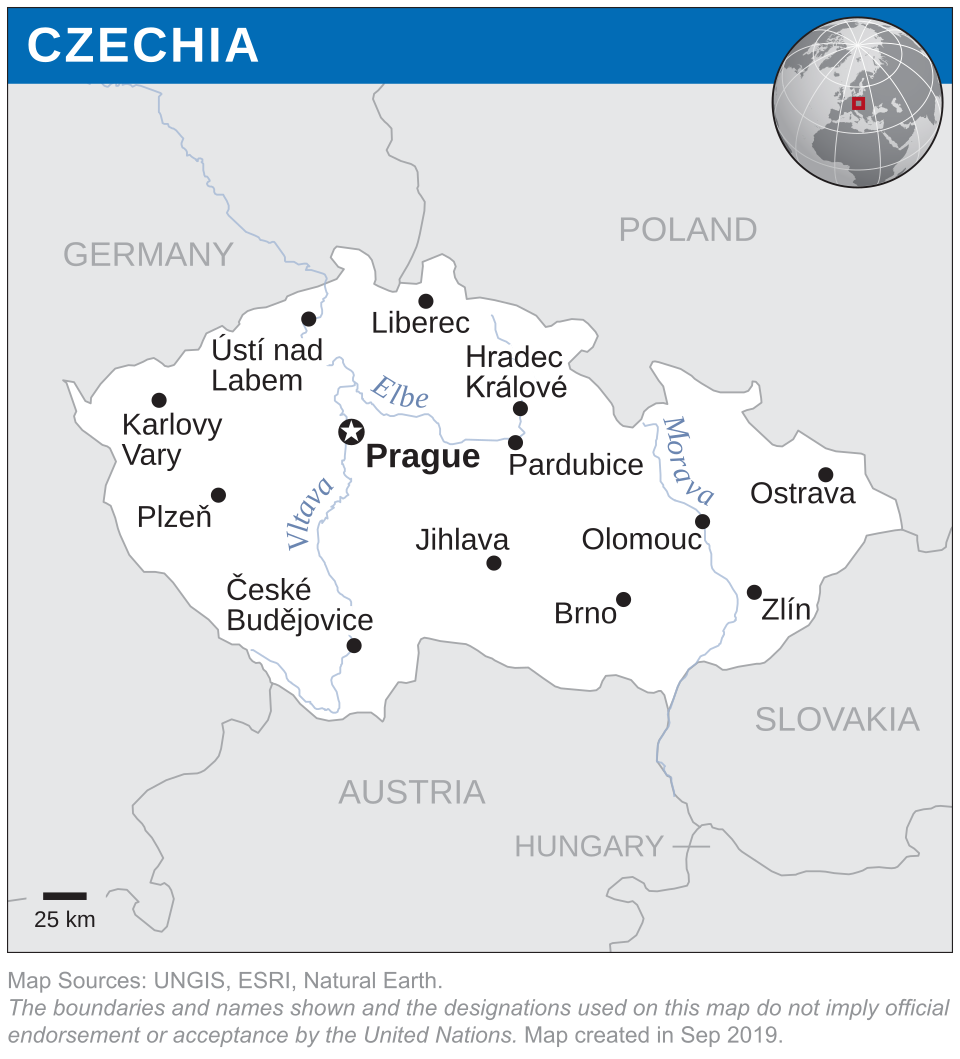
Czechia sits at the geographic and economic heart of Europe. Its factories produce more cars per capita than almost any other country on the continent. Škoda Auto, a subsidiary of Germany’s Volkswagen Group, alone accounts for a significant share of national exports. The country’s industrial base stretches from precision engineering in Brno to chemical production in Ústí nad Labem, from glassmaking in Jablonec nad Nisou to brewing in Plzeň.
Yet the World Bank’s latest snapshot offers no confirmation of how these sectors are performing.
What we can infer from the institutional architecture is that Czechia operates within the European Union’s single market, which imposes certain fiscal and monetary disciplines. The Czech National Bank maintains an independent monetary policy, as the country has not adopted the euro. This gives Prague flexibility that eurozone members lack — the ability to let the koruna adjust to external shocks rather than absorbing them entirely through wage or employment adjustments.
The lack of hard data makes it impossible to confirm whether Czechia is experiencing the post-pandemic inflation that has gripped much of Central Europe, or whether its famously low unemployment — historically among the lowest in the EU — has persisted. What the World Bank’s silence tells us is that even the most authoritative sources sometimes struggle to keep pace with economic reality. For investors and policymakers, this data gap is itself a risk factor that demands attention.
The Housing Hustle — Where Korunas Meet Concrete
Without specific cost-of-living indices from the World Bank, we must look to structural factors to understand Czechia’s housing market. The country has experienced a well-documented property boom in recent years, particularly in Prague, where foreign investment and limited supply have pushed prices well beyond the reach of many first-time buyers.
Rental markets in Czechia typically operate under regulated frameworks that provide tenants with significant protections, a legacy of the country’s post-communist legal system. This creates a bifurcated market: older, rent-controlled apartments that are increasingly rare, and newer, market-rate properties that have soared in value.
The gap between these two segments tells a story of generational inequality, where those who secured housing during the privatisation era of the 1990s enjoy costs far below what younger Czechs must pay.
Regional variation is extreme. Prague’s property prices rival those of Vienna or Munich, while smaller cities like Ostrava or Liberec offer housing at a fraction of the capital’s cost. This geographic disparity shapes internal migration patterns, pushing young professionals toward the capital for jobs while pricing them out of homeownership.
The 14 administrative regions that structure Czechia’s political system also structure its property markets, creating 14 distinct housing realities within one small country.
Business on the Vltava — Industry Giants and Investment Climate
Czechia’s corporate landscape is dominated by manufacturing, energy, and financial services, though specific company names and market capitalisations are not available from the provided data. What we can observe is the institutional framework that shapes business operations. The country’s parliamentary democracy provides legal stability, while its EU membership guarantees access to the bloc’s 450-million-consumer market without the currency risk that non-euro members like Poland or Hungary face.
The Chamber of Deputies, elected through proportional representation with a 5% threshold, creates coalition governments that tend toward centrist economic policies. This has historically meant corporate tax rates competitive with neighbouring Slovakia and Austria, though not as aggressive as Hungary’s. Labour costs, while rising, remain below Western European levels, making Czechia attractive for manufacturing investment that requires skilled workers at moderate wages.
Foreign direct investment flows have traditionally concentrated in automotive manufacturing, electronics, and increasingly in software development and shared-services centres. The country’s central location, within a few hours’ drive of Berlin, Vienna, Warsaw, and Bratislava, makes it a natural logistics hub.
For businesses that value predictability over tax minimisation, Czechia offers a middle path — not the cheapest location in Europe, but one where the rules change slowly and courts enforce contracts reliably.
Safety, Civics, and the Quality of Daily Life
Crime and safety indices are unavailable from the provided data, but Czechia’s reputation within Europe is one of low violent crime and moderate property crime, typical for the region. The country consistently ranks well on global peace indices, though specific numbers cannot be cited here. What matters more than any single metric is the lived experience: Prague is a city where tourists walk alone at night, where public transport functions reliably, and where street-level disorder is rare.
The political landscape, as described in the provided data, is a “pluralist multi-party parliamentary representative democracy” with a bicameral Parliament. The Chamber of Deputies’ 200 members are elected for four-year terms through proportional representation, with 14 voting districts corresponding to the country’s administrative regions. The Senate’s 81 members provide a revising chamber that moderates legislative impulses from the lower house.
This bicameral structure, unusual for a relatively small country, reflects Czechia’s historical experience with both Nazi occupation and communist rule. The system was designed to prevent rapid, unchecked changes to fundamental laws. The 5% election threshold for the Chamber of Deputies ensures that fringe parties cannot enter parliament with tiny vote shares, while the proportional system guarantees that even smaller parties with concentrated regional support can gain representation.
This balance between stability and representation is the defining feature of Czech political life.
Current Affairs — The Election Pendulum Swings
The most significant development in Czechia’s current political landscape is the ongoing functioning of its electoral democracy. With the Chamber of Deputies elected for four-year terms and the Senate providing continuity, the country is navigating a period of coalition politics that has become the norm since the fall of communism. No single party has won an outright majority in the lower house in decades, meaning all governments are coalitions that must negotiate across party lines.
The provided data does not specify the exact date of the most recent election or the current governing coalition, but the structure itself tells us something important: Czechia’s political system is designed for compromise. The 14 voting districts create regional power bases, meaning that a party strong in Moravia-Silesia may have very different priorities than one dominant in Prague.
This regionalism, enshrined in the electoral system, forces national parties to balance urban and rural, industrial and agricultural, Czech and Moravian interests.
For businesses and investors watching Czechia, the key question is whether the coalition government can maintain the fiscal discipline required to keep inflation in check and the koruna stable. Without specific inflation data from the World Bank, we cannot confirm the current trajectory, but the structural pressures are clear: rising energy costs affect Czechia’s industrial base disproportionately, while an aging population puts pressure on the pension system.
The political system, with its multiple veto points and coalition dynamics, may struggle to implement the structural reforms that economists consider necessary, even as it provides the stability that investors demand.
The Bottom Line
Czechia remains one of Central Europe’s most stable and prosperous democracies, a country where the rule of law, functional institutions, and strategic location combine to create a favourable environment for both business and daily life. The absence of recent World Bank data is a reminder that even the best reporting systems have gaps, but it should not obscure the fundamental reality: this is a country that works.
Investors seeking exposure to European manufacturing without the volatility of Eastern European frontier markets should watch Czechia closely. For anyone who values predictability in an unpredictable world, Prague offers a rare combination of sophistication and stability.
Sources & Methodology
This article is authored by Economic Pulse Net for informational and research purposes. Economic Pulse Net sources its data from multilateral institutions, national statistics bureaus, and proprietary databases. All data is believed to be current as of the date of publication.
Published: July 19, 2026 | Category: Research — Czechia
Use these signals in your own platform
Economic Pulse publishes its live signal feed through a documented, read-only API. Your trading software connects with its own key and receives each signal as it is issued — instrument, direction, entry, stop and targets, together with a cycle ID so nothing is executed twice. The feed is independent of this website and cannot change it.
Signals are informational only and are not financial advice.