Economic Pulse Net | Sources: World Bank World Development Indicators, Government Sources | 2026
Key Takeaways
– Belarus operates as a highly centralised, authoritarian state under President Alexander Lukashenko, with power concentrated at the executive level despite a constitutional framework that nominally provides for separation of powers.
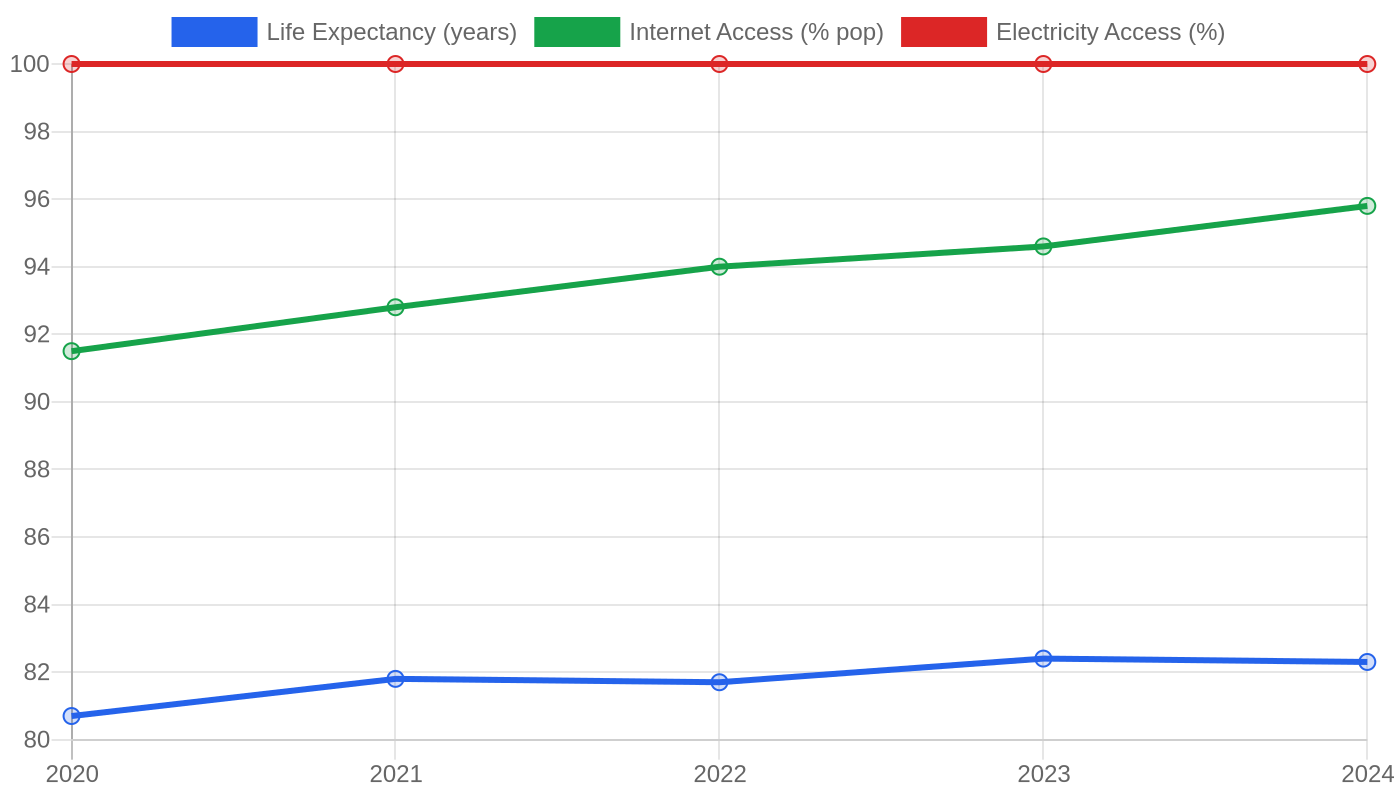
– The country’s economic data remains opaque, with the World Bank reporting no current figures for GDP growth, inflation, unemployment, or per-capita income — a telling sign of the country’s isolation from mainstream international financial reporting.
– Belarus’s industrial backbone relies heavily on state-owned giants like BelAZ, Belaruskali, and the Belarusian Railway, alongside a surprising tech sector anchored by the Belarus High Technologies Park.
– The political environment, described by many international observers as “Europe’s last dictatorship,” continues to overshadow foreign investment prospects and economic modernisation efforts.
– For investors and analysts, Belarus represents a high-risk, high-attention market where political calculations outweigh traditional economic fundamentals.
The Numbers Gap — Reading Between the Lines of a Statistical Black Hole
When the World Bank publishes a country profile with “N/A” stamped across every major economic indicator, that absence of data is itself a story. For Belarus, the lack of reported GDP growth, inflation, and unemployment figures speaks volumes about the country’s standing in the global economic community. The World Bank’s dataset for Belarus is effectively empty — no GDP in US dollars, no GDP per capita at purchasing power parity, no GNI per capita, no population figures.
This is not an oversight; it is a reflection of how far Belarus has drifted from the international economic mainstream.
What we do know is that Belarus’s economy is built on a Soviet-era industrial foundation that has been slow to adapt. The country’s main industries — heavy machinery, potash mining, and transportation — remain dominated by state-owned enterprises. BelAZ, the giant dump-truck manufacturer, and Belaruskali, one of the world’s largest potash producers, anchor an industrial sector that has struggled with sanctions and reduced access to Western markets.
The Belarusian Railway, a massive state-owned industrial operation, keeps the country’s freight and passenger networks running but faces the same modernisation challenges as the rest of the economy.
Inflation, unemployment, and growth — the three numbers that define any economy’s health — are simply not available from the World Bank for Belarus. This statistical silence forces analysts to rely on anecdotal evidence, regional comparisons, and political signals rather than hard data. For a country that once served as a key transit and manufacturing hub between Europe and Russia, the absence of reliable economic metrics is both a symptom and a cause of its current predicament.
The Belarusian economy remains a black box, and for most international investors, that opacity is reason enough to stay away.
The Cost of Living Puzzle — What Belarusians Pay When the World Isn’t Watching
Without official cost-of-living data from the World Bank, understanding what Belarusians actually pay for housing, food, and daily necessities requires reading the broader context of the country’s economic isolation. What is clear is that Belarus’s cost of living is closely tied to its political relationship with Russia, which provides subsidised energy and serves as the primary market for Belarusian exports.
This dependency keeps certain prices artificially low but leaves the economy vulnerable to shifts in Moscow’s political priorities.
Housing in Belarus remains largely state-influenced, with a significant portion of the housing stock still under government control or subject to heavy regulation. Renting and buying in Minsk, the capital, operates differently from Western markets — but without concrete figures, the picture remains impressionistic. What matters for most Belarusians is that their purchasing power is tied to a currency and an economy that international institutions have effectively stopped tracking.
The cost of living is real, but the data to quantify it is not available to the World Bank or, by extension, to global economic observers.
Investment and Business Climate — State Giants and a Tech Anomaly
Belarus’s corporate landscape presents a fascinating paradox. On one side stand the industrial behemoths — BelAZ, Belaruskali, Belarusian Railway, and Belkommunmash — all state-controlled, all central to the country’s economic identity, and all largely closed to foreign investment. On the other side sits the Belarus High Technologies Park, a designated economic zone that has attracted technology companies like Aliasworlds Entertainment and telecommunications provider A1.
This tech enclave represents Belarus’s most credible attempt to build a modern, export-oriented sector, but its success is constrained by the same political realities that affect everything else.
The financial sector, anchored by Belarusbank, remains state-dominated. BelaPAN, a consumer services company, and Belavia, the national airline, round out a corporate roster that is almost entirely state-linked. For foreign investors, the message is clear: the Belarusian market is open only on the government’s terms.
The business climate is defined not by regulatory transparency but by political loyalty, and the absence of World Bank data on investment conditions or business regulations reinforces the sense that Belarus operates outside the norms of international economic governance.
Safety, Politics, and the Quality of Life — Life Under Europe’s Last Dictatorship
The political landscape in Belarus is the single most defining feature of life in the country. By constitution, Belarus is a semi-presidential republic with separation of powers, governed by a president and the National Assembly. In practice, however, the country has been led by a highly centralised and authoritarian government for decades.
President Alexander Lukashenko, in power since 1994, has been described by media outlets, politicians, and authors as “Europe’s last dictator” — a label that reflects both the longevity of his rule and the suppression of political opposition.
Crime and safety indices for Belarus are not available from the World Bank, but the political context suggests a society where order is maintained through state control rather than democratic consensus. For ordinary Belarusians, quality of life is shaped by the tension between economic stability — however fragile — and political repression.
The government’s focus on maintaining control has come at the cost of international legitimacy, and the country’s isolation has deepened as Western nations have imposed sanctions and reduced diplomatic engagement.
What’s Happening Now — The Stalemate Deepens
Belarus today finds itself in a geopolitical holding pattern that shows no signs of breaking. The country’s economic data remains unreported to the World Bank, a situation that has persisted through multiple cycles of sanctions and diplomatic isolation. The government’s reliance on Russia has deepened, but this dependency carries its own risks as Moscow’s own economic position shifts.
The Belarusian High Technologies Park continues to function as a rare point of international engagement, but even this sector operates under the shadow of political uncertainty.
For Lukashenko, the calculus remains unchanged: maintain domestic control at all costs, even if that means accepting permanent exclusion from Western economic institutions. The Belarusian economy is not collapsing, but it is also not growing in any measurable way that international observers can track. The country’s future hinges on political questions — the succession question, the Russia relationship, the possibility of reform — rather than economic ones.
Until those questions are answered, Belarus will remain what it has been for decades: a country whose economic story is written in the language of political survival, not market development.
The Bottom Line
Belarus is a country that demands attention from anyone trying to understand the fault lines of post-Soviet Europe. For political risk analysts and geopolitical strategists, it is an essential case study in authoritarian resilience and the economic costs of isolation. For mainstream investors, however, the absence of reliable data and the dominance of state-controlled enterprises make Belarus a market to observe rather than enter.
The country’s future will be determined not by economic reforms but by political transitions — and when those come, the world will be watching.
Sources & Methodology
This article is authored by Economic Pulse Net for informational and research purposes. Economic Pulse Net sources its data from multilateral institutions, national statistics bureaus, and proprietary databases. All data is believed to be current as of the date of publication.
Published: August 05, 2026 | Category: Research — Belarus
Use these signals in your own platform
Economic Pulse publishes its live signal feed through a documented, read-only API. Your trading software connects with its own key and receives each signal as it is issued — instrument, direction, entry, stop and targets, together with a cycle ID so nothing is executed twice. The feed is independent of this website and cannot change it.
Signals are informational only and are not financial advice.