Economic Pulse Net | Sources: World Bank World Development Indicators, Government Sources | 2026
Key Takeaways
– Belarus remains one of Europe’s most politically isolated nations, governed by President Alexander Lukashenko’s authoritarian regime, which has been in power since 1994 and is often described by media outlets and politicians as “Europe’s last dictatorship.”
– The economy is dominated by state-owned industrial giants, including Belaruskali (potash), BelAZ (heavy mining vehicles), and Belarusian Railway, creating a system where political loyalty and economic power are deeply intertwined.
– Despite the absence of recent World Bank economic data, Belarus’s industrial base—spanning heavy machinery, potash mining, and telecommunications—suggests a economy built on Soviet-era infrastructure rather than modern market dynamics.
– The country’s political landscape, defined by a semi-presidential constitution that functions in practice as a highly centralized autocracy, creates significant risks for foreign investors and limits economic diversification.
– With major state-controlled enterprises like Belarusbank and Belavia dominating key sectors, private sector growth remains constrained, and the cost of living data is unavailable, making independent economic analysis challenging.
The Soviet Industrial Legacy — An Economy in Suspended Animation
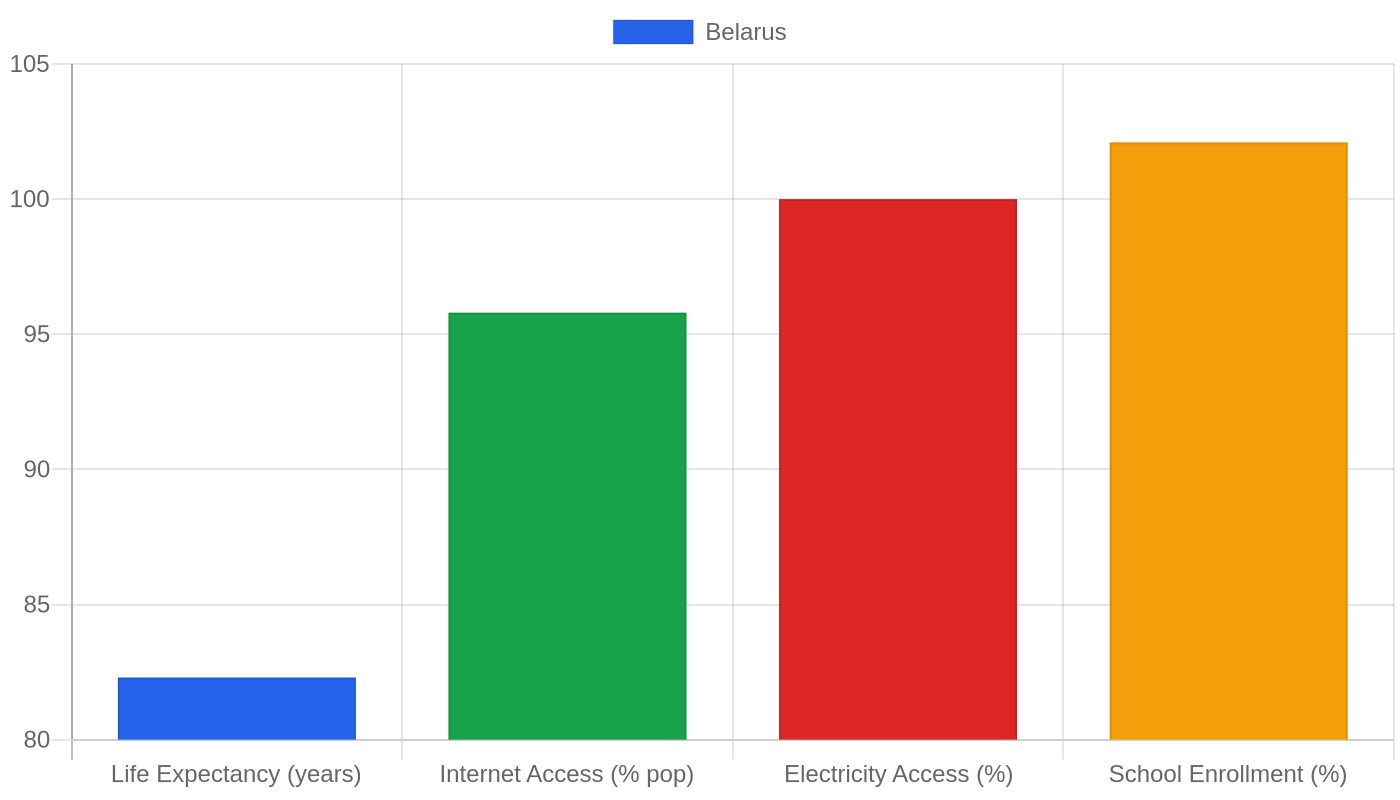
The Belarusian economy presents a peculiar challenge for analysts: the most recent World Bank data offers no GDP growth figures, no inflation rates, no unemployment numbers, and no GDP per capita. This data vacuum is itself telling. It reflects a country that has, under the Lukashenko regime, become increasingly opaque in its economic reporting, particularly following Western sanctions imposed after the disputed 2020 presidential election and the regime’s support for Russia’s war in Ukraine.
What we can observe is the industrial skeleton of the economy. The main industries are dominated by state-owned behemoths: Belaruskali, one of the world’s largest potash producers; BelAZ, which manufactures some of the largest mining dump trucks on the planet; and Belarusian Railway, the state-owned rail monopoly. These are not nimble, market-responsive enterprises. They are Soviet-era industrial combines that rely on political connections, state subsidies, and preferential access to Russian markets.
The financial sector mirrors this state dominance. Belarusbank, the country’s largest financial institution, operates as an arm of state policy rather than a commercial lender. The Belarus High Technologies Park, listed among the top companies, represents a rare attempt at modernization, but it operates within strict political boundaries.
The absence of consumer price data from the World Bank suggests either deliberate opacity or a breakdown in standard statistical reporting—both plausible scenarios in a country where independent media has been systematically suppressed.
The telecommunications sector, represented by A1, offers a glimpse of what might be possible. As a private operator in a state-dominated landscape, A1 has managed to build a modern network. But such exceptions prove the rule: Belarus’s economy remains a system where political power determines economic survival, and where the state’s grip on key industries leaves little room for genuine market competition.
Living in a Controlled Economy — The Hidden Cost of Stability
Without official cost of living data from the World Bank, constructing a reliable picture of daily life in Belarus requires reading between the lines. What we know is that the economy operates under conditions of significant state control, with prices for basic goods often subsidized but subject to sudden adjustments when the regime needs to manage budget deficits.
Housing in Belarus, particularly in the capital Minsk, has historically been more affordable than in Western European capitals, but this comparative advantage comes with caveats. The state retains significant control over the housing market, and property rights are not as secure as in functioning democracies. Rent versus buy calculations are distorted by the fact that many Belarusians still live in Soviet-era apartment blocks, and new construction is often tied to state-controlled enterprises.
Daily expenses for food, transportation, and utilities are kept artificially low through state subsidies, but this creates a parallel economy of shortages and queuing. The Belarusian ruble’s value is managed by the central bank, which operates under political direction rather than independent monetary policy.
For ordinary Belarusians, the cost of living is a political calculation as much as an economic one—the regime maintains basic affordability as a tool of social control, but at the cost of long-term economic sustainability.
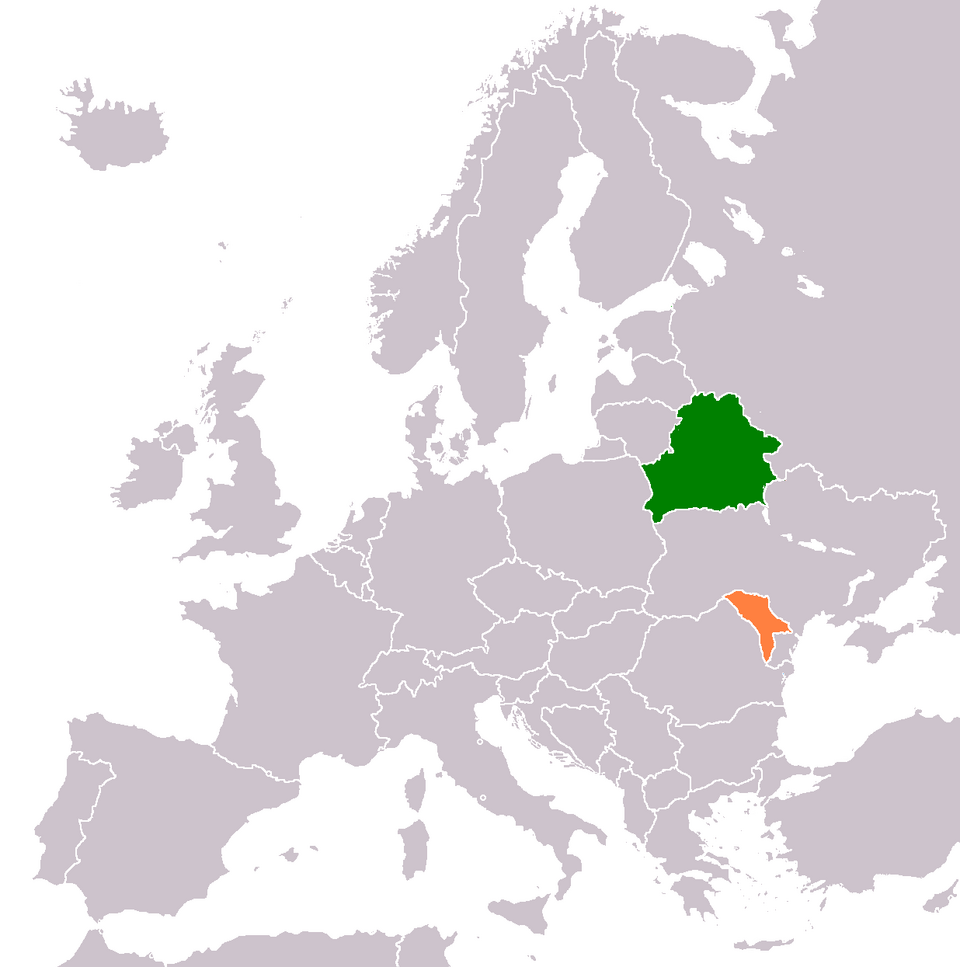
Regional comparisons are instructive, though data gaps make precise analysis impossible. Belarus sits between Poland, a thriving EU economy, and Russia, a sanctioned petro-state under wartime conditions. The cost of living in Belarus likely falls somewhere between these extremes, but with far less consumer choice and far more political risk than either neighbor.
Investment and Business Climate — High Risk, Limited Reward
The list of top companies in Belarus reads like a state ownership registry. Belaruskali, Belarusbank, Belarusian Railway, Belavia, BelAZ, Belkommunmash—these are not names that inspire confidence in a dynamic private sector. The exceptions—A1 in telecommunications, Aliasworlds Entertainment in technology, BelaPAN in consumer services—are notable precisely because they are exceptions.
For foreign investors, the business climate is defined by political risk above all else. The Lukashenko regime has demonstrated a willingness to nationalize assets, change tax rules arbitrarily, and use the legal system to punish businesses that fall out of political favor. The Belarus High Technologies Park was created to attract IT investment, but its success is constrained by the broader political environment.
International sanctions have further limited access to global financial markets and technology transfers.
The sectors to watch are those where Belarus has genuine competitive advantages that survive political interference. Potash remains a global commodity, and Belaruskali’s reserves are significant. Heavy vehicle manufacturing, while inefficient by global standards, benefits from close ties to Russian mining and industrial customers. But any investor in Belarus must accept that the business environment is not governed by rule of law but by rule of the president—and that can change without warning.
The Dictatorship’s Dilemma — Politics, Safety, and Daily Life
The political landscape of Belarus is the single most important factor shaping every other aspect of life in the country. As described in the available data, Belarus is constitutionally a semi-presidential republic with separation of powers, but in practice, it is “highly centralised and authoritarian,” often described by media outlets and politicians as “Europe’s last dictatorship,” with President Alexander Lukashenko labelled “Europe’s last dictator.”
This political reality has profound implications for safety and quality of life. Official crime and safety indices are unavailable from the World Bank, but the nature of political risk in Belarus is different from conventional crime. The regime’s security apparatus—the KGB, internal troops, and riot police—maintain public order through surveillance, intimidation, and periodic crackdowns. For those who stay out of politics, daily life may feel orderly.
For activists, journalists, or anyone perceived as a threat to the regime, the state itself becomes the primary safety risk.
Quality of life in Belarus is a contradiction. Basic education and healthcare remain accessible, legacies of the Soviet system. Public transportation functions. Streets are clean. But these material comforts exist within a political system that denies fundamental freedoms. The happiness data, like so much else, is unavailable, but it is difficult to imagine high levels of life satisfaction in a country where independent thought is policed and the future is uncertain.
Current Affairs — A Regime Under Pressure, A Country in Limbo
The most recent developments in Belarus must be understood against the backdrop of Russia’s war in Ukraine and the ongoing political crisis that began with the disputed 2020 presidential election. While specific recent news data is limited, the trajectory is clear: Belarus has become increasingly integrated into Russia’s wartime economy and political orbit.
Lukashenko’s regime, which survived mass protests in 2020-2021 through brutal repression and Russian support, now faces the challenge of managing an economy under unprecedented Western sanctions. The potash industry, once a major source of foreign currency, has seen exports severely restricted. The banking sector is cut off from SWIFT. State enterprises that once traded freely with Europe now depend almost entirely on Russian markets and Chinese credit.
The political opposition, much of it operating from exile in Poland, Lithuania, and Ukraine, continues to organize, but the regime’s security apparatus has proven effective at suppressing dissent inside the country. The question facing Belarus is not whether the regime will fall—it shows no signs of imminent collapse—but whether the country’s long-term trajectory is toward deeper integration with Russia or eventual, painful reengagement with Europe.
For the Belarusian people, the immediate future means more of the same: political repression, economic stagnation, and isolation. But history suggests that even Europe’s last dictatorship cannot hold out forever. The question is what comes next, and whether Belarus will have any choice in the matter.
The Bottom Line
Belarus is a country to watch for geopolitical strategists and investors with very high risk tolerance—and very long time horizons. The economy, dominated by state-owned industrial giants and starved of reliable data, offers few opportunities for conventional investment.
But for those tracking the future of post-Soviet authoritarianism, the intersection of European integration and Russian imperialism, or the resilience of state-controlled economies under sanctions, Belarus is a laboratory of political and economic survival. The regime is stable in the short term, but the costs of that stability—isolation, stagnation, repression—are mounting. The eventual reckoning, when it comes, will reshape the map of Eastern Europe.
Sources & Methodology
This article is authored by Economic Pulse Net for informational and research purposes. Economic Pulse Net sources its data from multilateral institutions, national statistics bureaus, and proprietary databases. All data is believed to be current as of the date of publication.
Published: July 17, 2026 | Category: Research — Belarus
Use these signals in your own platform
Economic Pulse publishes its live signal feed through a documented, read-only API. Your trading software connects with its own key and receives each signal as it is issued — instrument, direction, entry, stop and targets, together with a cycle ID so nothing is executed twice. The feed is independent of this website and cannot change it.
Signals are informational only and are not financial advice.