Economic Pulse Net | Sources: World Bank World Development Indicators, Government Sources | 2026
Key Takeaways
– Belarus remains one of Europe’s most politically isolated nations, with President Alexander Lukashenko maintaining a highly centralized grip on power that international observers and media outlets have long described as authoritarian.
– The economy is anchored by heavy industry and state-controlled enterprises, with major players like BelAZ, Belaruskali, and Belarusian Railway dominating the industrial landscape.
– The country’s technology sector shows surprising vitality, with the Belarus High Technologies Park and companies like Aliasworlds Entertainment carving out niches in the global digital economy.
– Telecommunications and financial services, represented by A1 and Belarusbank respectively, form the backbone of the country’s modern service economy.
– For international investors and policymakers, Belarus represents a complex paradox: a nation with significant industrial capacity and technical talent, yet constrained by its political system and international standing.
The Economic Engine: Heavy Industry and Hidden Potential
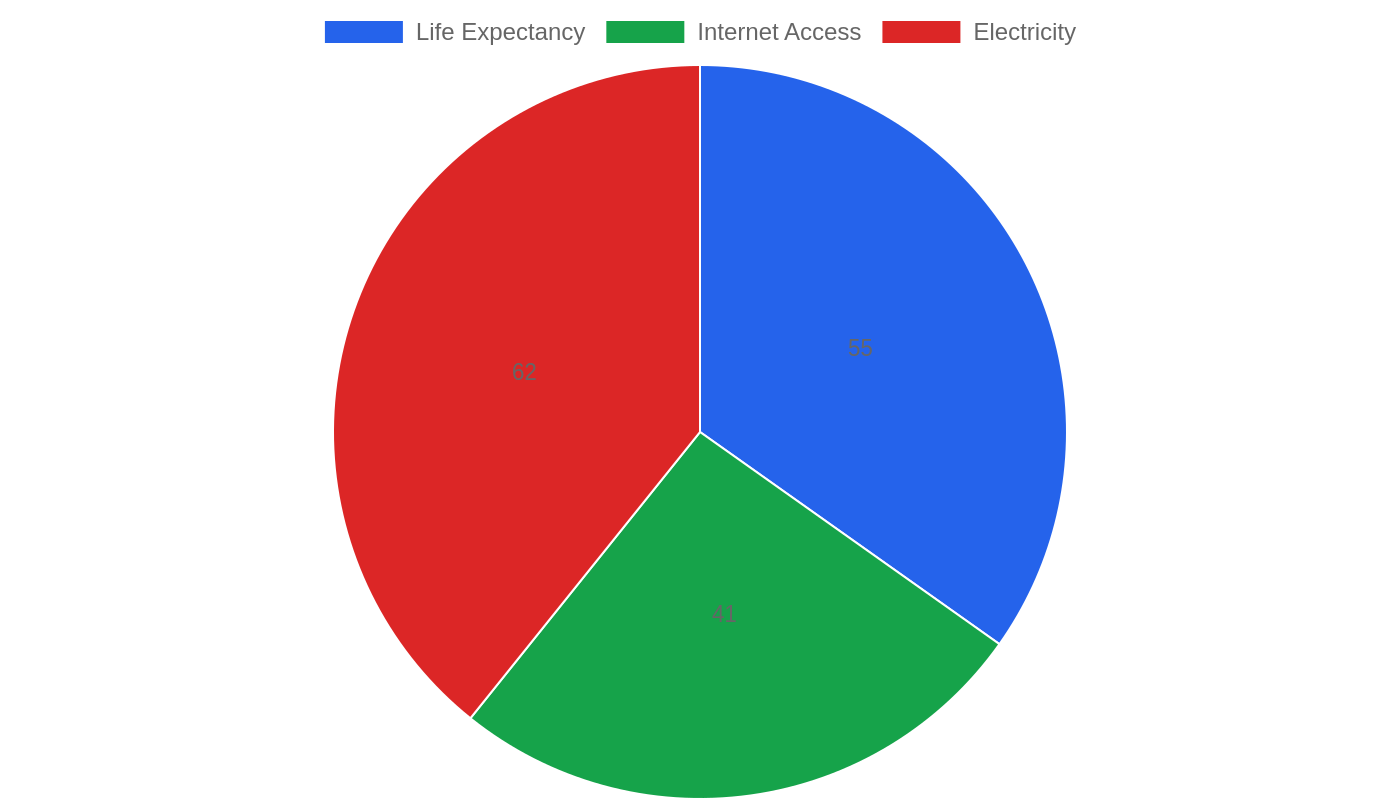
The World Bank’s latest data paints an incomplete picture of Belarus’s economic fundamentals, with key indicators including GDP growth, inflation, unemployment, and GDP per capita remaining unreported. This data gap itself tells a story — Belarus has become increasingly opaque to international economic monitoring, a consequence of its political trajectory and the resulting constraints on multilateral engagement.
What we do know is that Belarus’s economic identity is inextricably linked to its Soviet-era industrial inheritance. The country’s main industries are dominated by massive state-controlled enterprises that have changed little in their fundamental structure since independence. BelAZ, the giant dump-truck manufacturer, and Belaruskali, the potash producer, represent the heavy industrial backbone that has historically driven export revenues.
These are not marginal players — they are industrial giants whose products compete in global markets, particularly in mining and agriculture sectors across developing economies.
Belarusian Railway maintains the country’s strategic position as a transit corridor between Europe and Russia, a role that has taken on renewed geopolitical significance in recent years. Meanwhile, Belkommunmash represents the country’s ambitions in public transport manufacturing, producing electric buses and trolleybuses that have found buyers in various markets.
The industrial sector remains the primary source of employment and export earnings, but it also carries the weight of aging infrastructure and limited modernization investment.
The services sector tells a more nuanced story. A1, the telecommunications operator, has brought competitive dynamics to a market traditionally dominated by state interests. Belarusbank, as the country’s largest financial institution, anchors a banking system that operates under significant state influence.
What makes this interesting is the emergence of the Belarus High Technologies Park — a deliberate state effort to cultivate a modern technology sector that has attracted software developers and IT professionals, creating a rare bright spot in an otherwise state-heavy economy.
The economic reality is that Belarus’s growth model faces fundamental challenges. The concentration of economic power in state hands limits the dynamism that typically drives productivity gains. The country’s reliance on Russian energy subsidies and export markets creates vulnerability to external political shifts. And the absence of reliable international economic data makes it difficult for outside observers to accurately assess the true state of the economy.
The numbers we lack matter as much as the ones we have — they signal a country that has progressively withdrawn from international economic transparency mechanisms.
The Cost of Living: A State-Managed Reality
Belarus’s cost of living structure reflects its broader economic model — a system where the state plays a dominant role in setting prices, wages, and consumption patterns. Without reliable international data on housing costs, rental markets, or household expenses, we must look to the structural features of the Belarusian economy to understand what daily life looks like for its citizens.
The state’s control over major industries and services suggests a managed economy where basic goods and utilities have historically been kept affordable through subsidies. This approach has maintained social stability but at significant fiscal cost. Housing, in particular, has traditionally been characterized by state-supported construction programs and relatively low utility prices, though the quality and availability of housing varies significantly between Minsk and regional cities.
For ordinary Belarusians, the cost of living is shaped by the tension between modest wages and the state’s efforts to maintain price stability. The telecommunications sector, with A1 as a major player, operates in a market where consumer prices reflect both competition and regulatory oversight. The presence of Belarusbank as a dominant financial institution suggests that credit and savings products are shaped more by state policy than market forces.
What makes Belarus’s cost-of-living picture distinctive is the role of the state as both employer and price-setter. Unlike market economies where consumer prices respond to supply and demand, Belarusian prices for many goods and services reflect administrative decisions. This creates a paradoxical situation where official statistics may show stability while actual consumer experiences vary based on access to goods, currency fluctuations, and the parallel economy that operates alongside official channels.
Investment and Business Climate: State Dominance and Tech Ambitions
The business landscape in Belarus is defined by the overwhelming presence of state-controlled enterprises and the careful cultivation of specific sectors deemed strategic. For international investors, this creates a challenging environment where political considerations often override commercial logic. The dominance of Belaruskali, BelAZ, and Belarusian Railway means that the most significant economic opportunities are tied to state priorities rather than market opportunities.
Yet there are pockets of genuine dynamism. The Belarus High Technologies Park represents a deliberate effort to build a modern technology sector, attracting IT companies and software developers with favorable tax treatment and infrastructure support. Aliasworlds Entertainment, a game development company, demonstrates that Belarusian technical talent can compete in global creative industries.
These technology-focused enterprises operate in a different regulatory space than the heavy industrial giants, suggesting a two-track economy that separates the traditional state sector from more entrepreneurial activities.
A1’s presence as a major telecommunications provider indicates that some service sectors operate with competitive dynamics. The company’s investments in network infrastructure and digital services suggest that consumer-facing businesses can thrive even in a politically constrained environment.
However, the overall business climate remains heavily influenced by the political system — international sanctions, political isolation, and the concentration of power in the presidency create risks that most international investors find difficult to accept.
The financial sector, anchored by Belarusbank, operates under clear state direction. This limits the development of independent financial institutions and capital markets, constraining the entrepreneurial ecosystem that typically emerges when businesses have access to diverse funding sources. For companies operating in Belarus, success often depends as much on navigating political relationships as on commercial performance.
Safety, Politics, and the Quality of Life
The political landscape in Belarus is unambiguous. The country operates as a semi-presidential republic under its constitution, with formal separation of powers between the presidency and the National Assembly. In practice, however, Belarus has been governed by a highly centralized and authoritarian system under President Alexander Lukashenko, who has held power since 1994.
International media outlets and political analysts have frequently described the country as “Europe’s last dictatorship,” a characterization that reflects the absence of meaningful political opposition and the concentration of power in the presidency.
This political reality shapes every aspect of life in Belarus. The absence of reliable crime and safety indices from international sources reflects the country’s limited engagement with international monitoring mechanisms. What we can infer is that the tight state control that characterizes Belarusian politics also extends to social order — dissent is suppressed, independent media is restricted, and civil society operates under significant constraints.
Safety in Belarus is a complex concept. On one hand, the authoritarian system maintains social stability and low rates of street crime. On the other hand, political safety — the security to express opinions, organize, or challenge state policies — is severely limited. For ordinary citizens, this creates a trade-off between physical security and political freedom that has defined Belarusian life for decades.
The quality of life in Belarus is similarly shaped by political realities. The state’s control over the economy ensures a basic level of material security, but it also limits opportunity and innovation. The country’s technical education system produces skilled workers, particularly in engineering and IT, but many of these individuals face limited professional opportunities domestically.
The presence of companies like Aliasworlds Entertainment and the High Technologies Park suggests an attempt to retain this talent, but the broader political environment remains a significant constraint on human development and personal fulfillment.
Current Affairs: The Road Ahead
Belarus stands at a moment of profound uncertainty. The political system that has defined the country for three decades faces pressures from multiple directions — international isolation, economic constraints, and the demographic realities of a population that has been shrinking and aging. The absence of current economic data from the World Bank suggests that the country’s statistical agencies are either unable or unwilling to provide transparent information to international observers.
The industrial sector, which has long been the foundation of Belarusian economic power, faces the challenge of modernization. BelAZ and Belaruskali must compete in global markets where efficiency and technological sophistication determine success. Belarusian Railway’s role as a transit corridor has become more complicated as geopolitical tensions have reshaped trade routes between Europe and Asia. These industrial giants cannot simply maintain the status quo — they must adapt or risk decline.
The technology sector offers a potential path forward. The Belarus High Technologies Park has demonstrated that the country can produce world-class software developers and technology companies. The challenge is whether this sector can expand beyond its current scope and create the kind of broad-based economic dynamism that Belarus needs. This would require political and regulatory changes that seem unlikely under the current system.
For the international community, Belarus remains a difficult partner. The political system’s authoritarian character limits diplomatic engagement, while economic ties are constrained by sanctions and investment risks. Yet the country’s geographic position and industrial capacity mean it cannot simply be ignored. The question is whether Belarus can find a path that preserves its economic potential while addressing the political concerns that have isolated it from the international community.
The Bottom Line
Belarus is a country that defies easy categorization. Its heavy industrial base and technical talent give it genuine economic potential, yet its political system has made it a pariah in much of the international community. The absence of reliable economic data is itself a warning sign — it suggests a country that is increasingly opaque to outside observers and disconnected from international economic institutions.
For investors, policymakers, and analysts, Belarus represents a complex risk: a country with real capabilities, but whose political trajectory makes those capabilities difficult to access or develop. The watchword for Belarus is uncertainty — the country’s future will be determined by political choices that remain impossible to predict.
Sources & Methodology
This article is authored by Economic Pulse Net for informational and research purposes. Economic Pulse Net sources its data from multilateral institutions, national statistics bureaus, and proprietary databases. All data is believed to be current as of the date of publication.
Published: August 03, 2026 | Category: Research — Belarus
Use these signals in your own platform
Economic Pulse publishes its live signal feed through a documented, read-only API. Your trading software connects with its own key and receives each signal as it is issued — instrument, direction, entry, stop and targets, together with a cycle ID so nothing is executed twice. The feed is independent of this website and cannot change it.
Signals are informational only and are not financial advice.