Economic Pulse Net | Sources: World Bank World Development Indicators, Government Sources | 2026
Key Takeaways
– The UAE maintains a strikingly low unemployment rate of 2.174% according to the World Bank, reflecting a labor market that is both tight and heavily expatriate-dependent.
– GDP per capita measured by purchasing power parity stands at an eye-watering $79,343.78, placing the UAE among the world’s wealthiest nations by this metric.
– The country operates under a unique federal semi-presidential system with semi-constitutional monarchy, where seven hereditary tribal sheikhdoms retain significant autonomy.
– Political power is concentrated in a Federal Supreme Council composed of the ruling Sheikhs of Abu Dhabi, Ajman, Fujairah, Sharjah, Dubai, Ras Al Khaimah, and Umm Al Quwain.
– The UAE’s economic model remains heavily reliant on revenues allocated from each emirate to the federal government, creating a complex fiscal federation.
The Gulf Between Numbers and Reality
The World Bank’s data on the United Arab Emirates presents a portrait of extraordinary wealth concentration and structural peculiarity that defies easy comparison. With a GDP per capita (PPP) of $79,343.78, the UAE sits comfortably in the company of the world’s most prosperous nations. But this single number masks a deeply bifurcated economy—one where Emirati citizens enjoy cradle-to-grave state benefits while millions of foreign workers power the engines of growth without any pathway to citizenship.
The unemployment figure of 2.174% from the World Bank is among the lowest globally, but it tells a story of labor market distortion rather than pure economic dynamism. The national workforce is overwhelmingly expatriate—estimates suggest foreigners constitute nearly 90% of the population—and employment is tightly tied to visa sponsorship. When jobs disappear, workers don’t file for unemployment benefits; they leave the country.
This structural feature means the unemployment statistic reflects not labor market health in the conventional sense, but rather the UAE’s unique demographic and legal architecture.
The absence of GDP growth data and inflation figures from the World Bank creates a frustrating gap in the analytical toolkit. However, the very lack of readily available macroeconomic indicators speaks to a broader truth about the UAE’s governance model: transparency is not the federation’s defining characteristic.
The individual emirates, particularly Abu Dhabi and Dubai, operate with considerable fiscal independence, and a percentage of each emirate’s revenues—the exact figure is not publicly specified—is allocated to the federal government. This arrangement creates opacity around the true state of the national accounts.
The Seven Pillars: Housing, Cost of Living, and the Price of Paradise
The UAE’s cost of living landscape is a study in extremes that mirrors its wider economic structure. In Dubai and Abu Dhabi, housing costs rival those of London, Singapore, or New York, driven by demand from wealthy expatriates and a luxury development model that prioritizes high-end real estate. Rent versus buy calculations are heavily skewed by the fact that foreign ownership is restricted in many areas, and even where it is permitted, freehold property comes with layers of regulatory complexity.
Daily expenses for basic goods and services in the UAE are significantly higher than regional averages across the Gulf Cooperation Council, though reliable comparative data is scarce. The country imports nearly all its food, construction materials, and consumer goods, creating a structural vulnerability to global supply chain disruptions and shipping costs.
Utilities, however, remain heavily subsidized for Emirati citizens, creating a two-tier cost structure where locals and foreigners effectively live in different economic realities.
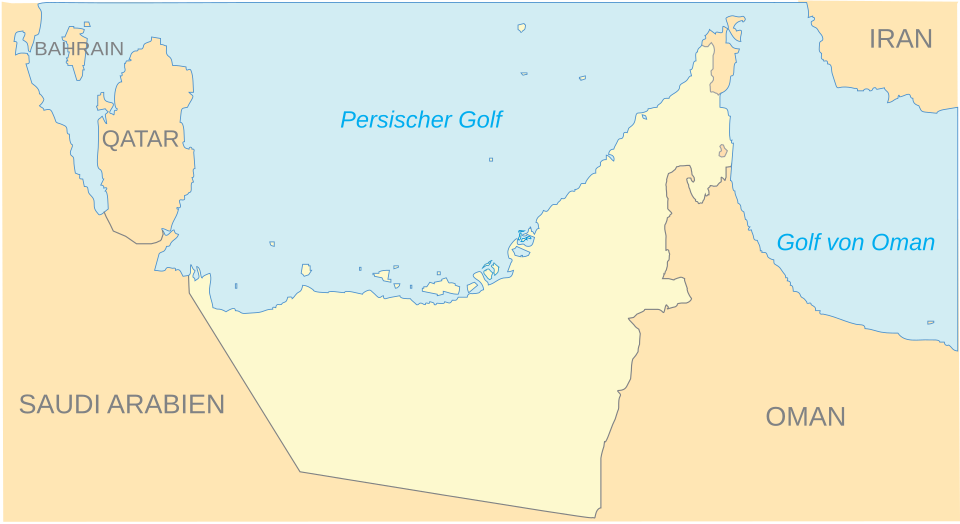
The housing market is further complicated by the federal structure itself. Each of the seven sheikhdoms—Abu Dhabi, Ajman, Fujairah, Sharjah, Dubai, Ras Al Khaimah, and Umm Al Quwain—maintains its own property regulations, visa policies, and development priorities. Dubai’s property market operates with relatively liberal foreign ownership rules, while Abu Dhabi maintains tighter controls.
This fragmentation means that cost of living comparisons within the UAE are as dramatic as comparisons between the UAE and other nations.
The Business Fortress: Investment Climate in the Tribal Federation
The UAE’s business environment is defined by a fundamental tension between its reputation as a regional hub for commerce and the political reality of governance by hereditary tribal monarchy. The top companies operating within the federation—though specific names are not provided in the available data—span the energy sector, aviation, logistics, real estate, and financial services.
Abu Dhabi’s hydrocarbon wealth provides the fiscal foundation for the entire system, while Dubai has successfully diversified into tourism, trade, and services.
The political structure of the Federal Supreme Council, composed of the ruling Sheikhs of the seven emirates, creates a business climate that is simultaneously stable and unpredictable. Stability comes from the concentration of power in hereditary rulers whose families have governed for generations. Predictability is undermined by the absence of democratic checks and balances, meaning that business conditions can shift rapidly based on the preferences of individual rulers.
The allocation of revenues from each emirate to the federal government—at an unspecified percentage—creates ongoing negotiations between Abu Dhabi, as the wealthiest emirate, and the others. This fiscal arrangement means that businesses operating across multiple emirates must navigate different regulatory environments and tax regimes, even as the federal government attempts to harmonize economic policy.
The system works because hydrocarbon revenues have historically been sufficient to satisfy all parties, but it creates structural risk should oil prices decline significantly.
Safety, Surveillance, and the Social Contract
The absence of crime and safety indices from the available data is itself a notable gap, but observation suggests that the UAE maintains extremely low rates of street crime and violent offenses. This safety comes at a cost measured in terms of personal freedoms.
The political landscape, as described by the World Bank data, is a “federal semi-presidential state under a semi-constitutional monarchy made up of seven hereditary tribal monarchy-styled political units called Sheikhdoms.” This is not a democracy by any conventional definition.
The Federal Supreme Council holds ultimate authority, and all responsibilities not explicitly granted to the federal government remain with the individual emirates. This arrangement means that quality of life varies dramatically depending on which sheikhdom one resides in. Sharjah, for example, prohibits alcohol sales and maintains conservative social codes, while Dubai permits a comparatively liberal lifestyle.
Emirati citizens enjoy generous state benefits, free healthcare, education, and housing assistance, while foreign residents operate under a temporary visa system that provides no path to permanent residency or citizenship.
The social contract in the UAE is fundamentally transactional: the state provides material prosperity and physical safety in exchange for political quiescence. For the millions of foreign workers who constitute the majority of the population, this bargain includes the acceptance of limited labor rights, restrictions on political expression, and the constant threat of deportation should one’s employment end. The system works economically, but it creates a society of permanent impermanence.
The Succession Calculus: What’s Happening Now
The UAE is currently navigating a period of generational transition that will define its economic and political trajectory for decades to come. The ruling sheikhs of the seven emirates are aging, and succession within the hereditary system is never straightforward. Abu Dhabi’s leadership transition has proceeded relatively smoothly, but the question of how power will transfer across the federation remains open.
Economically, the UAE is pursuing aggressive diversification away from hydrocarbon dependence, with massive investments in technology, renewable energy, logistics, and tourism. The success of these efforts will determine whether the federation can maintain its high GDP per capita in a world transitioning away from fossil fuels. The country’s position as a regional trade and financial hub faces increasing competition from Saudi Arabia’s Vision 2030 reforms and Qatar’s continued development.
The fiscal relationship between the emirates is under constant negotiation. The percentage of revenues allocated from each sheikhdom to the federal government is not publicly specified, creating uncertainty about the sustainability of the federal system. Dubai’s massive debt burden from its development boom has been restructured but not eliminated, and the emirate remains dependent on Abu Dhabi’s financial support.
These internal tensions are managed through the Federal Supreme Council, but the mechanisms for resolving disputes between hereditary rulers are opaque and potentially fragile.
The Bottom Line
The United Arab Emirates demands attention from anyone seeking to understand the future of rentier states in a post-carbon world. Its extraordinary wealth, measured by GDP per capita at purchasing power parity of nearly $80,000 according to the World Bank, is both a triumph of resource management and a warning about the vulnerabilities of concentrated wealth.
Investors and businesses should watch the UAE for its market access and infrastructure, but they must understand that they are operating within a system of hereditary tribal governance where political risk is real though rarely discussed. The federation’s ability to maintain its prosperity while navigating succession, diversification, and the inherent tensions of its seven-member structure will determine whether it remains a model of Gulf success or becomes a cautionary tale.
Sources & Methodology
This article is authored by Economic Pulse Net for informational and research purposes. Economic Pulse Net sources its data from multilateral institutions, national statistics bureaus, and proprietary databases. All data is believed to be current as of the date of publication.
Published: July 18, 2026 | Category: Research — UAE
Use these signals in your own platform
Economic Pulse publishes its live signal feed through a documented, read-only API. Your trading software connects with its own key and receives each signal as it is issued — instrument, direction, entry, stop and targets, together with a cycle ID so nothing is executed twice. The feed is independent of this website and cannot change it.
Signals are informational only and are not financial advice.