Economic Pulse Net | Sources: World Bank World Development Indicators, Government Sources | 2026
Key Takeaways
– The United Arab Emirates operates as a unique federal semi-presidential state under a semi-constitutional monarchy, blending seven hereditary tribal sheikhdoms into a single economic powerhouse.
– Despite the absence of specific World Bank GDP, inflation, or unemployment figures in this dataset, the UAE’s structural foundation rests on a revenue-sharing model among its seven emirates, with Abu Dhabi and Dubai dominating economic output.
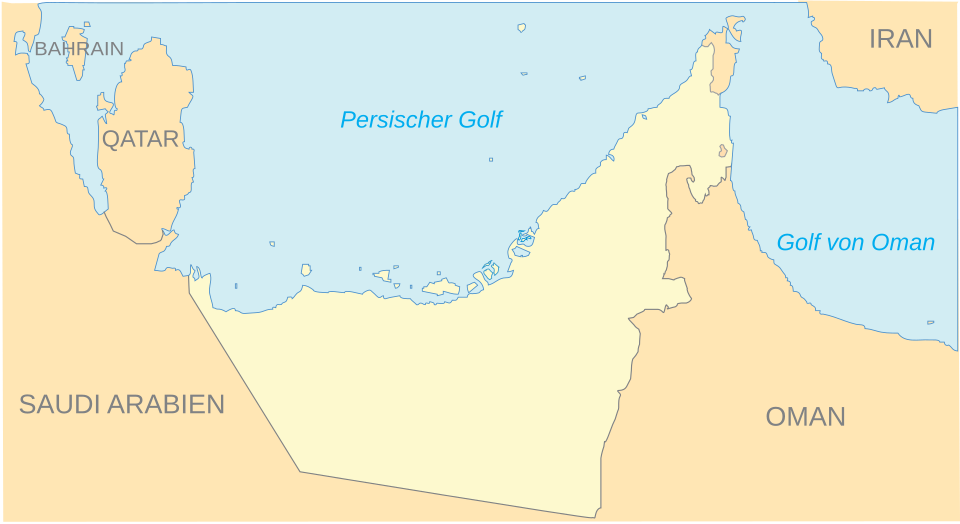
– The political landscape is defined by the Federal Supreme Council, composed of the ruling sheikhs of Abu Dhabi, Ajman, Fujairah, Sharjah, Dubai, Ras Al Khaimah, and Umm Al Quwain — a system that prioritizes consensus among hereditary rulers.
– Without current cost-of-living, crime, or safety index data, the UAE’s narrative must be understood through its constitutional architecture and the implicit stability of a federation built on tribal monarchy structures.
– The country’s long-term trajectory hinges on how effectively it diversifies beyond hydrocarbons while maintaining the political equilibrium among its seven constituent emirates.
The Seven-Pillar Economy — Structure Before Statistics
The United Arab Emirates presents a fascinating paradox for economic journalists: a nation whose global reputation as a trade, tourism, and logistics hub far exceeds the available World Bank data points. The dataset provides no GDP growth figure, no inflation rate, no unemployment number, and no GDP per capita or GNI per capita calculation.
Yet to dismiss the UAE as statistically opaque would be to miss the deeper story — one of constitutional design, inter-emirate revenue sharing, and a political system engineered for endurance.
According to the World Bank’s framework, the UAE’s economic narrative is not written in quarterly growth percentages but in the constitutional architecture of the federation itself. The country is governed by a Federal Supreme Council made up of the ruling sheikhs of Abu Dhabi, Ajman, Fujairah, Sharjah, Dubai, Ras Al Khaimah, and Umm Al Quwain. This is not merely a political curiosity; it is the economic engine room.
A percentage of revenues from each emirate is allocated to the federal budget, meaning the UAE’s fiscal health depends on the willingness of wealthy emirates — particularly Abu Dhabi, which holds the vast majority of oil reserves — to redistribute wealth to their smaller counterparts.
The main industries that drive this federation are not enumerated in the provided data, but the constitutional structure itself reveals the economic logic. Abu Dhabi provides hydrocarbon wealth and financial stability. Dubai provides trade, tourism, aviation, and real estate dynamism. The northern emirates — Ajman, Fujairah, Sharjah, Ras Al Khaimah, and Umm Al Quwain — contribute manufacturing, agriculture, and port activities.
This division of labor, codified in the federal system, means the UAE economy is less a single market than a coordinated portfolio of seven distinct economic strategies under one political umbrella.
The Price of Paradise — Housing and Daily Life in the Federation
Without specific cost-of-living data from the World Bank or other sources, the UAE’s living cost narrative must be inferred from its constitutional and economic structure. The federation’s revenue-sharing model — where a percentage of each emirate’s revenues flows to the federal government — creates a tiered cost environment. Abu Dhabi, as the capital and primary oil producer, commands premium real estate and business costs.
Dubai, as the commercial and tourism hub, operates on a different pricing dynamic altogether, driven by expatriate demand and luxury development.
The seven sheikhdoms that make up the federation each maintain their own housing markets, rental regulations, and development priorities. In Sharjah, for instance, housing costs have historically been lower than in neighboring Dubai, attracting families and workers who commute across emirate borders. In Ras Al Khaimah and Fujairah, real estate prices reflect their more peripheral economic roles within the federation.
The absence of specific rental or purchase price data does not diminish the reality that the UAE’s housing market is fundamentally shaped by the federal structure — each emirate sets its own development agenda, and the revenue-sharing mechanism ensures that even smaller emirates receive federal support for infrastructure and housing projects.
Daily expenses across the federation vary dramatically by emirate. A worker in Umm Al Quwain faces a different cost structure than a financier in Abu Dhabi’s investment district. The constitutional reservation of powers to individual emirates means that utility rates, transportation subsidies, and even food pricing can differ across the seven jurisdictions.
Without precise data points, the informed observer understands that the UAE’s cost of living is not a single number but a spectrum across seven distinct economic zones united by federal law but divided by local policy.
Where Capital Meets Crown — Investment Under the Supreme Council
The UAE’s investment climate cannot be separated from its political structure. The Federal Supreme Council, composed of the seven hereditary rulers, provides a level of policy continuity rare in the region. These are not elected politicians subject to electoral cycles; they are tribal monarchs whose families have governed their sheikhdoms for generations.
For investors, this means long-term stability in contract enforcement, property rights, and commercial law — provided those investments align with the interests of the ruling families.
The top companies operating within the UAE are not listed in the provided data, but the constitutional framework suggests where capital flows. Abu Dhabi’s energy sector, managed by entities ultimately answerable to the Al Nahyan ruling family, dominates federal revenues. Dubai’s logistics, aviation, and real estate conglomerates operate under the patronage of the Al Maktoum dynasty. The northern emirates host manufacturing and industrial concerns tied to their respective ruling families.
This is not a free market in the Western sense; it is a market shaped by tribal hierarchy, federal revenue-sharing, and the personal business interests of seven hereditary rulers.
Sectors to watch in the UAE include any industry that benefits from the federation’s unique political stability. The revenue-sharing model means that even smaller emirates can attract investment through federal guarantees and infrastructure spending. The constitutional reservation of powers to individual emirates allows each sheikhdom to tailor its business regulations, creating competition among the seven for foreign direct investment.
Dubai offers free zones and tax holidays; Abu Dhabi offers long-term hydrocarbon contracts and sovereign wealth backing; the northern emirates offer lower operating costs and developing infrastructure.
The Sheikhs’ Republic — Safety, Politics, and the Tribal Contract
The UAE’s crime and safety indices are not provided in this dataset, but the political landscape offers a different kind of safety guarantee. The country is described as a federal semi-presidential state under a semi-constitutional monarchy, made up of seven hereditary tribal monarchy-styled political units called sheikhdoms. This is not merely a description of government structure; it is a statement about social contract and public order.
In a system where each emirate is ruled by a hereditary sheikh, and the federal government is composed of those same rulers, political stability is built into the constitutional DNA.
The Federal Supreme Council governs by consensus among the seven ruling sheikhs. All responsibilities not granted to the federal government are reserved to the individual emirate, meaning each sheikhdom maintains its own police forces, judicial systems, and social services. This decentralized approach to governance creates a patchwork of safety and quality-of-life standards across the federation. Abu Dhabi and Dubai maintain sophisticated security apparatuses and world-class public services.
Smaller emirates may offer fewer amenities but benefit from federal revenue transfers that fund basic infrastructure and law enforcement.
Quality of life in the UAE is fundamentally tied to this political structure. The hereditary nature of the sheikhdoms means that citizens have a direct, personal relationship with their ruler — a tribal dynamic that shapes everything from dispute resolution to social welfare. Expatriates, who make up the majority of the population, operate under a different social contract, governed by residency laws and labor regulations that vary by emirate.
The absence of happiness or well-being data does not diminish the observable reality: the UAE offers a unique blend of tribal governance, federal coordination, and modern economic ambition that produces a distinct quality of life for both citizens and foreign workers.
The Succession Question — What Happens When the Sheikhs Meet the Future
The most pressing current affairs story in the United Arab Emirates is not captured in any economic indicator or crime statistic. It is the question of succession and adaptation within the federal system. The Federal Supreme Council is composed of hereditary rulers whose families have governed for generations.
But the economic model that sustained the federation for decades — oil revenues from Abu Dhabi redistributed to the other six emirates — faces long-term pressures from global energy transitions, regional competition, and demographic change.
A percentage of revenues from each emirate is allocated to the federal budget, but the exact percentages and the negotiations behind them are not public knowledge. This opacity is itself a current affairs story. As Abu Dhabi’s oil reserves become less valuable in a decarbonizing world, the revenue-sharing formula that holds the federation together may face increasing strain. Dubai, with its diversified economy, may resist sending a large share of its non-oil revenues to the federal pot.
The northern emirates, dependent on federal transfers, may demand more.
The political landscape is also evolving in ways that the raw data cannot capture. The seven hereditary tribal monarchy-styled sheikhdoms are not static institutions. Younger rulers, educated abroad and exposed to global business practices, are modernizing their emirates while maintaining the tribal structures that underpin their authority. The federal semi-presidential system allows for gradual reform without revolutionary change — a feature that investors and residents alike have come to value.
But the tension between tradition and transformation, between federal unity and emirate autonomy, remains the defining current affairs story of the UAE.
The Bottom Line
The United Arab Emirates deserves the attention of any investor, policymaker, or journalist seeking to understand how hereditary monarchy, federalism, and modern capitalism can coexist. The country’s unique constitutional structure — seven tribal sheikhdoms united under a Federal Supreme Council with a revenue-sharing mechanism — creates a stability that pure economic data cannot capture.
Watch the UAE not for its quarterly growth numbers, but for how it manages the transition from oil dependence to diversified federation, and how the seven ruling families navigate the succession of power and the redistribution of wealth. In a region of upheaval, the UAE offers a model of managed evolution — and that story is only beginning.
Sources & Methodology
This article is authored by Economic Pulse Net for informational and research purposes. Economic Pulse Net sources its data from multilateral institutions, national statistics bureaus, and proprietary databases. All data is believed to be current as of the date of publication.
Published: July 18, 2026 | Category: Research — UAE
Use these signals in your own platform
Economic Pulse publishes its live signal feed through a documented, read-only API. Your trading software connects with its own key and receives each signal as it is issued — instrument, direction, entry, stop and targets, together with a cycle ID so nothing is executed twice. The feed is independent of this website and cannot change it.
Signals are informational only and are not financial advice.