Economic Pulse Net | Sources: World Bank World Development Indicators, Government Sources | 2026
Key Takeaways
– The United Arab Emirates is not a single economy but a federation of seven hereditary sheikhdoms, each retaining significant fiscal and regulatory autonomy under a semi-constitutional monarchy.
– Political power is concentrated in the Federal Supreme Council, composed of the ruling sheikhs of Abu Dhabi, Ajman, Fujairah, Sharjah, Dubai, Ras Al Khaimah, and Umm Al Quwain, with revenue-sharing arrangements between emirates.
– The country’s economic model blends tribal governance structures with modern global investment ambitions, creating a unique business environment where political stability and royal patronage drive commerce.
– Despite the absence of specific GDP, inflation, or unemployment figures from the World Bank, the UAE’s structural position as a major hydrocarbons exporter and regional trade hub remains central to its economic identity.
– Foreign investors and expatriates operate within a system where political rights are limited but economic freedoms are substantial, creating a distinctive quality-of-life calculus.
The Seven-Headed Economy: Understanding the UAE’s Federal Bargain
The United Arab Emirates presents a fascinating paradox for economists: a federation of seven hereditary tribal monarchies that has built one of the world’s most dynamic business environments while maintaining a political structure that would be unrecognizable to most modern democracies.
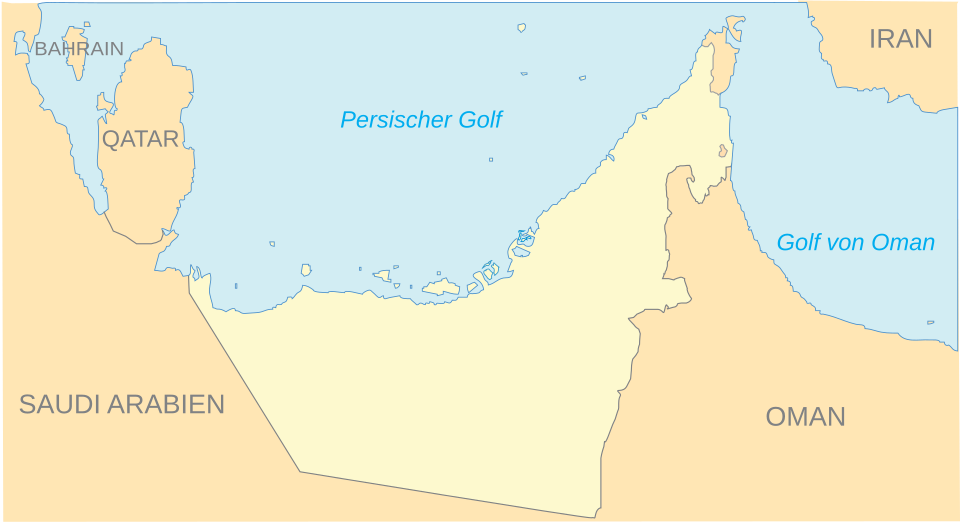
According to the World Bank, the UAE operates as a federal semi-presidential state under a semi-constitutional monarchy, but this description only scratches the surface of a system where power flows from the ruling sheikhs of Abu Dhabi, Ajman, Fujairah, Sharjah, Dubai, Ras Al Khaimah, and Umm Al Quwain.
The Federal Supreme Council, composed of these seven hereditary rulers, serves as the highest constitutional authority in the land. Each sheikhdom retains all responsibilities not explicitly granted to the federal government, creating a patchwork of regulatory environments, economic priorities, and development strategies within a single national framework.
This arrangement means that doing business in Dubai can be a fundamentally different experience from operating in Abu Dhabi or Ras Al Khaimah, even though all fall under the same national banner.
The revenue-sharing mechanism between emirates—where a percentage of each emirate’s revenues is allocated to the federal budget—is the fiscal glue that holds this federation together. The World Bank data does not specify the exact percentage, but this arrangement ensures that wealthier emirates like Abu Dhabi and Dubai effectively subsidize the federal apparatus that serves the entire nation.
This system has proven remarkably stable, allowing the UAE to project an image of unified prosperity while maintaining the local autonomy that tribal politics demands.
The Cost of Living in a Federation of Contrasts
Housing costs across the seven emirates reflect the dramatic disparities in development and economic focus that characterize the UAE federation. In Dubai and Abu Dhabi, residential real estate has long been driven by international demand, expatriate labor markets, and government-backed megaprojects, creating price points that rival global capitals.
The rental market in these emirates operates on a fundamentally different plane from the more traditional housing sectors in Ajman, Fujairah, or Umm Al Quwain, where local dynamics and lower expatriate concentrations keep costs more moderate.
The cost of daily essentials—from food to transportation to utilities—varies significantly depending on which sheikhdom one calls home. Expatriate workers in Dubai’s service economy face a different cost structure than Emirati nationals in Sharjah or Ras Al Khaimah, partly because each emirate sets its own utility tariffs, municipal fees, and regulatory requirements.
The federal structure means that a family relocating from one emirate to another may encounter entirely new cost-of-living calculations, even within the same country.
For the majority of the population—expatriates who have no path to citizenship—the cost of housing is often the single largest expense, and it is directly tied to visa requirements that mandate minimum salary levels and employer sponsorship. This creates a market where housing costs are not simply a function of supply and demand but are also shaped by immigration policy and the political decisions of each emirate’s ruling sheikh.
Investment and Business in the Sheikhdom System
The UAE’s top companies operate within a business environment that is simultaneously highly regulated and remarkably free, depending on one’s position in the political hierarchy. The ruling families of each emirate maintain controlling stakes in the nation’s most valuable enterprises, from energy conglomerates to real estate developers to aviation giants.
For international investors, the key to success lies in understanding that business relationships in the UAE are often mediated through personal connections to the ruling sheikhs and their appointed representatives.
Each emirate has developed its own economic specialization: Abu Dhabi controls the vast majority of hydrocarbon reserves and has built a sovereign wealth fund model that invests globally; Dubai has positioned itself as a trade, tourism, and logistics hub; Sharjah focuses on education and culture; while the northern emirates have pursued more modest manufacturing and agricultural development strategies.
This division of economic labor within the federation creates multiple entry points for foreign investors, each with different regulatory frameworks and partnership requirements.
The business climate in the UAE is characterized by minimal taxation, streamlined company registration in designated free zones, and a legal system that blends civil law with elements of Sharia. However, the absence of democratic accountability means that business regulations can change rapidly based on the decrees of individual rulers, creating both opportunities and risks for those who operate within the system.
Foreign ownership restrictions have been relaxed in recent years, but the fundamental structure of an economy dominated by royal family interests remains intact.
Safety, Politics, and the Quality of Life Trade-Off
The UAE’s political landscape, as described by the World Bank, is one of hereditary tribal monarchy where seven sheikhdoms operate under a federal umbrella. This system delivers remarkable political stability—there are no elections for national leadership, no opposition parties, and no independent media in the Western sense.
For residents and investors, this stability is a double-edged sword: it provides predictability in business dealings and personal safety, but it comes at the cost of political rights and civil liberties that citizens of democratic nations take for granted.
The safety environment in the UAE is widely considered excellent by international standards, with low rates of violent crime and a strong police presence across all seven emirates. This security is maintained through extensive surveillance, strict laws, and a legal system that grants authorities broad powers. For expatriates and tourists, the trade-off between personal safety and personal freedoms is generally accepted as a feature of life in the federation, not a bug.
The quality of life for different segments of the population varies enormously. Emirati citizens enjoy generous state benefits, subsidized housing, and preferential access to public sector employment. Expatriate professionals in Dubai and Abu Dhabi can access world-class healthcare, education, and leisure facilities.
But the millions of low-income migrant workers who build and service the economy face a fundamentally different reality, with limited labor rights, restricted mobility under the sponsorship system, and living conditions that are often far below the glittering image the federation projects to the world.
Current Affairs: The Federation Faces Its Future
The UAE is currently navigating a period of strategic transformation that tests the resilience of its federal structure. Each of the seven sheikhdoms is pursuing its own post-oil economic vision, with Abu Dhabi investing heavily in renewable energy and technology, Dubai doubling down on its position as a global business hub, and the northern emirates seeking to attract manufacturing and logistics investments that might otherwise go to lower-cost competitors in the region.
The revenue-sharing mechanism between emirates has come under increased scrutiny as global energy transitions threaten the long-term value of hydrocarbon exports. Abu Dhabi, as the wealthiest emirate, bears the largest burden in funding federal services, and there are ongoing discussions about how to recalibrate the fiscal relationship as the federation’s economic center of gravity shifts.
The percentage of revenues allocated from each emirate to the federal budget remains a sensitive political question that touches on the fundamental balance of power between the seven ruling families.
For businesses and investors watching the UAE today, the key questions revolve around succession planning within the ruling families, the pace of economic diversification away from hydrocarbons, and the federation’s ability to maintain political cohesion as individual emirates pursue increasingly divergent economic strategies.
The system of hereditary tribal monarchy that has served the UAE so well for decades faces new pressures from globalization, demographic change, and the expectations of a younger generation that has grown up with internet access and global awareness.
The Bottom Line
The United Arab Emirates deserves the attention of any serious observer of global economics, not despite its unusual political structure but because of it. The federation of seven sheikhdoms offers a laboratory for understanding how hereditary monarchy, federalism, and global capitalism can coexist and even thrive.
Investors should watch the UAE for its continued role as a regional trade and finance hub, while political economists should study it as a case study in how traditional governance structures adapt to modern economic realities. The experiment of seven thrones ruling as one nation is far from finished, and its next chapter will be written in the balance between tribal tradition and global integration.
Sources & Methodology
This article is authored by Economic Pulse Net for informational and research purposes. Economic Pulse Net sources its data from multilateral institutions, national statistics bureaus, and proprietary databases. All data is believed to be current as of the date of publication.
Published: July 18, 2026 | Category: Research — UAE
Use these signals in your own platform
Economic Pulse publishes its live signal feed through a documented, read-only API. Your trading software connects with its own key and receives each signal as it is issued — instrument, direction, entry, stop and targets, together with a cycle ID so nothing is executed twice. The feed is independent of this website and cannot change it.
Signals are informational only and are not financial advice.