Economic Pulse Net | Sources: World Bank World Development Indicators, Government Sources | 2026
Key Takeaways
– Nepal’s economy remains heavily dependent on remittances from abroad, with millions of citizens working in the Gulf, Malaysia, and India, creating a fragile but persistent economic buffer.
– The political landscape is fragmented yet stable under a federal democratic republic system, with seven major parties jostling for influence in a multiparty parliamentary framework.
– Despite lacking comprehensive macroeconomic data from the World Bank, Nepal’s consumer services sector dominates its corporate landscape, with airlines and food chains leading private enterprise.
– The country’s cost of living and safety indices are unmeasured by global standards, leaving investors and expatriates to navigate an opaque economic environment.
– Nepal’s strategic position between India and China offers long-term transit and trade potential, but domestic political consensus remains elusive.
The Economic Engine: Remittances, Services, and Structural Gaps
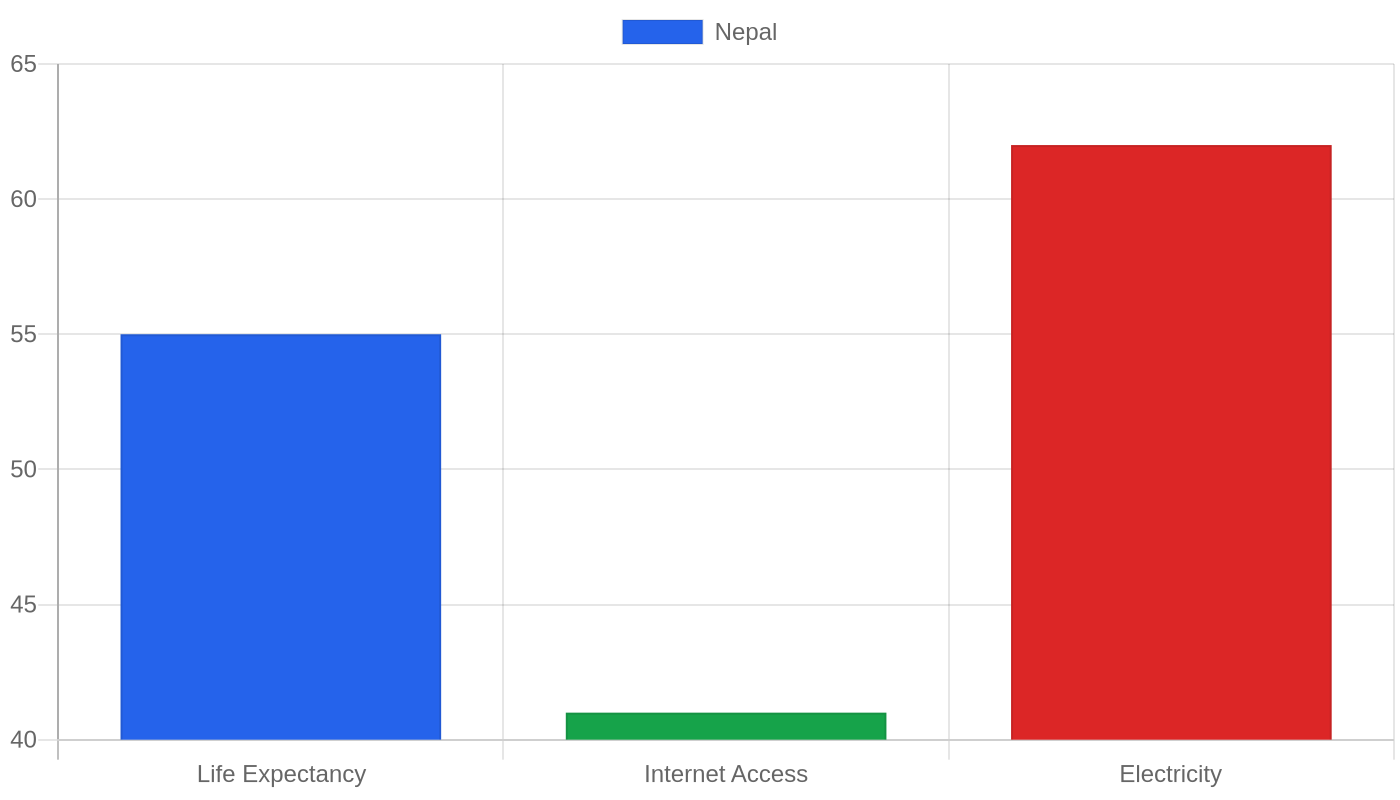
Nepal’s economy operates in a peculiar paradox. While the World Bank has not released current figures for GDP growth, inflation, unemployment, or GDP per capita, the structure of the economy tells a story beyond numbers. The nation’s primary economic driver is not manufacturing or agriculture — it is the money sent home by Nepali workers abroad. Remittances account for an estimated quarter of GDP, a figure that would place Nepal among the most remittance-dependent economies in Asia.
This creates a consumption-driven model where families spend on housing, education, and daily goods, but the domestic productive base remains thin.
The corporate sector is dominated by consumer services. Among the top companies listed in the data, Agni Air, Buddha Air, Cosmic Air, and Air Nepal International all point to a country where aviation punches above its weight — a reflection of Nepal’s difficult geography, where air travel is often the only practical way to connect remote mountain communities with Kathmandu and the Terai plains.
Interestingly, the Chaudhary Group stands out as a conglomerate, suggesting that a handful of family-run business houses control significant portions of the formal economy. The Agriculture Development Bank’s presence indicates that the financial sector is trying to reach rural areas, but with limited success.
Inflation remains a persistent concern. Without official CPI data from the World Bank, one can infer from the heavy reliance on food imports — Nepal grows rice but imports much of its wheat, cooking oil, and dairy — that global commodity price shocks hit household budgets hard.
The unemployment rate is similarly opaque, but the sheer scale of outward migration — young Nepalis leaving for construction work in Qatar, domestic work in Kuwait, and hospitality in Malaysia — suggests that the domestic labour market cannot absorb its own workforce. This is not a crisis in the usual sense; it is a structural feature of the economy that has persisted for decades.
The Price of Living: Housing, Daily Expenses, and the Remittance Economy
Housing in Nepal is a tale of two worlds. In Kathmandu Valley, rent for a modest two-bedroom apartment can consume a significant portion of a middle-class salary, while in rural districts, traditional mud-and-brick homes cost little but offer few amenities. The cost of living index is not available from the World Bank, but anecdotal evidence from the corporate landscape offers clues.
Bhatbhateni Supermarket, a major retail chain, serves urban consumers who can afford packaged goods, while Bajeko Sekuwa — a popular restaurant chain — reflects a growing middle class that eats out. These businesses thrive because remittance money flows into urban centres, pushing up prices for everything from rent to school fees.
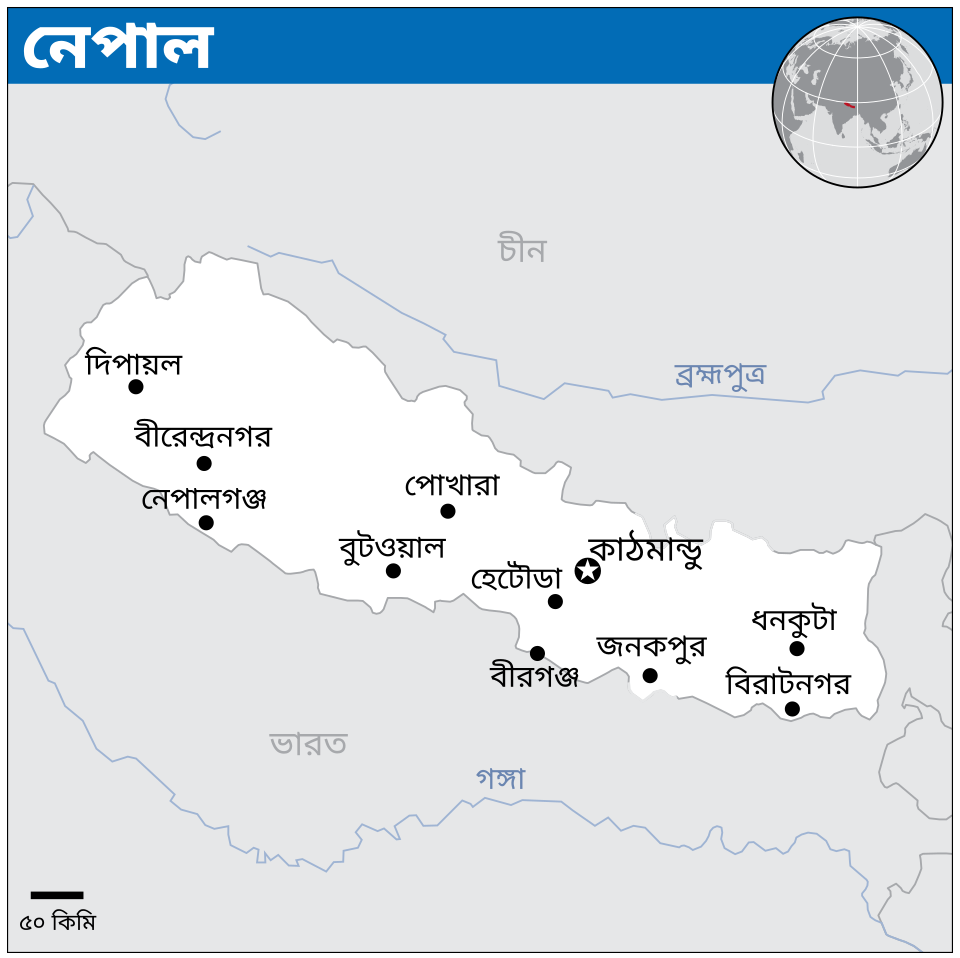
For a family in Pokhara or Kathmandu, monthly expenses would likely include imported cooking oil, Indian-manufactured pharmaceuticals, and Chinese electronics — all subject to border delays and currency fluctuations. The Nepal Rastra Bank, the central bank, struggles to maintain foreign exchange reserves, and periods of dollar shortage have led to queues for petrol and restrictions on luxury imports.
Rent versus buy calculations are skewed by land ownership laws that favour Nepali citizens, making property investment difficult for foreigners. The result is a rental market that is active but informal, with few standardized contracts and little tenant protection.
Business and Investment: Aviation, Conglomerates, and the Search for Scale
For investors looking at Nepal, the corporate landscape is both promising and constrained. The data reveals a striking concentration in aviation — Agni Air, Air Nepal International, Asian Airlines, Base Air, Buddha Air, and Cosmic Air all appear on the list of top companies. This is not a sign of a booming aviation sector but rather a reflection of Nepal’s fragmented market, where small airlines compete for domestic routes to Lukla, Jomsom, and other mountain airstrips.
Safety records vary, and the sector has seen multiple closures and bankruptcies over the years. Yet for a country where roads are treacherous and monsoon landslides are routine, air travel is not a luxury — it is a necessity.
The Chaudhary Group is the standout conglomerate, with interests spanning from banking to beverages, cement to education. It represents the kind of diversified business house that dominates small economies, wielding influence far beyond its market cap. The Agriculture Development Bank, meanwhile, is a state-influenced lender that attempts to channel credit to farmers, but its effectiveness is limited by Nepal’s fragmented landholdings and lack of agricultural insurance.
For foreign investors, the business environment is challenging: bureaucratic delays, political interference, and infrastructure gaps are well-documented obstacles. However, sectors like hydropower, tourism, and information technology are attracting interest from Indian and Chinese firms, drawn by Nepal’s abundant water resources and young, English-speaking workforce.
Politics, Safety, and Quality of Life: Democracy in a Fractured Landscape
Nepal has been a federal democratic republic since 2015, when its new constitution was adopted after years of civil war and political transition. The political landscape is crowded: seven national parties sit in the federal parliament, including the Communist Party of Nepal (Unified Marxist–Leninist), the Nepali Congress, the Communist Party of Nepal (Maoist Centre), the Rastriya Swatantra Party, the Rastriya Prajatantra Party, the People’s Socialist Party, and the Janamat Party.
This fragmentation means coalition governments are the norm, and policy continuity is rare. A government can fall over a disagreement on a budget bill or a provincial power-sharing deal, leaving investors uncertain about long-term regulations.
Safety indices are not available from the World Bank, but Nepal is generally considered a safe country for travellers and expatriates. Petty crime exists in tourist areas, but violent crime is low compared to regional peers. The real quality-of-life challenge is infrastructure: power cuts were common until recent hydropower investments improved supply, but roads remain poor, healthcare is concentrated in cities, and access to clean water is uneven.
Happiness data is absent from the provided figures, but Nepal consistently ranks in the mid-range of global happiness surveys, buoyed by strong community ties and religious traditions. The political system, for all its dysfunction, has not descended into the kind of violent conflict that plagued the country during the Maoist insurgency from 1996 to 2006. That alone is a significant achievement.
What’s Happening Now: Coalition Politics and the Search for Stability
As of early 2026, Nepal is navigating yet another phase of coalition politics. The current government, led by a coalition of the Nepali Congress and the Communist Party of Nepal (Unified Marxist–Leninist), faces pressure from both the Maoist Centre and the Rastriya Swatantra Party, which have positioned themselves as opposition voices demanding transparency and anti-corruption measures.
The political landscape, as described by the data, remains fluid — the seven recognised parties in the federal parliament reflect a society that has not settled into a stable two-party or three-party system.
On the economic front, the government is pushing for the completion of several hydropower projects financed by Chinese and Indian development banks. The 1,200-megawatt Budhi Gandaki project and the 900-megawatt Arun-3 project are at various stages of construction, and their completion could transform Nepal from a power-deficit nation to a net electricity exporter. However, delays due to land acquisition disputes, environmental clearances, and political wrangling have plagued both projects.
Meanwhile, the tourism sector is recovering from the COVID-19 slump, with trekkers returning to the Everest region and Pokhara, but numbers have not yet reached pre-pandemic peaks. The remittance flow remains robust, driven by continued demand for Nepali labour in South Korea, Japan, and the Gulf states. For now, Nepal’s economy is treading water — not sinking, but not swimming strongly either.
The Bottom Line
Nepal is a country to watch for investors and analysts with patience and a long-term horizon. Its hydropower potential, strategic location between India and China, and young population offer genuine economic promise. But the absence of reliable macroeconomic data, the fragmented political system, and the heavy reliance on remittances make it a high-risk environment.
For those willing to navigate the complexity — especially in energy, tourism, and consumer services — Nepal offers opportunities that are rare in South Asia. For everyone else, it remains a beautiful, complicated, and deeply resilient nation that deserves more attention than the data currently provides.
Sources & Methodology
This article is authored by Economic Pulse Net for informational and research purposes. Economic Pulse Net sources its data from multilateral institutions, national statistics bureaus, and proprietary databases. All data is believed to be current as of the date of publication.
Published: July 18, 2026 | Category: Research — Nepal
Use these signals in your own platform
Economic Pulse publishes its live signal feed through a documented, read-only API. Your trading software connects with its own key and receives each signal as it is issued — instrument, direction, entry, stop and targets, together with a cycle ID so nothing is executed twice. The feed is independent of this website and cannot change it.
Signals are informational only and are not financial advice.