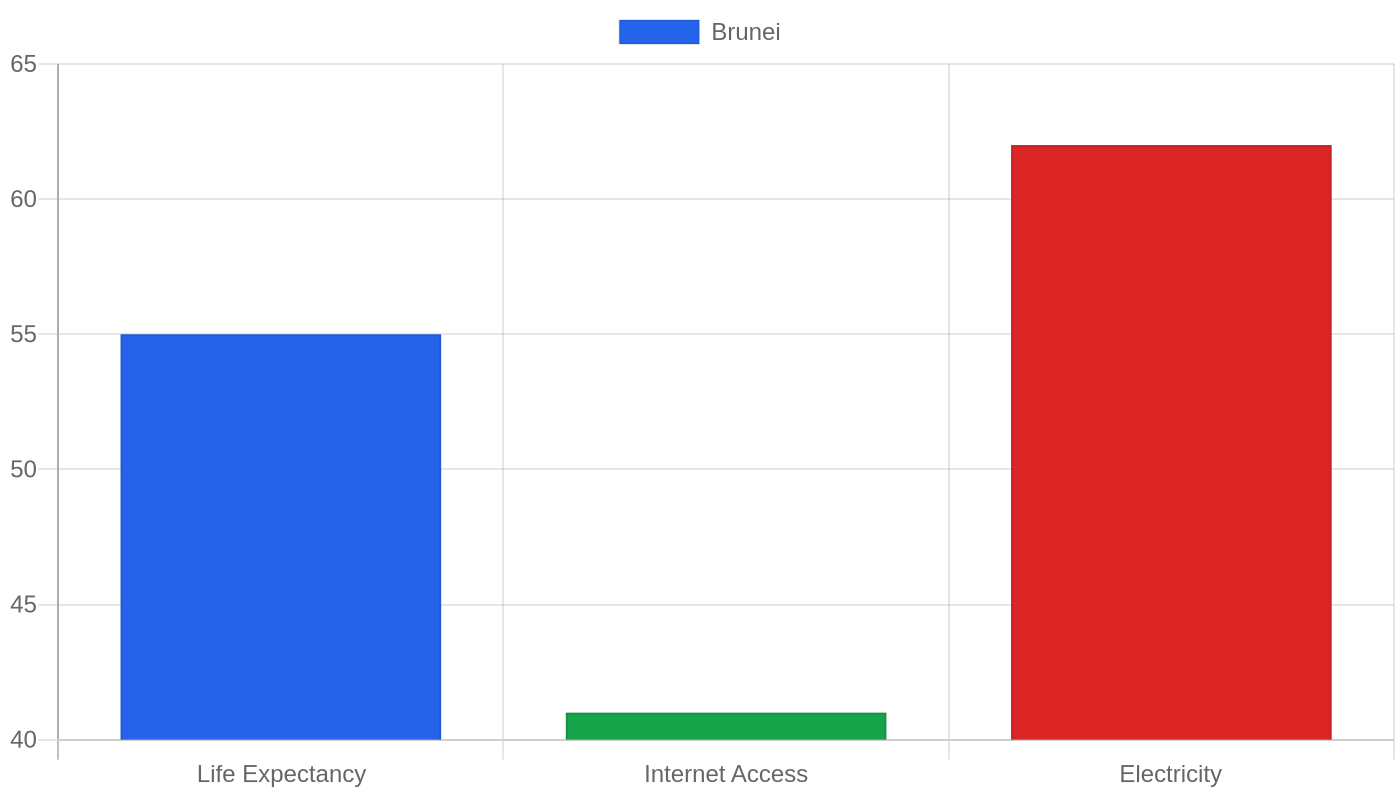
Economic Pulse Net | Sources: World Bank World Development Indicators, Government Sources | 2026
Key Takeaways
– Brunei’s economy remains overwhelmingly dependent on oil and gas, with state-linked giants like Brunei Shell Petroleum and Brunei LNG dominating the industrial landscape, yet the government is aggressively pushing diversification into fertilizers and petrochemicals.
– The political system is a unique Malay Islamic Monarchy (MIB) where the Sultan holds absolute power, appoints all parliament members, and there are no elections — stability is enforced, not contested.
– Despite lacking published World Bank data on GDP growth, inflation, or unemployment, the country’s high per-capita wealth is evident in its state-led economic model, where the Brunei Investment Agency manages vast sovereign reserves.
– The financial sector is anchored by three major institutions — Baiduri Bank, Bank Islam Brunei Darussalam, and the central bank — providing a stable but narrow banking environment.
– Crime and safety indices are not published, but the country’s tight social controls and small population suggest a low-crime environment, though this comes within a framework where Sharia law supersedes English common law in certain cases.
The Hydrocarbon Heartbeat — Growth in a Data Vacuum
Brunei’s economy is a paradox of plenty and opacity. The World Bank provides no current figures for GDP growth, inflation, or unemployment — a silence that speaks volumes about both data transparency and the insular nature of this Southeast Asian sultanate. What is clear, however, is that the nation’s economic pulse is entirely synchronized with the rhythm of the global energy market.
The main industries read like a roll call of hydrocarbon dominance: Brunei Shell Petroleum, Brunei LNG, Brunei Methanol Company, and Brunei Energy Services and Trading form the backbone of national output. These are not merely companies; they are quasi-state instruments through which the monarchy channels wealth.
The absence of hard numbers from the World Bank does not mean stagnation. On the contrary, the government has been quietly engineering a structural shift. The emergence of Brunei Fertilizer Industries as a major industrial player signals a deliberate strategy to move up the value chain — from crude extraction to processed petrochemicals. This is a classic resource-rich nation play: when you cannot escape commodity dependence, you at least try to capture more margin.
The Brunei Investment Agency, the sovereign wealth fund, sits at the apex of this system, managing the surplus that allows the state to maintain its generous social contract with citizens. Without published GDP per capita or GNI figures, one must read the economy through its institutions rather than its statistics. The sheer concentration of financial and industrial power in state-linked entities suggests an economy that prioritizes stability over transparency, and control over volatility.
The real economic story here is not about growth rates — it is about the clock ticking on hydrocarbons. Every new fertilizer plant or methanol facility is a hedge against a future where oil and gas revenues decline. The World Bank data gap may be inconvenient for analysts, but for a monarchy that does not depend on foreign bond markets or IMF programs, it is also a statement of sovereign independence.
The Cost of Living — Subsidized Serenity in a Small State
Housing and daily expenses in Brunei are shaped by a fundamental reality: the state is the largest landlord, employer, and price-setter. Without specific cost-of-living indices from the World Bank, one must infer from the country’s economic structure. The presence of Hua Ho Department Store among the top ten companies — a consumer services retailer — suggests a domestic consumption base that is both active and reliant on formal retail channels.
Rent versus buy decisions are likely skewed toward ownership, as the government has historically provided land and housing subsidies to citizens as part of the MIB social contract.
Compared to regional neighbors like Malaysia or Singapore, Brunei’s cost of living is probably lower in absolute terms but higher in opportunity cost. There is no dynamic private rental market driving prices; instead, housing allocation is tied to employment in the state sector or in major companies like Brunei Shell Petroleum. Daily expenses for food, fuel, and utilities are heavily subsidized by hydrocarbon revenues.
The lack of inflation data from the World Bank may actually reflect a success story — price stability maintained through direct state intervention. But this comes with a trade-off: the economy lacks the competitive churn that creates affordable options for non-citizens. For the expatriate workforce that supports the oil and gas industry, housing is often provided as part of employment packages, insulating them from market forces but also limiting choice.
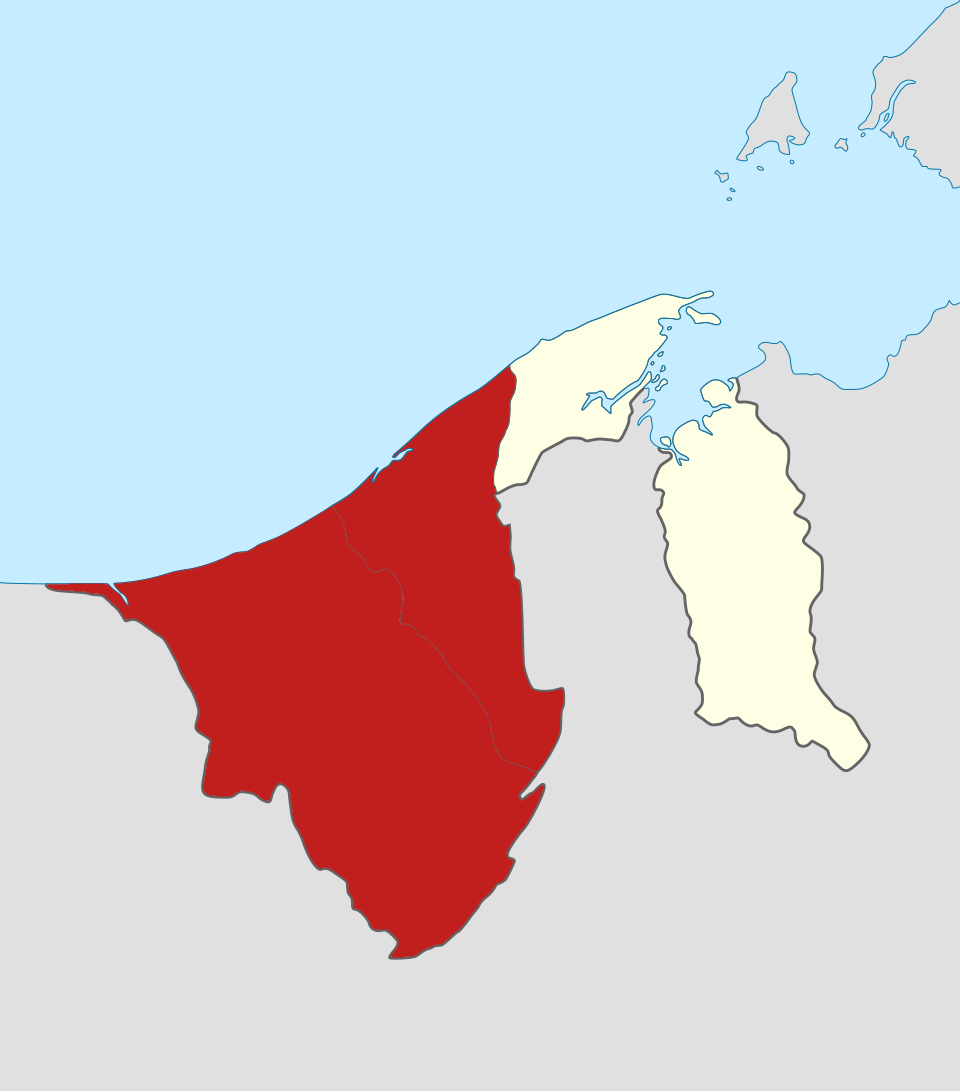
Investment & Business Climate — The Sultan’s Balance Sheet
For an investor looking at Brunei, the top companies list is both a map and a warning. The dominance of financial institutions — Baiduri Bank, Bank Islam Brunei Darussalam, and the Brunei Darussalam Central Bank — indicates a banking sector that is deep enough to manage sovereign wealth but shallow in terms of private credit creation. These are not aggressive lenders seeking high-growth ventures; they are custodians of stability.
The Brunei Investment Agency, sitting atop the financial hierarchy, is the ultimate gatekeeper of capital allocation.
The sectors to watch are not consumer tech or services, but industrials and petrochemicals. Brunei Fertilizer Industries and Brunei Methanol Company represent the government’s bet on downstream processing. For foreign capital, the entry points are limited and controlled. There is no vibrant startup ecosystem or stock exchange attracting venture money.
Instead, the business climate is defined by joint ventures with the state — the Brunei LNG and Brunei Shell Petroleum models, where international partners bring technology and the sultanate brings resource access. The absence of published GDP data from the World Bank reinforces the message: this is not a market for the impatient or the transparent. It is a place for long-term, capital-intensive partnerships with a sovereign counterparty that does not answer to voters.
Safety, Politics & Quality of Life — The MIB Compact
Brunei does not publish crime or safety indices, but the political landscape provided in the data offers a clearer picture of social order. The Malay Islamic Monarchy (MIB) is not just a political system; it is a comprehensive social contract that blends Malay cultural norms, Islamic jurisprudence, and absolute monarchical authority. The legal system is a dual structure: English common law applies in many areas, but Sharia law supersedes it in certain cases. This creates a predictable but rigid social environment.
There are no elections; the parliament is entirely appointed by the Sultan. The last election mentioned in the data is described simply as “the last election was” — a fragment that underscores the irrelevance of electoral politics.
Quality of life in Brunei is likely high for citizens who conform to the MIB framework. Subsidized housing, free healthcare and education, and zero income tax are the rewards for political quiescence. The trade-off is clear: personal freedoms are circumscribed by religious and monarchical norms. The lack of crime data may reflect genuine safety — small population, strong state surveillance, conservative social values — or it may reflect the absence of independent reporting.
For a foreign observer, the key insight is that safety in Brunei is not the product of democratic institutions or community policing; it is the product of authoritarian stability. The Sultan is both the guarantor of security and the sole source of political legitimacy.
The Fertilizer Gambit — What’s Happening Now
The most telling current development in Brunei is not a policy announcement or a political reform — it is the rise of Brunei Fertilizer Industries to the top ten companies list. This is a signal that the sultanate is moving beyond its historical reliance on crude oil and LNG exports. The fertilizer plant, likely built in partnership with foreign technology providers, represents a bid to capture value from the country’s abundant natural gas reserves by converting them into higher-value agricultural inputs.
This is a play for Asian markets — India, China, Indonesia — where fertilizer demand is structural and growing.
Alongside this, the continued prominence of Brunei Methanol Company and Brunei Energy Services and Trading suggests a coordinated push across the petrochemical value chain. The Brunei Investment Agency, as the sovereign wealth fund, is almost certainly the financial engine behind these projects, recycling hydrocarbon revenues into industrial diversification.
Meanwhile, the financial sector remains stable but unexciting — Baiduri Bank and Bank Islam Brunei Darussalam are not driving a credit boom; they are managing the deposits of a wealthy, static population. The absence of any recent news about political change, elections, or policy shifts reinforces the sense of continuity. In Brunei, the big story is not what is happening in the capital, but what is being built in the industrial zones.
The Bottom Line
Brunei is a country for the patient, risk-averse investor who values sovereign stability over democratic accountability. Its economy is a state-managed machine designed to preserve the MIB social contract, not to maximize growth or transparency. The move into fertilizers and petrochemicals is a sensible hedge, but it does not change the fundamental reality: this is a hydrocarbon monarchy with a limited shelf life for its primary revenue source.
Analysts and journalists should watch Brunei for its quiet diversification efforts, but the real story is the political system itself — a functioning absolute monarchy in the 21st century that has traded democratic participation for material security. For now, that trade is holding.
Sources & Methodology
This article is authored by Economic Pulse Net for informational and research purposes. Economic Pulse Net sources its data from multilateral institutions, national statistics bureaus, and proprietary databases. All data is believed to be current as of the date of publication.
Published: July 18, 2026 | Category: Research — Brunei
Use these signals in your own platform
Economic Pulse publishes its live signal feed through a documented, read-only API. Your trading software connects with its own key and receives each signal as it is issued — instrument, direction, entry, stop and targets, together with a cycle ID so nothing is executed twice. The feed is independent of this website and cannot change it.
Signals are informational only and are not financial advice.