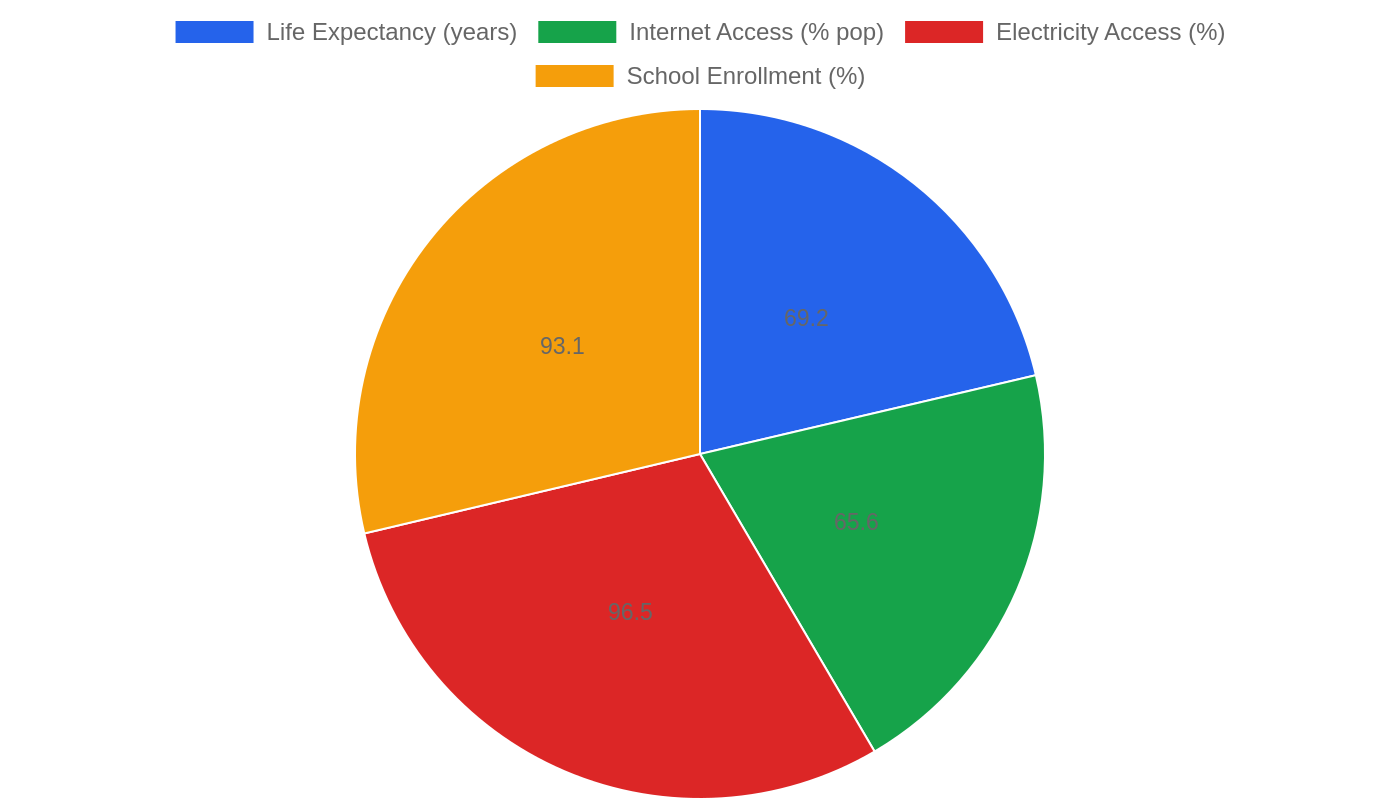
Economic Pulse Net | Sources: World Bank World Development Indicators, Government Sources | 2026
Key Takeaways
– Laos remains a unitary communist state officially in transition from capitalism to socialism, yet its economic engine is powered by state-linked utilities and consumer giants.
– The country’s economic narrative is dominated by hydropower and aviation, with companies like Nam Theun 2 Power Company and Electricite du Laos forming the backbone of industrial output.
– According to The Economist’s Democracy Index 2016, Laos was classified as an **”authoritarian regime”** , ranking lowest among the 9 ASEAN nations included in that study — a critical context for investors assessing governance risk.
– The economy is heavily reliant on state-owned enterprises (SOEs), which control everything from electricity generation to national airlines, creating a business environment where political connections are paramount.
– Despite data gaps in the World Bank’s latest reporting, the structural picture is clear: Laos is a frontier market where infrastructure investment and regional integration will define the next decade.
The Mekong’s Powerhouse — Reading Between the Data Lines
The World Bank’s latest data snapshot for Laos presents a curious paradox: headline figures for GDP growth, inflation, and unemployment remain unreported, yet the country’s economic architecture tells a compelling story of state-directed development. What we can observe is an economy anchored by heavy infrastructure plays — particularly in the energy sector.
**Nam Theun 2 Power Company**, one of the largest hydropower projects in Southeast Asia, exemplifies Laos’s ambition to become the “battery of the Mekong region.” This is not incidental; it is the core of the national development strategy.
The energy sector’s dominance is reinforced by Electricite du Laos and **Lao Holding State Enterprise**, both utilities that manage the country’s electricity generation and distribution networks. The practical effect is that Laos’s economic fortunes are tied directly to regional energy demand — particularly from neighboring countries that purchase Lao hydropower.
When the World Bank’s data eventually catches up, analysts expect the numbers to reflect this infrastructure-heavy growth model, which prioritizes large capital projects over consumer-driven expansion.
Employment figures remain opaque, but the structure of the top companies suggests a labor market bifurcated between skilled engineering and technical roles in the energy sector, and service-oriented positions in aviation and consumer goods. The Lao Brewery Company — a consumer goods giant — indicates that domestic consumption does exist, though it is likely concentrated in urban centers like Vientiane.
The real economic question for Laos is whether the hydropower wealth can be distributed beyond the state-owned enterprise ecosystem to create broader prosperity. For now, the answer remains embedded in the country’s socialist transition framework, where state planning still takes precedence over market forces.
The Cost of Living — A Tale of Two Laos
Housing and daily expenses in Laos present a study in contrasts that mirrors its economic structure. In Vientiane, the capital, expatriate workers and a growing middle class have created demand for modern apartments and gated communities, with rental prices reflecting a premium for international-standard accommodation. However, outside the capital, living costs drop dramatically, and much of the population still relies on subsistence agriculture and local markets for daily needs.
The absence of official cost-of-living data from the World Bank makes precise comparisons difficult, but regional context is instructive. Laos sits between Thailand and Vietnam — both of which have higher consumer price levels — suggesting that Laos offers a relatively lower cost environment for basic goods and services. Yet this comes with a caveat: imported goods, from electronics to vehicles, carry significant premiums due to the country’s landlocked geography and infrastructure constraints.
For the average Lao worker, the cost of living is manageable in local terms, but the gap between urban and rural economic realities remains one of the widest in Southeast Asia. Rent versus buy calculations are heavily skewed toward ownership in rural areas, where land is abundant and traditional housing is the norm, while urban renters face a tighter market driven by foreign investment and NGO presence.
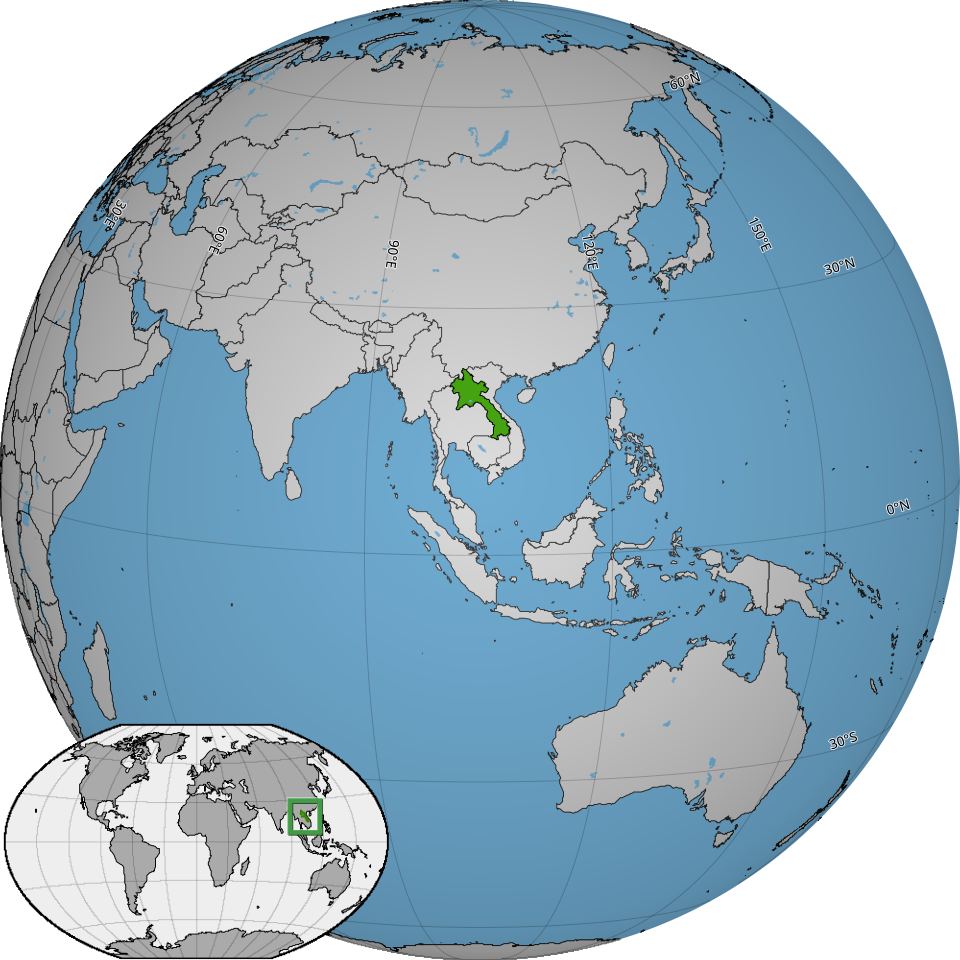
Investment and Business Climate — State Giants and Frontier Opportunities
The corporate landscape of Laos is unmistakably state-centric. Boun Oum Airways, **Lao Airlines**, and **Lao Skyway** dominate the aviation sector, while **Lao Central Airlines** adds another layer to a crowded state-aligned market. This concentration is not merely a business fact; it is a signal to potential investors that the Lao government prefers to keep strategic industries under its control.
The utility sector reinforces this, with **Electricite du Laos** and **Nam Theun 2 Power Company** representing the crown jewels of the national economy.
For foreign investors, the opportunities lie in niche areas where state capacity is limited — logistics, tourism infrastructure, and consumer goods distribution. The Lao Brewery Company demonstrates that consumer-facing businesses can thrive, particularly when they have strong domestic brand recognition and distribution networks. However, the business climate remains challenging for those unaccustomed to operating within a communist governance framework.
The **Democracy Index** classification as an “authoritarian regime” by **The Economist** underscores that political risk is a real consideration, and investors must navigate a system where state approval is often more important than market dynamics. That said, Laos’s strategic position between China, Vietnam, and Thailand makes it an attractive hub for regional supply chain diversification — if the government continues to open select sectors to foreign participation.
Safety, Politics, and Quality of Life — Stability Under an Authoritarian Umbrella
Laos presents a unique quality-of-life proposition: low crime rates and social stability, but within a politically constrained environment. The country’s communist governance structure, which The Economist classifies as an “authoritarian regime,” ensures tight control over political life, but this also translates into a society with minimal street crime and a strong sense of communal order.
For expatriates and travelers, Laos is generally considered safe, with petty theft being the most common concern rather than violent crime.
The political landscape is defined by the Lao People’s Democratic Republic’s official transition framework — from capitalism to socialism, and eventually to communism. This ideological roadmap shapes everything from property rights to business regulations. For the Lao people, quality of life is a complex equation: economic opportunities are expanding, but political freedoms remain limited.
The happiness data, where available, suggests that Lao citizens report moderate satisfaction levels, driven by strong family ties, Buddhist cultural traditions, and a relatively unhurried pace of life. However, the lack of political pluralism and press freedom means that the country’s social contract is built on stability rather than democratic participation. For those considering relocation or long-term business presence, the trade-off is clear: safety and order in exchange for political voice.
What’s Happening Now — The Infrastructure Pivot and Regional Integration
Right now, Laos is in the midst of a significant economic recalibration, driven by the completion of major infrastructure projects and a renewed focus on regional connectivity. The World Bank’s silence on recent GDP and inflation figures is telling — it suggests a period of data revision and economic restructuring as the government adjusts to post-pandemic realities and shifts in global energy demand.
The country’s hydropower exports remain the primary revenue generator, but there is growing recognition within government circles that over-reliance on energy is a vulnerability, not just a strength.
The aviation sector is showing signs of consolidation, with Lao Airlines and **Lao Skyway** facing pressure to modernize fleets and routes to capture growing tourism and business travel demand. Meanwhile, **Electricite du Laos** is under pressure to improve grid reliability and expand rural electrification, a priority that aligns with the government’s socialist development goals.
The consumer goods sector, anchored by **Lao Brewery Company**, is quietly expanding, reflecting urbanization and a young population with disposable income. Perhaps most significantly, Laos is positioning itself as a logistics hub for the Mekong subregion, leveraging its geography to connect Chinese, Vietnamese, and Thai markets. This is a high-stakes bet — one that could transform the country’s economic trajectory or leave it vulnerable to regional power dynamics.
The coming months will reveal whether Laos can execute this pivot while maintaining the political stability that has defined its recent history.
The Bottom Line
Laos is not a country for casual observers or risk-averse investors. It is a frontier market where state control and economic ambition intersect, offering opportunities in energy, infrastructure, and consumer goods for those willing to navigate its unique political landscape. The World Bank data gaps are frustrating, but they should not obscure the structural reality: Laos is building, connecting, and positioning itself for a more prominent role in Southeast Asia.
Watch this country if you are interested in hydropower, regional trade corridors, or the evolution of socialist economies in the 21st century. The story is just beginning, and the next chapter will be written in the fast-flowing rivers of the Mekong and the corridors of power in Vientiane.
Sources & Methodology
This article is authored by Economic Pulse Net for informational and research purposes. Economic Pulse Net sources its data from multilateral institutions, national statistics bureaus, and proprietary databases. All data is believed to be current as of the date of publication.
Published: July 31, 2026 | Category: Research — Laos
Use these signals in your own platform
Economic Pulse publishes its live signal feed through a documented, read-only API. Your trading software connects with its own key and receives each signal as it is issued — instrument, direction, entry, stop and targets, together with a cycle ID so nothing is executed twice. The feed is independent of this website and cannot change it.
Signals are informational only and are not financial advice.