Economic Pulse Net | Sources: World Bank World Development Indicators, Government Sources | 2026
Key Takeaways
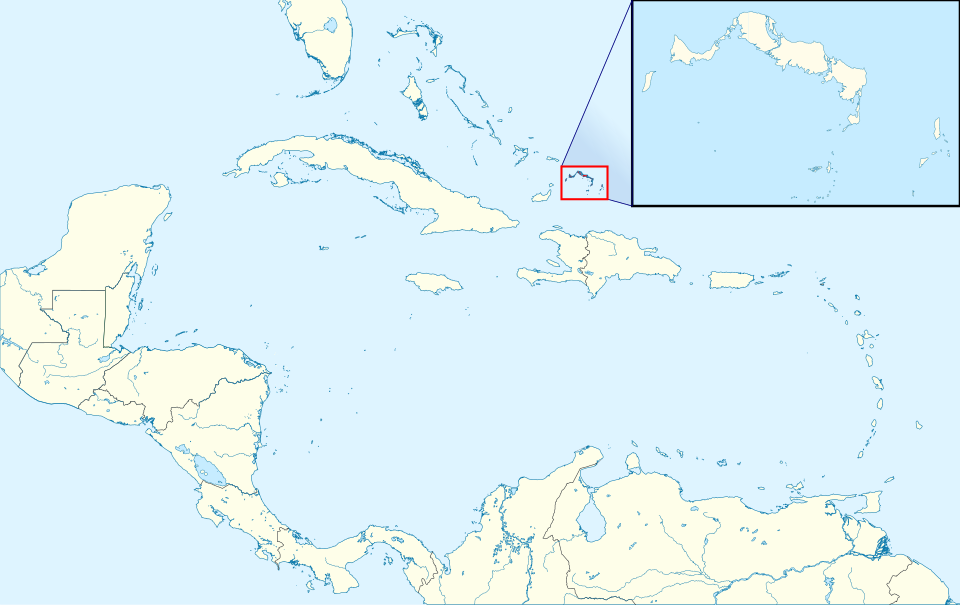
– The Turks and Caicos Islands operate as a British Overseas Territory, with King Charles III as sovereign and a governor appointed by the monarch on the advice of the Foreign Office — a constitutional arrangement that shapes everything from investment law to daily governance.
– The territory celebrates Constitution Day annually on 30 August, marking the adoption of its first constitution in 1976 under the leadership of the islands’ first Chief Minister, J. A. G. S.
McCartney — a milestone that anchors the nation’s political identity.
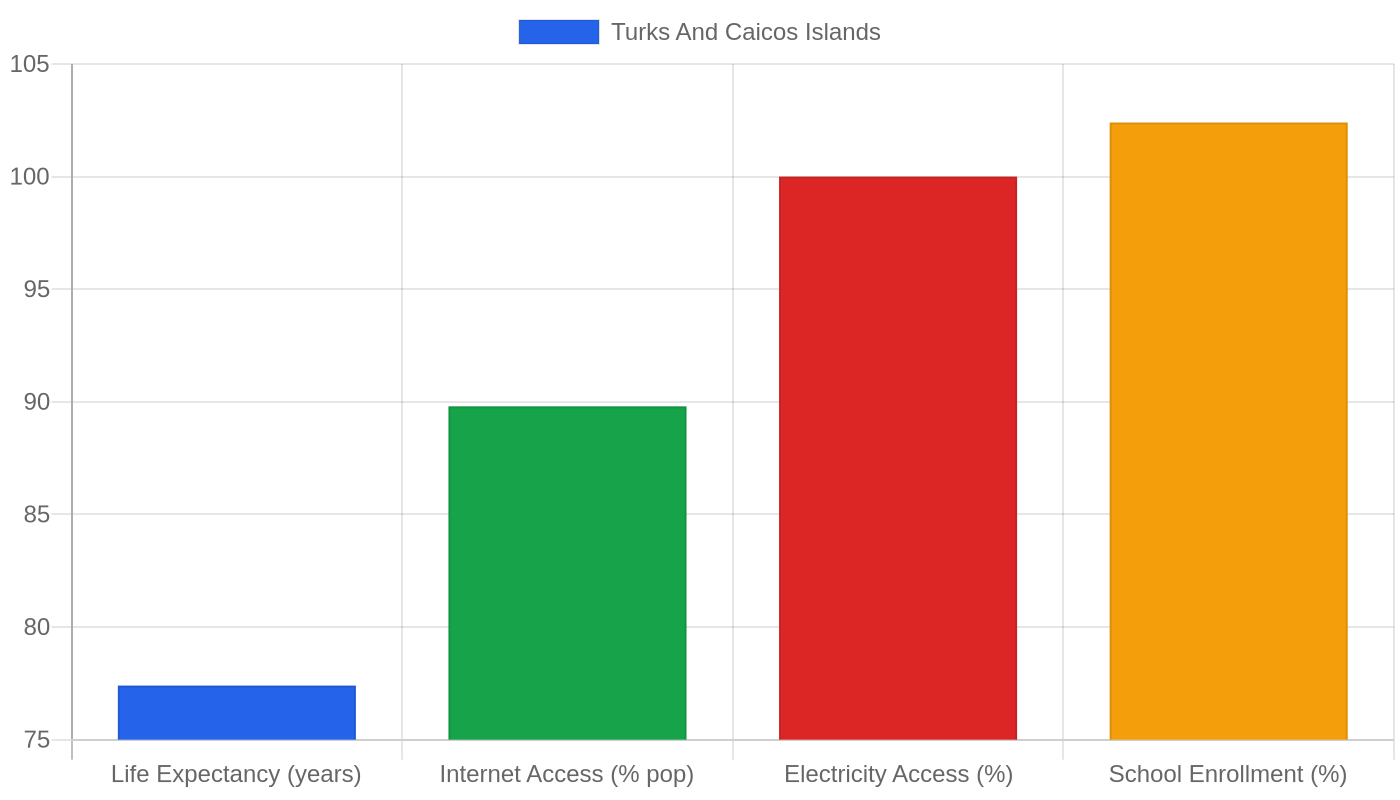
– Comprehensive economic indicators including GDP growth, inflation, unemployment, and GDP per capita remain unreported in the latest World Bank data, making the islands something of a statistical blank spot in Caribbean economic monitoring.
– The political landscape is defined by its relationship with the United Kingdom, meaning that major policy shifts often originate in London rather than in the islands themselves — a dynamic that investors and residents must navigate.
– With no crime or safety indices available, and no cost-of-living or major company data on record, the territory presents both opportunities and challenges for those seeking to understand its economic trajectory through traditional data sources.
The Economic Canvas — A Statistical Silence With Real Consequences
The absence of hard numbers from the World Bank for the Turks and Caicos Islands — no GDP growth figure, no inflation rate, no unemployment data — tells its own story. For a territory that has long positioned itself as a premium Caribbean destination, this statistical silence creates a peculiar challenge. Investors, analysts, and policymakers who rely on comparative data to make decisions find themselves working with anecdotal evidence and regional context rather than precise metrics.
What can be inferred from the available data is that the islands’ economy has historically leaned heavily on tourism and offshore financial services, though the current dataset provides no confirmation of sectoral output. The lack of a GDP per capita figure on a purchasing power parity basis means that standard-of-living comparisons with neighbouring Caribbean nations cannot be drawn with authority.
Similarly, the absence of GNI per capita data limits any assessment of income distribution or economic maturity.
The implications of this data gap extend beyond academic curiosity. For a British Overseas Territory, economic transparency often serves as a signal of governance quality and investment readiness. When the World Bank — the most widely cited source for cross-country economic comparison — has no figures on file, it suggests either reporting gaps from the territorial government or challenges in data collection that themselves merit attention.
For businesses considering entry into this market, the lack of baseline data means conducting their own primary research, a cost that smaller enterprises may find prohibitive.
Inflation and employment figures, both unreported, would ordinarily provide insight into whether the local economy is overheating or stagnating. Without them, observers must rely on qualitative signals — construction activity, hotel occupancy rates, and anecdotal reports from the business community — to gauge economic temperature.
The islands’ status as a territory of the United Kingdom does provide some macroeconomic anchor, as monetary policy and financial regulation ultimately flow through British institutions, but the local economic dynamics remain opaque.
Property, Prices, and the Cost of Living Puzzle
The cost of living in the Turks and Caicos Islands is a subject of considerable local discussion, yet the available data provides no official figures on housing costs, rental rates, or daily expenses. This is particularly notable given that the territory has a reputation — widely discussed in travel and business circles — for premium pricing driven by its reliance on imported goods and its high-end tourism market.
Without World Bank data or a national statistics bureau report, any specific numbers would be conjecture.
What can be said with confidence is that islands with limited local agriculture and manufacturing typically face higher prices for everyday goods due to transportation and import costs. The Turks and Caicos, like many Caribbean territories, must import the vast majority of consumer products, foodstuffs, and building materials. For residents, this typically translates into a cost of living that exceeds mainland averages, though the absence of comparative data in this dataset prevents precise regional benchmarking.
The housing market, a critical component of any cost-of-living assessment, remains similarly undocumented in the available figures. Property in the Turks and Caicos has historically been positioned at the luxury end of the Caribbean market, with beachfront developments and private villas dominating the real estate conversation.
For local residents, however, the more relevant question is the availability and affordability of workforce housing — a challenge that many small island territories face when tourism development drives up land values. The tension between tourism-driven property appreciation and local housing affordability is a familiar story across the Caribbean, and the Turks and Caicos Islands appear to fit this pattern, though the data to confirm it is not currently available.
Investment and Enterprise — Reading Between the Lines
The top companies operating in the Turks and Caicos Islands are not listed in the available dataset, which means any portrait of the business environment must be drawn from the territory’s known economic structure and its constitutional framework. As a British Overseas Territory, the islands offer a legal and regulatory environment that is ultimately underpinned by British governance, providing a degree of institutional stability that some independent Caribbean nations struggle to match.
This has historically made the territory attractive for offshore financial services and for high-net-worth individuals seeking a stable jurisdiction for wealth management.
The tourism sector, while not explicitly broken out in the data, is widely understood to be the engine of the local economy. The islands’ famous beaches and marine environment have made them a destination for luxury travellers, and the hospitality industry has responded with high-end resorts and boutique properties.
For investors, the key question is whether the territory can diversify beyond tourism and financial services into other sectors — technology, renewable energy, or value-added services — that would broaden the economic base and reduce vulnerability to external shocks.
The business climate is shaped by the territory’s relationship with the United Kingdom, which means that regulatory changes can originate from London. This dual-layered governance structure — local administration under a governor appointed by the monarch on the advice of the Foreign Office — creates a unique environment where businesses must be attentive to both local policy and British regulatory trends.
The stability that this arrangement provides is a double-edged sword: it offers predictability and the protection of British legal standards, but it also means that the islands have limited autonomy over their own economic policy levers.
Governance, Security, and the Quality of Life Question
The political landscape of the Turks and Caicos Islands is defined by its constitutional relationship with the United Kingdom. As a British Overseas Territory, the islands’ sovereign is Charles III, King of the United Kingdom, who is represented by a governor appointed by the monarch on the advice of the Foreign Office.
This arrangement places the territory in a category with other British dependencies such as Bermuda and the Cayman Islands, though each has its own distinct constitutional history and political culture.
The islands first adopted a constitution on 30 August 1976, following the election of the territory’s first Chief Minister, J. A. G. S. McCartney. Constitution Day, celebrated annually on 30 August, serves as the national holiday and a moment of reflection on the territory’s political evolution.
The fact that the islands have maintained this constitutional arrangement for nearly five decades speaks to a certain political stability, though it also raises questions about the pace of democratic evolution and the appetite for greater self-governance.
On the safety front, the available data provides no crime index or safety index figures, leaving a significant gap in the quality-of-life assessment. In the absence of official statistics, prospective residents and investors must rely on qualitative reports and regional context.
The Caribbean region as a whole faces varying levels of crime, and while the Turks and Caicos Islands are not known for the kind of violent crime that afflicts some larger Caribbean nations, the lack of data makes any definitive statement impossible. For families considering a move to the islands, this uncertainty is itself a consideration.
The Constitutional Conversation — What’s Happening Now
The most significant current affairs story in the Turks and Caicos Islands is not an economic data point but a political one: the ongoing evolution of the territory’s relationship with the United Kingdom. As a British Overseas Territory, the islands exist in a constitutional space that is increasingly being debated across the Caribbean. Some territories have pushed for greater autonomy or even full independence, while others have sought to deepen their ties with London.
The Turks and Caicos Islands, with their 1976 constitution and their continued status under the British Crown, appear to be in the latter category, though the conversation is far from settled.
The celebration of Constitution Day on 30 August serves as an annual reminder of the territory’s political journey and the leadership of J. A. G. S. McCartney, the first Chief Minister. This historical anchor provides context for contemporary debates about governance, representation, and the balance of power between local officials and the governor appointed by the monarch on the advice of the Foreign Office.
For residents, the practical implications of this arrangement touch everything from judicial appointments to economic policy.
The absence of current economic indicators from the World Bank suggests that the territory may be in a period of statistical transition — either preparing to report data that has not yet been published or facing challenges in data collection that need to be addressed. For a territory that aspires to attract international investment, the ability to provide transparent, timely economic data is not a luxury but a necessity.
The islands’ business community, tourism sector, and political leadership all have a stake in ensuring that the world can see the territory’s economic performance clearly. The conversation about data transparency is, in many ways, a conversation about the territory’s future ambitions.
The Bottom Line
The Turks and Caicos Islands present a paradox: a territory with a clear political identity and constitutional framework, yet a statistical blank slate in the World Bank’s economic database. For investors, this means entering a market where due diligence requires primary research rather than reliance on published indicators. For policymakers, it signals an urgent need to invest in statistical capacity.
For the casual observer, it serves as a reminder that the Caribbean’s economic landscape is far more diverse — and in some cases, far less documented — than aggregate regional data suggests. Watch this territory for its constitutional evolution and its potential to emerge as a more transparent player in the Caribbean economy.
Sources & Methodology
This article is authored by Economic Pulse Net for informational and research purposes. Economic Pulse Net sources its data from multilateral institutions, national statistics bureaus, and proprietary databases. All data is believed to be current as of the date of publication.
Published: August 04, 2026 | Category: Research — Turks And Caicos Islands
Use these signals in your own platform
Economic Pulse publishes its live signal feed through a documented, read-only API. Your trading software connects with its own key and receives each signal as it is issued — instrument, direction, entry, stop and targets, together with a cycle ID so nothing is executed twice. The feed is independent of this website and cannot change it.
Signals are informational only and are not financial advice.