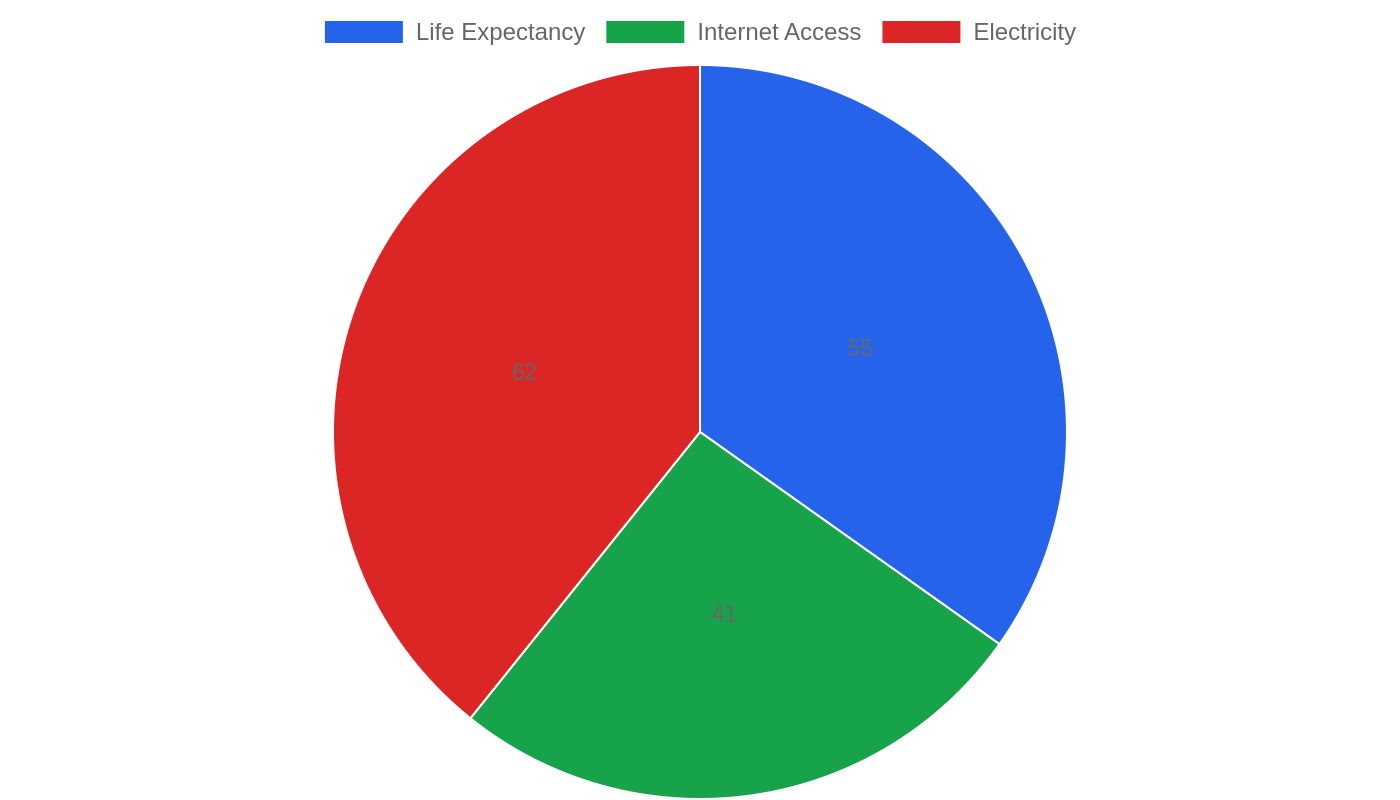
Economic Pulse Net | Sources: World Bank World Development Indicators, Government Sources | 2026
Key Takeaways
* Leadership Transition: The nation is navigating a new political era under President Mohamed Muizzu, who assumed office in November 2023, marking a significant shift in executive leadership.
Constitutional Framework: As a presidential constitutional republic, the country concentrates substantial power in the head of state, who also serves as head of government and commander of the armed forces.
Political Structure: Governance relies on a unicameral People’s Majlis, with both the President and Members serving fixed five-year terms, creating a structured but highly centralized political environment.
Data Transparency Gap: Current economic reporting faces challenges due to unavailable metrics for GDP growth, inflation, and unemployment, suggesting a need for cautious interpretation of macroeconomic health.
Strategic Importance: Despite data voids, the Maldives remains a critical case study in small-island developing states, where political stability directly impacts tourism-dependent industries and international investment flows.
A Centralized Executive in Transition
The Maldivian economy operates within a distinct political framework that heavily influences its commercial landscape. As a presidential constitutional republic, the system grants extensive influence to the president, who simultaneously serves as the head of government and head of state. This dual role allows the executive branch to wield considerable authority over policy direction, with the cabinet appointments requiring only the approval of the People’s Majlis.
The current political dynamic is defined by the tenure of Mohamed Muizzu, who has led the nation since taking office on 17 November 2023. His administration inherits the complex task of managing an economy where traditional indicators like GDP growth and inflation rates are currently reported as not available, complicating the assessment of immediate economic performance.
The structure of the government, including the armed forces leadership, rests entirely with this central figure, meaning that political stability is intrinsically linked to the presidency’s effectiveness. With both the President and the members of the unicameral Majlis serving five-year terms, the political calendar provides a predictable rhythm for long-term planning, even if short-term economic data remains opaque.
This concentration of power suggests that major economic reforms or shifts in business regulation will likely be driven from the top down, rather than through gradual legislative consensus. Understanding this political architecture is essential for any observer trying to decode the country’s economic trajectory, as policy changes can be implemented rapidly under this centralized model.
Navigating the Data Void in Economic Metrics
When analyzing the Maldivian economy, one must first confront the significant gaps in standard World Bank data. Currently, key indicators such as GDP growth, inflation CPI, and unemployment rates are listed as not available, leaving investors and analysts without the usual quantitative benchmarks for assessing economic health. Similarly, aggregate figures for GDP in USD, GDP per capita adjusted for purchasing power parity, and GNI per capita are missing from the latest reports.
This absence of hard data creates a challenging environment for precise economic forecasting, forcing observers to rely more heavily on qualitative assessments and sector-specific insights. The lack of population data further complicates efforts to calculate per-capita metrics accurately, adding another layer of uncertainty to the economic profile.
In such contexts, the “N/A” designations do not necessarily indicate economic stagnation, but rather reflect limitations in data collection or reporting mechanisms within the statistical infrastructure. For international stakeholders, this means that traditional risk models based on historical GDP trends may require adjustment or supplementation with alternative indicators.
The challenge here is not just about missing numbers, but about understanding how a service-based island economy functions when standard macroeconomic barometers are offline. Consequently, the focus shifts toward monitoring political decisions and industry-specific developments as proxies for overall economic momentum.
Living Costs and Business Realities
The cost of living in the Maldives presents a unique set of dynamics influenced by its geographic isolation and reliance on imports. While specific indices for housing costs, rent versus buy scenarios, and daily expenses are not provided in the current dataset, the general experience for residents and expatriates is shaped by the high logistical costs associated with transporting goods to remote atolls.
Without concrete figures for crime or safety indices, potential residents must navigate quality-of-life assessments through anecdotal evidence and broader regional comparisons, as direct local metrics remain unavailable. The business climate is similarly characterized by a lack of transparent data on top companies and major industrial sectors, which makes it difficult to identify clear market leaders or dominant players in the private sector.
Investors looking at the Maldives must therefore approach the business environment with caution, recognizing that the absence of detailed corporate data does not imply a lack of activity, but rather a lack of visibility. The interplay between the high cost of imported goods and the limited local production capacity likely drives up the baseline cost of living, affecting everything from food prices to energy consumption.
For businesses, this means that operational margins may be tighter than in mainland economies, requiring efficient supply chain management and strong local partnerships. The unknown variables in housing and daily expenses add a layer of unpredictability for those considering relocation or long-term residency, making thorough due diligence even more critical before committing resources.
Political Stability and Safety Considerations
Safety and political stability are paramount considerations for anyone engaging with the Maldives, yet current indices for crime and safety levels are reported as not available. This gap in data necessitates a reliance on the broader political context to gauge the overall security environment. The political landscape is defined by the strong executive powers held by President Mohamed Muizzu, whose administration began in late 2023, bringing a fresh perspective to governance.
The unicameral People’s Majlis plays a crucial role in approving the cabinet and shaping legislation, providing a check on executive power within the constitutional framework. With five-year terms for both the President and parliamentary members, there is a structured timeline for political accountability, which can contribute to a degree of predictability in governance.
However, the extent of presidential influence over the armed forces and the executive branch means that political decisions can have immediate and far-reaching implications for social stability. In the absence of specific crime statistics, visitors and residents are advised to exercise standard precautions while remaining aware of the political currents driving national policy.
The relationship between the government and the populace, mediated through the Majlis, forms the backbone of social order, making political engagement a key indicator of future stability. Ultimately, the safety of the Maldives is closely tied to the legitimacy and effectiveness of its current leadership, making political observation a vital component of risk assessment.
The Bottom Line
The Maldives stands at a pivotal moment under the leadership of President Mohamed Muizzu, offering a fascinating case study in centralized governance and small-island economics. While the lack of comprehensive economic data presents challenges for traditional analysis, the political structure provides a clear framework for understanding decision-making processes.
Stakeholders should monitor the implementation of policies by the new administration, as these will likely shape the economic landscape in the coming years. For now, the Maldives requires a qualitative approach to investment and travel, prioritizing political insight over quantitative metrics.
Sources & Methodology
This article is authored by Economic Pulse Net for informational and research purposes. Economic Pulse Net sources its data from multilateral institutions, national statistics bureaus, and proprietary databases. All data is believed to be current as of the date of publication.
Published: October 27, 2026 | Category: Research — Maldives
Use these signals in your own platform
Economic Pulse publishes its live signal feed through a documented, read-only API. Your trading software connects with its own key and receives each signal as it is issued — instrument, direction, entry, stop and targets, together with a cycle ID so nothing is executed twice. The feed is independent of this website and cannot change it.
Signals are informational only and are not financial advice.