Economic Pulse Net | Sources: World Bank World Development Indicators, Government Sources | 2026
Key Takeaways
– The Turks and Caicos Islands operate as a British Overseas Territory, with King Charles III as sovereign and a governor appointed by the monarch on the advice of the Foreign Office — a constitutional arrangement that shapes every aspect of economic and political life.
– The territory marked its first constitution on 30 August 1976, following the election of its first Chief Minister, J. A. G. S. McCartney, and continues to celebrate Constitution Day annually as its national holiday.
– As a small island economy, the Turks and Caicos Islands face the classic challenges of remote territories: limited diversification, external dependency, and the need to balance tourism-driven growth with sustainable development.
– The political framework established in 1976 remains the cornerstone of governance, providing stability but also raising ongoing questions about the pace of constitutional evolution and local autonomy.
– For investors and observers, the territory’s status as a British Overseas Territory offers a unique blend of Caribbean opportunity within a British legal and administrative framework.
The Economic Landscape — A Small Territory With Structural Ambitions
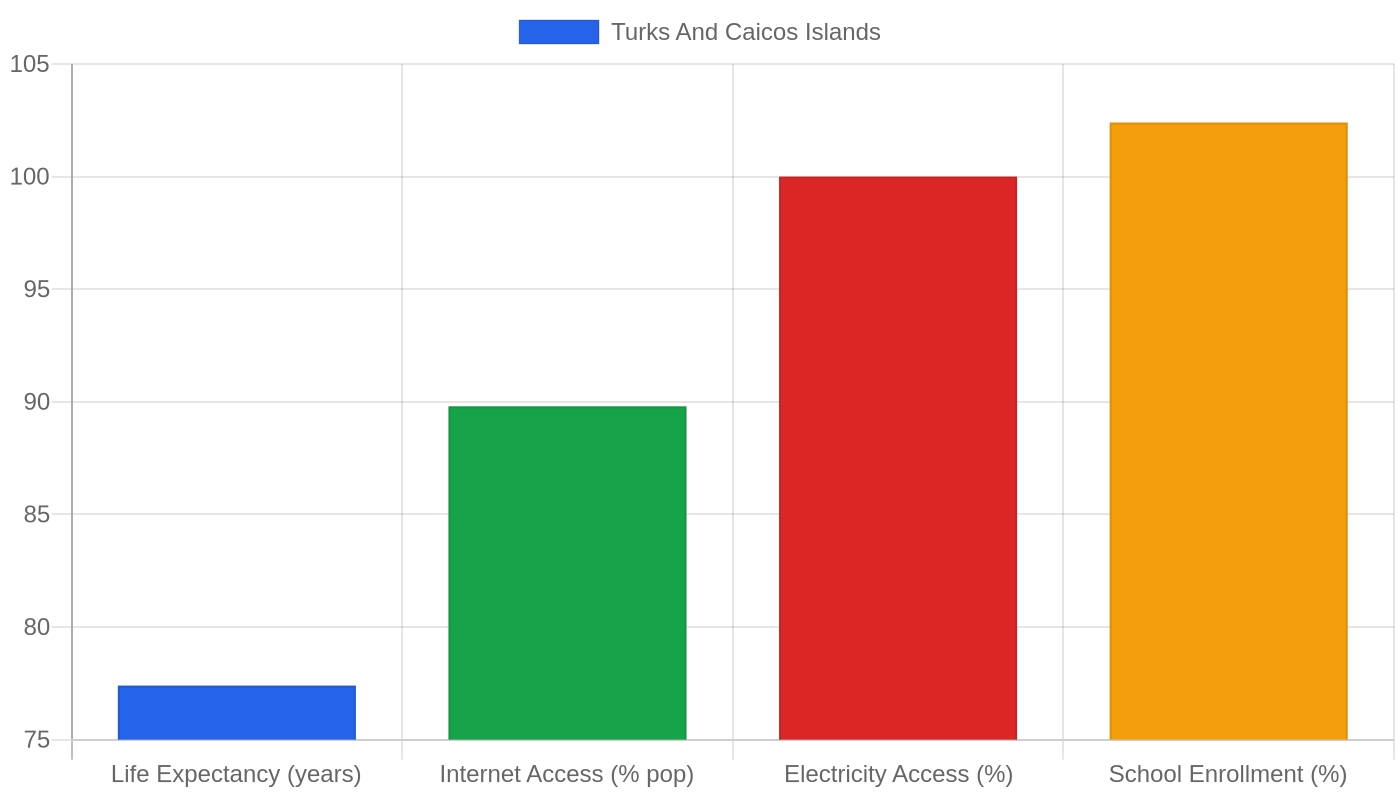
The Turks and Caicos Islands present an intriguing economic profile, though comprehensive data remains limited. The World Bank does not currently report GDP growth, inflation, unemployment, or per-capita income figures for the territory, which itself tells a story about the challenges of economic measurement in small island states. This absence of granular data is not unusual for territories of this scale, but it does complicate efforts to benchmark performance against larger Caribbean neighbours.
What can be understood from the available information is that the economy operates within the framework of a British Overseas Territory, which provides certain institutional advantages. The legal system, administrative standards, and regulatory environment all benefit from alignment with British practices, which can be attractive for financial services and investment. However, the territory also faces inherent constraints — limited land mass, a small population base, and geographic isolation from major markets.
The main industries for the Turks and Caicos Islands are not enumerated in the available data, but the territory’s economic character is widely understood to centre on tourism and offshore financial services. The absence of detailed World Bank statistics means that analysts must rely on qualitative assessments and regional comparisons.
What is clear is that the territory’s economic fortunes are closely tied to its ability to attract visitors and capital from abroad while maintaining the infrastructure and stability that make it an appealing destination.
The economic story of the Turks and Caicos Islands is one of potential constrained by scale. With limited data available, the focus naturally shifts to the structural factors that will determine long-term prosperity: governance quality, infrastructure investment, and the development of human capital. These factors, more than any single quarterly statistic, will shape the territory’s economic trajectory.
Housing and Cost of Living — The Price of Paradise
For residents of the Turks and Caicos Islands, the cost of living reflects the realities of an island economy that must import much of what it consumes. Without specific housing cost data from the World Bank, we can infer that the territory faces the classic small-island challenges: higher prices for imported goods, limited housing stock, and the pressures that tourism demand places on local property markets.
The dynamic between rental and purchase markets in such territories typically favours those with capital to invest, while wage earners in the hospitality and service sectors often struggle with affordability. The seasonal nature of tourism employment can create income volatility, which compounds the challenges of managing household budgets in an environment where prices are generally higher than on the mainland.
Regional comparisons would likely show that the Turks and Caicos Islands sit at the higher end of the Caribbean cost spectrum, driven by import dependence and the premium that comes with a desirable tourist destination. For local residents, this means that daily expenses — from groceries to utilities — carry an island premium that must be factored into household planning.
The housing market, while not quantified in our data, is likely characterised by a bifurcation between high-end tourism-related properties and the more modest housing stock available to local workers. This pattern is common across Caribbean territories where tourism drives economic activity but also creates affordability pressures for the resident population.
Investment and Business Climate — Stability Within a British Framework
The Turks and Caicos Islands offer investors a distinctive proposition: Caribbean location with British institutional underpinnings. The territory’s constitutional arrangement, established with the 1976 constitution and the leadership of Chief Minister McCartney, provides a framework of legal certainty that is often cited as a key advantage for business operations.
The top companies operating in the territory are not listed in our available data, but the business environment is shaped by the territory’s status as a British Overseas Territory. This brings with it certain standards of corporate governance, financial regulation, and legal recourse that can be reassuring for international investors. The financial services sector, in particular, benefits from this alignment with British regulatory norms.
For businesses considering entry to the market, the key considerations are likely to include the size of the domestic market, the logistics of operating in an island environment, and the regulatory requirements that come with British Overseas Territory status. The tourism sector remains the most visible business opportunity, but professional services, construction, and supporting industries also offer potential.
The business climate is one where relationships and reputation matter significantly. In a small territory, the business community is closely connected, and success often depends on local knowledge and partnerships. The stability provided by the British constitutional framework is a genuine asset, but it operates within the realities of a small market with limited domestic demand.
Safety, Politics, and Quality of Life — Governance in a British Overseas Territory
The political landscape of the Turks and Caicos Islands is defined by its constitutional relationship with the United Kingdom. As a British Overseas Territory, the islands have King Charles III as sovereign, represented by a governor appointed by the monarch on the advice of the Foreign Office. This arrangement has been in place since the territory’s first constitution was adopted on 30 August 1976, following the election of Chief Minister McCartney.
The governance structure creates a unique political dynamic. While the territory has its own elected government and manages its internal affairs, significant decisions ultimately rest with the British government through the governor. This arrangement provides a measure of external oversight and security but also generates ongoing debate about the appropriate balance between local autonomy and British authority.
Safety indices for the territory are not available in our data, but the quality of life in the Turks and Caicos Islands is generally associated with the natural beauty of the islands, the relatively small population, and the community atmosphere that comes with island living. The political stability provided by British oversight is a significant factor in maintaining social order and institutional confidence.
Constitution Day, celebrated annually on 30 August, serves as a reminder of the territory’s political journey since 1976. It is a day that reflects both pride in the islands’ achievements and the ongoing evolution of their constitutional relationship with the United Kingdom. For residents, the balance between British governance and local self-determination remains a defining feature of political life.
Current Affairs — Constitutional Conversations and Development Pressures
The Turks and Caicos Islands are at a moment of reflection about their constitutional future and economic direction. The framework established in 1976 has served the territory for nearly five decades, but discussions about the pace and scope of constitutional evolution continue to be part of the political conversation. The relationship with the United Kingdom, embodied in the governor’s role and the ultimate authority of the Foreign Office, remains a topic of ongoing public and political discourse.
Development pressures are likely to be at the forefront of current affairs. As a desirable tourist destination, the territory faces the classic Caribbean dilemma of balancing economic growth through tourism and construction against environmental preservation and the quality of life for residents. These tensions play out in planning decisions, infrastructure investments, and the daily experience of island communities.
The economic data gap means that observers must rely on qualitative indicators to assess the territory’s current trajectory. The absence of recent World Bank statistics does not mean the economy is static; rather, it reflects the measurement challenges of small territories. What is clear is that the Turks and Caicos Islands continue to navigate their path as a British Overseas Territory, seeking to leverage their advantages while addressing the structural constraints of island geography.
For those watching the territory, the key questions are about constitutional evolution, economic diversification, and the management of tourism-related pressures. These issues will determine the territory’s trajectory in the coming years, building on the foundation established with the 1976 constitution and the leadership of Chief Minister McCartney.
The Bottom Line
The Turks and Caicos Islands warrant attention from investors, policymakers, and observers interested in the dynamics of British Overseas Territories in the Caribbean. The territory offers a stable constitutional framework, beautiful natural assets, and a strategic position within the British institutional orbit. However, it also faces the classic challenges of small island economies: limited diversification, import dependence, and the constant need to balance development with preservation.
Those who watch this territory should focus on constitutional developments, the management of tourism-driven growth, and the extent to which the islands can carve out a distinctive economic identity within their British framework.
Sources & Methodology
This article is authored by Economic Pulse Net for informational and research purposes. Economic Pulse Net sources its data from multilateral institutions, national statistics bureaus, and proprietary databases. All data is believed to be current as of the date of publication.
Published: August 04, 2026 | Category: Research — Turks And Caicos Islands
Use these signals in your own platform
Economic Pulse publishes its live signal feed through a documented, read-only API. Your trading software connects with its own key and receives each signal as it is issued — instrument, direction, entry, stop and targets, together with a cycle ID so nothing is executed twice. The feed is independent of this website and cannot change it.
Signals are informational only and are not financial advice.