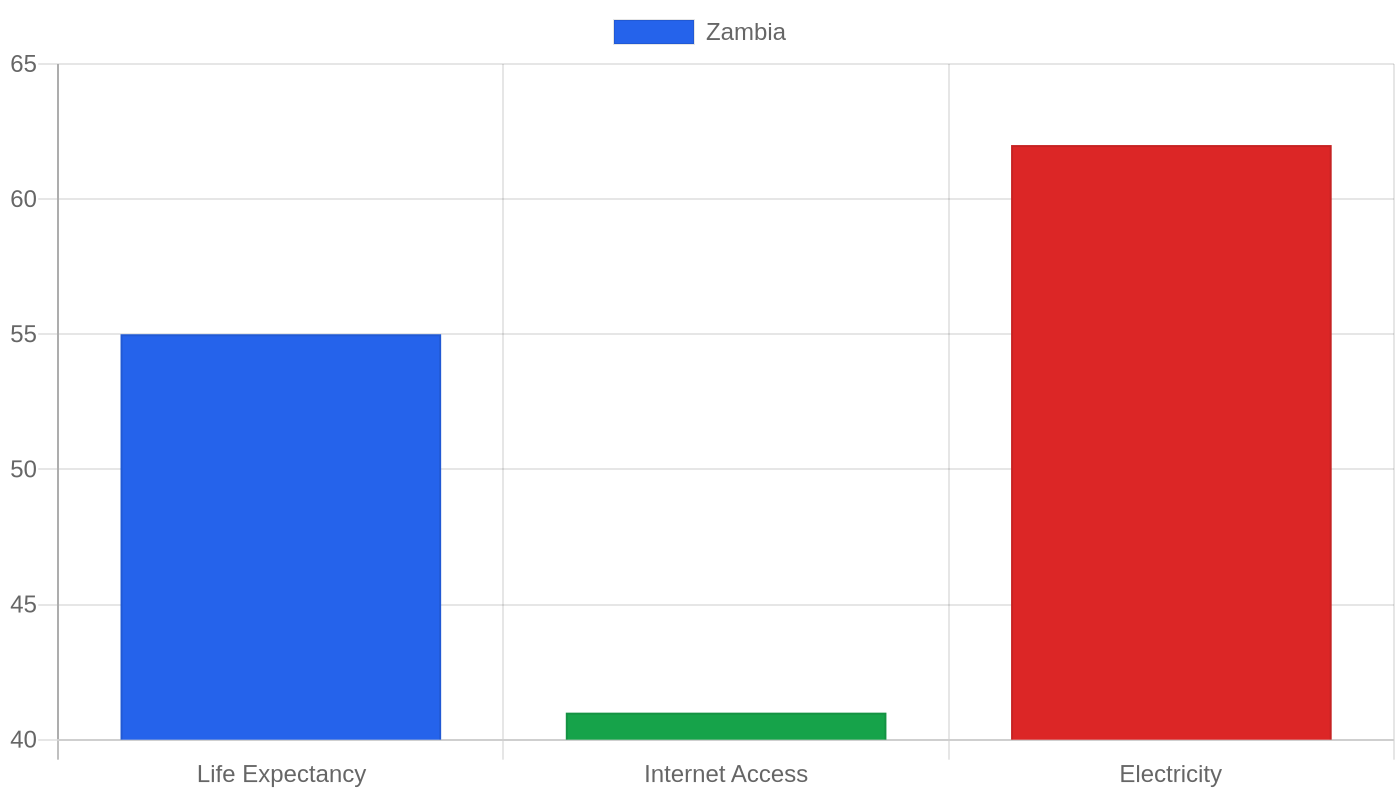
Economic Pulse Net | Sources: World Bank World Development Indicators, Government Sources | 2026
Key Takeaways
– Zambia operates as a presidential representative democratic republic, with executive power concentrated in the presidency and legislative authority shared with parliament, creating a political framework that shapes all economic decision-making.
– The country’s economic backbone remains tied to its natural resource wealth, with major companies spanning copper mining, energy generation, cement production, and petroleum refining forming the core of formal sector activity.
– Financial services are a notable growth cluster, with multiple banks—Access Bank Zambia, Cavmont Bank, Atlas Mara Bank Zambia Limited, and First Alliance Bank Zambia Limited—competing for market share in an evolving banking landscape.
– Infrastructure and energy companies such as Copperbelt Energy Corporation, Bangweulu Power Company Limited, and Chilanga Cement underscore the centrality of power and construction to Zambia’s development agenda.
– While specific GDP, inflation, and unemployment figures are not available from the World Bank data provided, the composition of leading firms signals an economy heavily dependent on commodities, with all the volatility that entails.
The Copper-Led Engine — Growth, Prices, and Structural Constraints
Zambia’s economic narrative has long been written in copper. The World Bank data, while lacking precise GDP growth or inflation percentages, points to an economy whose major listed companies tell a clear story: mining, energy, and basic materials dominate. FQM Trident Limited, operating in the basic materials sector, represents the extractive industries that have historically driven export revenues and government budgets.
When global copper prices rise, Zambia breathes easier; when they fall, the entire fiscal architecture creaks.
The presence of Indeni Petroleum Refinery in the energy sector highlights a critical vulnerability—Zambia must import crude oil for refining, exposing the economy to global energy price shocks that feed directly into domestic inflation. Without specific CPI data from the World Bank, the pattern remains familiar to analysts of resource-dependent economies: currency depreciation, imported inflation, and wage pressures that erode purchasing power for urban and rural households alike.
Employment dynamics remain opaque without official statistics, but the roster of major companies suggests a formal sector concentrated in mining, banking, and energy. This narrow base means that job creation outside these industries faces structural headwinds. The absence of manufacturing or technology giants among the top firms underscores a diversification challenge that successive governments have acknowledged but struggled to resolve.
Housing and Daily Life — The Cost of Living in a Copper Economy
The cost of living in Zambia reflects the tensions of a resource-dependent economy. Without specific housing cost data from the World Bank, one can infer from the broader economic structure that urban centers like Lusaka and the Copperbelt cities face pressures common to many African capitals: demand for quality housing outstrips supply, rental markets are segmented between formal and informal sectors, and the cost of imported goods—from electronics to building materials—carries a premium shaped by currency fluctuations.
For Zambian households, daily expenses revolve around food, transport, and energy. The prominence of Copperbelt Energy Corporation among top companies signals that electricity costs are a significant line item, both for households and for the industrial users that drive economic activity. Chilanga Cement’s position among leading firms further suggests that construction costs—and by extension housing affordability—remain tied to domestic production capacity and input prices.
Compared to regional averages, Zambia’s cost of living likely sits in a middle tier, but the absence of granular data from the World Bank means any precise comparison would be speculative. What is clear is that the structure of the economy—heavy on commodities, light on consumer goods manufacturing—creates inherent price volatility that complicates household budgeting.
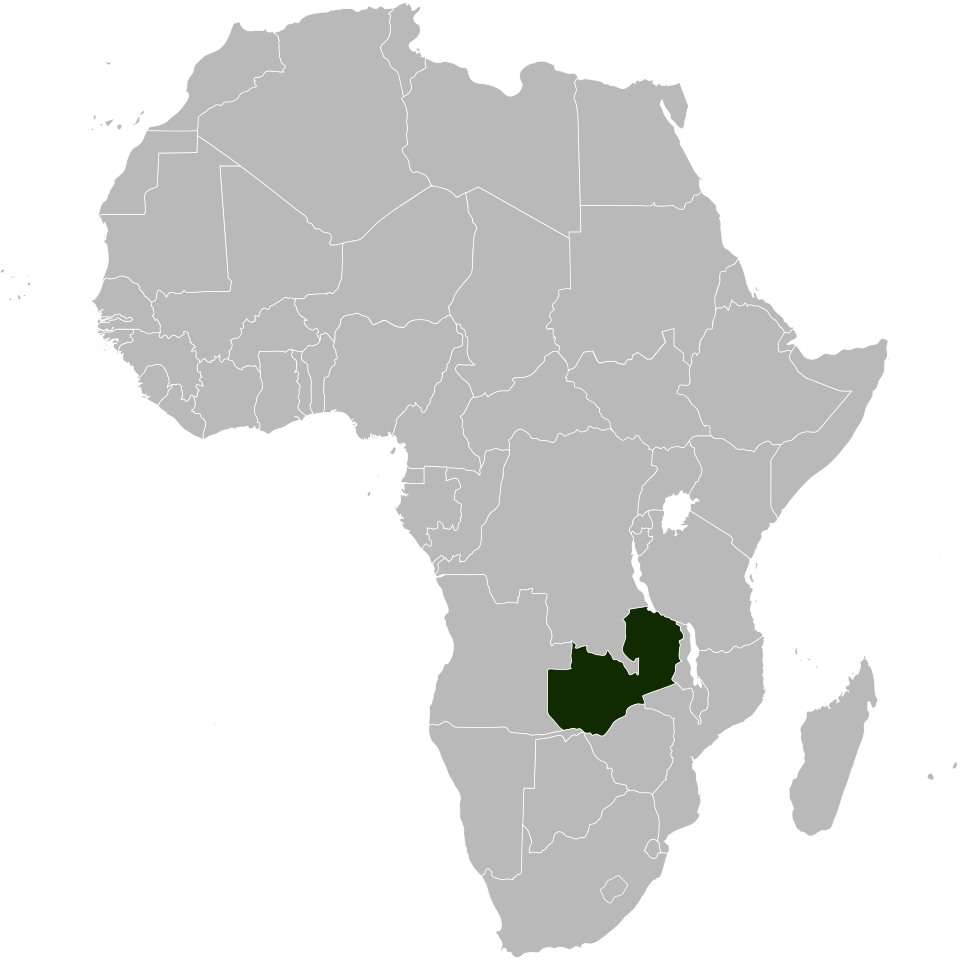
Banking, Energy, and the Business Frontier
Zambia’s investment climate is defined by its concentration of financial institutions. Access Bank Zambia, Cavmont Bank, Atlas Mara Bank Zambia Limited, and First Alliance Bank Zambia Limited represent a competitive banking sector that has attracted regional and international players.
This density of financial services suggests a market where credit is available—at least for established businesses—and where mobile banking and financial inclusion are likely advancing, though the World Bank data does not provide specific metrics.
Sectors to watch include renewable energy, represented by Bangweulu Power Company Limited, which signals growing interest in diversifying Zambia’s power generation away from hydropower, a source vulnerable to drought. The presence of Aero Zambia in consumer services hints at a domestic aviation market serving both business travelers and the tourism sector, though the airline’s position among top companies suggests limited scale.
For investors, the political framework matters. Zambia’s presidential representative democratic republic provides a stable constitutional structure, but the concentration of executive power means that policy continuity depends heavily on the incumbent administration. The business environment benefits from English as an official language and a legal system rooted in common law traditions, but infrastructure gaps and currency risk remain perennial concerns.
Safety, Stability, and the Quality of Life Equation
The political landscape in Zambia, as described by the World Bank data, operates within a framework of presidential representative democracy and a pluriform multi-party system. This institutional structure provides a degree of predictability—elections occur, governments change, and parliament provides legislative oversight. However, the concentration of executive power in the presidency means that political stability is closely tied to leadership transitions and the management of ethnic and regional balances.
Without crime and safety indices from the World Bank, one must rely on the broader context. Zambia has historically been considered one of the more peaceful countries in Southern Africa, avoiding the large-scale civil conflicts that have plagued some neighbors. The multi-party system, while imperfect, offers outlets for political competition that reduce the risk of extra-constitutional change.
Quality of life in Zambia is shaped by the same economic forces that drive the headlines: access to reliable electricity, clean water, healthcare, and education varies dramatically between urban and rural areas. The absence of specific GNI per capita or population figures from the World Bank data limits a fuller assessment, but the composition of top companies—heavy on mining and energy, light on healthcare and technology—suggests where private sector investment is flowing and where it is not.
Current Affairs — Navigating the Present Without Hard Numbers
In the absence of recent news data or live indicators from the provided materials, the current moment in Zambia can be assessed through the lens of its structural realities. The government, operating within the presidential representative democratic framework, faces the perennial challenge of managing a commodity-dependent economy in a global environment where copper demand is shaped by the energy transition and Chinese industrial policy.
The banking sector’s prominence among top companies suggests ongoing financial sector development, likely including efforts to expand credit to small and medium enterprises and to deepen capital markets. Access Bank Zambia’s presence indicates continued interest from Nigerian and regional banking groups in the Zambian market, a vote of confidence in the country’s long-term economic potential.
Energy remains a live issue. Bangweulu Power Company Limited’s focus on renewable energy aligns with global trends and donor priorities, but the transition away from hydropower dependency is neither quick nor cheap. Copperbelt Energy Corporation’s role as a utility underscores the centrality of reliable power to industrial competitiveness—a lesson reinforced whenever drought reduces hydro generation.
The Bottom Line
Zambia is a country for investors and analysts who understand commodity cycles and are willing to ride their volatility. The concentration of top companies in mining, energy, and banking reveals an economy with clear strengths—natural resources, a competitive financial sector, and democratic institutions—but also clear vulnerabilities. Those watching Zambia should track copper prices, election cycles, and energy policy with equal attention.
For patient capital willing to engage with the complexities of a resource-dependent democracy, the opportunities are real, but they come with the understanding that in Lusaka, as in all commodity economies, the boom times never last forever, and neither do the busts.
Sources & Methodology
This article is authored by Economic Pulse Net for informational and research purposes. Economic Pulse Net sources its data from multilateral institutions, national statistics bureaus, and proprietary databases. All data is believed to be current as of the date of publication.
Published: July 19, 2026 | Category: Research — Zambia
Use these signals in your own platform
Economic Pulse publishes its live signal feed through a documented, read-only API. Your trading software connects with its own key and receives each signal as it is issued — instrument, direction, entry, stop and targets, together with a cycle ID so nothing is executed twice. The feed is independent of this website and cannot change it.
Signals are informational only and are not financial advice.