Economic Pulse Net | Sources: World Bank World Development Indicators, Government Sources | 2026
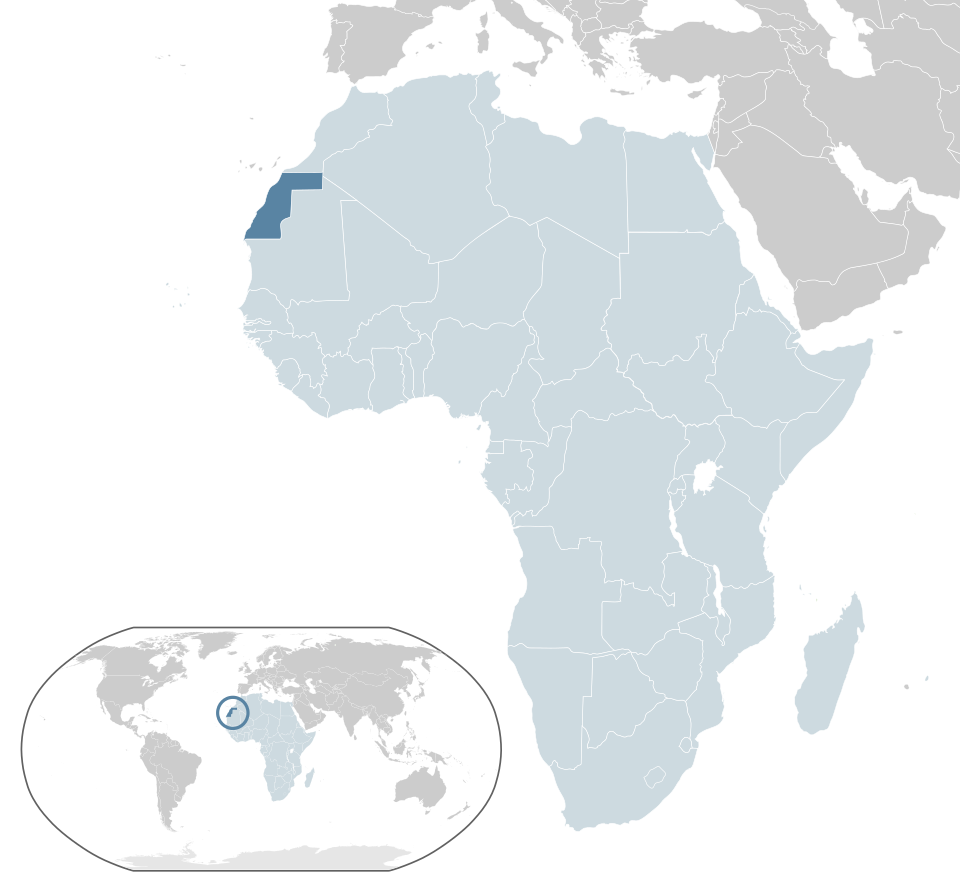
🇪🇭 Western Sahara: The Economics of Ambiguity in a Contested Frontier
Key Takeaways
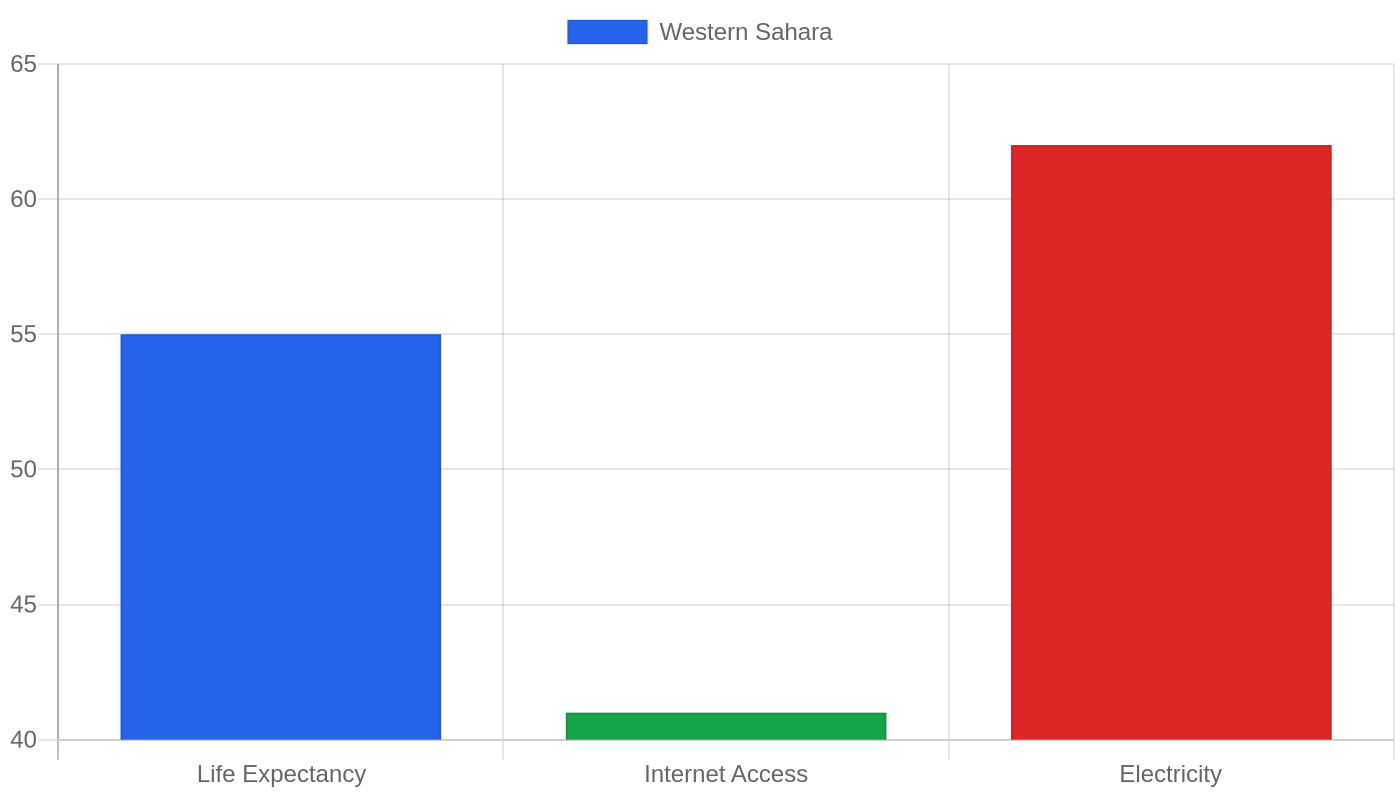
- Statistical Void: Standard economic indicators such as GDP growth, inflation, and unemployment rates are currently unavailable, reflecting the territory’s unique status as a non-self-governing territory under the United Nations.
- Political Primacy: The economic narrative is inextricably linked to the sovereignty dispute between Morocco and the Polisario Front, which defines the legal and regulatory environment.
- Data Scarcity: There is no reliable public data on cost of living, major corporate entities, or crime indices, making traditional economic analysis nearly impossible.
- Investment Uncertainty: The lack of clear economic data and unresolved legal status creates a high-risk environment for external investors and businesses.
The Statistical Silence: Why Numbers Matter Less Than Status
In the world of global economics, data is king.
Investors, policymakers, and journalists rely on hard figures—GDP growth, inflation rates, and unemployment statistics—to gauge a nation’s health.
However, when attempting to profile Western Sahara, the most striking feature of the World Bank’s dataset is what is missing.
All key economic metrics, including GDP in USD, GDP per capita at purchasing power parity, and Gross National Income per capita, are listed as “N/A.” This is not merely a gap in reporting; it is a reflection of the territory’s complex geopolitical reality.
Because Western Sahara is classified by the United Nations as a “non-self-governing territory,” it does not function as a standard sovereign state with independent central banking or statistical agencies that report to international bodies in the conventional manner.
Consequently, the World Bank does not publish standardized economic growth or inflation figures for the region.
This statistical silence underscores that the primary economic force here is not market dynamics, but political status.
Without a clear sovereign framework, the traditional tools of economic analysis fail to capture the reality of life in the territory.
The absence of data on unemployment or industrial output highlights a fundamental disconnect between Western economic measurement systems and the on-the-ground reality of this contested zone.
For any observer, the lack of numbers is itself the most important data point, signaling that the economy is a derivative of the sovereignty dispute rather than an independent variable.
A Life Without Benchmarks: The Cost of Living Mystery
Understanding the daily cost of living in Western Sahara is an exercise in navigating the unknown.
Unlike established markets where rent, groceries, and utilities are tracked by local statistics bureaus, there is no available data on housing costs, rent versus buy dynamics, or daily expenses for this territory.
The provided datasets contain no information on the cost of living, leaving residents and potential visitors without a clear guide to the economic threshold required to maintain a basic standard of life.
In most regions, one might compare local prices to regional averages to gauge affordability, but here, the lack of any reference points makes such comparisons impossible.
This opacity suggests that the local economy may operate in ways that are not easily captured by international surveys, potentially relying on local trade networks or subsidies that are not part of the broader global data stream.
For those considering relocation or business operations, the inability to estimate living costs adds a layer of significant uncertainty.
Without knowing the baseline cost of essentials, it is difficult to assess the purchasing power of local residents or the viability of wage-based employment.
The absence of this data forces observers to rely on anecdotal evidence or broader regional trends, neither of which can provide the precision needed for rigorous economic planning.
The Business Vacuum: Investment in Uncertainty
The business landscape of Western Sahara is defined by the absence of identifiable major companies and clear sectoral data.
The list of top companies is empty, and the main industries are not specified, indicating that there is no robust, transparent corporate sector that operates under a recognizable regulatory framework.
This lack of visibility into key players suggests that the economy is likely dominated by small-scale local activities, government services, or entities that do not report to international business databases.
For investors, this environment is fraught with risk, as the legal status of contracts, property rights, and corporate governance remains entangled in the political dispute between Morocco and the Polisario Front.
Without a clear legal identity, the enforcement of business laws becomes a matter of interpretation rather than standard procedure.
The absence of named industry leaders means there are no anchors for economic analysis, making it difficult to identify sectors to watch or potential partnerships.
This vacuum creates a barrier to entry for foreign capital, which typically requires a level of regulatory clarity and institutional stability that is currently lacking.
The business climate is thus characterized not by specific industry challenges, but by a fundamental lack of institutional infrastructure that supports transparent commerce.
Safety and Sovereignty: The Political Reality
The safety and political landscape of Western Sahara is the defining feature of the territory, overshadowing all other economic considerations.
The United Nations classifies the region as a “non-self-governing territory,” a status that highlights the ongoing and unresolved sovereignty dispute between Morocco and the Polisario Front.
This political ambiguity has direct implications for safety and stability, yet specific crime and safety indices are not available in the provided data, leaving the security situation opaque to external observers.
The lack of crime data does not imply safety, but rather indicates that the mechanisms for collecting and reporting such information are not established in a way that is accessible to international databases.
The political landscape is one of frozen conflict, where legal status remains unresolved, and this has profound effects on the quality of life and the rule of law.
Citizens and residents navigate a daily reality where their legal identity and rights are subject to the shifting sands of geopolitical negotiation.
The absence of happiness data or detailed safety metrics further isolates the territory from global well-being indices, making it a blind spot in the map of human development.
The Current Stalemate: A Feature of Stasis
In the current moment, the most significant development in Western Sahara is the continued persistence of the status quo.
There are no recent news reports or live indicators provided that suggest any immediate shifts in policy, reforms, or economic breakthroughs.
The situation remains defined by the long-standing dispute, with the United Nations maintaining its classification and the parties involved continuing to assert their respective claims.
This stagnation means that there are no fresh economic reforms or inflation trends to report, as the fundamental structural issues remain unresolved.
The lack of current affairs data reinforces the narrative that the territory exists in a state of suspended animation, where major economic changes are unlikely to occur without a resolution to the political conflict.
For journalists and analysts, the story is one of endurance and waiting, rather than dynamic change.
The absence of new data points or policy shifts underscores that the primary focus remains on the diplomatic and legal battles over sovereignty.
The Bottom Line
Western Sahara remains a fascinating but elusive subject for economic analysis, primarily because its economy is a direct reflection of its political status.
For investors, policymakers, and researchers, the key takeaway is that traditional economic metrics are not applicable, and any analysis must prioritize the geopolitical context over financial data.
This territory is not for the risk-averse, as the lack of data and legal clarity creates an environment of high uncertainty.
Watching Western Sahara requires understanding that the resolution of the sovereignty dispute is the single most important factor that will determine its future economic trajectory.
Sources & Methodology
This article is authored by Economic Pulse Net for informational and research purposes.
Economic Pulse Net sources its data from multilateral institutions, national statistics bureaus, and proprietary databases.
All data is believed to be current as of the date of publication. Published: September 03, 2026 |
Category: Research — Western Sahara
Use these signals in your own platform
Economic Pulse publishes its live signal feed through a documented, read-only API. Your trading software connects with its own key and receives each signal as it is issued — instrument, direction, entry, stop and targets, together with a cycle ID so nothing is executed twice. The feed is independent of this website and cannot change it.
Signals are informational only and are not financial advice.