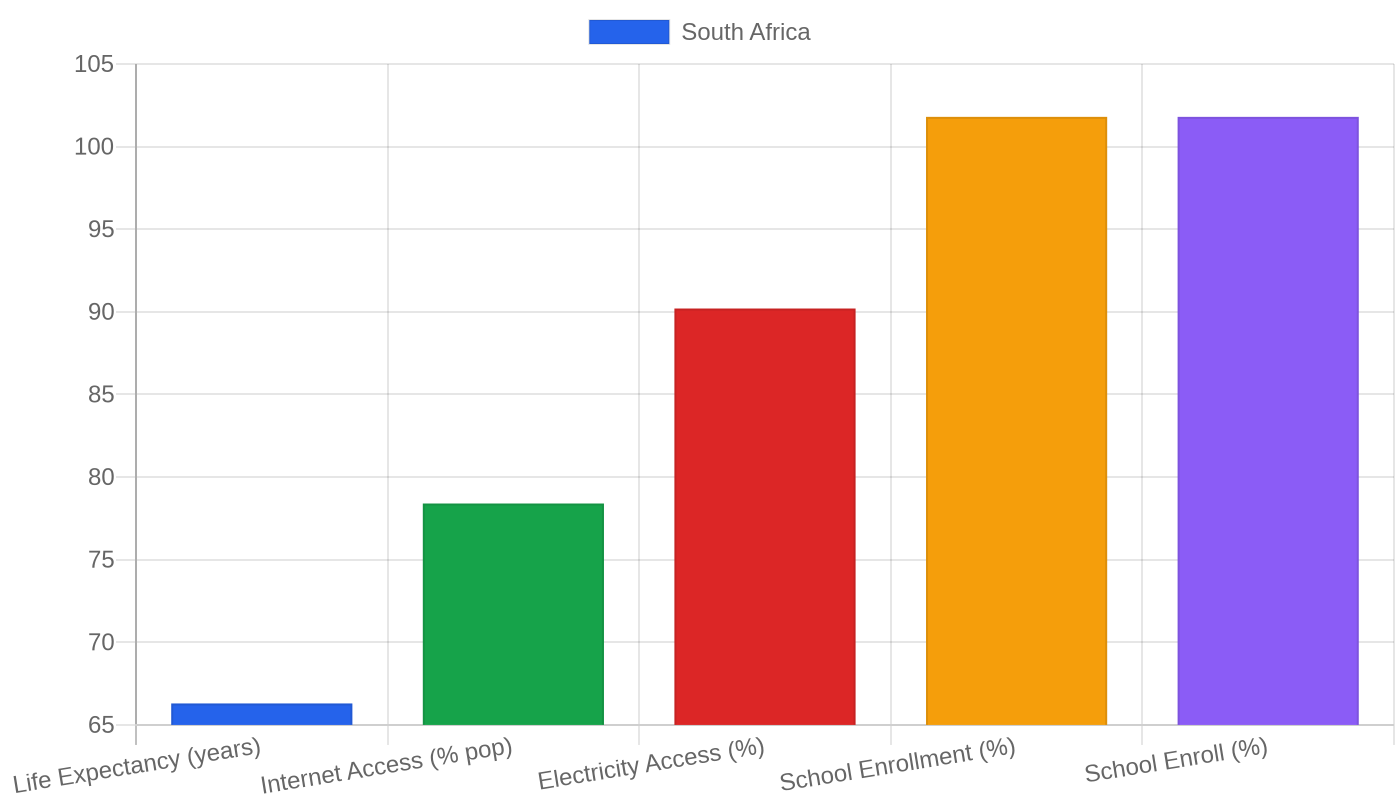
Economic Pulse Net | Sources: World Bank World Development Indicators, Government Sources | 2026
Key Takeaways
* Growth Under Pressure: The economy is expanding at a modest pace, with GDP growth projected at just over 1.1% for 2025, signaling a fragile recovery rather than a boom.
The Employment Crisis: Despite macroeconomic stability, the unemployment rate remains critically high at nearly 32.4%, posing a severe social and economic challenge.
Inflation Control: Consumer price inflation has been brought under relatively tight control, hovering around 3.2%, which supports currency stability but limits consumer spending power.
Corporate Resilience: Homegrown giants like Anglo American, Sasol, and Absa continue to dominate the regional landscape, leveraging deep historical roots in finance and resources.
Economic Headwinds and Structural Realities
South Africa’s economic trajectory in 2025 is defined by cautious optimism tempered by structural inertia. According to World Bank data, the nation’s GDP growth is projected at 1.11462608103956%, a figure that reflects an economy struggling to accelerate beyond its historical baseline. While this positive growth indicates that the economy is not contracting, it falls short of the double-digit expansion rates needed to significantly alter the living standards of the broader population.
Inflation, however, presents a more manageable picture; the Consumer Price Index (CPI) stands at 3.20550474112603%, suggesting that monetary policy has successfully anchored price expectations. This stability is crucial for foreign investors who seek predictable operating environments. However, the human cost of this macroeconomic balance is starkly visible in the labor market, where the unemployment rate sits at a staggering 32.391%.
This figure highlights a dual economy: one segment of skilled workers enjoys relative prosperity, while a vast majority remains excluded from formal employment opportunities. To understand the disparity, one must look at purchasing power parity; with a GDP per capita (PPP) of 15905.6794419658, the average citizen’s real income potential is higher than nominal figures might suggest, yet the GNI per capita of 6270.0 reveals significant wealth leakage or lower gross national income compared to global peers.
These numbers collectively paint a portrait of a nation that is economically stable but socially strained, growing slowly while grappling with deep-seated inequality.
The Cost of Living and Housing Dynamics
For residents and expatriates alike, navigating the daily expenses in South Africa requires a keen understanding of local purchasing power. With a GDP per capita (PPP) of approximately $15,905, the cost of living varies drastically depending on location and lifestyle choices. Urban centers like Johannesburg and Cape Town offer world-class amenities but come with premium pricing for housing and services.
For those considering long-term stays, the decision to rent versus buy is heavily influenced by interest rates and property values, which are indirectly stabilized by the low inflation rate of 3.2%. Daily expenses, including food and transport, are generally affordable when measured against the PPP-adjusted income, allowing for a decent standard of living for those employed in the formal sector.
However, the high unemployment rate means that for nearly a third of the workforce, these metrics are theoretical rather than practical. The gap between the official inflation rate and the lived experience of households can be wide, particularly for those reliant on public services or informal economies. Consequently, budgeting requires flexibility, as the rigid structure of formal costs often clashes with the volatility of informal income sources.
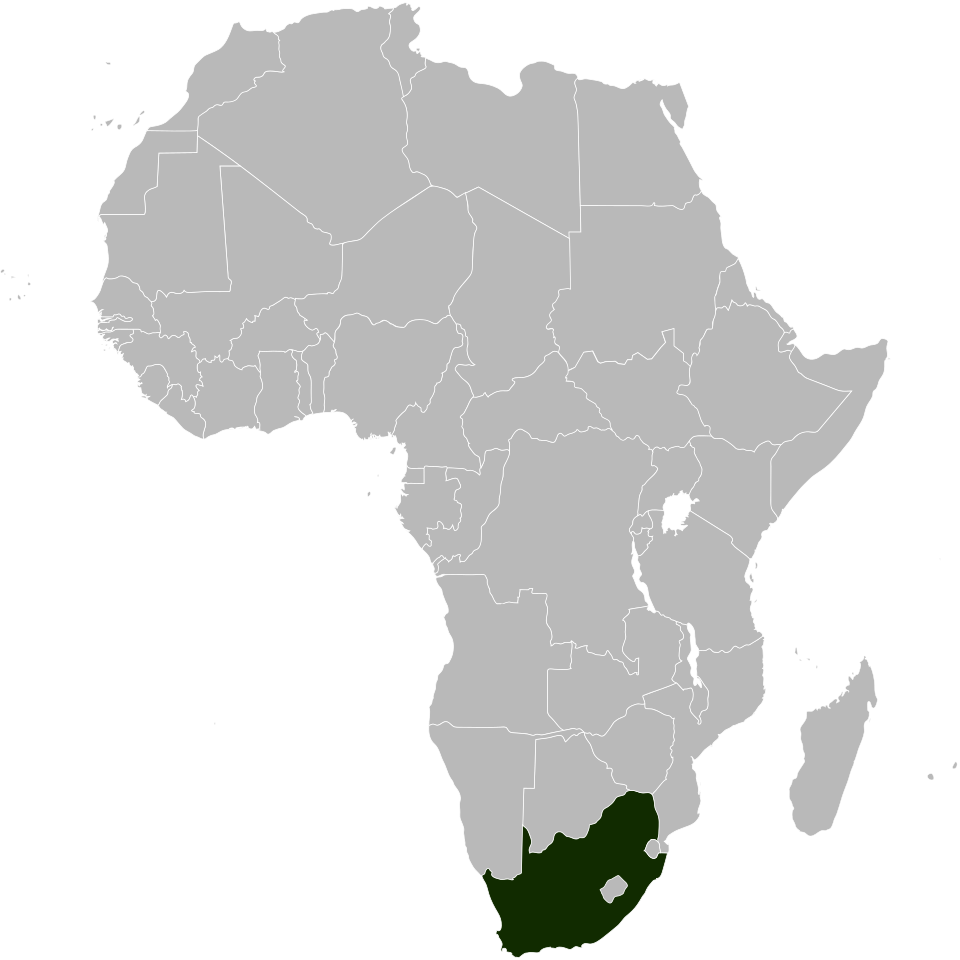
Investment Landscape and Corporate Giants
South Africa boasts one of the most sophisticated corporate landscapes in Africa, anchored by companies with deep historical pedigrees. The presence of titans such as Standard Bank Group (founded in 1862), Old Mutual (1845), and Nedbank (1888) underscores the country’s role as a financial hub for the continent. These institutions provide not only domestic stability but also extensive cross-border investment capabilities.
In the industrial sector, Anglo American (1917) and Sasol (1950) represent the country’s enduring strength in mining and energy, sectors that remain critical to global supply chains. Meanwhile, modern conglomerates like Bidvest (1988) and Shoprite Holdings (1979) demonstrate the robustness of the retail and service industries, catering to both local needs and regional trade.
MTN Group (1994) further highlights the digital transformation underway, providing essential telecommunications infrastructure across multiple African markets. For investors, these established entities offer a blend of dividend yields and growth potential, though they operate within a regulatory environment that demands strict compliance with constitutional mandates.
The diversity of these top companies—from banking to mining to telecom—provides a diversified entry point for capital seeking exposure to emerging markets without venturing into less developed regions.
Safety, Politics, and Quality of Life
The political framework of South Africa is unique among parliamentary republics, as the president serves as both head of state and head of government, deriving tenure from the confidence of Parliament. This system ensures that the executive, legislature, and judiciary are all subject to the supremacy of the Constitution, with superior courts empowered to strike down unconstitutional actions. This rule-of-law foundation provides a layer of political stability that attracts institutional investors.
However, quality of life is often overshadowed by safety concerns. While specific Crime and Safety Indices are currently listed as N/A in the provided data, the high unemployment rate of 32.391% historically correlates with higher crime rates in many developing economies. Potential residents must weigh the rich cultural heritage and legal protections against the need for heightened personal security measures.
The political landscape, therefore, is not just about governance but about maintaining social cohesion in a deeply unequal society. Happiness and well-being data are not explicitly provided, but the tension between constitutional rights and economic exclusion suggests a complex social fabric that requires careful navigation.
Current Affairs and Regional Context
Looking beyond South Africa’s borders, the broader African economic context offers clues to future trends. Recent reports indicate that Kenya expects its budget deficit to rise to 5.9% of GDP in 2027/28, highlighting a region-wide challenge of fiscal sustainability amidst slowing global demand.
Simultaneously, Afreximbank sees the African Continental Free Trade Area (AfCFTA) strengthening Africa’s financial markets, a development that could benefit South Africa’s export-oriented companies like Sasol and Shoprite. Markets in the region, as noted by CNBC Africa, are reacting to these shifts, with investors looking for safe havens and high-growth opportunities. South Africa, with its mature financial markets and strong currency, often serves as a proxy for continental sentiment.
The strengthening of financial markets through AfCFTA could open new avenues for South African firms to expand their footprint across the continent. These regional dynamics suggest that while South Africa faces internal stagnation, its external connections are evolving rapidly, offering new pathways for growth if domestic reforms can keep pace.
The Bottom Line
South Africa remains a critical watchlist country for investors seeking exposure to African markets, primarily due to its institutional depth and corporate maturity. The combination of low inflation and constitutional stability provides a solid foundation, but the high unemployment rate poses a significant long-term risk. Those interested in resource extraction, financial services, and retail should monitor the performance of legacy giants like Anglo American and Standard Bank.
Ultimately, the country’s future hinges on whether it can translate its macroeconomic stability into meaningful job creation and inclusive growth.
Sources & Methodology
This article is authored by Economic Pulse Net for informational and research purposes. Economic Pulse Net sources its data from multilateral institutions, national statistics bureaus, and proprietary databases. All data is believed to be current as of the date of publication.
Published: October 10, 2026 | Category: Research — South Africa
Use these signals in your own platform
Economic Pulse publishes its live signal feed through a documented, read-only API. Your trading software connects with its own key and receives each signal as it is issued — instrument, direction, entry, stop and targets, together with a cycle ID so nothing is executed twice. The feed is independent of this website and cannot change it.
Signals are informational only and are not financial advice.