Economic Pulse Net | Sources: World Bank World Development Indicators, Government Sources | 2026
Key Takeaways
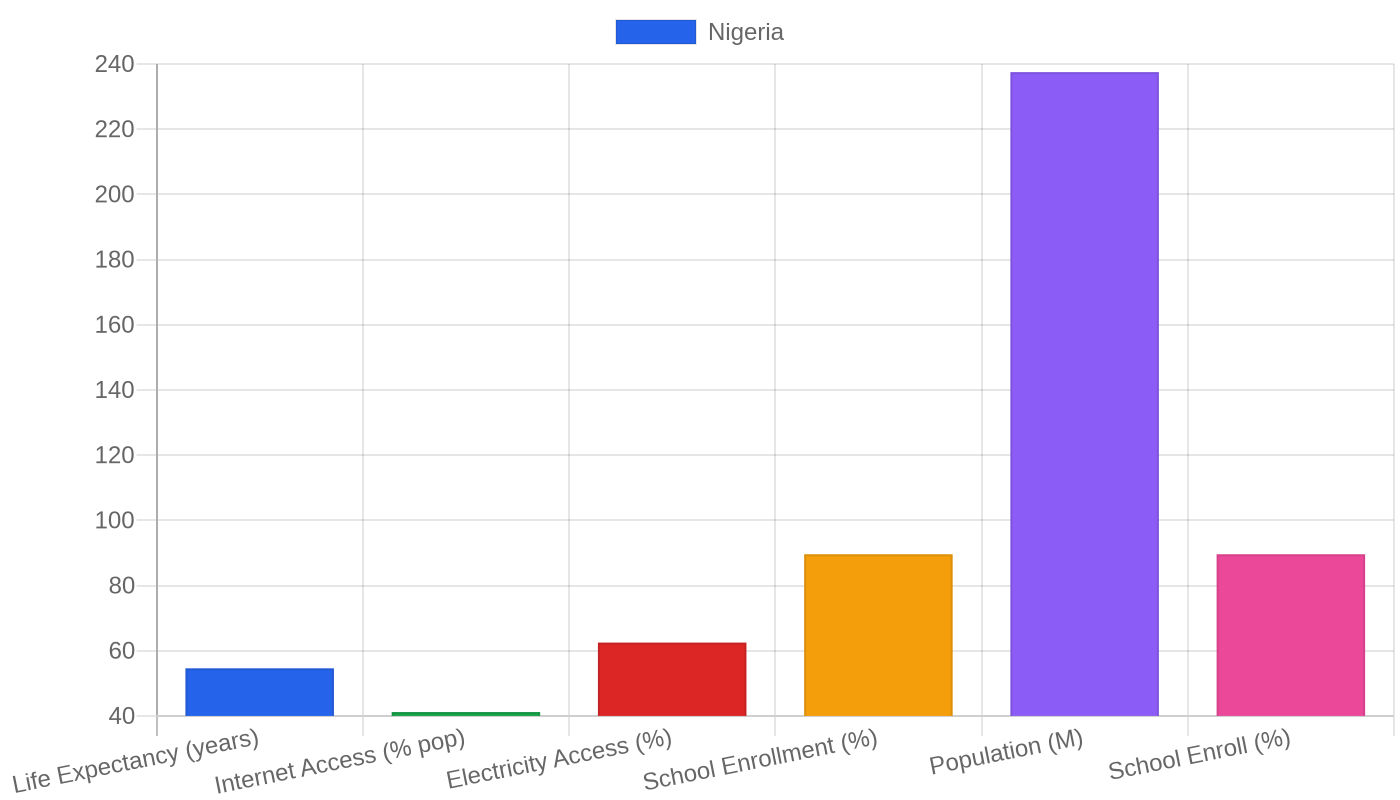
– Nigeria’s inflation rate has surged to 23.01%, according to the World Bank, squeezing households and businesses across Africa’s most populous nation, now estimated at 237.5 million people.
– Despite high inflation, official unemployment stands at just 3.06%, a figure that masks deep structural challenges in Africa’s largest economy.
– President Bola Tinubu’s tax reform laws, enacted one year ago, are beginning to reshape the fiscal landscape, though a special report by Premium Times reveals soaring cooking gas prices are testing public resilience.
– With a GNI per capita of just $1,360, Nigeria remains a lower-middle-income economy where the gap between reform ambition and daily survival is starkly visible.
– The corporate landscape is dominated by financial services and consumer goods giants, including Access Bank, BUA Cement, and BUA Foods, signalling where capital is concentrating.
The Paradox of Growth — Inflation, Employment, and the Real Economy
Nigeria’s economic story is one of stark contradictions, and nowhere is this more evident than in the headline numbers from the World Bank. Inflation has climbed to 23.01%, a level that erodes purchasing power with alarming speed. For context, this means that a basket of goods costing 10,000 naira a year ago now costs more than 12,300 naira.
The central bank, listed among the country’s top financial institutions, has been wrestling with this beast through monetary tightening, but the pressure remains intense.
What makes this inflation particularly painful is its broad base. It is not merely a story of imported price shocks; domestic structural factors — from logistics bottlenecks to energy costs — are compounding the problem. The World Bank data shows unemployment at a remarkably low 3.06%, but any economist worth their salt will tell you this figure requires careful interpretation.
In a country where vast swathes of the workforce operate in the informal economy, official unemployment numbers often fail to capture underemployment and the reality of subsistence-level work.
The population of 237.5 million people represents both a massive market and a monumental challenge. With a GNI per capita of $1,360, Nigeria sits firmly in the lower-middle-income bracket. This means that while the economy has scale, the average citizen has limited disposable income. The main industries — spanning financial services, aviation, cement manufacturing, and food processing — are concentrated in the hands of a few major players.
Companies like Access Bank dominate financials, while BUA Cement and BUA Foods anchor the industrial and consumer goods sectors. Aero Contractors, Arik Air, and Chanchangi Airlines represent a struggling aviation sector that mirrors the broader economy’s infrastructure gaps.
The Cost of Living Crisis — When Cooking Gas Becomes a Luxury
For the typical Nigerian household, the inflation numbers translate into a daily battle. The most visceral evidence comes from a special report by Premium Times, which documents how soaring cooking gas prices are squeezing households and businesses alike. Cooking gas, once considered a cleaner alternative to firewood and kerosene, has become a luxury for many families.
This is not merely a convenience issue; it is a health and time poverty issue, as families revert to biomass fuels that cause respiratory problems and require hours of collection.
Housing costs, while not captured in granular data, are implicitly reflected in the inflation trajectory. In major cities like Lagos, Abuja, and Port Harcourt, rent consumes a disproportionate share of household income. The gap between what people earn and what they need for basic shelter has widened considerably. Unlike in some regional peers where rent controls or social housing programmes offer a cushion, Nigeria’s housing market operates largely on market forces, leaving low-income families exposed.
Daily expenses — from transportation to food staples — have all felt the inflationary heat. The 23.01% CPI figure from the World Bank is not an abstraction; it is the reason why market women adjust prices weekly, why commuters spend longer hours on buses to save naira, and why small business owners are cutting back on staff. The cost of living crisis is the single most potent political and economic issue facing the country today.
Investment and Business Climate — Where Capital Is Flowing
Despite the headwinds, Nigeria’s corporate sector continues to attract attention. The list of top companies reveals where the smart money is positioned. Access Bank leads the financials sector, a sign that banking remains the backbone of formal economic activity. The Central Bank of Nigeria itself appears on the list, underscoring the outsized role of monetary policy in shaping business conditions.
BUA Cement and BUA Foods represent the industrial and consumer goods pillars, both benefiting from infrastructure spending and population-driven demand.
The aviation sector, represented by Aero Contractors, Arik Air, and Chanchangi Airlines, tells a more cautionary tale. These companies operate in an environment of high fuel costs, currency volatility, and infrastructure constraints. Their presence on the top companies list is as much a reflection of market dominance as it is of the sector’s fragility.
C&I Leasing Group, an industrial services firm, and Cassava Republic Press and Chocolate City Records, both in consumer services, round out a diverse but challenging business ecosystem.
For investors, the question is whether the reform agenda can unlock Nigeria’s undoubted potential. The tax reform laws, now one year old, are a step toward fiscal consolidation. But the business environment remains hobbled by foreign exchange shortages, regulatory unpredictability, and security concerns. Sectors to watch include financial technology, where Nigerian startups have shown global competitiveness, and agro-processing, which could leverage the country’s vast agricultural land.
However, the path from potential to profit remains strewn with obstacles.
Safety, Politics, and the Quality of Life
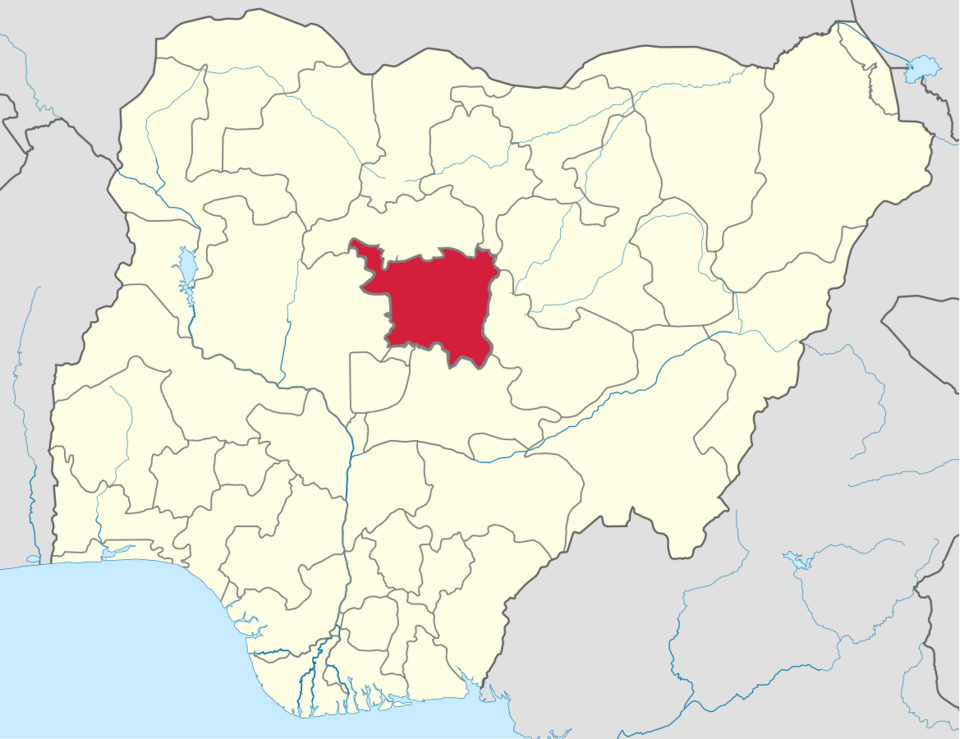
Nigeria operates as a federal republic modelled on the United States system, with 36 states and the Federal Capital Territory of Abuja. Executive power rests with the president, who is elected by popular vote for a maximum of two four-year terms. State governors follow the same term limits. The political structure is designed to balance power between the centre and the states, but in practice, the system is tested by ethnic and regional tensions, resource allocation disputes, and security challenges.
Crime and safety indices are not available in the current data, but any discussion of quality of life in Nigeria must acknowledge the security environment. From banditry in the northwest to separatist tensions in the southeast and oil theft in the Niger Delta, the country faces a multi-faceted security landscape. These issues directly affect economic activity — farmers are driven from their land, supply chains are disrupted, and investment is deterred.
Political stability under President Bola Tinubu has been a mixed bag. On one hand, the administration has pursued bold reforms, including the removal of fuel subsidies and the tax overhaul. On the other hand, these reforms have imposed short-term pain on a population already struggling with inflation. The quality of life, measured by access to reliable electricity, clean water, and healthcare, remains low for the majority.
Nigeria is a country of immense human capital and resilience, but the structural deficits in public goods are a constant drag on well-being.
Reform Fever Meets Reality — What’s Happening Now
The most timely story in Nigeria today is the collision between reform ambition and economic reality. One year after the passage of the tax reform laws, Premium Times contributor Aderonke Atoyebi argues that President Tinubu’s economic foresight is taking shape. The reforms aim to broaden the tax base, reduce reliance on oil revenues, and improve fiscal discipline. These are textbook prescriptions for a resource-dependent economy seeking to diversify.
Yet the same newspaper’s special report on cooking gas prices tells the other side of the story. The removal of fuel subsidies and currency devaluation have fed directly into higher energy costs. Households and small businesses are the shock absorbers for macroeconomic adjustment. The 23.01% inflation rate is the most visible symptom of this adjustment pain.
The central bank, a top financial institution in its own right, faces a delicate balancing act. It must keep interest rates high enough to tame inflation but not so high that they choke off the credit needed for business expansion. The financial sector, led by Access Bank, is watching these policy moves closely. Meanwhile, companies like BUA Cement and BUA Foods are navigating input cost volatility and currency risk.
The political calendar adds another layer of uncertainty. With the president serving his first term, the next two years will be critical for determining whether the reform narrative holds or whether populist pressures force a policy reversal. The international community is watching Nigeria closely — not just for its oil exports, but as a bellwether for democratic governance and economic reform in Africa.
The Bottom Line
Nigeria is not a country for the faint-hearted investor or policymaker. It offers scale, dynamism, and human capital that few African nations can match, but it also delivers volatility, infrastructure deficits, and policy risk in equal measure. The current moment — with inflation at 23.01%, a reform agenda taking shape, and a population of 237.5 million demanding better — is both dangerous and full of possibility.
Those who understand that Nigeria’s story is a marathon, not a sprint, will find opportunities. Those looking for quick returns should look elsewhere. For now, the world’s most populous black nation is writing its next chapter, and the ink is far from dry.
Sources & Methodology
This article is authored by Economic Pulse Net for informational and research purposes. Economic Pulse Net sources its data from multilateral institutions, national statistics bureaus, and proprietary databases. All data is believed to be current as of the date of publication.
Published: July 22, 2026 | Category: Research — Nigeria
Use these signals in your own platform
Economic Pulse publishes its live signal feed through a documented, read-only API. Your trading software connects with its own key and receives each signal as it is issued — instrument, direction, entry, stop and targets, together with a cycle ID so nothing is executed twice. The feed is independent of this website and cannot change it.
Signals are informational only and are not financial advice.