Economic Pulse Net | Sources: World Bank World Development Indicators, Numbeo | 2026
<#>Key Takeaways
– Nigeria’s economy expanded by 4.01% in 2025, according to the World Bank, marking a notable recovery after years of sluggish performance and currency turmoil.
– Inflation remains painfully high at 23.01%, squeezing household budgets and threatening the purchasing power of Africa’s most populous nation.
– The country’s GDP stands at roughly $290.8 billion, but with a population approaching 238 million, per capita income measured by GNI sits at just $1,360 — a stark reminder of the distribution challenge.
– Major corporates like BUA Foods are pushing ahead with expansion plans, signalling private-sector confidence even as cooking gas prices soar and households struggle.
– Nigeria operates as a federal republic modelled on the United States, with a powerful presidency and a two-term limit, providing political stability — though governance challenges persist.
<#>The Growth Paradox — GDP Rises, Living Standards Lag
On paper, Nigeria’s economy is moving in the right direction. The World Bank reports GDP growth of 4.01% for 2025 — a figure that many emerging economies would envy.
After a period marked by currency devaluation, foreign exchange shortages, and the aftershocks of pandemic-era disruption, this rebound suggests that Africa’s largest economy is regaining some momentum. But the headline number tells only part of the story.
Dig deeper, and the contradictions become apparent. Inflation stands at a blistering 23.01%, according to the World Bank. That means while the economy is producing more goods and services, the cost of everyday life is rising at a pace that erodes real incomes. For a typical Nigerian household, wage gains — if they come at all — are being swallowed whole by higher prices for food, transport, and energy.
The central bank has been forced into a tightening cycle, raising interest rates to tame price pressures, but the trade-off is clear: slower credit growth and higher borrowing costs for businesses.
The per capita figures are sobering. GDP per capita measured by purchasing power parity is $9,531.61 — a number that places Nigeria firmly in lower-middle-income territory. But the GNI per capita of just $1,360 tells a different story, one of vast inequality and a formal economy that struggles to generate broad-based prosperity. With a population of 237.5 million people, Nigeria is both a massive market and a demographic challenge.
Growth must accelerate significantly — and be more inclusive — to lift living standards across the board.
The industrial base remains narrow. The data provided does not specify Nigeria’s main industries, but the country’s corporate landscape offers clues: banking, cement, food processing, aviation, and consumer goods dominate. These sectors are growing, but they are not yet generating enough employment to absorb the millions of young Nigerians entering the labour market each year.
<#>The Cost of Living Squeeze — When Growth Doesn’t Feel Like Growth
For the average Nigerian, the economic data from the World Bank is not an abstraction — it is felt at the market stall, the petrol pump, and the kitchen table. While the data provided does not include specific cost-of-living figures from Numbeo, the broader picture is clear from the inflation numbers alone. At 23.01%, the price of basic goods is rising at nearly a quarter of their value each year. That is not a pinch; it is a squeeze.
Food prices are the most sensitive component. Nigeria imports a significant share of its staple foods, and the naira’s weakness has made those imports more expensive. Cooking gas, as highlighted in recent reporting by Premium Times, has seen prices soar, putting pressure on households that rely on it for daily cooking. The same report notes that businesses are also feeling the strain, with higher energy costs feeding into the price of everything from street food to manufactured goods.
Housing costs, while not specified in the available data, are another pressure point. In Lagos, Abuja, and Port Harcourt, rents have climbed steadily, driven by urban migration and a shortage of affordable housing. For most Nigerians, homeownership remains a distant dream; renting is the norm, and rent absorbs a large share of monthly income. The combination of high inflation, stagnant wages, and rising housing costs creates a cost-of-living crisis that the GDP growth figure does not capture.
<#>Investment and Business Climate — Big Bets Amid Uncertainty
Despite the macroeconomic headwinds, Nigeria’s corporate sector is not standing still. The list of top companies provided includes heavyweights like Access Bank, BUA Cement, and BUA Foods — firms that are placing long-term bets on the country’s potential. BUA Foods, as reported by Premium Times, has announced plans for a major expansion to support Nigeria’s economic growth and food security.
This is a vote of confidence from one of the country’s most prominent conglomerates, and it signals that private capital still sees opportunity in Nigeria’s vast consumer market.
The financial sector, led by Access Bank, remains the backbone of the economy. Nigerian banks have expanded regionally and are increasingly sophisticated, though they face challenges from non-performing loans and currency risk. The aviation sector, represented by Aero Contractors, Arik Air, and Chanchangi Airlines, is a mixed picture — high fuel costs and foreign exchange shortages have made operations difficult, but domestic travel demand remains strong.
The business climate, however, is not for the faint-hearted. Currency volatility, regulatory unpredictability, and infrastructure deficits are persistent hurdles. Yet the presence of companies like Cassava Republic Press and Chocolate City Records — both in consumer services and creative industries — points to a vibrant entrepreneurial ecosystem that is finding ways to thrive despite the odds.
For investors with a long horizon and a tolerance for risk, Nigeria offers exposure to one of the world’s fastest-growing consumer markets.
<#>Safety, Politics, and Quality of Life — Democracy’s Uneven Rewards
Nigeria’s political system is a federal republic modelled after the United States, with 36 states and a federal capital territory in Abuja. The president is both head of state and head of government, elected by popular vote to a maximum of two four-year terms. State governors operate under similar term limits. This structure provides a degree of political predictability, though the system is far from frictionless.
Elections are fiercely contested, and the 2023 general election — which brought President Bola Tinubu to power — was closely watched both domestically and internationally. The transition of power, while peaceful, took place against a backdrop of deep economic challenges and security concerns. Nigeria faces multiple security threats, including insurgency in the northeast, banditry in the northwest, and separatist tensions in the southeast.
These issues weigh heavily on quality of life and deter investment in affected regions.
The crime and safety data provided does not include specific indices, but it is well understood that Nigeria’s major cities present safety challenges, particularly at night and in certain neighbourhoods. Petty crime, traffic-related extortion, and occasional kidnappings for ransom are realities that residents navigate daily. For expatriates and wealthier Nigerians, gated communities and private security are common.
The quality of life, then, is deeply stratified — those with means can insulate themselves from many of the country’s problems, while the majority bear the brunt of insecurity and inadequate public services.
<#>What’s Happening Now — Statistics, Expansion, and the Price of Gas
This is a moment of statistical introspection for Nigeria. The National Bureau of Statistics recently celebrated African Statistics Day 2024, and the Statistician General delivered a keynote address at a sensitisation workshop for stakeholders on the GDP and CPI rebasing exercise. This is not bureaucratic trivia — rebasing matters.
It changes the base year for economic calculations and can dramatically alter reported growth rates, inflation figures, and the composition of GDP. The fact that the NBS is undertaking this exercise signals a commitment to more accurate data, which in turn shapes policy decisions and investor perceptions.
In the private sector, BUA Foods is moving ahead with expansion plans, as reported by Premium Times. The company’s investment is framed around supporting Nigeria’s economic growth and food security — a politically resonant message in a country where food inflation is a major source of public discontent. If successful, this expansion could boost local production, reduce import dependence, and create jobs.
But the picture is not entirely optimistic. A special report from Premium Times details how soaring cooking gas prices are squeezing Nigerian households and businesses. This is a microcosm of the broader inflation challenge: global energy prices, currency weakness, and domestic supply chain issues are combining to push up costs for essential goods. For the average Nigerian, the question is not whether GDP is growing, but whether they can afford dinner tonight.
The tension between macroeconomic recovery and household-level hardship is the defining story of Nigeria in 2025.
<#>The Bottom Line
Nigeria is a country of immense potential and persistent problems. The 4.01% GDP growth reported by the World Bank is encouraging, but it is not enough — not when inflation is running at 23.01%, not when per capita income is $1,360, and not when cooking gas prices are squeezing families. Investors should watch Nigeria for its demographic dividend, its entrepreneurial energy, and its strategic importance in West Africa.
But they should also watch with clear eyes: the path to prosperity is real, but it is neither straight nor short.
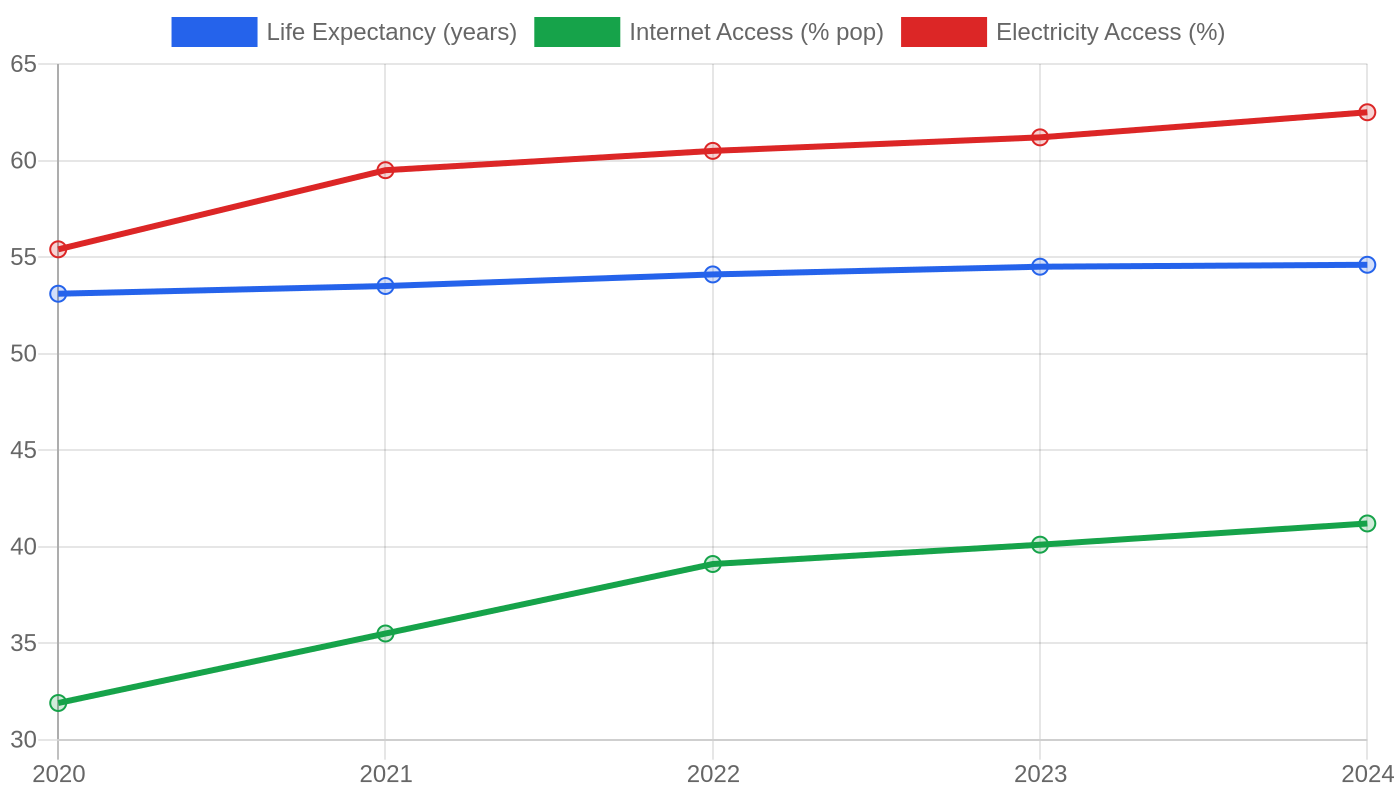
*Chart: /home/deploy/.openclaw/workspace/pulse/data/media/nigeria-chart.png*
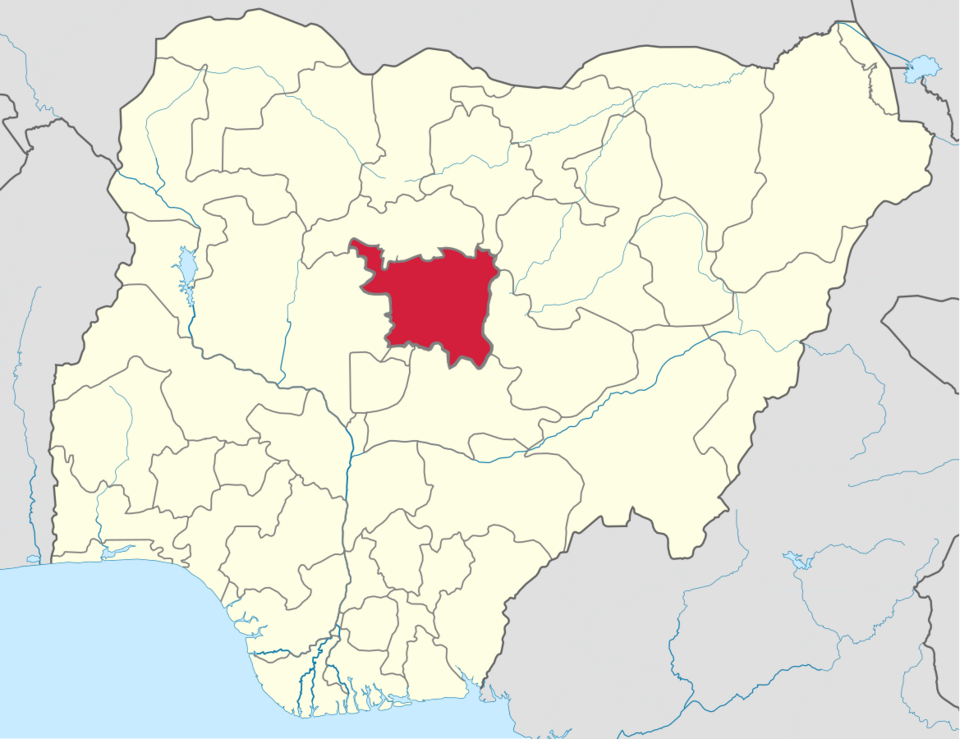
*Photo: /home/deploy/.openclaw/workspace/pulse/data/media/nigeria-photo.jpg*
Sources & Methodology
This article is produced by Economic Pulse Net for informational and research purposes. Data is drawn from publicly available sources including the World Bank Open Data portal, Trading Economics, Numbeo, Wikipedia, and official national statistics bureaus. Economic Pulse Net does not guarantee the accuracy or completeness of third-party data. All data is believed to be current as of the date of publication.
Published: July 16, 2026 | Category: Research — Nigeria
Use these signals in your own platform
Economic Pulse publishes its live signal feed through a documented, read-only API. Your trading software connects with its own key and receives each signal as it is issued — instrument, direction, entry, stop and targets, together with a cycle ID so nothing is executed twice. The feed is independent of this website and cannot change it.
Signals are informational only and are not financial advice.