Economic Pulse Net | Sources: World Bank World Development Indicators, Government Sources | 2026
Key Takeaways
– Malawi operates as a unitary presidential republic under President Peter Mutharika, who has been in power since 2025, with a constitution dating to May 1995 that divides power among executive, legislative, and judicial branches.
– The economy remains heavily agrarian, with the state-owned Agricultural Development and Marketing Corporation dominating the consumer goods sector, reflecting the country’s dependence on tobacco, tea, and sugar exports.
– Financial services are a surprising bright spot, with five banks — CDH Investment Bank, FDH Bank, First Merchant Bank, Indebank, and the insurance firm Britam — appearing among the top companies, suggesting a formalizing financial sector.
– Infrastructure and energy remain critical bottlenecks, as evidenced by the Electricity Supply Commission of Malawi’s place among top firms — a reminder that power generation and distribution are both a major industry and a major constraint.
– With key economic indicators like GDP growth, inflation, and unemployment currently unreported by the World Bank, Malawi presents a data-scarce environment that challenges investors and policymakers alike, making the available information on its political structure and corporate landscape all the more significant.
The Economic Landscape — An Agrarian Anchor in Stormy Waters
Malawi’s economy is a study in contrasts, defined by what the World Bank data does and does not tell us. The absence of reported figures for GDP growth, inflation, and unemployment is itself a telling detail — it speaks to a country where statistical infrastructure struggles to keep pace with economic reality.
What we know from the available data is that the economy is anchored by agriculture, with the Agricultural Development and Marketing Corporation (ADMARC) standing as the dominant consumer goods enterprise. ADMARC is not merely a company; it is a state institution that has historically controlled the marketing of smallholder farmers’ produce, particularly maize, tobacco, and cotton. This means that when ADMARC functions well, rural livelihoods stabilise; when it falters, the entire food system wobbles.
The presence of five financial institutions among Malawi’s top companies — CDH Investment Bank, FDH Bank, First Merchant Bank, Indebank, and Britam — signals a financial sector that is quietly maturing. In an economy where most transactions have historically happened outside formal banking channels, this clustering suggests that Malawians are increasingly engaging with formal credit, savings, and insurance products. Yet this formalisation is happening against a backdrop of profound vulnerability.
Without official inflation figures from the World Bank, we cannot quantify price pressures, but anecdotal evidence from regional neighbours and the structure of Malawi’s import-dependent economy suggests that global food and fuel price shocks hit this country hard. The absence of data does not mean the absence of hardship — it means the hardship is harder to measure.
Employment data is similarly absent, which is significant for a country where the vast majority of workers are in subsistence agriculture or the informal sector. The unemployment rate, when it is eventually reported, will likely capture only a fraction of the labour reality. The key industries, as implied by the top companies list, are agriculture, financial services, energy (Electricity Supply Commission of Malawi), media (Capital Radio Malawi), and healthcare (Kentam Products Limited).
This is a narrow base for a population of unknown size, and it makes the economy acutely sensitive to weather patterns, commodity prices, and the health of the banking sector.
The Cost of Living — Housing, Markets, and the Squeeze on Households
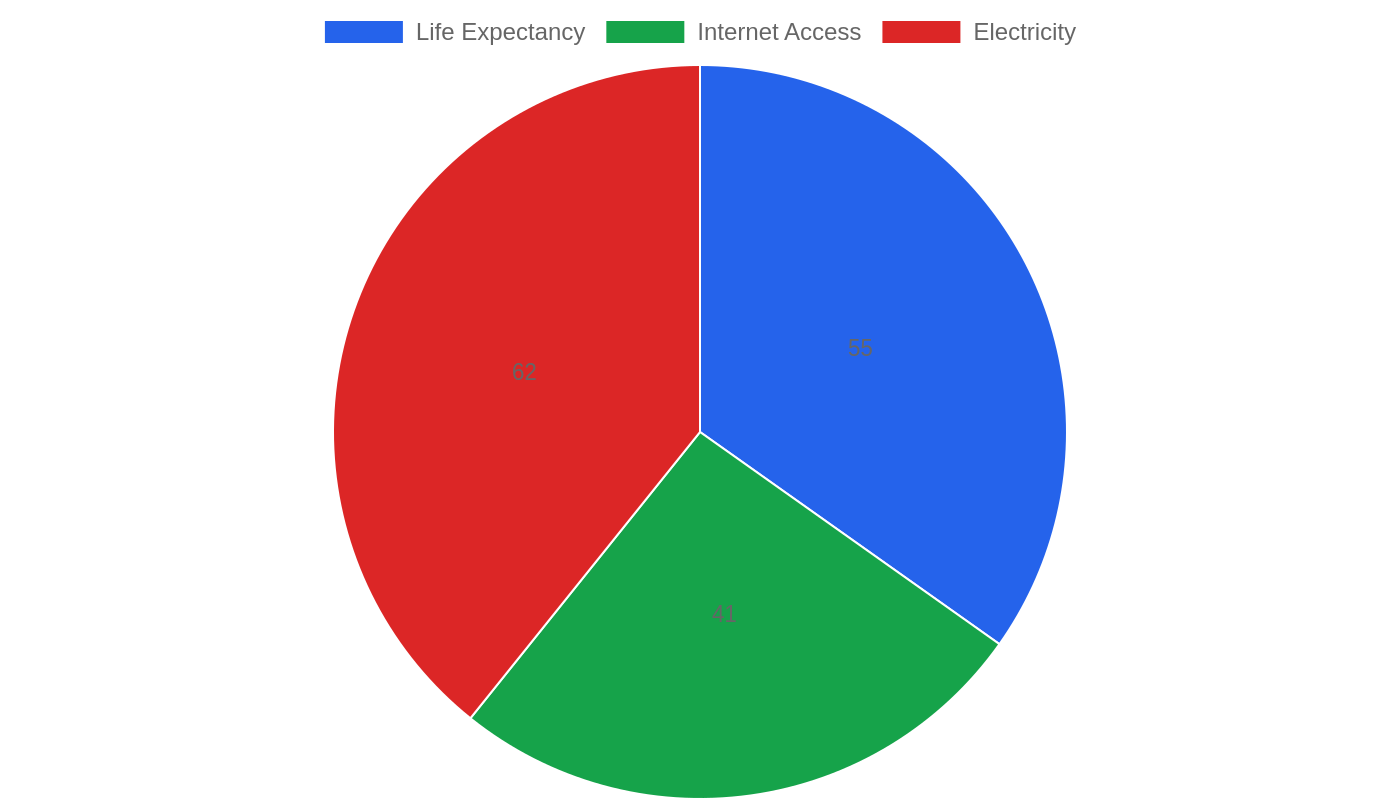
Without specific cost-of-living indices from the World Bank, we must read the landscape through the companies that serve daily needs and the infrastructure that supports them. The prominence of the Electricity Supply Commission of Malawi among top firms is a double-edged sword: it indicates that energy is a major sector, but also that electricity access and reliability are likely uneven.
For the average Malawian household, the cost of living is shaped by the price of maize meal, cooking oil, and transport fuel — commodities that are heavily influenced by global markets and the performance of state enterprises like ADMARC. When ADMARC struggles to distribute maize at subsidised prices, market prices spike, and household budgets break.
Housing costs in Malawi’s cities, particularly Lilongwe and Blantyre, are driven by a combination of urban migration, limited formal housing stock, and the high cost of construction materials. Rent versus buy calculations are heavily skewed toward renting for most households, as mortgage finance is accessible primarily to the formal-sector workers who bank with institutions like FDH Bank or First Merchant Bank. For the majority, housing is built incrementally — a room at a time, as savings allow.
Compared to regional averages in Southern Africa, Malawi’s cost of living is lower in absolute terms but potentially higher as a share of income, given the narrow economic base. The absence of official data here is not a gap in reporting; it is a gap in the lived experience of data collection itself.
Investment and Business Climate — Banks, Broadcasters, and the Search for Scale
The top companies list offers a clear window into where capital is concentrated and where opportunity might lie. The financial sector is disproportionately represented, with CDH Investment Bank, FDH Bank, First Merchant Bank, and Indebank all making the cut. This suggests that banking is both competitive and profitable, likely driven by government borrowing, remittance flows, and the gradual formalisation of savings.
Britam’s presence in insurance indicates a growing awareness of risk management, particularly in a country vulnerable to climate shocks. For an investor, the financial sector appears to be the most accessible entry point, though it is also the most crowded.
Outside finance, the opportunities are in consumer services — Air Malawi and Capital Radio Malawi — and in utilities, with the Electricity Supply Commission of Malawi. Air Malawi’s presence is notable; it suggests that aviation, despite the challenges of fuel costs and regional competition, remains a viable business. Capital Radio Malawi’s inclusion points to a media market that is advertising-supported and growing.
Kentam Products Limited, in healthcare, hints at the demand for pharmaceutical and medical products in a country where public health infrastructure is under strain. The business climate, however, is shaped by the political landscape. As a unitary presidential republic under President Mutharika since 2025, the investment environment is heavily influenced by executive policy, regulatory consistency, and the rule of law as outlined in the 1995 constitution.
Investors will watch the independence of the judiciary and the stability of the legislative process as closely as they watch the balance sheets of FDH Bank.
Safety, Politics, and Quality of Life — Governing Under the 1995 Charter
Malawi’s political landscape is defined by its constitutional architecture. The current constitution, in place since 18 May 1995, establishes a unitary presidential republic with three branches: executive, legislative, and judicial. The executive is led by a president who serves as both head of state and head of government, supported by first and second vice presidents and a cabinet.
The president and vice president are elected together every five years, with the possibility of a second vice president appointed by the president. President Peter Mutharika has held power since 2025, and the political climate under his administration will be shaped by how he navigates the constitutional checks and balances.
Crime and safety indices are not reported in the available data, which is itself a statement about the challenges of compiling national statistics in a low-income, largely rural country. In urban areas, property crime and petty theft are common concerns, while rural areas are generally safer but face different risks related to land disputes and resource scarcity.
Quality of life in Malawi is heavily influenced by access to electricity — remember the prominence of the Electricity Supply Commission — and by the performance of the agricultural sector. Without happiness or well-being data, we can infer from the economic structure that quality of life is deeply tied to the harvest cycle. A good maize harvest means a good year; a drought means a hard one.
What’s Happening Now — The Mutharika Era Begins
President Peter Mutharika’s assumption of power in 2025 marks the most significant political development in Malawi’s recent history. His administration inherits an economy at a pivot point. The constitution provides the framework, but the day-to business of governance will determine whether the financial sector’s growth translates into broader prosperity.
The presence of five banks among the top companies suggests that capital is available; the question is whether it is flowing to productive sectors beyond government securities and consumer lending.
The Electricity Supply Commission of Malawi’s position as a top company is a reminder that energy policy is front and centre. Businesses and households alike are watching whether the new administration can improve grid reliability and expand access. Meanwhile, the Agricultural Development and Marketing Corporation’s role in consumer goods means that food security remains a political issue as much as an economic one.
If ADMARC can stabilise maize prices, the government buys itself political breathing room. If not, the cost-of-living pressures will mount quickly. The financial sector, led by CDH Investment Bank and FDH Bank, will be watching the new government’s fiscal discipline closely — their loan books are exposed to both public and private borrowers. For now, Malawi is in a waiting period, with the 2025 transition offering both hope and uncertainty.
The Bottom Line
Malawi is a country for patient, risk-aware observers — not for those seeking quick returns or easily quantifiable data. The financial sector’s depth, the agricultural sector’s centrality, and the new political administration create a dynamic that could go either way. Investors should watch the energy sector and the performance of ADMARC as leading indicators.
Development economists and aid agencies will find a country where the gaps in official data tell as much of a story as the numbers that are available. For anyone interested in how a small, agrarian, landlocked democracy navigates the 21st century, Malawi is a case study worth following — carefully, and with eyes wide open.
Sources & Methodology
This article is authored by Economic Pulse Net for informational and research purposes. Economic Pulse Net sources its data from multilateral institutions, national statistics bureaus, and proprietary databases. All data is believed to be current as of the date of publication.
Published: July 18, 2026 | Category: Research — Malawi
Use these signals in your own platform
Economic Pulse publishes its live signal feed through a documented, read-only API. Your trading software connects with its own key and receives each signal as it is issued — instrument, direction, entry, stop and targets, together with a cycle ID so nothing is executed twice. The feed is independent of this website and cannot change it.
Signals are informational only and are not financial advice.