Economic Pulse Net | Sources: World Bank World Development Indicators, Government Sources | 2026
🇬🇭 Ghana 2025 — High Growth, Sticky Inflation: The West African Giant’s Double-Edged Sword
Key Takeaways
- Robust Expansion: Ghana’s economy is growing at a rapid pace of nearly 6% in 2025, signaling strong macroeconomic momentum according to World Bank data.
- Inflationary Pressure: Despite growth, consumer prices remain elevated at 14.2%, indicating that the cost of living is still a significant burden for households.
- Low Unemployment: The labor market is tight, with unemployment hovering at just under 3%, suggesting high demand for workers but potential wage pressure.
- Diversified Corporate Base: The business landscape is anchored by major players in mining, aviation, and financial services, including Ashanti Goldfields and Accra Brewery Company.
- Political Stability: The nation operates under a stable democratic framework, with power alternating between the National Democratic Congress and the New Patriotic Party.
Engine of Growth: A Macro Picture of Resilience
Ghana’s economic trajectory for 2025 is defined by a striking contrast between top-line growth and persistent price pressures.
According to the World Bank, the country’s Gross Domestic Product is expanding at a rate of 5.95%, a figure that places Ghana among the faster-growing economies in the region.
This robust expansion is underpinned by a total GDP valued at approximately $114.2 billion, reflecting a substantial economic engine that continues to attract attention from international investors.
However, this growth comes with a caveat: consumer price inflation stands at 14.2%, a level that erodes purchasing power and complicates fiscal policy for the government.
While the high growth rate suggests that the supply side of the economy is performing well, the sticky inflation implies that monetary tightening or supply chain constraints may still be at play.
The labor market, meanwhile, is showing signs of strength, with unemployment recorded at just 2.98%.
This low unemployment rate indicates that the expanding economy is successfully absorbing workers, though it may also contribute to wage inflation in certain sectors.
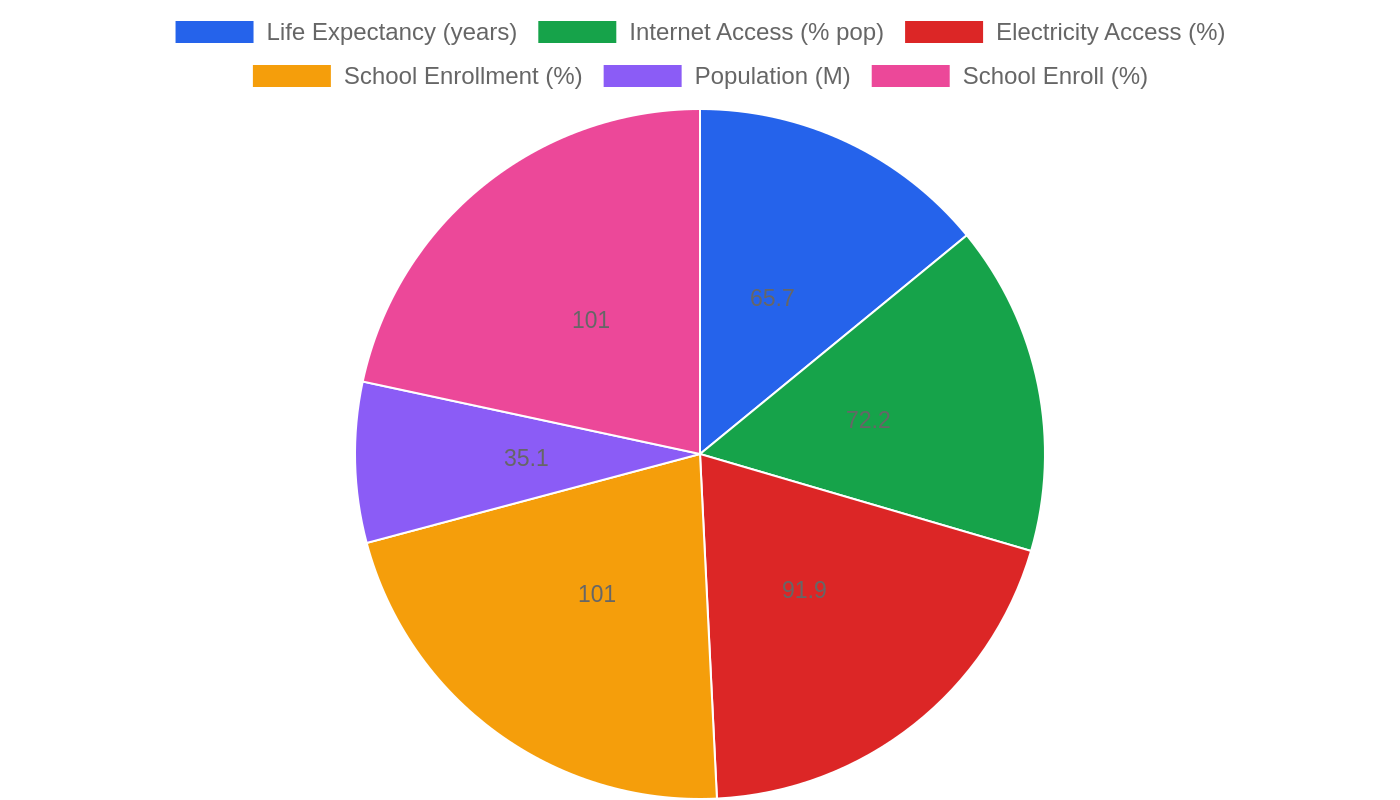
With a population of over 35 million, the human capital base is large, and the GDP per capita on a purchasing power parity basis stands at $8,610, offering a more realistic view of local living standards than the nominal GNI per capita of $2,630.
These figures collectively paint a picture of an economy that is dynamic and resilient, yet still grappling with the aftershocks of earlier economic shocks.
The Price of Living: Navigating High Costs
For the average Ghanaian, the macroeconomic headlines of 6% growth do not immediately translate into relief at the grocery store, where inflation of 14.2% remains a daily reality.
While specific housing and rent data is not detailed in the current dataset, the high rate of consumer price inflation suggests that essential goods, services, and likely housing costs are trending upward.
This inflationary environment creates a challenging backdrop for household budgeting, as the real value of wages can stagnate even if nominal incomes rise.
The disparity between the nominal GNI per capita of $2,630 and the PPP-adjusted figure of $8,610 highlights the significant difference between international exchange rates and the actual cost of goods and services within the country.
Consequently, while the economy is growing, the quality of life for many citizens is heavily influenced by their ability to manage these rising costs.
Businesses and consumers alike must navigate a landscape where price stability is not yet fully achieved, requiring careful financial planning to maintain savings and investment capacity.
The tight labor market, evidenced by the sub-3% unemployment rate, may offer some buffer through increased employment opportunities, but the high cost of living remains the central economic challenge for the majority of the population.
Corporate Titans: The Backbone of the Market
The corporate sector in Ghana is a diverse mix of heavy industry, financial services, and consumer goods, providing a solid foundation for economic activity.
Leading the charge in the basic materials sector is Ashanti Goldfields Corporation, a key player that underscores the importance of mining and natural resources to the national economy.
In the consumer goods space, the Accra Brewery Company remains a household name, reflecting the robust domestic demand for beverages and packaged products.
The aviation sector is notably active, with multiple major carriers such as Aerogem Aviation, Afra Airlines, Africa World Airlines, and Antrak Air operating within the market.
This density of aviation firms suggests a competitive environment and a significant focus on connectivity and transport services.
On the financial front, institutions like the Agricultural Development Bank of Ghana, AmalBank, and others play a crucial role in channeling capital to various sectors, including agriculture and private enterprise.
Other industrial giants such as Aluworks and African Champion Industries further diversify the portfolio of major companies, indicating a broad-based industrial capability beyond just mining.
These top companies not only drive domestic employment but also serve as critical nodes in regional and global supply chains, reinforcing Ghana’s position as a business hub in West Africa.
Stability and Safety: The Democratic Foundation
Ghana’s political landscape provides a layer of stability that is essential for long-term economic planning and investment.
The country is a unitary presidential constitutional democracy with a parliamentary multi-party system, a structure that has proven resilient over time.
Political power is primarily contested between two major parties: the National Democratic Congress (NDC) and the New Patriotic Party (NPP).
This two-party dominance has characterized Ghanaian politics since the Fourth Republic was established in 1993, following a period of alternating civilian and military rule.
The 1992 constitution, which divides powers among the President, who serves as the commander-in-chief of the Ghana Armed Forces, and other branches of government, has been a cornerstone of this stability.
While specific crime and safety indices are currently marked as N/A in the available data, the consistent alternation of power between the NDC and NPP suggests a functioning democratic process that mitigates the risk of political instability.
This political predictability is a key asset for both domestic and foreign investors, who rely on a stable legal and regulatory framework to protect their interests.
The absence of recent military interventions or constitutional crises further reinforces the perception of Ghana as a safe and stable environment for business and residence.
Current Affairs: The 2025 Economic Pulse
As we move through 2025, the immediate economic focus for Ghana is balancing the impressive growth rate against the persistent inflationary pressures.
The World Bank data indicating a 5.95% GDP growth rate suggests that recent policy measures are beginning to yield positive results in terms of output and activity.
However, the 14.2% inflation rate remains the critical variable that policymakers must address to ensure that this growth is inclusive and sustainable.
The tight labor market, with unemployment at 2.98%, may be contributing to wage pressures, which in turn can feed back into higher consumer prices.
Investors are likely watching closely to see if the central bank’s monetary policies can bring inflation down without stifling the momentum of the 6% growth.
The presence of major companies in key sectors like aviation and mining indicates that private sector confidence remains relatively high, despite the macroeconomic challenges.
There is no evidence of acute political crisis in the current data, with the political landscape continuing to follow the established pattern of competition between the NDC and NPP.
The focus now is on whether the government can manage the transition from high growth to stable growth, ensuring that the benefits of the expanding economy are felt in lower prices and higher real incomes for the 35 million Ghanaians.
The Bottom Line
Ghana presents a compelling case for investors and observers looking at the West African region, combining strong macroeconomic growth with a stable democratic framework.
The near-6% GDP growth is a powerful signal of economic resilience, while the low unemployment rate reflects a vibrant labor market.
However, the high inflation rate of 14.2% remains a significant headwind that could erode gains if not effectively managed.
Those watching this country should focus on how the government and central bank navigate the trade-off between maintaining growth and achieving price stability.
The diversity of its top companies and the established political institutions provide a solid foundation, but the success of 2025 and beyond will depend on taming inflation and ensuring that economic growth translates into tangible improvements in the standard of living for its citizens.
Sources & Methodology
This article is authored by Economic Pulse Net for informational and research purposes.
Economic Pulse Net sources its data from multilateral institutions, national statistics bureaus, and proprietary databases.
All data is believed to be current as of the date of publication. Published: September 02, 2026 |
Category: Research — Ghana
Use these signals in your own platform
Economic Pulse publishes its live signal feed through a documented, read-only API. Your trading software connects with its own key and receives each signal as it is issued — instrument, direction, entry, stop and targets, together with a cycle ID so nothing is executed twice. The feed is independent of this website and cannot change it.
Signals are informational only and are not financial advice.