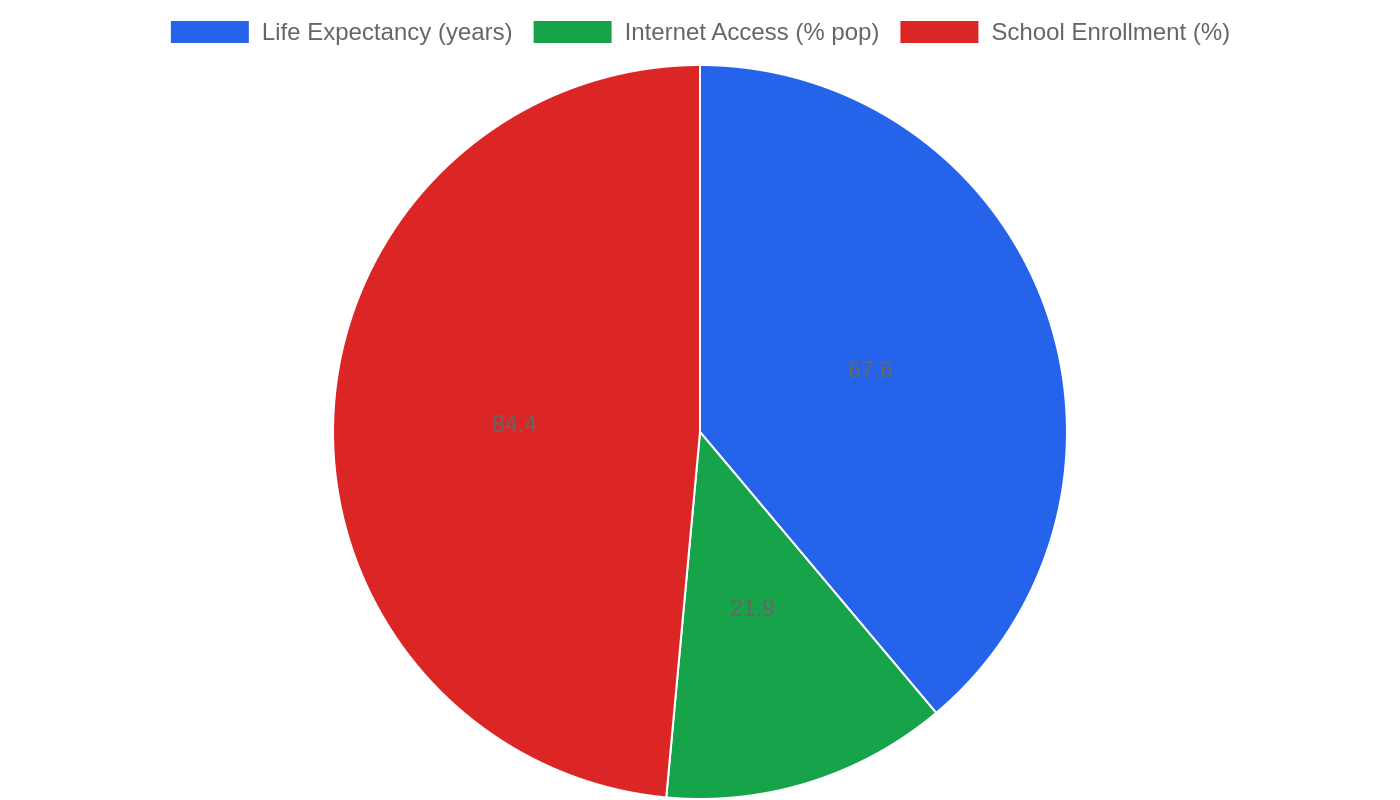
Economic Pulse Net | Sources: World Bank World Development Indicators, Government Sources | 2026
Key Takeaways
– Ethiopia’s economy is undergoing a profound structural transformation, shifting from state-dominated agriculture toward a more diversified, private-sector-led model, though official GDP and inflation figures remain unreported by the World Bank.
– The financial sector dominates the corporate landscape, with six of the top ten companies being banks or financial institutions, signaling both the depth of capital accumulation and the fragility of a system still finding its footing.
– Ethiopian Airlines stands as the crown jewel of the nation’s economy—a globally competitive carrier that punches far above its weight and serves as a rare success story in African aviation.
– Political stability remains an open question under the federal parliamentary republic system, with a bicameral legislature that includes an upper House of Federation designed to manage ethnic and regional tensions.
– The absence of basic economic indicators from international institutions suggests either a data collection crisis or a deliberate opacity that makes Ethiopia both an intriguing and risky proposition for investors.
The Great Unmeasured — An Economy in Shadow
The curious thing about Ethiopia’s economy is how little we actually know about it. The World Bank, that great repository of global data, offers only blanks where GDP growth, inflation, unemployment, and per capita income should be. This is not a data glitch. It is a statement. Ethiopia, for all its ambition and strategic importance in the Horn of Africa, remains something of an economic black box.
What we do know is that this is a nation of immense scale—Africa’s second-most populous country—with an economy that has historically been one of the continent’s fastest-growing, until war, drought, and policy turbulence intervened. The absence of reliable inflation figures is particularly telling. In a country where food prices can swing violently with the seasons and where currency reforms have created parallel exchange rates, the cost of living is a deeply political question.
Without official numbers, households negotiate their own reality.
The main industries, while not enumerated in the data, are widely understood to include agriculture (coffee remains the classic export), textiles, and a nascent manufacturing sector. But the data silence from the World Bank suggests that Ethiopia’s statistical apparatus may be struggling to keep pace with the economy’s complexity—or that the government is choosing not to share what it knows. Either way, it makes every analysis provisional.
We are writing the story of an economy that refuses to be fully measured.
The Price of Daily Life — Housing and Survival in Addis Ababa
Cost of living data is also absent from the official record, but the contours of Ethiopia’s affordability crisis are visible in the corporate landscape. The presence of Anbessa City Bus Service Enterprise among the top companies tells us something crucial: public transportation is not a marginal service here but a major economic actor. In a city like Addis Ababa, where car ownership remains a distant dream for most, the bus system is the circulatory system of daily life.
Housing costs in Addis have been climbing for years, driven by rapid urbanization and a construction sector that cannot keep pace with demand. The government’s ambitious condominium program, which aimed to provide affordable housing to the masses, has been plagued by delays, corruption, and quality issues. Renting in desirable neighborhoods now consumes a punishing share of household income, pushing many families to the urban periphery where commute times stretch into hours.
The absence of reliable CPI data means we cannot quantify exactly how much more expensive life has become, but the anecdotal evidence is overwhelming. A cup of coffee, that quintessential Ethiopian commodity, costs more than it did a year ago. The price of injera—the spongy flatbread that is the nation’s staple—fluctuates with the grain harvest. For ordinary Ethiopians, the economy is not an abstraction measured in GDP but a daily negotiation over survival.
Banking on the Future — Investment Climate and Corporate Power
Look at the list of Ethiopia’s top companies and one thing becomes immediately clear: this is a country where finance rules. Awash International Bank, Commercial Bank of Ethiopia, Cooperative Bank of Oromia, Dedebit Credit and Saving Institution, and the Ethiopia Commodity Exchange—five financial institutions among the top ten. This concentration reflects both the underdevelopment of other sectors and the enormous demand for credit in a rapidly monetizing economy.
The Commercial Bank of Ethiopia, state-owned and dominant, is the 800-pound gorilla. It holds the majority of deposits and controls the flow of credit to both the government and the private sector. Its presence at the top of the corporate hierarchy is a reminder that Ethiopia’s economy remains heavily state-influenced, even as liberalization efforts proceed. The rise of private banks like Awash and Cooperative Bank of Oromia suggests a sector in transition, but the state’s shadow is long.
For investors, the message is mixed. The financial sector offers clear opportunities—there is massive unmet demand for banking services in a largely unbanked population. But the political landscape complicates things. The federal parliamentary republic, with its House of Federation designed to represent ethnic regions, creates a complex regulatory environment where doing business often means navigating not just economic forces but ethnic politics.
The Ethio-Engineering Group, a heavy industry player, reminds us that the government still sees a role for itself in strategic sectors.
The Politics of Survival — Safety, Stability, and the Federal Experiment
Ethiopia’s political system is a carefully engineered compromise. A federal parliamentary republic, it vests executive power in the Prime Minister while the President serves a largely ceremonial role. The bicameral legislature—with the House of Federation’s 108 seats representing regional interests and the House of Peoples’ Representatives’ 547 seats providing popular representation—is designed to balance the centrifugal forces of ethnicity and nationalism.
This system has been tested brutally in recent years. The war in Tigray, the ongoing conflicts in Oromia and Amhara, and the ever-present threat of ethnic violence have made safety a deeply uneven experience. Crime index and safety index data are absent from the record, but the lived reality is one of checkpoints, armed conflict, and a state that is simultaneously present and absent. In Addis Ababa, relative calm prevails. In the countryside, the situation is far more precarious.
The political landscape is not static. The House of Federation, with its 108 seats, is meant to be a stabilizing force—a chamber where regional grievances can be addressed before they become armed conflicts. Whether it has succeeded is an open question. The quality of life for most Ethiopians remains low by global standards, but there is a palpable sense of possibility, a feeling that the country’s enormous potential has not yet been realized.
The question is whether the political system can hold together long enough to allow that potential to emerge.
Current Affairs — The Unfolding Story
What is happening in Ethiopia right now is difficult to pin down with precision, precisely because the data is so sparse. But the corporate landscape offers clues. The presence of BGI Ethiopia PLC, a consumer discretionary company, suggests that domestic consumption is growing—people are buying beer, soft drinks, and other non-essentials.
The Ethiopia Commodity Exchange, meanwhile, is attempting to bring transparency to agricultural markets, a crucial reform in a country where farmers have historically been at the mercy of middlemen.
The biggest story, however, is the ongoing tension between liberalization and state control. The government has talked for years about opening up key sectors—telecoms, banking, aviation—to foreign investment. Ethiopian Airlines, already a world-class carrier, is a model of what state-owned enterprises can achieve when well-managed. But the question of whether other sectors can follow suit remains unresolved.
The political situation remains fluid. The federal government is engaged in multiple peace processes, attempting to end conflicts that have displaced millions and devastated large parts of the country. The success or failure of these efforts will determine not just the political future but the economic one. Investors are watching, waiting for signs that stability is returning. Until then, Ethiopia remains the great African enigma—a country of enormous promise whose present reality is stubbornly opaque.
The Bottom Line
Ethiopia is a country for patient, risk-tolerant investors who understand that the absence of data is itself a form of information. The financial sector offers clear opportunities, the aviation industry is a proven success, and the sheer size of the population makes it an irresistible long-term bet. But the political risks are real, the data gaps are alarming, and the cost of living crisis is a daily reality for millions. Watch Ethiopia for its potential, but do not expect quick returns.
This is a story still being written.
Sources & Methodology
This article is authored by Economic Pulse Net for informational and research purposes. Economic Pulse Net sources its data from multilateral institutions, national statistics bureaus, and proprietary databases. All data is believed to be current as of the date of publication.
Published: July 30, 2026 | Category: Research — Ethiopia
Use these signals in your own platform
Economic Pulse publishes its live signal feed through a documented, read-only API. Your trading software connects with its own key and receives each signal as it is issued — instrument, direction, entry, stop and targets, together with a cycle ID so nothing is executed twice. The feed is independent of this website and cannot change it.
Signals are informational only and are not financial advice.