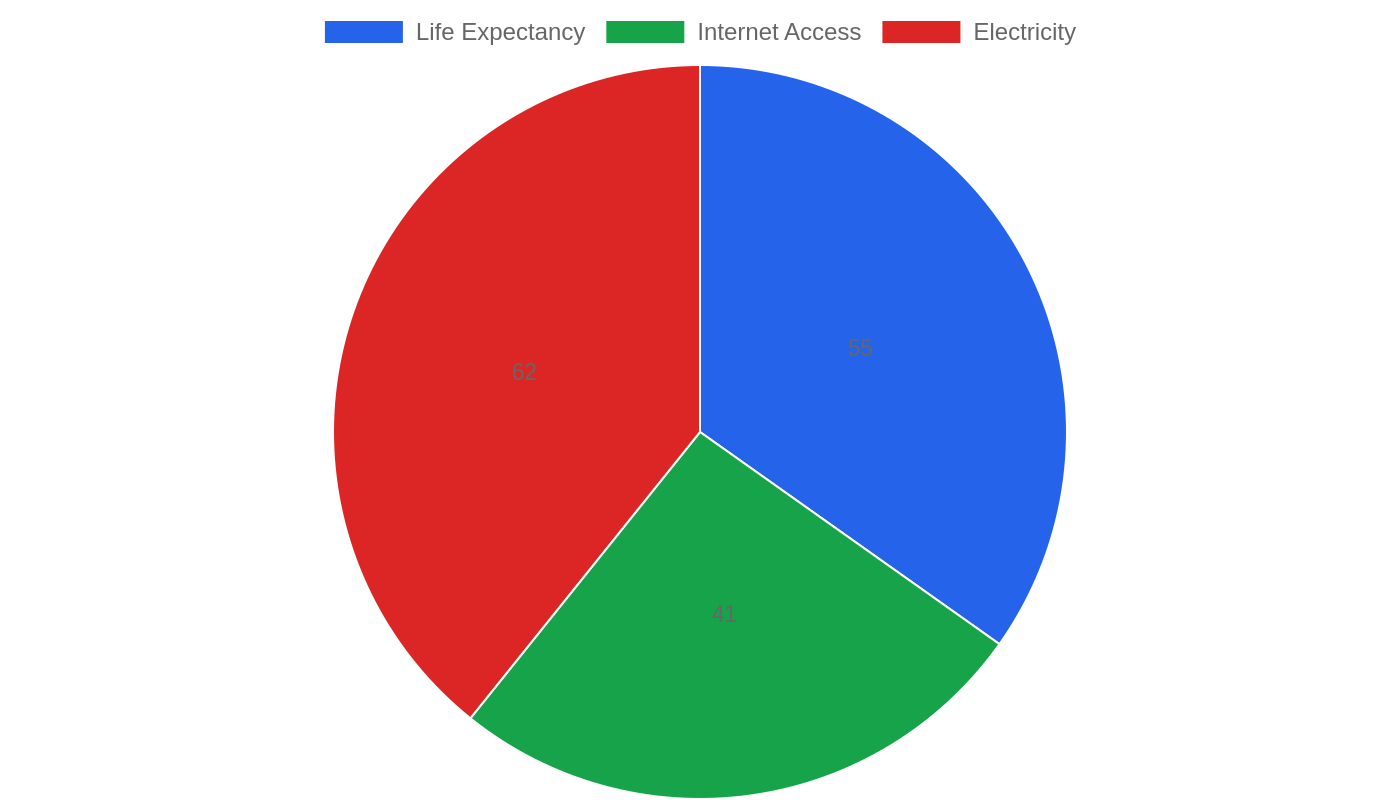
Economic Pulse Net | Sources: World Bank World Development Indicators, Government Sources | 2026
Key Takeaways
– Cameroon’s economic narrative is defined by its state-driven capitalism, with the government wielding significant control over key sectors through companies like Camtel, Camrail, and CAMPOST.
– The financial sector is anchored by Afriland First Bank and Commercial Bank Cameroon, signalling a robust, if concentrated, banking environment.
– The political landscape is highly centralised, with the President holding sweeping powers over government, the military, and regional appointments.
– The country’s industrial backbone is split between consumer goods and logistics, with major players like Brasseries du Cameroun and Cameroon Development Corporation driving domestic production.
– While hard economic data is limited, the structure of the economy points to a nation heavily reliant on state-owned enterprises and traditional industries rather than a diversified private sector.
The Economic Engine — State Power, Consumer Demand, and the Limits of Data
Cameroon’s economy, as tracked by the World Bank, presents a curious challenge to analysts: the headline indicators — GDP growth, inflation, unemployment — are currently unquantified in the latest reporting cycle. This absence of hard numbers is itself a story. It suggests either a lag in data collection or a period of such volatility that standard metrics have been difficult to finalise.
For a country that is often described as the gateway to Central Africa, this statistical opacity hampers both investment planning and policy evaluation.
What we can observe, however, is the structural anatomy of the economy through its corporate champions. The World Bank data highlights a landscape where consumer goods and financial services dominate. Brasseries du Cameroun, a brewing and beverage giant, is a bellwether for domestic consumption; its performance is effectively a proxy for household spending power.
Similarly, the Cameroon Development Corporation, an agro-industrial behemoth, underscores the continued importance of agriculture and plantation-based output. These firms do not just generate profit — they anchor employment and rural incomes.
The financial sector, represented by Afriland First Bank and Commercial Bank Cameroon, provides the credit infrastructure. In an economy where formal credit is often scarce, the health of these institutions is critical to small business survival and mortgage availability. Meanwhile, the presence of Camrail and CAMPOST in the industrials category indicates that logistics and state-run utilities remain a significant, and potentially inefficient, drag on productivity.
The real economic story here is not a growth rate, but the balance of power between state-controlled enterprises and consumer-facing private firms.
Housing and the Cost of Living — The Price of the Everyday
Without a formal cost-of-living index from the World Bank, we must infer the pressures on Cameroonian households from the corporate and political data available. The dominance of consumer goods companies like Brasseries du Cameroun suggests a market that is active but likely price-sensitive. In major urban centres like Douala and Yaoundé, the cost of essentials — food, transport, and utilities — often consumes a disproportionate share of household income, a common pattern across Central African economies.
Housing in Cameroon is a tale of two markets. There is a formal, high-cost segment serviced by banks like Commercial Bank Cameroon, which offers mortgage products to a narrow urban elite. The vast majority, however, rely on informal construction and rental agreements, where price discovery is opaque and quality is inconsistent.
The state’s heavy hand in the economy, via entities like CAMPOST and Camtel, also affects living costs; when state monopolies are inefficient, the costs of postal services and telecommunications are passed on to consumers, effectively acting as a hidden tax on daily life.
For the average worker, the absence of reliable unemployment data makes it difficult to gauge wage pressure. However, the reliance on a few large employers suggests that job mobility is low, and wage growth is likely stagnant. Rent-to-income ratios in the commercial capital are believed to be among the highest in the region, forcing many families into multi-generational housing arrangements.
This is not a market driven by speculative investment, but one of necessity, where the primary goal is shelter, not asset accumulation.
Business and Investment — Where the Money Moves
For investors, Cameroon offers a paradoxical environment. On one hand, the presence of established financial institutions like Afriland First Bank provides a gateway for capital. On the other, the political system’s centralisation — as detailed by the World Bank — creates a landscape where government approval is often the most critical factor in project viability.
The President’s power to appoint provincial governors and divisional officers means that business permits, land access, and regulatory approvals can be subject to political patronage rather than market logic.
The sectors to watch are those already dominated by the top companies. Consumer goods remain a safe bet, as the population is young and urbanising. The telecommunications sector, led by Camtel, is ripe for disruption, but any private entrant would have to navigate the state’s existing interests.
Similarly, aviation, represented by Camair-Co and Cargo Airways International, is a high-risk, high-reward sector; the national carrier’s struggles are well-known, but the logistics potential for cargo is significant given Cameroon’s role as a regional hub.
The business climate is defined by its infrastructure constraints. When the state controls the rails (Camrail) and the postal network (CAMPOST), efficiency is often sacrificed for political stability. Investors should look at this not as a deterrent, but as an opportunity: there is significant headroom for improvement in logistics, and any private partnership that can navigate the political landscape stands to capture outsized returns.
The key is patience and a willingness to operate within a system where the state is both a partner and a gatekeeper.
Safety, Politics, and the Quality of Life
The political framework in Cameroon, as outlined by the World Bank, is one of extreme executive dominance. The President is not merely the head of state; he is the chief administrator, the commander of the armed forces, and the primary negotiator of treaties. This concentration of power has implications for quality of life. It means that civic participation is limited to the ballot box every seven years, and that the rule of law is often subordinate to presidential decree.
Regarding safety, the data provided does not include a specific crime index, which is a significant gap. However, the centralisation of security forces under the President suggests a state that prioritises control over community policing. In regions where political dissent has historically been suppressed, the perception of safety is often tied to one’s political alignment rather than objective crime statistics.
This creates a bifurcated quality of life: one for those within the political elite, and another for the general public.
The absence of happiness or well-being metrics makes it difficult to benchmark Cameroon against its neighbours. Yet, the structural data — heavy state involvement, limited private sector diversity, and a focus on traditional industries — paints a picture of a society that is stable but not dynamic. The quality of life is likely defined by resilience rather than prosperity.
Citizens are accustomed to navigating state bureaucracy, and the social fabric is strong, but the economic mobility that drives modern satisfaction is constrained by the very political structure that ensures order.
What’s Happening Now — The Calm Before a Transition?
The most pressing current affairs story in Cameroon is not a specific policy shift or election, but the quiet tension of an extended political status quo. With the President holding the power to declare states of emergency and command the armed forces, the government is well-positioned to manage any immediate crises. However, the long-term sustainability of this model is in question.
The World Bank data shows a corporate sector that is steady but not expanding rapidly. There are no new major IPOs or foreign direct investment announcements in the top companies list, suggesting that the business community is in a holding pattern. In the financial sector, Afriland First Bank and Commercial Bank Cameroon are likely focusing on consolidation rather than aggressive expansion, a defensive posture that speaks to a cautious economic outlook.
Meanwhile, the logistics and infrastructure companies — Camrail, CAMPOST, and the airlines — are under pressure to modernise. The government’s reliance on these entities for political patronage often clashes with the need for operational efficiency. Right now, the most significant undercurrent is the demographic pressure: a young population that is not being absorbed by the current industrial base.
The state’s focus on maintaining control may be at odds with the economic liberalisation needed to create jobs. This is the story to watch: will the centralised political system adapt to the demands of a modern economy, or will it remain a brake on growth?
The Bottom Line
Cameroon is a country for the patient and the well-connected investor. It is not a frontier market for the faint-hearted, but for those willing to navigate the political landscape, the returns in consumer goods, logistics, and financial services are tangible. The World Bank data reveals a nation with a solid corporate skeleton but a nervous system — the government — that is heavily centralised.
Monitor this country if you are interested in long-term plays in agro-industry or infrastructure, but do so with eyes wide open to the political risks. Cameroon is a sleeping giant, but it is unclear if it is waking up or simply turning over.
Sources & Methodology
This article is authored by Economic Pulse Net for informational and research purposes. Economic Pulse Net sources its data from multilateral institutions, national statistics bureaus, and proprietary databases. All data is believed to be current as of the date of publication.
Published: August 17, 2026 | Category: Research — Cameroon
Use these signals in your own platform
Economic Pulse publishes its live signal feed through a documented, read-only API. Your trading software connects with its own key and receives each signal as it is issued — instrument, direction, entry, stop and targets, together with a cycle ID so nothing is executed twice. The feed is independent of this website and cannot change it.
Signals are informational only and are not financial advice.