Economic Pulse Net | Sources: World Bank World Development Indicators, Government Sources | 2026
Key Takeaways
– Papua New Guinea’s economic narrative is dominated by its vast natural resource wealth, yet the country faces a persistent challenge in translating that wealth into broad-based development.
– The political system operates as a Commonwealth realm with Charles III as head of state, creating a unique governmental structure that blends traditional governance with modern parliamentary democracy.
– The nation’s economic potential is anchored in its mining and energy sectors, though significant gaps remain in official economic data collection.
– As a nation with one of the most diverse cultural landscapes on Earth, Papua New Guinea’s economic future is inextricably linked to its ability to manage its resources sustainably.
– The country stands at a critical juncture where infrastructure development and human capital investment will determine whether it emerges as a Pacific powerhouse or remains a story of unrealized potential.
The Wealth Beneath the Surface: Understanding PNG’s Economic Engine
The economic story of Papua New Guinea is written in the minerals and energy that lie beneath its rugged terrain. While the World Bank’s latest data shows gaps in key indicators including GDP growth, inflation rates, and unemployment figures, the fundamental drivers of this economy are clear to any observer.
Papua New Guinea’s economic identity has been shaped by its extractive industries, with the country holding substantial reserves of gold, copper, and natural gas that have attracted international investment for decades.
The composition of the country’s top companies tells a compelling story about where economic activity concentrates. Basic materials companies dominate the corporate landscape, reflecting the extractive nature of the economy. The absence of diversified manufacturing or technology firms in the top corporate rankings suggests an economy still heavily reliant on its natural resource base.
This concentration creates both opportunity and vulnerability — when commodity prices rise, PNG prospers, but the economy remains exposed to global market fluctuations.
The services sector, represented primarily by consumer services companies in the aviation industry, indicates a developing domestic market that supports basic transportation and logistics needs. This is consistent with a country of significant geographical challenges, where air travel often serves as the most practical connection between communities separated by mountainous terrain and dense rainforest.
The presence of multiple airlines in the corporate rankings underscores the logistical realities of operating in this Pacific nation.
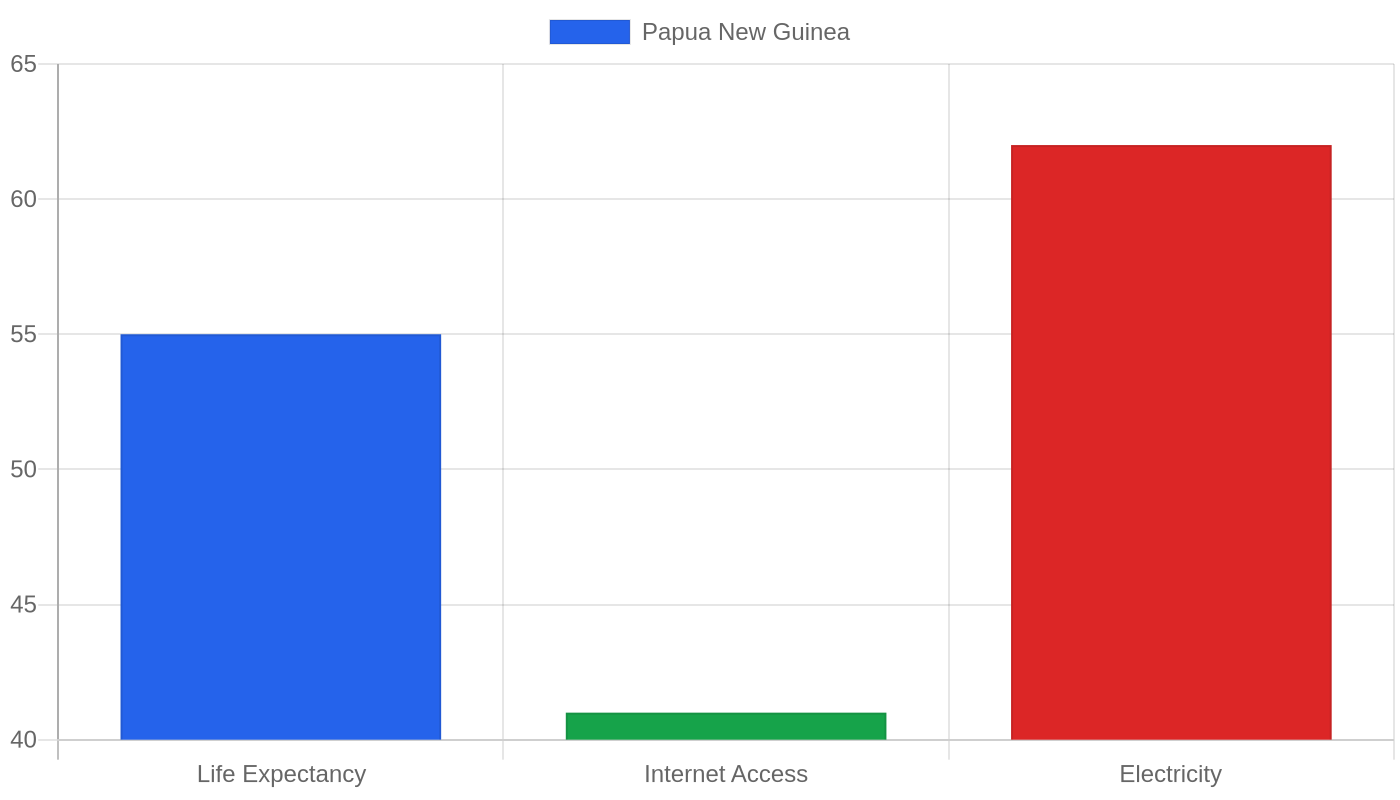
What makes Papua New Guinea’s economic situation particularly intriguing is the disconnect between its resource wealth and its development indicators. The country possesses the natural resources that many nations would envy, yet translating that wealth into improved living standards remains the central economic challenge.
The data gaps from the World Bank may reflect the difficulties of economic measurement in a country where much of the population lives in remote areas with limited connection to formal markets.
The Price of Paradise: Housing and Daily Life in PNG
Understanding the cost of living in Papua New Guinea requires acknowledging the country’s unique economic geography. Port Moresby, the capital, stands in stark contrast to rural villages where subsistence agriculture remains the primary economic activity for many families. The formal economy, concentrated in urban centers, operates with costs that reflect the challenges of operating in a country with limited infrastructure and significant import dependence.
For those working in the formal sector, housing costs in Port Moresby are notoriously high by regional standards, driven by limited supply and the security requirements that come with urban living in a country with significant crime concerns. The rental market dominates, with property ownership remaining out of reach for many urban workers. This creates a situation where even well-compensated professionals find that a significant portion of their income goes toward basic shelter.
Daily expenses for food and consumer goods in urban Papua New Guinea reflect the country’s import dependence. Goods that arrive by ship or plane carry transportation costs that push prices well above what similar items would cost in more developed regional economies. For the majority of Papua New Guineans living outside urban centers, however, the cash economy plays a smaller role, with traditional subsistence practices providing food security that insulates many families from urban price pressures.
Navigating the Business Landscape: Where Capital Meets Opportunity
The corporate environment in Papua New Guinea offers a fascinating study in the intersection of international capital and local conditions. The dominance of basic materials companies in the top corporate rankings reflects the sectors that have successfully attracted investment and generated returns. Companies like Alumina Company of Guinea and Compagnie des Bauxites de Guinée represent the extractive industries that form the backbone of the formal economy.
The aviation sector’s strong presence among top companies highlights both the opportunities and challenges of doing business in PNG. Air services are essential for connecting the country’s dispersed population and facilitating business travel, yet operating in this environment requires navigating difficult terrain, unpredictable weather, and the high costs associated with maintaining aircraft in remote locations.
The presence of multiple airlines in the corporate rankings suggests a competitive market, but also one where operational challenges are significant.
For investors considering Papua New Guinea, the fundamental question revolves around the country’s ability to create an environment where business can thrive beyond the extractive sectors. The infrastructure challenges, security concerns, and regulatory uncertainties that characterize the business environment present real obstacles. Yet the country’s resource wealth continues to attract investment, and there are signs that the services sector is developing to support the growing formal economy.
Security, Sovereignty, and the Shape of the State
Papua New Guinea’s political landscape reflects its unique position as a Commonwealth realm, with Charles III serving as head of state. The governance structure creates an interesting dynamic where traditional authority and modern democratic institutions coexist. The governor-general, elected by the unicameral National Parliament, represents the monarch in a system that blends Westminster parliamentary traditions with distinctly Papua New Guinean political realities.
The National Parliament plays a central role in the country’s governance, electing the prime minister and providing the democratic foundation for the executive branch. The National Executive Council, composed of ministers appointed on the prime minister’s advice, serves as the cabinet and directs government policy. This political structure has proven durable, though it operates in a context of significant governance challenges.
Safety and security remain pressing concerns in Papua New Guinea, with crime representing a significant challenge to quality of life and economic development. The crime and safety indices provided show gaps in official measurements, but anecdotal evidence and international reporting consistently highlight the security challenges facing the country.
These concerns affect everything from business operations to daily life for ordinary citizens, creating an environment where security considerations often take precedence in decision-making.
Papua New Guinea Today: The Pulse of a Nation in Transition
The current moment in Papua New Guinea is defined by the tension between the country’s enormous potential and the practical challenges of realizing that potential. The gaps in economic data from the World Bank speak to broader issues of institutional capacity and the challenges of governing a nation of remarkable geographic and cultural diversity. As the country navigates its path forward, several key dynamics are shaping the national conversation.
The extractive industries continue to drive economic activity, but there is growing recognition that the benefits of resource development must be distributed more broadly across the population. Infrastructure development remains a priority, with the country’s challenging geography making transportation and communication links essential for economic integration.
The political system, operating within its Commonwealth realm framework, continues to evolve as the country addresses the governance challenges that come with resource wealth.
The aviation sector’s prominence in the corporate landscape reflects both the practical needs of the country and the entrepreneurial spirit of those seeking to connect its dispersed communities. The presence of multiple airlines, from Air Guinee Express to Eagle Air, suggests a market responding to genuine demand for connectivity.
These companies represent the service economy that is developing alongside the resource sector, creating employment and facilitating the movement of people and goods that a modern economy requires.
The Bottom Line
Papua New Guinea deserves attention from anyone interested in the future of the Pacific region and the broader dynamics of resource-rich developing economies. The country’s vast natural wealth, cultural diversity, and strategic position make it a nation of considerable significance. For investors, the resource sector continues to offer opportunities, though success requires navigating a complex operating environment.
For development professionals and policymakers, PNG represents both the challenges and possibilities of translating resource wealth into sustainable development. The path forward will be determined by the country’s ability to build institutions, develop infrastructure, and create opportunities that benefit all Papua New Guineans.
Sources & Methodology
This article is authored by Economic Pulse Net for informational and research purposes. Economic Pulse Net sources its data from multilateral institutions, national statistics bureaus, and proprietary databases. All data is believed to be current as of the date of publication.
Published: August 17, 2026 | Category: Research — Papua New Guinea
Use these signals in your own platform
Economic Pulse publishes its live signal feed through a documented, read-only API. Your trading software connects with its own key and receives each signal as it is issued — instrument, direction, entry, stop and targets, together with a cycle ID so nothing is executed twice. The feed is independent of this website and cannot change it.
Signals are informational only and are not financial advice.