Economic Pulse Net | Sources: World Bank World Development Indicators, Government Sources | 2026
Key Takeaways
– The Cayman Islands remains one of the world’s most significant financial centers despite its small physical footprint, functioning as a British overseas territory with a unique constitutional arrangement that grants substantial domestic autonomy.
– The territory is listed by the UN Special Committee of 24 as one of 17 non-self-governing territories, placing it in a distinct political category that shapes its international relationships and regulatory obligations.
– A 19-seat Parliament (with two additional non-voting members appointed by the Governor, bringing the total to 21) governs domestic affairs through elections held every four years, providing political stability within a British constitutional framework.
– The 2009 Constitution, which incorporates a Bill of Rights, was established through a UK statutory instrument, marking a significant milestone in the territory’s political evolution.
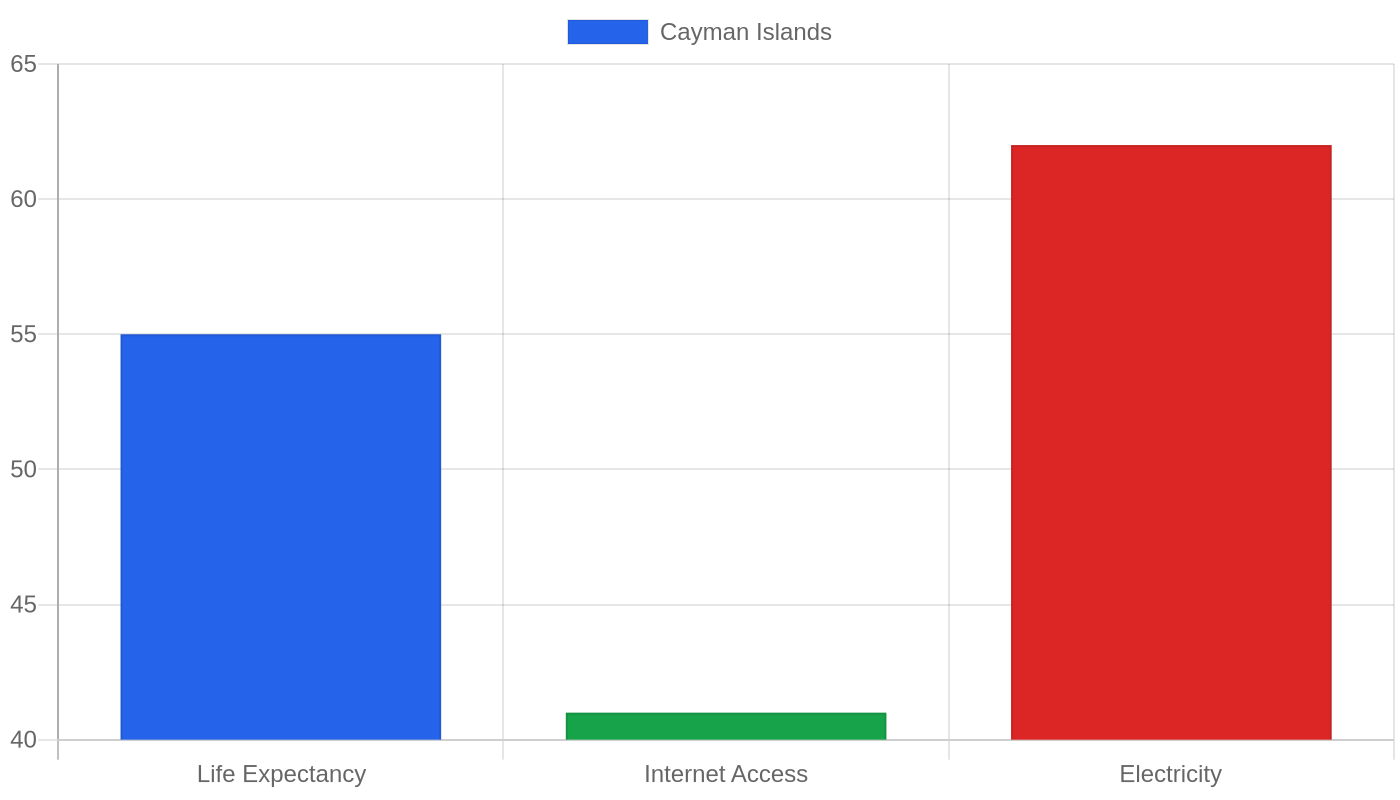
– While comprehensive economic data from the World Bank remains unavailable, the Cayman Islands’ role in global finance and its sophisticated legal framework continue to attract international attention and investment.
The Economic Engine — Small Islands, Global Financial Flows
The Cayman Islands presents a fascinating paradox for economic observers: a territory with minimal physical resources that has nonetheless become a cornerstone of global financial architecture. The World Bank data for GDP growth, inflation, unemployment, and per capita income remains unavailable, which itself tells a story about how this territory operates outside conventional economic measurement frameworks.
Rather than relying on traditional productive industries, the Cayman Islands has built its prosperity on financial services, particularly as a domicile for hedge funds, private equity vehicles, and structured finance entities.
The absence of direct taxation—no income tax, no corporate tax, no capital gains tax—has historically been the cornerstone of the territory’s economic model. This fiscal environment has attracted thousands of registered entities, making the Cayman Islands one of the largest banking jurisdictions in the world by asset volume.
The territory’s economic resilience is tied directly to global financial markets, meaning its fortunes rise and fall with international investor confidence rather than domestic production cycles.
Employment patterns in the Cayman Islands reflect this financial services focus, with a substantial portion of the workforce employed in banking, legal services, accounting, and corporate administration. The tourism sector provides an additional economic pillar, with the island’s beaches and diving sites drawing visitors from around the world.
However, without concrete World Bank figures, analysts must rely on qualitative assessments of the territory’s economic health, which remains robust despite global pressures on offshore financial centers.
The territory’s economic model faces ongoing challenges from international regulatory pressures, including European Union tax transparency requirements and global efforts to crack down on money laundering. Yet the Cayman Islands has consistently adapted its regulatory framework to meet international standards while preserving its competitive advantages. This balancing act—maintaining attractiveness for global capital while satisfying international compliance demands—defines the territory’s economic trajectory.
The Price of Paradise — Living in a Financial Hub
The cost of living in the Cayman Islands carries a significant premium, driven by the territory’s reliance on imports for nearly all consumer goods and its high-income demographic profile. Housing represents the most substantial expense for residents, with property prices in Grand Cayman, the most developed island, reflecting both scarcity and high demand from financial services professionals.
The rental market is particularly active, with expatriate workers comprising a large portion of the workforce and typically renting rather than purchasing property.
The territory’s status as a tax haven creates an interesting dynamic for residents: while there is no income tax, the government raises revenue through import duties, work permit fees, and other indirect taxes. This means everyday goods, from food to electronics, carry effectively higher prices than in jurisdictions with broader tax bases. Dining out, entertainment, and imported luxury goods all command premium prices, making the Cayman Islands one of the more expensive places to live in the Caribbean region.
For those considering a move to the territory, the financial equation requires careful consideration. Salaries in the financial services sector tend to be competitive, often reflecting the high cost of living, but the absence of income tax can make net compensation attractive compared to other international financial centers. The trade-off is clear: residents pay more for everything, but they keep more of what they earn.
This calculus continues to draw skilled professionals from around the world, sustaining the territory’s demographic growth and economic vitality.
Business and Investment — Navigating the Offshore Landscape
The Cayman Islands’ business environment is defined by its sophisticated legal infrastructure, which has been developed over decades to serve the needs of international finance. The territory’s legal system, based on English common law, provides familiarity and predictability for global investors while its regulatory bodies maintain rigorous standards for financial services.
This combination of legal certainty and regulatory sophistication has made the Cayman Islands the preferred domicile for a significant portion of the world’s hedge funds and private equity vehicles.
The territory’s top companies are predominantly in the financial services sector, including major international banks with Cayman operations, global accounting firms, and specialized corporate service providers. These entities benefit from the territory’s time zone, which bridges Asian and American markets, and its professional infrastructure that rivals much larger jurisdictions.
The business climate is characterized by efficiency, with company formation and ongoing compliance managed through a well-established framework of local service providers.
Sectors to watch in the Cayman Islands include fintech and digital assets, areas where the territory has been positioning itself as a regulated but welcoming jurisdiction. The government has signaled interest in diversifying the economy beyond traditional financial services, though progress remains measured.
The territory’s business community continues to navigate the tension between maintaining its historical advantages and adapting to a changing global regulatory environment, with the outcome of this balancing act determining the islands’ future economic trajectory.
Stability and Society — The Political Framework of a British Territory
The Cayman Islands occupies a unique political space as a British overseas territory, listed by the UN Special Committee of 24 among 17 non-self-governing territories. This status means the United Kingdom retains responsibility for defense, foreign affairs, and ultimately good governance, while the elected Parliament handles domestic matters.
The current Constitution, ordained by a UK statutory instrument in 2009, incorporates a Bill of Rights that protects fundamental freedoms and establishes the framework for the territory’s governance.
The political landscape is characterized by stability, with elections held every four years for the 19 elected seats in Parliament, supplemented by two non-voting members appointed by the Governor. This hybrid system—combining democratic representation with appointed oversight—reflects the territory’s constitutional arrangement and has generally produced effective governance.
The Governor, appointed by the British Crown, retains significant powers, including responsibility for external affairs, defense, and internal security, while elected officials manage most domestic policy areas.
Crime and safety indices for the Cayman Islands are not available in the current data, but the territory is generally considered a safe environment, particularly compared to other Caribbean jurisdictions. The quality of life is enhanced by high standards of healthcare, education, and infrastructure, though these come at a cost reflected in the territory’s high living expenses.
The political system, while sometimes animated by debates over constitutional reform and the relationship with the United Kingdom, has maintained continuity and avoided the instability seen in other Caribbean nations.
Current Affairs — The Territory Charts Its Course
The Cayman Islands is currently navigating a period of significant regulatory evolution, responding to global pressures while protecting its position as a leading financial center. The implementation of economic substance requirements, driven by European Union and OECD initiatives, has forced many entities registered in the territory to demonstrate real business activity there, reshaping the nature of the offshore industry.
These changes have been met with a pragmatic response from the local financial services community, which has adapted its offerings to comply with new standards while maintaining the territory’s competitive appeal.
The government has been actively engaged in international negotiations and regulatory alignment, seeking to balance compliance with global standards against the territory’s historical advantages. Discussions around constitutional reform continue, with some local voices advocating for greater autonomy while others emphasize the benefits of the British connection.
The territory is also addressing challenges related to its status on various international lists and the need to maintain its reputation as a well-regulated jurisdiction.
Looking ahead, the Cayman Islands faces both opportunities and uncertainties. The growing focus on digital assets and fintech presents potential avenues for diversification, while the ongoing evolution of international tax standards requires constant adaptation. The territory’s political leadership has signaled commitment to maintaining high regulatory standards and transparency, recognizing that its long-term prosperity depends on being viewed as a responsible actor in the global financial system.
The coming years will test whether the Cayman Islands can successfully navigate these challenges while preserving the attributes that have made it successful.
The Bottom Line
The Cayman Islands deserves attention from anyone interested in the future of global finance and the evolution of offshore financial centers. Its ability to adapt to changing international standards while maintaining its competitive position will determine whether it remains a dominant force in the industry. For investors, businesses, and policymakers alike, the territory offers a case study in how small jurisdictions can punch far above their weight in the global economy.
The Cayman Islands is not merely a tax haven—it is a sophisticated financial ecosystem that continues to evolve, and its trajectory merits close observation.
Sources & Methodology
This article is authored by Economic Pulse Net for informational and research purposes. Economic Pulse Net sources its data from multilateral institutions, national statistics bureaus, and proprietary databases. All data is believed to be current as of the date of publication.
Published: August 01, 2026 | Category: Research — Cayman Islands
Use these signals in your own platform
Economic Pulse publishes its live signal feed through a documented, read-only API. Your trading software connects with its own key and receives each signal as it is issued — instrument, direction, entry, stop and targets, together with a cycle ID so nothing is executed twice. The feed is independent of this website and cannot change it.
Signals are informational only and are not financial advice.