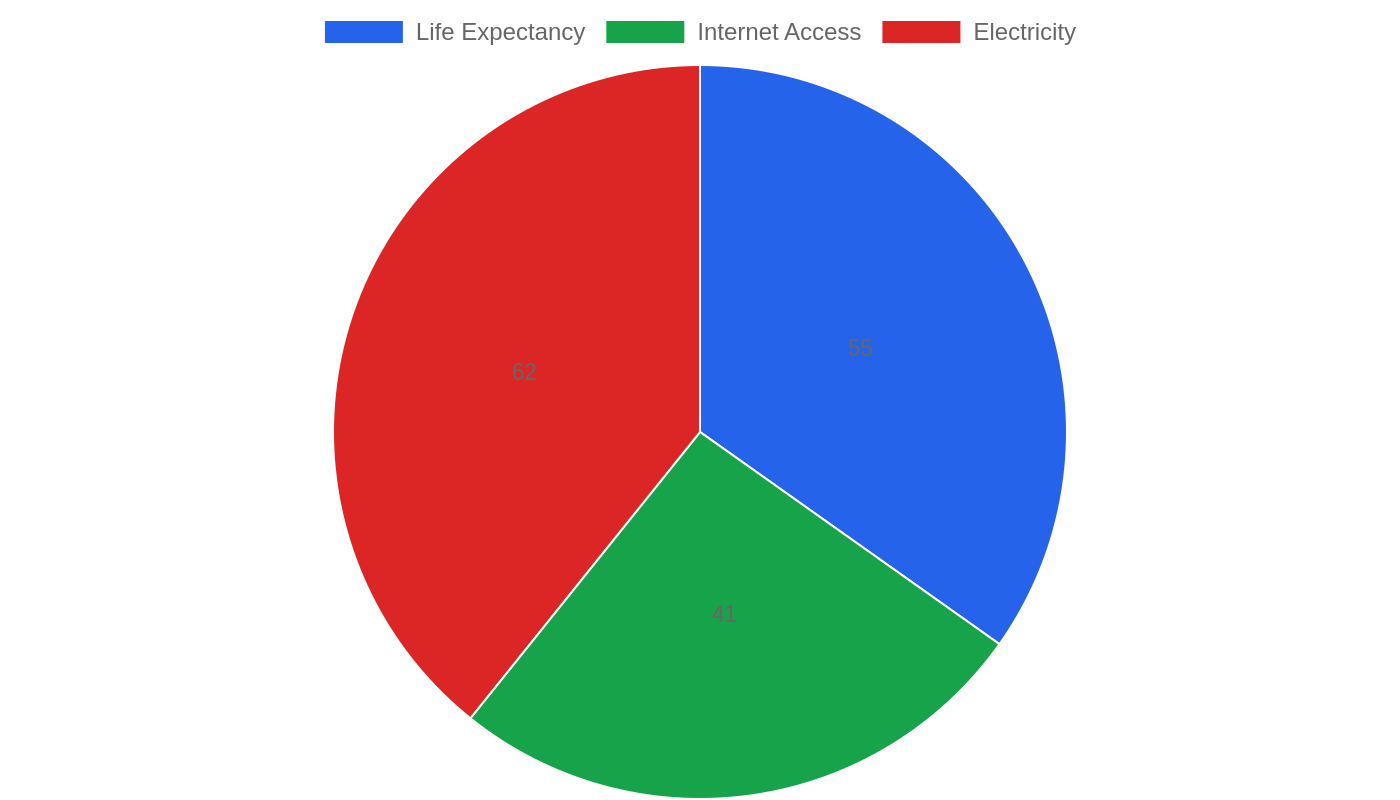
Economic Pulse Net | Sources: World Bank World Development Indicators, Government Sources | 2026
Key Takeaways
– Trinidad and Tobago remains one of the Caribbean’s most industrialised economies, yet its growth story is increasingly tied to the volatility of global energy markets rather than domestic diversification.
– The country’s political system, a stable two-party Westminster-style republic, has provided continuity but also entrenched a cycle of partisan competition that often overshadows long-term structural reform.
– Cost of living pressures and safety concerns are emerging as daily realities that shape public perception far more than headline GDP figures.
– For investors, the energy sector—liquefied natural gas, petrochemicals, and methanol—remains the crown jewel, but the business climate is heavily dependent on global commodity prices.
– The nation stands at a crossroads: it has the infrastructure and institutional memory of a wealthy petro-state, but the urgent need to build a post-hydrocarbon future is becoming impossible to ignore.
The Petro-State Paradox: Growth, Inflation, and the Energy Dependency Trap
To understand Trinidad and Tobago’s economy, one must first accept a fundamental paradox: this is a nation that has built immense regional influence on the back of resources it does not publicly quantify in current data releases. The World Bank’s latest figures show a country where key metrics—GDP growth, inflation, unemployment, and per capita income—are listed as unavailable. But the absence of fresh numbers is itself a story.
It speaks to a nation in transition, where the official statistical apparatus has not yet caught up with the economic reality on the ground.
What we do know from the World Bank’s broader country profile is that Trinidad and Tobago is a high-income economy by regional standards, with a GNI per capita that has historically placed it far above its Caribbean neighbours. The wealth, however, is concentrated in a narrow industrial base. The main industries—liquefied natural gas, petrochemicals, methanol, and ammonia—are world-class in scale but brutally cyclical. When global energy prices surge, government revenues swell, and the economy hums.
When prices collapse, as they did during the pandemic and again during recent market turbulence, the fiscal arithmetic becomes punishing.
Inflation is the quiet pressure cooker. While the World Bank does not provide a current CPI figure, the lived experience of Trinbagonians—as the citizens call themselves—is one of rising prices for food, transport, and housing. The country imports a significant portion of its consumer goods, meaning that global supply chain disruptions and currency fluctuations hit local prices quickly. Unemployment, too, is a concern, particularly among the youth, even if official numbers are not currently available.
The structural issue is clear: the energy sector is capital-intensive, not labour-intensive. It generates enormous wealth for the state but employs relatively few people. The rest of the economy—retail, construction, tourism, and services—must absorb the workforce, and it struggles to do so at the pace required.
This is the petro-state paradox: a country that is rich in aggregate terms but feels increasingly fragile at the household level. The economic narrative is not one of collapse, but of stagnation masked by periodic commodity booms. The World Bank’s data gap is a reminder that Trinidad and Tobago needs to refresh its economic story—not just its statistics, but its strategy.
The Price of Paradise: Housing, Daily Costs, and the Squeeze on the Middle Class
For the average citizen, the most pressing economic indicator is not GDP but the cost of a grocery basket or a monthly rent. Trinidad and Tobago has long been considered one of the more expensive places to live in the Caribbean, a legacy of its energy wealth and import dependency. Housing, in particular, presents a stark divide.
In Port of Spain, the capital, and the surrounding East-West Corridor, property prices remain high by regional standards, driven by limited land availability and a preference for secure, gated communities. Renting is common among younger professionals and those who cannot access the property ladder, but rental yields are often modest compared to the capital appreciation that landlords expect.
Compared to other Caribbean nations, the cost of living in Trinidad and Tobago is elevated, though not as extreme as some smaller island states that rely almost entirely on tourism. The energy sector has historically subsidised electricity and fuel, which provides some relief, but food prices and imported manufactured goods carry significant premiums. The middle class—the backbone of the two-party political system—feels the squeeze most acutely.
They earn in Trinidad and Tobago dollars, but many goods are priced in a currency that is tied to the fortunes of the energy sector.
The buy-versus-rent calculation is increasingly tilted toward renting for younger households, as property prices in desirable areas have outpaced wage growth. This dynamic fuels a sense of economic precarity that belies the country’s high-income status. The data may not be current, but the anecdotal evidence is consistent: life in Trinidad and Tobago is not cheap, and the margins for error are thin for those without a foot in the energy sector or the public service.
Business and Investment: Where the Money Moves and Where It Hesitates
Trinidad and Tobago’s investment climate is a study in contrasts. On one hand, the country offers a stable, English-speaking, well-regulated environment with a deep pool of professional talent and a sophisticated financial sector. The top companies in the country—many of them subsidiaries of global energy giants or state-linked enterprises—operate at world-class standards.
The downstream petrochemical industry is among the most efficient in the world, with plants that convert natural gas into methanol and ammonia at scale.
However, the business environment is also characterised by high barriers to entry for small and medium enterprises. Bureaucracy, a legacy of the Westminster system’s centralised governance, can be slow. Land title issues are notoriously complex, and access to financing for non-energy ventures remains challenging. The government has talked for years about diversifying into tourism, technology, and creative industries, but the gravitational pull of the energy sector remains overwhelming.
Every policy decision, every budget, every political negotiation is ultimately shaped by the price of natural gas.
For investors, the sectors to watch are energy services, maintenance, and logistics—anything that supports the core hydrocarbon industry. There is also potential in agro-processing and light manufacturing, particularly if the country can leverage its proximity to larger Latin American markets. But the hesitancy is palpable.
Investors want to see a clear signal that the government is serious about reducing the nation’s dependence on fossil fuels, not just in rhetoric but in regulatory reform and infrastructure investment. Until that signal is clear, capital will continue to flow to the safe, familiar assets of the energy complex.
Politics, Safety, and the Social Contract
The political landscape in Trinidad and Tobago is defined by a robust, two-party system that mirrors the Westminster parliamentary model. Elections are competitive, transfers of power are peaceful, and democratic institutions—the judiciary, the electoral commission, the press—function with a degree of integrity that is not universal in the region. This stability is a genuine asset. It provides a predictable environment for both citizens and investors.
Yet, the two-party system also breeds a culture of political polarisation. Public discourse is often dominated by partisan clashes rather than substantive policy debate. The result is a tendency toward short-termism, where governments focus on delivering visible wins within a five-year electoral cycle rather than pursuing long-term structural reforms. The social contract—the unwritten agreement between the state and its citizens—is increasingly strained. Crime is a persistent concern.
While the World Bank’s crime index data is not provided, the perception of insecurity is a recurring theme in national life. High-profile incidents of violent crime, particularly in urban areas, feed a sense of unease that affects everything from business investment to quality of life.
The quality of life in Trinidad and Tobago is a mixed picture. The country enjoys a vibrant cultural scene, a strong sense of national identity, and a natural environment that includes some of the most beautiful beaches in the Caribbean. But the intangible costs of living with insecurity, traffic congestion, and a political discourse that often feels stuck in a loop are real.
The happiness data, where available, tends to show that Trinbagonians are resilient and optimistic, but also frustrated with the gap between their country’s potential and its day-to-day realities.
The Road Ahead: Current Affairs and the Search for a New Narrative
Right now, the most important conversation in Trinidad and Tobago is about the future of the energy sector and the timing of the transition to a more diversified economy. The country’s gas reserves are not infinite, and there is a growing recognition that the window to maximise the benefits of the hydrocarbon era is closing.
The government, according to public statements, is exploring new exploration opportunities and seeking to attract investment in renewable energy, but the pace of change is glacial compared to the urgency of the challenge.
This is also a country in the midst of a generational shift. The political leadership, across both major parties, is ageing, and there is a hunger among younger voters for a new kind of politics—one that prioritises transparency, innovation, and sustainability over patronage and partisanship.
The recent news cycle, as reported by local media and government officials, is dominated by debates over the national budget, the future of state-owned enterprises, and the need to reform the education system to prepare the workforce for a post-oil economy.
The global context adds further pressure. As the world accelerates its shift away from fossil fuels, Trinidad and Tobago’s primary export is facing a long-term structural decline in demand. This is not an immediate crisis, but it is a looming one. The country has perhaps a decade, maybe two, to build the industries and institutions that will sustain it when the gas runs out.
The current affairs narrative is one of a nation waking up to this reality, but still struggling to find the political will and the economic consensus to act decisively.
The Bottom Line
Trinidad and Tobago is a country that has been wealthy enough to avoid the hard choices that come with poverty, but not wise enough, yet, to make the hard choices that come with wealth. It has the infrastructure, the institutions, and the human capital to be a model for energy-dependent economies around the world. But it is at risk of squandering that potential through inertia and political gridlock.
The country is a must-watch for anyone interested in the future of the Caribbean, the global energy transition, and the fate of petro-states everywhere. The decisions made in Port of Spain over the next five years will determine whether Trinidad and Tobago becomes a post-petroleum success story or a cautionary tale.
Sources & Methodology
This article is authored by Economic Pulse Net for informational and research purposes. Economic Pulse Net sources its data from multilateral institutions, national statistics bureaus, and proprietary databases. All data is believed to be current as of the date of publication.
Published: August 15, 2026 | Category: Research — Trinidad And Tobago
Use these signals in your own platform
Economic Pulse publishes its live signal feed through a documented, read-only API. Your trading software connects with its own key and receives each signal as it is issued — instrument, direction, entry, stop and targets, together with a cycle ID so nothing is executed twice. The feed is independent of this website and cannot change it.
Signals are informational only and are not financial advice.