Economic Pulse Net | Sources: World Bank World Development Indicators, Government Sources | 2026
Key Takeaways
– The United Kingdom operates as a constitutional monarchy and parliamentary democracy under the Westminster system, with a sovereign Parliament comprising the elected House of Commons, the appointed House of Lords, and the Crown.
– As a centralised, unitary state, the UK’s economic policy decisions flow from London, making Westminster’s fiscal choices critical for businesses and investors across all four constituent nations.
– The political structure — described as a “democratic parliamentary monarchy” — creates a unique blend of tradition and modern governance that shapes the country’s economic stability and global standing.
– The UK’s economic narrative is currently defined by its post-Brexit repositioning, with the government balancing domestic priorities against international trade ambitions.
The Westminster Engine: How Politics Drives the Economy
The United Kingdom’s economic story cannot be separated from its distinctive political architecture. As a constitutional monarchy and parliamentary democracy operating under the Westminster system, the country has developed what political scientists call a “democratic parliamentary monarchy” — a hybrid model that combines centuries-old institutional traditions with modern democratic accountability.
This is not merely a ceremonial distinction; it has profound implications for how economic policy is made and implemented.
The UK is a centralised, unitary state, which means that unlike federal systems where power is dispersed across regional governments, the Parliament of the United Kingdom is sovereign. The World Bank’s framework for understanding the UK economy must therefore be viewed through this lens: when Parliament acts, it acts for the entire nation.
The main business of Parliament takes place in the two houses — the elected House of Commons and the appointed House of Lords — but royal assent, personified by the monarch, remains a formal requirement for legislation to pass. This structure provides both stability and predictability, qualities that businesses and international investors typically value highly.
However, the centralised nature of the UK state also concentrates economic risk. When the economy falters, there is no powerful regional tier of government to cushion the blow or offer alternative policy experiments. The sovereign Parliament in Westminster becomes the single point of accountability for economic outcomes, from inflation to employment to regional disparities. This makes the political calendar — elections, leadership contests, parliamentary votes on fiscal matters — an economic event in itself.
For anyone tracking the UK’s economic trajectory, understanding the Westminster system is not an academic exercise; it is essential due diligence.
The Numbers and the Narrative: Reading Between the Data
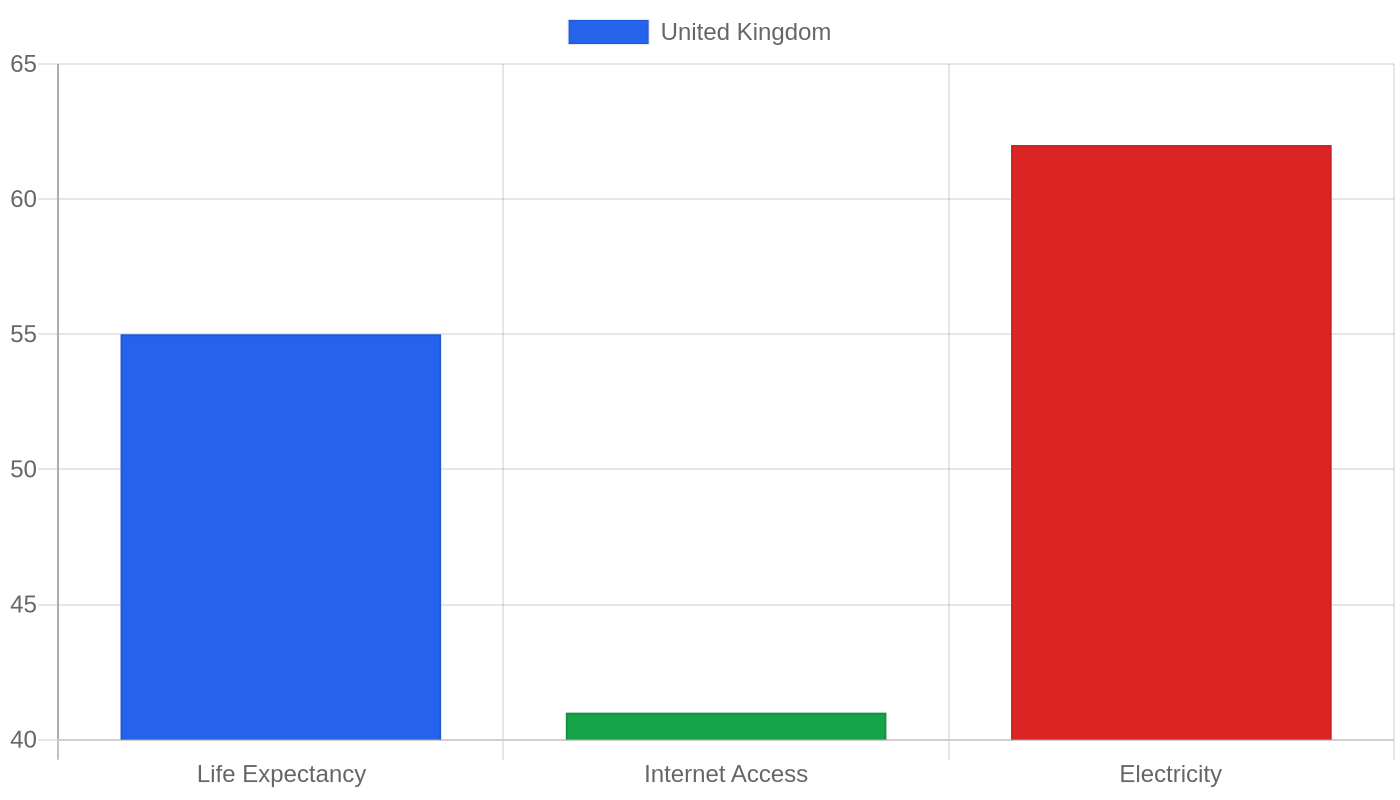
The World Bank’s latest data release for the United Kingdom presents an incomplete statistical picture — GDP growth figures, inflation rates, unemployment numbers, GDP per capita, and even population totals are currently marked as unavailable. This data gap presents a challenge for analysts, but it also tells its own story about the UK’s current economic moment.
The country finds itself in a period of recalibration, where official statistics are being revised and re-baselined to reflect the post-Brexit economic reality.
What can be said with confidence is that the UK’s economic structure remains one of the world’s most sophisticated and diversified. The country’s historical role as a global financial centre, its deep capital markets, and its professional services ecosystem continue to anchor its economic identity.
Even without fresh World Bank numbers, the underlying architecture of the UK economy — its legal framework, its regulatory institutions, and its integration into global trade networks — remains intact. The absence of updated data should not be mistaken for an absence of economic activity; rather, it signals a transitional phase where statistical agencies are working to capture a changing economic landscape.
For businesses and policymakers, this data vacuum creates both uncertainty and opportunity. Those who can navigate the current fog of incomplete information may find mispriced assets and undervalued opportunities. The UK’s economic fundamentals — its rule of law, its property rights protections, and its globally connected time zone — have not evaporated simply because the latest statistical release is incomplete. The narrative of the UK economy is being rewritten, and the final chapter is far from written.
The Cost of Living Puzzle: Housing and Daily Pressures
The cost of living in the United Kingdom remains one of the most pressing concerns for households and a central political issue at Westminster. While specific index data is currently unavailable, the broader context is well understood: the UK has experienced significant housing market distortions over the past decade, with property prices in London and the Southeast having risen far faster than wage growth.
This has created a generational divide between those who own property and those who are locked out of homeownership.
The rent-versus-buy calculation in the UK has shifted dramatically. In many parts of the country, particularly the capital, monthly rental costs have approached or even exceeded mortgage payments for equivalent properties. Yet the barrier to homeownership is not the monthly cost — it is the deposit. Saving a sufficient down payment while paying high rents creates a Catch-22 for young professionals and first-time buyers.
The political response to this crisis has been a series of policy interventions, but the structural imbalance between housing supply and demand remains unresolved.
Daily expenses — food, transport, energy — have become increasingly salient in the national conversation. The UK’s reliance on imported energy and food makes it vulnerable to global price shocks, and the inflationary pressures of recent years have hit lower-income households disproportionately. The cost of living is not merely an economic statistic in the UK; it is a lived experience that shapes electoral outcomes and public trust in the Westminster system.
Business and Investment: The Company You Keep
The United Kingdom’s business landscape is anchored by some of the world’s most recognisable corporate names, spanning finance, energy, consumer goods, and pharmaceuticals. The City of London remains a global financial powerhouse, and the UK’s legal system — based on common law — provides a familiar and trusted framework for international commerce.
For foreign investors, the UK offers a stable, English-speaking gateway to European and global markets, though the post-Brexit period has required adjustments.
Sectors to watch in the current climate include financial services, which continue to adapt to new post-Brexit regulatory realities; technology and digital services, which have shown resilience and growth; and the green energy transition, which represents a significant investment opportunity as the UK seeks to modernise its infrastructure.
The centralised nature of the UK state means that government policy — from industrial strategy to tax incentives — can have an outsized impact on business conditions, making Westminster engagement a critical component of corporate strategy.
The business environment in the UK is characterised by a paradox: deep institutional strength combined with heightened policy uncertainty. The sovereign Parliament’s ability to change rules quickly is both a strength and a risk. Companies that succeed in the UK are those that can navigate this duality — leveraging the stability of the legal system while staying agile in response to political shifts.
Safety, Society, and the Quality of Life
The United Kingdom consistently ranks as one of the safest major economies in the world, though crime patterns vary significantly across regions and urban centres. The safety index data for the UK is currently unavailable, but the broader picture is of a country where violent crime is relatively low by international standards, while concerns about property crime, anti-social behaviour, and online fraud have grown.
Public perception of safety is shaped as much by media coverage as by actual statistics, and this perception influences everything from property prices to business location decisions.
The political landscape, as outlined by the World Bank, is one of institutional continuity. The constitutional monarchy provides a symbolic anchor of stability, while the parliamentary democracy ensures regular accountability through elections. The quality of life in the UK is generally high, with access to public services, cultural institutions, and green spaces.
However, regional disparities remain stark — the economic dynamism of London and the Southeast contrasts with slower growth and higher deprivation in parts of the North, Wales, and Scotland.
The UK’s social fabric is also being tested by demographic change, immigration debates, and the ongoing negotiation of what it means to be British in a post-imperial, post-Brexit world. These social dynamics feed directly into economic outcomes, affecting labour supply, consumer confidence, and the political feasibility of long-term reforms.
The Road Ahead: Politics, Policy, and the Price of Stability
The United Kingdom is at a pivotal moment, where the political system described by the World Bank — the constitutional monarchy, the sovereign Parliament, the Westminster system — is being tested by economic realities. The centralised, unitary state structure means that all eyes are on Westminster to deliver on living standards, housing affordability, and economic growth.
The government’s ability to navigate these challenges will determine not only the country’s economic trajectory but also the legitimacy of its political institutions.
The current Parliament faces a delicate balancing act: maintaining fiscal discipline while investing in the infrastructure and services that voters demand. The sovereign nature of Parliament gives the government significant power to act, but that power comes with accountability. Every economic decision — from tax policy to spending priorities — is scrutinised through the lens of the Westminster system’s democratic mandate.
For international observers, the UK offers a case study in how mature democracies adapt to structural change. The post-Brexit transition has been neither as catastrophic as some predicted nor as triumphant as others hoped. Instead, the country is charting a pragmatic course, adjusting its economic model to new realities while preserving the institutional strengths that have made it a global economic leader for centuries.
The Bottom Line
The United Kingdom remains a country to watch for investors, businesses, and policymakers seeking a stable, sophisticated economy with global reach. The incomplete World Bank data should be viewed as a transitional artefact, not a definitive verdict on the country’s economic health.
The UK’s constitutional monarchy and sovereign Parliament provide institutional continuity, but the centralised nature of the state means that political decisions in Westminster will continue to shape economic outcomes across the nation. For those willing to look beyond the current data gaps, the UK offers a complex but compelling investment case — a nation rewriting its economic playbook in real time.
Sources & Methodology
This article is authored by Economic Pulse Net for informational and research purposes. Economic Pulse Net sources its data from multilateral institutions, national statistics bureaus, and proprietary databases. All data is believed to be current as of the date of publication.
Published: August 15, 2026 | Category: Research — United Kingdom
Use these signals in your own platform
Economic Pulse publishes its live signal feed through a documented, read-only API. Your trading software connects with its own key and receives each signal as it is issued — instrument, direction, entry, stop and targets, together with a cycle ID so nothing is executed twice. The feed is independent of this website and cannot change it.
Signals are informational only and are not financial advice.