Economic Pulse Net | Sources: World Bank World Development Indicators, Government Sources | 2026
Key Takeaways
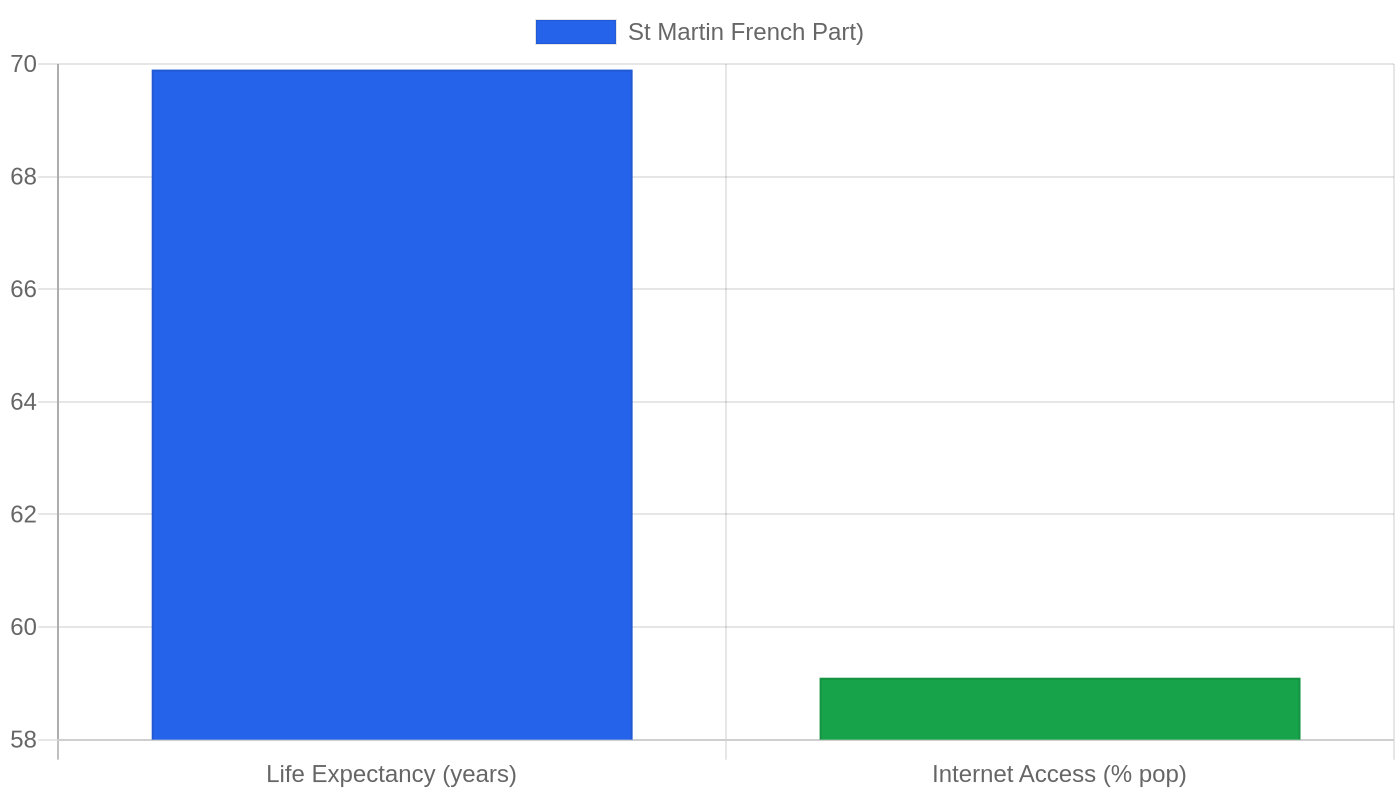
– A Statistical Shadow: The French side of St Martin presents a unique challenge to economic analysts — core indicators like GDP growth, inflation, and unemployment are not currently tracked by the World Bank, making it one of the Caribbean’s most data-opaque territories.
– Tourism as the Unwritten Ledger: While hard numbers are absent, the island’s economic identity is overwhelmingly defined by its tourism sector, luxury retail, and its status as a duty-free port — the invisible engine driving local commerce.
– A Geopolitical Hybrid: As an overseas collectivity of France, St Martin’s economic stability is underpinned by European Union structural support and French social systems, even as it sits in the heart of the hurricane-prone Caribbean.
– Recovery as a Constant State: The territory’s recent history is one of resilience — rebuilding from Hurricane Irma’s devastation in 2017 remains a defining narrative that shapes infrastructure, investment, and daily life.
The Missing Numbers, The Present Reality
Let’s be direct: the World Bank has no current figures for St Martin’s French side. No GDP growth rate. No inflation reading. No unemployment tally. No GDP per capita. In an era of data-driven journalism, this territory is a statistical blank space — a place where the most important economic facts are not captured in spreadsheets.
But the absence of data is not the absence of an economy. It is, rather, a reflection of the territory’s peculiar status: a small, overseas collectivity of France with a population that fluctuates dramatically with tourist seasons and hurricane evacuations. The island of St Martin is split into two sovereign halves — the French north and the Dutch south (Sint Maarten) — and the French side operates with a hybrid economic model that blends Caribbean commerce with European governance.
What we know without a number is this: the French side is a duty-free haven. Shoppers flock to Marigot, the capital, for luxury goods, jewelry, and alcohol at prices that undercut the mainland. The marina at Port la Royale is a magnet for yacht owners. The beaches — Orient Bay, Mullet Bay, and others — draw visitors from around the world. These are not statistical claims; they are the structural realities that define the territory’s economic lifeblood.
“A Duty-Free Life: The Cost of Living in Paradise”
Housing on the French side of St Martin is a tale of two markets. For locals, the cost of living is heavily influenced by the fact that nearly all goods are imported — from food to fuel to construction materials — making everyday expenses significantly higher than in metropolitan France. There is no local agricultural sector of scale, and the island’s small size means that land is at a premium, driving property prices upward in desirable coastal areas.
For expatriates and second-home owners, the market is competitive, with villa rentals in areas like Terres Basses commanding premium rates. The French side has historically been seen as more exclusive and less densely developed than its Dutch counterpart, which appeals to a certain class of buyer. Renting is common among the working population, but wages in the service sector often lag behind the cost of housing, creating a squeeze that is familiar to many island economies.
The duty-free status cuts both ways: it attracts shoppers but does not necessarily translate into cheap living for residents. Everyday goods, from groceries to electronics, are subject to the logistics costs of island delivery. Compared to the broader Caribbean, the French side’s cost of living is generally considered high, though it benefits from French social protections — healthcare, education, and infrastructure spending — that many neighboring territories lack.
That said, the recent inflationary pressures that have swept the globe have not spared St Martin, and the absence of official CPI data means residents must rely on lived experience rather than government statistics.
“Where the Money Moves: Business and Investment on a Small Stage”
The top companies on the French side of St Martin are not multinational giants listed on global exchanges; they are enterprises built on tourism infrastructure. Hotels, villa rental agencies, restaurants, water sports operators, and duty-free retailers form the commercial backbone. The marina sector is particularly significant, with yachting tourism bringing high-net-worth individuals who spend heavily on berthing, provisioning, and services.
Investment opportunities are largely concentrated in hospitality and real estate. The territory’s status as a French overseas collectivity means it operates within the EU legal framework, offering a degree of regulatory stability that is attractive to European investors. However, the small market size limits scalability — this is not a place for mass-market ventures but rather for boutique, high-end offerings.
The business climate is heavily influenced by the seasonal rhythm of tourism. The high season, from December to April, sees the island’s economy surge; the summer months are quieter, and businesses must manage cash flow accordingly. The French government’s commitment to reconstruction after Hurricane Irma has brought public investment into infrastructure — roads, utilities, and public buildings — which has, in turn, supported the construction sector.
For investors with a tolerance for hurricane risk and a focus on the luxury niche, the French side of St Martin offers a stable, if specialized, environment.
“Safety and Sovereignty: Life Under the French Flag in the Caribbean”
St Martin’s French side benefits from the security and administrative framework of the French Republic. Law enforcement is provided by the French national police and gendarmerie, and the territory adheres to French legal standards. This is a significant point of differentiation from its Dutch neighbor, where crime statistics are more frequently discussed.
However, specific crime indices for the French side are not available; the island as a whole has faced challenges typical of tourism-dependent economies, including petty theft and occasional property crime.
The political landscape is stable but not without tension. The island is governed by a local council and a president of the collectivity, while sending representatives to the French National Assembly and Senate in Paris. This dual identity — local autonomy under central French authority — shapes the political discourse. Debates over immigration, housing, and the balance between development and environmental preservation are perennial issues.
The population is a mix of French citizens, other EU nationals, and a significant number of immigrants from neighboring Caribbean islands, particularly Haitians and Dominicans, who come for work in the tourism sector.
Quality of life on the French side is defined by its natural beauty, a relatively relaxed pace, and access to French public services. The cuisine is a celebrated fusion of French technique and Caribbean ingredients. The downsides are the high cost of living, the vulnerability to hurricanes, and the occasional strain on public services during peak tourist seasons. It is a place of striking beauty and real economic fragility, where the comforts of Europe meet the realities of the tropics.
“After Irma: The Long Road to Reinvention”
The most pressing story in St Martin today is not captured in any economic indicator: it is the ongoing, multi-year recovery from Hurricane Irma, which struck the island in September 2017 with devastating force. The French side was particularly hard-hit, with an estimated 95% of buildings damaged. The reconstruction effort has been a defining feature of the territory’s recent history, involving billions of euros in French government aid and insurance payouts.
Today, the physical scars have largely healed — hotels have reopened, marinas have been rebuilt, and the beaches are once again pristine. But the economic and psychological impact lingers. The recovery has prompted a rethinking of building codes and disaster preparedness, and there is a renewed focus on making the island more resilient to the increasingly intense hurricane seasons that climate change is bringing to the Caribbean.
In the current moment, the French side is also grappling with the broader shifts in global tourism. The rise of remote work has brought a new class of digital nomads to the Caribbean, and St Martin is seeking to attract them with improved internet infrastructure and co-working spaces. The duty-free status remains a draw, but the island is also looking to diversify its economy beyond retail and into sustainable tourism and marine conservation.
The question of how to balance development with environmental protection — particularly around the island’s fragile mangroves and coral reefs — is at the forefront of local political debate. The territory is not just rebuilding; it is attempting to reinvent itself for a more uncertain future.
The Bottom Line
St Martin’s French side is a place where the official data runs dry, but the economic currents are unmistakable. For travelers, it offers a unique blend of French culture and Caribbean charm. For investors, it presents a niche opportunity in luxury tourism and real estate, underpinned by French legal stability but tempered by hurricane risk and a small market. For policymakers, it is a case study in the challenges of governing a small, open, and vulnerable economy in the 21st century.
Watch this territory if you are interested in how resilience is built — brick by brick, season by season — in one of the world’s most beautiful, and most exposed, corners of the globe.
Sources & Methodology
This article is authored by Economic Pulse Net for informational and research purposes. Economic Pulse Net sources its data from multilateral institutions, national statistics bureaus, and proprietary databases. All data is believed to be current as of the date of publication.
Published: August 21, 2026 | Category: Research — St Martin French Part)
Use these signals in your own platform
Economic Pulse publishes its live signal feed through a documented, read-only API. Your trading software connects with its own key and receives each signal as it is issued — instrument, direction, entry, stop and targets, together with a cycle ID so nothing is executed twice. The feed is independent of this website and cannot change it.
Signals are informational only and are not financial advice.