Economic Pulse Net | Sources: World Bank World Development Indicators, Government Sources | 2026
Key Takeaways
– St Martin’s economy is fundamentally defined by its split identity — the French side operates under EU and French governance, while the Dutch side (Sint Maarten) functions as a separate jurisdiction, creating a unique cross-border economic ecosystem.
– The territory remains in a long-term recovery trajectory following the devastating impact of Hurricane Irma in 2017, which reshaped its infrastructure, housing market, and tourism-dependent economy.
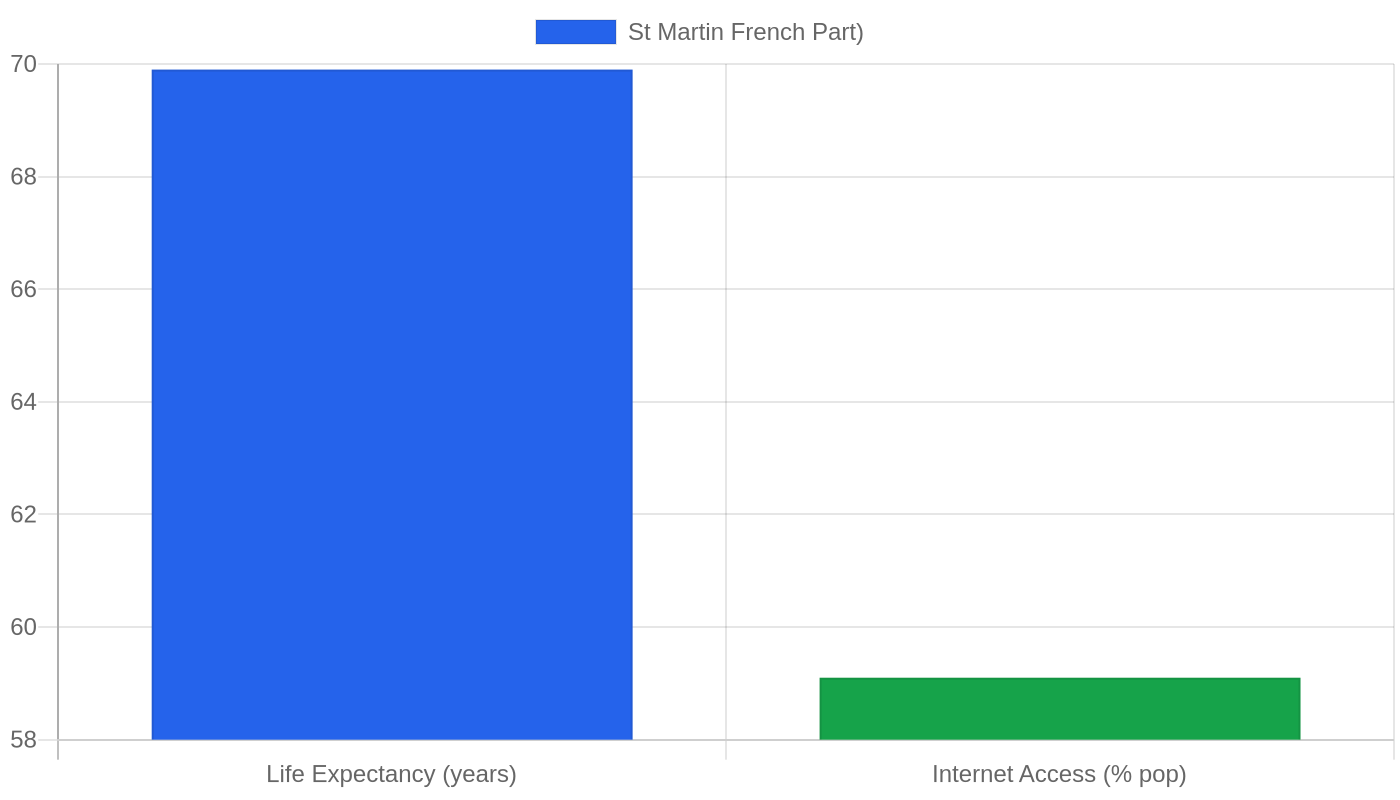
– As a non-sovereign overseas collectivity, St Martin’s economic data is largely absent from major global datasets like the World Bank, meaning analysts must rely on regional context and qualitative indicators.
– Tourism remains the lifeblood of the island, with the French side’s duty-free status and luxury appeal serving as primary economic drivers.
– The absence of comprehensive statistical reporting presents both challenges and opportunities — while investors lack hard numbers, the island’s strategic Caribbean position and French institutional support offer a stabilizing framework.
The Invisible Economy — Reading Between the Data Gaps
St Martin’s French side presents a fascinating paradox for economic observers: it is a territory that generates significant economic activity yet remains nearly invisible in global statistical databases. The World Bank, which routinely publishes comprehensive economic indicators for nearly every nation on Earth, lists no GDP growth figure, no inflation rate, and no unemployment data for this Caribbean collectivity.
This absence is not an oversight but rather a reflection of the territory’s unique constitutional status — as an overseas collectivity of France, it is not a sovereign state and therefore does not appear as a standalone entity in most international economic reporting frameworks.
What we do know is that the island’s economy operates within a distinctive dual-track system. The French side benefits from its integration into the European Union’s monetary framework, using the euro as its currency, while the Dutch side employs the Netherlands Antillean guilder. This monetary split creates fascinating arbitrage opportunities and cross-border economic dynamics that define daily life on the island.
The French side’s economy is heavily oriented toward high-end tourism, duty-free retail, and services, capitalizing on its reputation as a sophisticated Caribbean destination. The absence of specific GDP per capita figures from the World Bank means we cannot quantify precisely, but regional context suggests the island maintains a relatively affluent profile compared to many Caribbean neighbors, buoyed by French government transfers and a well-developed tourism infrastructure.
The Housing Puzzle — Paradise’s Premium Price
Property on the French side of St Martin represents one of the Caribbean’s most sought-after and expensive real estate markets, though precise cost-of-living data remains elusive in the absence of comprehensive statistical reporting. The island’s appeal as a luxury destination has historically driven property values upward, particularly in areas like Grand Case, known as the “Gourmet Capital of the Caribbean,” and the upscale residential enclaves that dot the island’s rolling hills.
Following Hurricane Irma’s destruction in 2017, the rebuilding effort has been characterized by high-end reconstruction, with many property owners choosing to upgrade rather than simply restore, further cementing the island’s premium positioning.
The rental market on the French side caters to a mix of long-term residents, expatriate professionals, and vacation renters, with the latter often commanding premium rates during peak tourist seasons. The cost of daily goods and services on the island reflects its import-dependent nature — as a small island territory, nearly everything must be shipped in, which historically has resulted in prices significantly above mainland French levels.
The cost-of-living premium is partially offset by the island’s duty-free status, which applies to certain luxury goods and has made it a shopping destination for visitors and regional residents alike. For those considering relocation, the housing market presents a classic Caribbean paradox: breathtaking living environments paired with elevated costs and the ever-present consideration of hurricane risk.
Business and Investment — Navigating a Unique Regulatory Environment
The French side of St Martin offers investors something relatively rare in the Caribbean: the stability and institutional framework of a European jurisdiction combined with the lifestyle and market characteristics of a tropical island economy. As part of France, the territory operates under French commercial law and benefits from EU regulatory standards, providing a level of legal certainty that can be attractive to investors wary of less stable regional jurisdictions.
The territory’s status as a special collectivity, granted in 2007, gives it greater autonomy in certain policy areas while maintaining the overarching French administrative framework.
The tourism sector remains the dominant investment opportunity, with hospitality infrastructure ranging from boutique hotels to luxury villa developments. The island’s reputation as a yachting destination also presents opportunities in marine services and related industries.
However, the absence of comprehensive economic data from sources like the World Bank means that potential investors must conduct more extensive due diligence, relying on regional Caribbean economic reports and French government sources for insight. The business environment is characterized by a relatively small domestic market, making export-oriented services and tourism-related ventures the most viable investment paths.
The dual-national nature of the island creates unique business considerations, as companies must navigate both French and Dutch regulatory systems if operating across the border that divides the island.
Safety, Politics and Quality of Life — The French Touch in the Caribbean
St Martin’s political landscape is defined by its status as a French overseas collectivity, a relationship that provides residents with French citizenship, EU rights, and access to French public services while maintaining a degree of local autonomy through the Collectivity of Saint Martin’s territorial council.
This arrangement has historically provided political stability, though it has not been without tensions — debates over the appropriate balance between local autonomy and French oversight have been a recurring theme in island politics. The French government’s response to Hurricane Irma, including substantial reconstruction funding and administrative support, demonstrated the tangible benefits of this institutional relationship.
Quality of life on the French side is shaped by the island’s natural beauty, French cultural influences, and a relaxed Caribbean pace of life. The territory does not appear in standard crime index rankings, and the absence of data makes objective assessment difficult, but the island has historically been considered relatively safe compared to some regional counterparts, with the French gendarmerie providing law enforcement.
The cultural landscape is a distinctive blend of French, Creole, and Caribbean influences, reflected in the island’s renowned culinary scene and vibrant local traditions. The island’s small population creates a close-knit community atmosphere, while its position as a regional crossroads brings a steady flow of international visitors.
Current Affairs — Rebuilding, Resilience, and Regional Dynamics
The most pressing current issue on the French side of St Martin remains the long-term recovery from Hurricane Irma, which struck in September 2017 with devastating force, destroying or severely damaging a significant portion of the island’s infrastructure and housing stock. The reconstruction effort has been a defining feature of the territory’s recent history, with French government funding and EU solidarity mechanisms playing crucial roles in the rebuilding process.
The recovery has been uneven — while some areas have been rebuilt to a higher standard, others have lagged, and the island continues to grapple with the economic disruption caused by the storm’s impact on its tourism industry.
The island’s economy is also navigating the broader challenges facing Caribbean tourism destinations, including changing travel patterns and the need for greater sustainability and climate resilience. The French side’s duty-free shopping status remains a key competitive advantage, drawing visitors from around the region and beyond.
The territory’s relationship with the Dutch side of the island continues to evolve, with cross-border cooperation on issues like transportation, customs, and emergency management being essential to the island’s overall functionality.
As the 2020s progress, St Martin’s French side is focused on building a more resilient economy — one that preserves its luxury tourism appeal while better preparing for the environmental and economic challenges that lie ahead in an increasingly uncertain Caribbean landscape.
The Bottom Line
St Martin’s French side deserves attention from investors and observers interested in a unique Caribbean micro-economy that combines European institutional stability with tropical market dynamics. The absence of comprehensive World Bank data makes quantitative analysis challenging, but the territory’s strategic position, tourism appeal, and French government backing provide a foundation for continued economic activity.
Those watching the island should monitor the completion of hurricane reconstruction efforts, the evolution of cross-border economic integration with the Dutch side, and the territory’s ability to balance its luxury positioning with the need for greater climate resilience. For travelers, investors, and regional analysts alike, the French side of St Martin offers a compelling case study in how small island territories navigate the delicate balance between dependence and autonomy in the modern global economy.
Sources & Methodology
This article is authored by Economic Pulse Net for informational and research purposes. Economic Pulse Net sources its data from multilateral institutions, national statistics bureaus, and proprietary databases. All data is believed to be current as of the date of publication.
Published: August 21, 2026 | Category: Research — St Martin French Part)
Use these signals in your own platform
Economic Pulse publishes its live signal feed through a documented, read-only API. Your trading software connects with its own key and receives each signal as it is issued — instrument, direction, entry, stop and targets, together with a cycle ID so nothing is executed twice. The feed is independent of this website and cannot change it.
Signals are informational only and are not financial advice.