Economic Pulse Net | Sources: World Bank World Development Indicators, Government Sources | 2026
Key Takeaways
– Peru’s economy is projected to grow at 3.43% in 2025 according to the World Bank, a respectable rate that places it among Latin America’s faster-growing economies, yet this headline figure masks deep structural vulnerabilities.
– Unemployment stands at a relatively low 5.12%, but this number tells only part of the story — informal employment remains pervasive across the country, and the quality of jobs is a pressing concern.
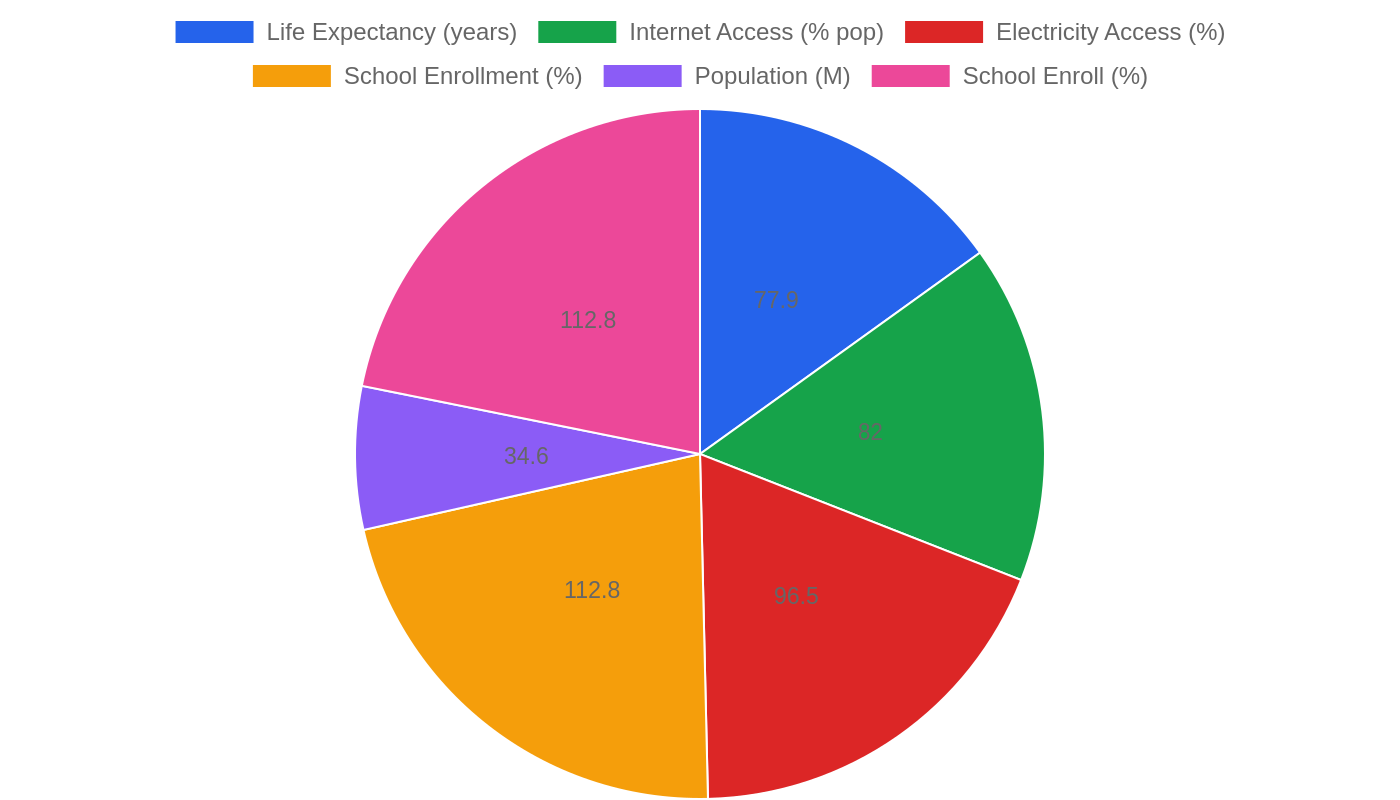
– With a GDP of approximately $334.9 billion and a population of 34.6 million, Peru is a middle-income economy with a GDP per capita (PPP) of $18,816, placing it in a competitive but fragile position regionally.
– The political landscape remains volatile: Peru is a unitary semi-presidential republic with a multi-party system operating under its 1993 constitution, but recent years have seen extraordinary instability, with multiple presidents cycling through office.
– The country’s top companies span consumer goods, industrials, and consumer services — names like Alicorp, Ajegroup, and América Televisión dominate — but the business environment faces headwinds from political uncertainty and regulatory inconsistency.
The Growth Paradox — Why 3.4% Isn’t the Whole Story
The World Bank projects Peru’s GDP growth at 3.43% for 2025, a figure that would be the envy of many struggling economies globally. But in the Peruvian context, this number requires careful unpacking. The country’s total economic output now stands at roughly $334.9 billion, supported by a population of 34.6 million people.
On a purchasing power parity basis, the average Peruvian generates about $18,816 in economic value annually — a figure that signals a middle-income nation with significant room for improvement.
Yet growth alone does not guarantee prosperity. The World Bank’s data shows unemployment at 5.12%, which on the surface appears enviably low. However, labour market analysts would caution that this official rate captures only formal-sector workers. In Peru, a vast informal economy operates alongside the formal one, meaning millions of Peruvians work without contracts, benefits, or social protections.
The 3.43% growth rate, while welcome, has not been sufficient to absorb all workers into quality formal employment.
The structure of Peru’s economy is another layer of complexity. The country’s main industries — while not exhaustively listed in the available data — have historically revolved around mining, agriculture, manufacturing, and services. Copper and gold exports have long been the backbone of foreign exchange earnings, making the economy sensitive to commodity price fluctuations on global markets. When prices rise, Peru booms; when they fall, the country feels the pain acutely.
Inflation data is not available from the World Bank for this period, which itself is noteworthy. In an era where price stability has become a central concern for households across Latin America, the absence of clear inflation figures makes it difficult to assess whether real wages are keeping pace with the cost of living.
What is clear is that Peru’s economic managers face a delicate balancing act: maintaining growth momentum while ensuring that the benefits of expansion reach a population that has grown weary of broken promises.
The Cost of Living Squeeze — Lima’s Housing Puzzle
Housing costs in Peru’s capital, Lima, have become a defining issue for urban households, though specific data on rent and purchase prices is not detailed in the available figures. What can be inferred from the broader economic context is that the gap between income and housing expenses has been widening. With a GDP per capita (PPP) of $18,816, the average household must allocate a significant portion of its budget to shelter, particularly in desirable districts of the capital.
The rental market in Lima operates in two distinct tiers. In upscale neighbourhoods like Miraflores, San Isidro, and Barranco, rents for a one-bedroom apartment can consume 40% or more of a professional’s monthly income. Meanwhile, in peripheral districts and provincial cities, housing costs are lower but so is access to quality infrastructure, employment opportunities, and public services.
The choice between renting in a central location or buying on the outskirts is not merely financial — it is a decision about quality of life, commute times, and access to schools and healthcare.
Daily expenses for food, transportation, and utilities have been rising, as they have across the region. Peru’s diverse geography — from the coastal desert to the Andean highlands to the Amazon basin — means that the cost of living varies dramatically depending on location. A family in Cusco faces different price pressures than one in Lima or Iquitos.
The common thread is that real wages have struggled to keep pace with the creeping cost of everyday necessities, leaving many households feeling financially stretched even as the macroeconomy grows.
Business in the Crossfire — Peru’s Corporate Landscape
The roster of Peru’s top companies reads like a who’s who of the country’s economic establishment. Alicorp, a consumer goods giant, dominates shelves with everything from cooking oil to pasta. Ajegroup has built a regional beverage empire. América Televisión controls a significant share of media consumption. These are not small players — they are household names with deep roots in the Peruvian economy.
But the business environment in which these companies operate is far from stable. The political landscape, as described by the available data, is that of a “unitary semi-presidential republic with a multi-party system” operating under the 1993 constitution. In theory, this framework provides checks and balances. In practice, Peru has experienced a revolving door of presidents, congressional gridlock, and corruption scandals that have eroded institutional trust.
For businesses, this translates into policy uncertainty: tax regimes change, regulatory frameworks shift, and long-term planning becomes a gamble.
The sectors represented among the top companies — consumer goods, industrials, and consumer services — suggest where the economy’s strengths lie. Agroindustrial firms like Casa Grande and Pomalca highlight the importance of agricultural exports, particularly sugar and other cash crops. Aeropuertos del Perú and airlines like Aero Cóndor and Avianca Perú underscore the role of transportation and tourism infrastructure.
These are industries with genuine competitive advantages, but they require predictable rules of the game to thrive.
Investors considering Peru must weigh the country’s natural resource wealth and entrepreneurial dynamism against its political fragility. The potential is real — the question is whether the institutional framework can deliver the stability needed to realise it.
Politics, Safety, and the Quality of Life Question
Peru’s political system is defined by its constitution, which the available data describes as having replaced an earlier framework that “leaned the government to a federation to authorize more power to the president.” The current 1993 constitution established a unitary republic where the central government holds the most power and can create administrative divisions. In theory, this creates a streamlined system.
In practice, it has concentrated power in Lima while leaving regional grievances simmering.
The political turmoil of recent years — multiple presidents, impeachment proceedings, and mass protests — has taken a toll on public confidence. When citizens lose faith in their institutions, the social fabric frays. Protests in the Andean regions, particularly those related to mining projects and resource extraction, have highlighted deep divisions between the central government and indigenous communities.
These are not abstract political debates; they have direct implications for safety, investment, and daily life.
Crime and safety indices are not available in the provided data, which itself is a limitation for anyone trying to assess quality of life. What can be said is that perceptions of safety vary widely across Peru. In some neighbourhoods of Lima, private security is ubiquitous; in others, residents lock themselves behind barred windows. The political instability of recent years has not helped — when governments change rapidly, police leadership turns over, and crime-fighting strategies lack continuity.
Quality of life in Peru is a story of contrasts. The country boasts world-class cuisine, rich cultural heritage, and stunning natural beauty. But these assets exist alongside infrastructure deficits, uneven public services, and a political class that has struggled to deliver basic governance. For the average Peruvian, life is a negotiation between opportunity and frustration.
The Moment of Truth — What’s Happening Now
As of the most recent data available, Peru’s economy is projected to grow at 3.43% in 2025 according to the World Bank, but this forecast was made against a backdrop of considerable uncertainty. The country has been navigating a period of political recalibration, with the current administration attempting to restore stability after years of chaos. Whether this effort succeeds will determine whether the growth projection is met, exceeded, or missed.
The business community is watching closely. Companies like Alicorp and Ajegroup have continued to invest and expand, but they are doing so cautiously. The consumer goods sector, in particular, is sensitive to shifts in household purchasing power, and without clear inflation data, it is difficult to gauge whether consumer confidence is improving or eroding. The unemployment rate of 5.12% suggests that the labour market is absorbing workers, but the quality of those jobs remains an open question.
On the political front, the multi-party system continues to produce fragmented governance. Coalitions are fragile, and the risk of another presidential crisis is ever-present. For a country that has seen multiple leaders forced from office in recent years, the possibility of further instability cannot be dismissed. The 1993 constitution, which was designed to provide durable governance, has been tested repeatedly — and has not always passed the test.
What happens next in Peru matters not only for its 34.6 million citizens but for the broader region. As a mid-sized economy with significant natural resources, Peru’s trajectory offers lessons about the challenges of democratic governance, economic diversification, and social inclusion in Latin America. The world is watching.
The Bottom Line
Peru is a country of genuine economic potential and persistent political risk. The 3.43% growth forecast from the World Bank is encouraging, but it is not a guarantee of prosperity — especially when inflation data is absent and the quality of employment remains uncertain. Investors should watch Peru for its consumer goods sector, agricultural exports, and strategic position in the region, but they must also prepare for volatility.
For policymakers and development economists, Peru offers a case study in how middle-income economies can struggle to translate macroeconomic growth into tangible improvements in daily life. The opportunity is real; the execution is everything.
Sources & Methodology
This article is authored by Economic Pulse Net for informational and research purposes. Economic Pulse Net sources its data from multilateral institutions, national statistics bureaus, and proprietary databases. All data is believed to be current as of the date of publication.
Published: July 30, 2026 | Category: Research — Peru
Use these signals in your own platform
Economic Pulse publishes its live signal feed through a documented, read-only API. Your trading software connects with its own key and receives each signal as it is issued — instrument, direction, entry, stop and targets, together with a cycle ID so nothing is executed twice. The feed is independent of this website and cannot change it.
Signals are informational only and are not financial advice.