Economic Pulse Net | Sources: World Bank World Development Indicators, Government Sources | 2026
Key Takeaways
* Robust Expansion: Vietnam is projected to deliver an impressive GDP growth rate of over 8% in 2025, signaling a resilient economic engine despite global headwinds.
Stable Prices: Inflation remains tightly controlled at approximately 3.3%, providing a predictable environment for consumers and businesses alike.
Tight Labor Market: With unemployment hovering near 1.5%, the country faces a scarcity of labor that may drive wage pressures but ensures high consumer participation.
Political Duality: The nation operates as a unitary communist state while simultaneously embracing market-driven, capitalist economic policies, creating a unique hybrid model.
Emerging Corporate Sector: Key industries are led by a mix of financial institutions, technology firms, and consumer service companies, indicating a diversifying economy beyond traditional manufacturing.
Economic Momentum Defies Conventional Wisdom
Vietnam’s economic trajectory in 2025 presents a compelling case study in rapid development, with the World Bank projecting a GDP growth rate of 8.01882998978245%. This figure is not merely a statistical outlier; it represents a sustained acceleration that outpaces many developed economies and positions Vietnam as one of the fastest-growing major economies in Southeast Asia.
The sheer scale of this output is reflected in a total GDP of $514,697,215,165.065, underscoring the nation’s transition from an agrarian base to a significant industrial player. For investors and policymakers, this growth is critical because it suggests that foreign direct investment and domestic consumption are feeding a self-reinforcing cycle of expansion.
Furthermore, the per capita metrics reveal a rising standard of living, with GDP per capita (PPP) standing at $18,088.491587163, which indicates that wealth generation is beginning to trickle down to the average citizen more effectively than in previous decades. While the Gross National Income (GNI) per capita sits at $4,970, the gap between PPP-adjusted income and nominal GNI highlights the purchasing power advantages within the local market, making it an attractive destination for cost-sensitive operations.
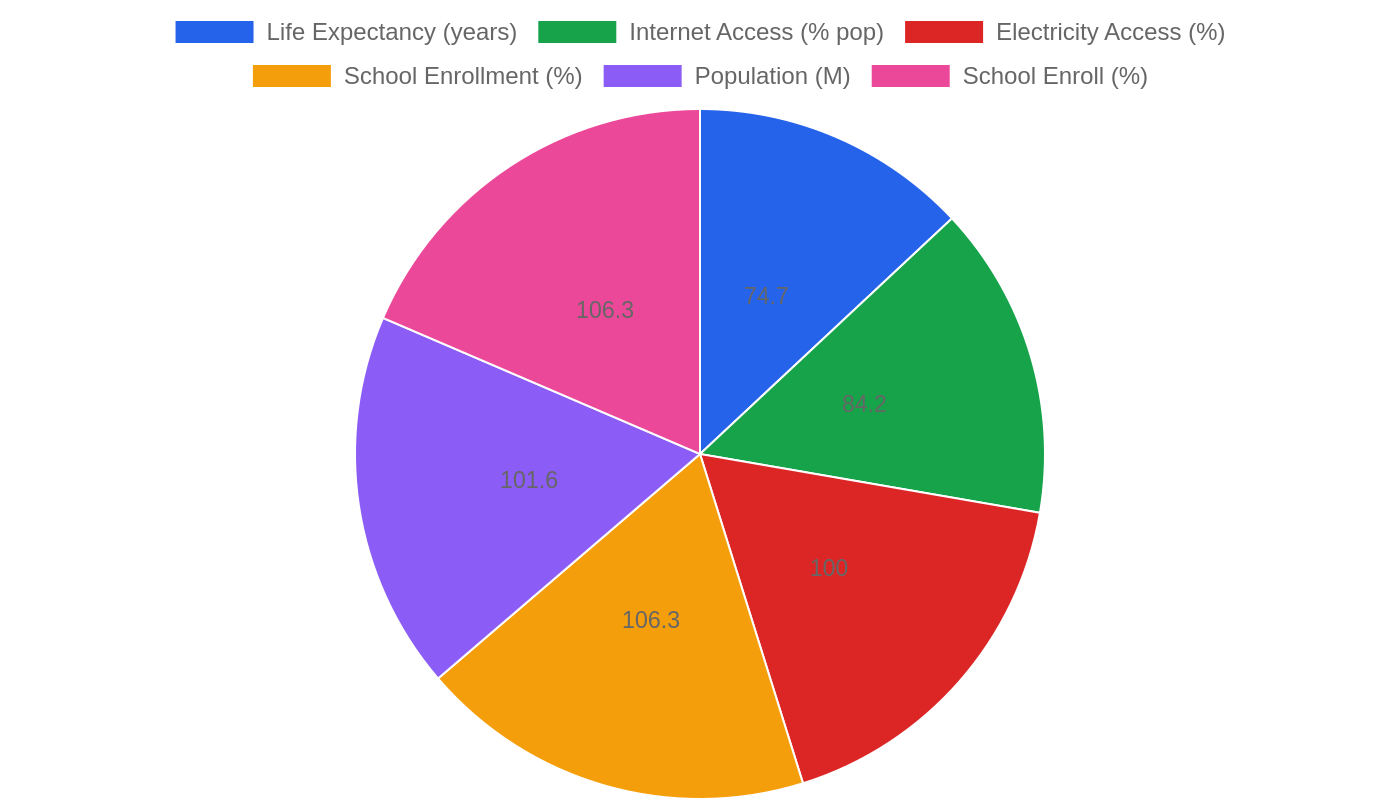
This robust performance is underpinned by a massive population of 101,598,527.0, which provides both a vast domestic consumer base and a formidable labor force, although the latter is currently constrained by exceptionally low unemployment rates.
Living Costs and Housing Dynamics
The cost of living in Vietnam is shaped by its status as an emerging market, where daily expenses remain relatively affordable compared to Western standards but are rising alongside economic growth. While specific housing indices are not provided in the current dataset, the moderate inflation rate of 3.30999314219739% suggests that price increases for goods and services are being managed carefully to prevent erosion of consumer purchasing power.
This controlled inflation environment allows households to plan budgets with greater certainty, as essential goods do not experience the volatile spikes seen in other developing nations. However, the extremely low unemployment rate of 1.523% implies a tight labor market, which typically exerts upward pressure on wages and, consequently, on the cost of services and housing rents in urban centers like Ho Chi Minh City and Hanoi.
As incomes rise, driven by the expanding middle class, demand for quality housing and modern amenities is likely outpacing supply, leading to gradual appreciation in property values. For expatriates and returning citizens, the disparity between the nominal GNI per capita of $4,970 and the higher PPP-adjusted income suggests that local purchasing power is stronger than international averages might imply, making everyday life more accessible than raw currency conversions would indicate.
Investment Landscape and Corporate Powerhouses
The business climate in Vietnam is increasingly defined by a diverse array of top-tier companies that span financials, technology, and consumer services, reflecting a maturing corporate sector. Major players such as the Bank for Investment and Development of Vietnam and Asia Commercial Bank dominate the financial landscape, facilitating the capital flows necessary for continued infrastructure and industrial development.
In the technology space, Appota Corporation stands out as a key innovator, signaling Vietnam’s growing capability in digital services and software solutions beyond simple assembly work. The consumer services sector is equally vibrant, with entities like Air Mekong and the Airports Corporation of Vietnam playing pivotal roles in connecting the country to global trade routes and tourism markets.
Additionally, traditional sectors remain strong, with Bien Hoa Sugar and An Giang Coffee representing the agricultural backbone that continues to export value globally. These companies operate within a framework that, while officially socialist, encourages private enterprise and foreign partnership, creating a fertile ground for joint ventures.
The presence of healthcare providers like Bidiphar and securities firms like Bien Viet Securities further illustrates the depth of the market, offering opportunities across multiple asset classes and service industries for astute investors looking to capitalize on Vietnam’s structural transformation.
Political Structure and Social Stability
Vietnam’s political landscape is characterized by a unique ideological duality: it is a unitary communist state that self-designates as a socialist republic, yet its economic policies have grown increasingly capitalist. According to external observers, including *The Economist*, the leadership can be described as “ardently capitalist communists,” a phrase that captures the pragmatic approach taken by the Communist Party of Vietnam (CPV).
Under the constitution, the CPV asserts its dominant role in governance, ensuring political stability and continuity of policy, which is highly valued by long-term investors. Although crime and safety indices are listed as N/A in the current data, the consistent application of law and order under a centralized government typically contributes to a baseline level of social predictability.
This political model allows the state to implement rapid economic reforms without the gridlock often seen in democratic systems, though it requires careful balancing to maintain public support amidst growing market-oriented changes. The absence of violent political upheaval and the clear chain of command provide a stable backdrop for business operations, even as the society navigates the tensions between traditional socialist ideals and modern capitalist realities.
Current Affairs and Policy Shifts
Right now, Vietnam is navigating a period of intense economic integration and internal reform, driven by the need to sustain its double-digit growth ambitions. The government is actively refining its regulatory frameworks to accommodate the influx of foreign technology and investment, particularly in the tech and financial sectors highlighted by the rise of firms like Appota Corporation.
With inflation held steady at roughly 3.3%, policymakers appear focused on preventing overheating while maintaining the momentum that has delivered an 8% GDP growth projection. The tight labor market, evidenced by the 1.523% unemployment rate, is prompting discussions around workforce development and immigration policies to support expanding industries.
Meanwhile, the banking sector, led by institutions like Bao Viet Holdings and the Bank for Investment and Development of Vietnam, is adapting to new digital demands and cross-border transaction volumes. These developments suggest a government that is agile in responding to global trends, leveraging its strategic location in Southeast Asia to attract supply chains shifting away from other regional hubs.
The ongoing dialogue between maintaining socialist political structures and embracing capitalist economic mechanisms remains the central theme of current policy debates, shaping how the country engages with international partners.
The Bottom Line
Vietnam offers a rare combination of high growth potential and political stability, making it a critical watchlist country for global investors seeking exposure to Southeast Asia’s next wave of development. The 8% GDP growth forecast, coupled with manageable inflation, creates a favorable macroeconomic environment for both short-term trading and long-term capital allocation.
However, stakeholders must navigate the complex political reality of a state-led economy that is rapidly adopting market principles, requiring a nuanced understanding of local regulations and corporate landscapes. For those willing to engage with the complexities of the Vietnamese market, the rewards lie in participating in a dynamic economy powered by a young population and a burgeoning middle class.
Sources & Methodology
This article is authored by Economic Pulse Net for informational and research purposes. Economic Pulse Net sources its data from multilateral institutions, national statistics bureaus, and proprietary databases. All data is believed to be current as of the date of publication.
Published: October 21, 2026 | Category: Research — Vietnam
Use these signals in your own platform
Economic Pulse publishes its live signal feed through a documented, read-only API. Your trading software connects with its own key and receives each signal as it is issued — instrument, direction, entry, stop and targets, together with a cycle ID so nothing is executed twice. The feed is independent of this website and cannot change it.
Signals are informational only and are not financial advice.