Economic Pulse Net | Sources: World Bank World Development Indicators, Government Sources | 2026
Key Takeaways
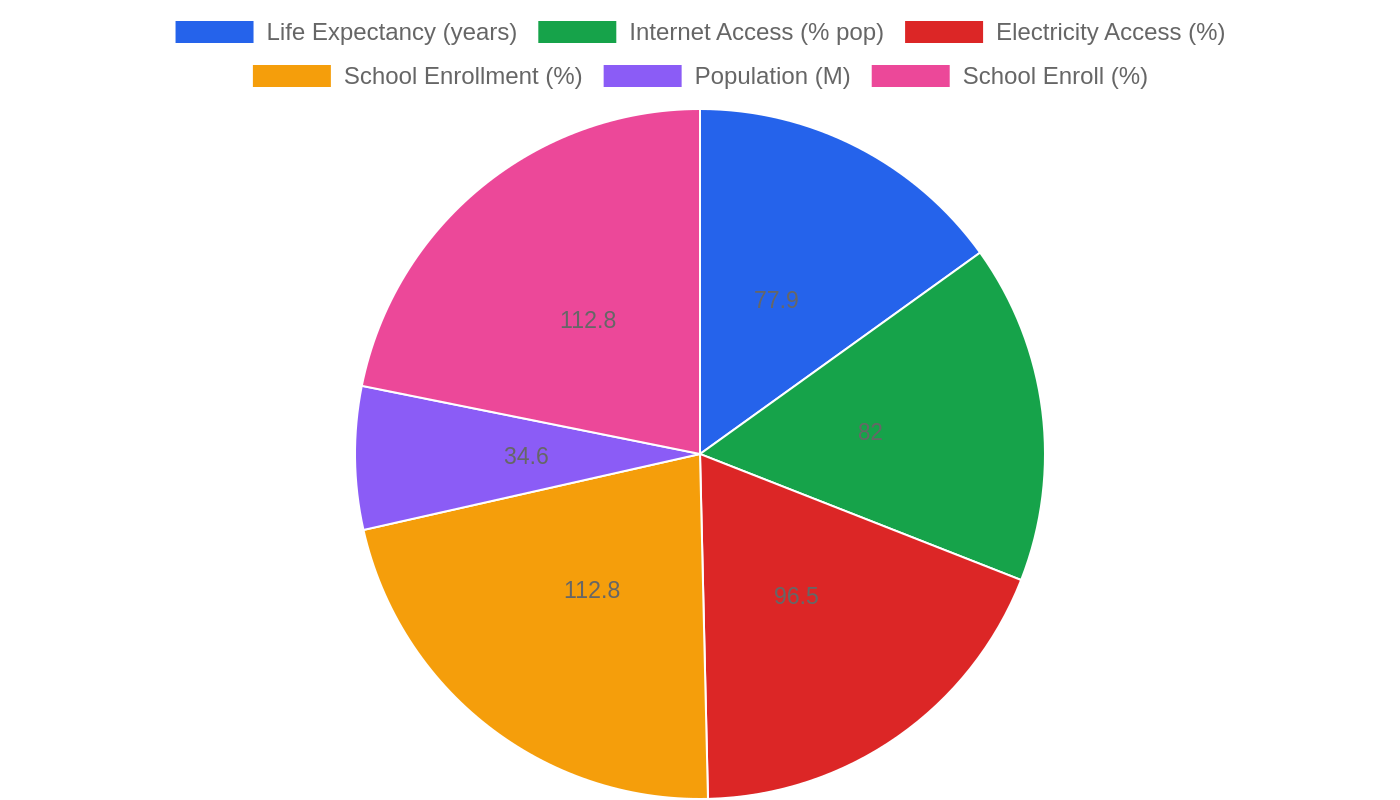
* Resilient Growth Trajectory: Peru is projected to expand its economy by approximately 3.43% in 2025, demonstrating a steady recovery path supported by a robust population base of over 34.5 million people.
Price Stability as a Pillar: With inflation held at a low 1.53%, the central bank’s monetary policy appears effective in maintaining purchasing power, offering a stable environment for domestic consumption.
Labor Market Balance: An unemployment rate of 5.12% suggests a tightening labor market that balances workforce participation with economic demand, though structural challenges remain in formal job creation.
Consumer Goods Dominance: The corporate landscape is heavily anchored by consumer goods and services giants, indicating an economy driven by internal demand rather than solely by extractive industries.
Economic Engine: A Steady Climb
Peru’s economic narrative in 2025 is defined by measured expansion and macroeconomic stability. According to World Bank data, the country’s Gross Domestic Product (GDP) is valued at approximately $334.85 billion, reflecting a substantial economic footprint for a nation of this size. The growth rate is projected at 3.43%, a figure that signals moderate but consistent momentum, likely buoyed by domestic consumption and infrastructure development.
This growth occurs against a backdrop of remarkably low inflation, with the Consumer Price Index (CPI) standing at just 1.53%. Such price stability is critical; it preserves the real value of wages and encourages long-term planning by businesses and households alike. Furthermore, the unemployment rate of 5.12% indicates a healthy labor market where the majority of the active population is engaged in productive activity.
For a country with a population exceeding 34.5 million, these metrics suggest that economic benefits are being distributed broadly enough to sustain aggregate demand. The GDP per capita, adjusted for Purchasing Power Parity (PPP), stands at roughly $18,816, highlighting a middle-income status that offers significant potential for further development if productivity gains can be sustained.
Cost of Living: Affordability and Accessibility
For residents and expatriates alike, the cost of living in Peru presents a compelling value proposition compared to many other Latin American economies. While specific housing indices are not detailed in the current dataset, the low inflation rate of 1.53% implies that daily expenses, including food and utilities, are rising at a negligible pace. This stability allows consumers to plan their budgets with greater certainty, reducing the financial anxiety often associated with volatile price environments.
The GNI per capita of $8,430 provides context for household earnings, suggesting that while income levels vary, the overall affordability of goods and services remains accessible to a broad segment of the population. In a region often plagued by erratic currency fluctuations and high inflation, Peru’s ability to keep CPI near single digits makes it an attractive destination for those seeking economic predictability.
Consequently, the purchasing power of the average citizen is likely protected from the erosive effects of rapid price hikes, fostering a more stable social contract between the government and its citizens.
Investment & Business Climate: The Consumer Sector Leads
The investment landscape in Peru is currently characterized by the strength of its private sector, particularly within the consumer goods and services industries. Major players such as Alicorp, Ajegroup, and Agroindustrial Casa Grande dominate the local market, indicating a mature domestic supply chain that caters to essential needs. These companies are not merely surviving; they are expanding, as evidenced by the presence of multiple agro-industrial firms like Pomalca and Andahuasi in the top corporate rankings.
The service sector also shows significant vitality, with major airlines like Aero Cóndor, Air Perú, and Avianca Perú facilitating both business travel and tourism. Additionally, Aeropuertos del Perú underscores the importance of infrastructure in enabling this commercial activity. For investors, these sectors represent safe havens due to their direct link to daily human needs—food, transport, and communication.
The concentration of listed companies in these areas suggests that capital markets are liquid and that there is investor confidence in the longevity of these business models.
Safety, Politics & Quality of Life: Institutional Framework
Peru operates under a unitary semi-presidential republic framework, a system established by the 1993 constitution which centralized power to enhance executive efficiency. This political structure has maintained a liberal democratic system, providing a predictable legal environment for international engagement. However, the absence of specific crime and safety indices in the current data highlights a gap in publicly reported metrics, necessitating caution when assessing day-to-day security conditions.
Despite this, the political continuity since 1993 suggests a degree of institutional resilience that supports long-term governance. The multi-party system allows for diverse political representation, although it can sometimes lead to legislative gridlock. For quality of life, the combination of political stability and economic moderation creates a baseline environment that, while requiring vigilance regarding personal safety, offers a structured society.
The lack of explicit happiness or well-being data leaves the qualitative experience of residents open to interpretation, but the macro-stability serves as a foundational pillar for societal order.
What’s Happening Now: Navigating the Current Landscape
In the immediate term, Peru is navigating a period of consolidation where economic fundamentals are being tested against global headwinds. The focus remains on sustaining the 3.43% growth trajectory without compromising the hard-won inflation control of 1.53%. Businesses are likely prioritizing operational efficiency to maintain margins amidst the current competitive landscape dominated by consumer goods conglomerates.
There is a palpable sense of cautious optimism as the unemployment rate holds at 5.12%, signaling that job creation is keeping pace with labor force entry. Investors are watching closely to see if the government will introduce further reforms to deepen the integration of the digital economy and improve infrastructure connectivity. The performance of major entities like América Televisión and various airline groups will serve as key barometers for consumer sentiment and mobility trends.
As the year progresses, the interplay between fiscal discipline and social spending will determine whether this growth phase translates into broader-based prosperity for the 34.5 million inhabitants.
The Bottom Line
Peru stands out as a model of macroeconomic prudence in Latin America, offering a rare combination of positive growth and price stability. Investors seeking exposure to emerging markets should view Peru not as a high-risk speculative play, but as a steady compounder driven by strong domestic consumption. The dominance of consumer goods and services companies provides a clear entry point for capital looking for tangible assets with reliable cash flows.
For the global observer, Peru represents a case study in how institutional frameworks and monetary discipline can foster resilience in a volatile world.
Sources & Methodology
This article is authored by Economic Pulse Net for informational and research purposes. Economic Pulse Net sources its data from multilateral institutions, national statistics bureaus, and proprietary databases. All data is believed to be current as of the date of publication.
Published: October 04, 2026 | Category: Research — Peru
Use these signals in your own platform
Economic Pulse publishes its live signal feed through a documented, read-only API. Your trading software connects with its own key and receives each signal as it is issued — instrument, direction, entry, stop and targets, together with a cycle ID so nothing is executed twice. The feed is independent of this website and cannot change it.
Signals are informational only and are not financial advice.