Economic Pulse Net | Sources: World Bank World Development Indicators, Government Sources | 2026
Asunción moves at its own pace. The capital of one of South America’s least-known economies sits on the eastern bank of the Paraguay River, a city of low-rise buildings, sprawling *tereré* stalls, and an air of deliberate calm.
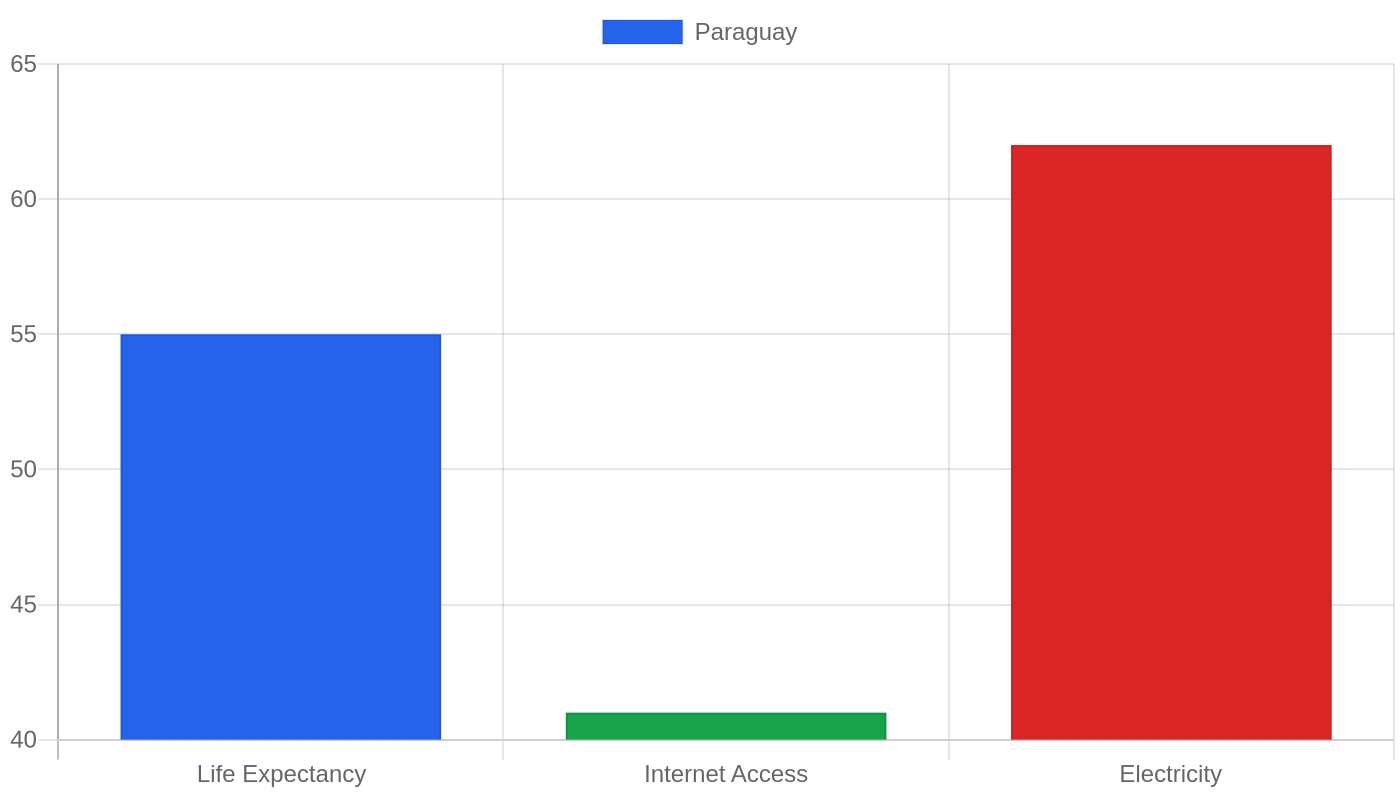
But beneath the surface, Paraguay is a country of striking contradictions: a representative democratic republic with a robust multi-party system, yet one where a handful of family-controlled conglomerates — Grupo Cartes most prominent among them — cast long shadows over commerce and politics. The World Bank data on Paraguay is sparse, with key indicators like GDP growth, inflation, unemployment, and GDP per capita listed as unavailable. This absence of data is itself a story.
It speaks to a nation that, despite being the world’s fourth-largest soybean exporter and a powerhouse of hydroelectric energy thanks to the Itaipu Dam, remains understudied, under-reported, and often underestimated. For the astute observer, however, Paraguay offers a unique case study in how a small, landlocked economy navigates global headwinds with a mix of agricultural wealth, financial sector depth, and political continuity.
Key Takeaways
– Data opacity masks real activity: The World Bank’s lack of key economic figures for Paraguay suggests either reporting gaps or a deliberate low profile. Investors must rely on sectoral analysis rather than headline numbers.
– A conglomerate-driven economy: Grupo Cartes, alongside financial giants like Banco Itaú Paraguay and Banco Amambay, dominates the business landscape. Political and economic power are deeply intertwined.
– Energy superpower in disguise: Paraguay is one of the world’s largest net exporters of electricity, yet this advantage has not translated into broad-based industrial transformation.
– Political stability with concentration: The country’s democratic framework and separation of powers coexist with a highly concentrated media environment (ABC Color) and a small elite that controls key utilities (ANDE) and aviation (LATAM Paraguay, Paranair).
– Safety remains a question mark: With no Crime Index or Safety Index data from the World Bank, Paraguay’s security profile is ambiguous — likely better than its northern neighbours but with pockets of concern.
The Soybean and the Circuit Board — Inside Paraguay’s Economic Engine
Without GDP growth or inflation figures from the World Bank, one must look at what Paraguay does to understand what Paraguay earns. The country’s economy is built on two pillars: agriculture and energy. Paraguay is a global heavyweight in soybean production, and the commodity’s price on international markets dictates the rhythm of the entire economy. When soybean prices are high, Asunción’s car dealerships hum; when they fall, the mood shifts.
The country is also a co-owner of the Itaipu Dam, one of the largest hydroelectric plants on Earth, which generates far more power than Paraguay consumes. The surplus electricity is sold to Brazil and Argentina, providing a steady, dollar-denominated revenue stream that acts as a fiscal cushion. This energy wealth, however, has not yet sparked a manufacturing renaissance.
The economy remains heavily reliant on primary products and services, with a financial sector that is surprisingly sophisticated for a nation of its size. The presence of both the Central Bank of Paraguay and the Bolsa de Valores de Asunción — the country’s stock exchange — points to an ambition to deepen capital markets. Yet without World Bank data on employment, it is difficult to gauge whether this financial infrastructure is translating into jobs.
The unemployment figure may be unavailable, but anecdotal evidence from the region suggests that Paraguay’s informal economy is vast, absorbing workers that formal statistics might miss. The challenge for policymakers is clear: how to leverage agricultural and energy wealth into sustainable, inclusive growth.
The Price of *Tereré* — Housing and Daily Life in Asunción
Cost of living data from the World Bank is absent, so any discussion of Paraguay’s daily economics must rely on regional context and inference. Paraguay has historically been one of the more affordable countries in South America, particularly when compared to neighbours like Brazil, Argentina, or Chile.
Housing in Asunción tends to be cheaper than in Buenos Aires or São Paulo, though prices have crept upward in recent years as foreign investors — particularly from Argentina seeking a hedge against their own inflation — have bought property. Renting is common among the middle class, while homeownership is a long-term goal for many. Daily expenses revolve around the ubiquitous *tereré* — cold yerba mate tea — and the markets of the capital, where fresh produce is relatively inexpensive.
Utility costs are moderated by the fact that ANDE, the state-owned electricity company, provides power at subsidised rates thanks to the country’s hydroelectric bounty. Transportation is cheap, with a network of buses and shared taxis serving most of the city.
The absence of hard data makes precise comparisons impossible, but the general picture is of a low-cost, low-pressure urban environment where a modest income can still afford a decent quality of life — provided one is not dependent on imported goods, which carry higher prices due to landlocked logistics.
The Cartes Constellation — Investment and Business in Paraguay
The corporate landscape of Paraguay is dominated by a small number of powerful players, and no name looms larger than Grupo Cartes. This conglomerate, controlled by former President Horacio Cartes, has interests ranging from tobacco and beverages to banking and media. Its influence is pervasive. Alongside Grupo Cartes, the financial sector is robust: Banco Itaú Paraguay, a subsidiary of the Brazilian giant, competes with Banco Amambay for retail and corporate clients.
The Central Bank of Paraguay and the Bolsa de Valores de Asunción provide the regulatory and transactional infrastructure for capital markets that are still in their infancy but growing. For investors, the sectors to watch are agribusiness (soy, beef, and increasingly, hemp), energy (both generation and potential for green hydrogen), and financial services.
The business environment is generally considered favourable by regional standards: corporate tax rates are low, labour laws are flexible, and the government is eager to attract foreign direct investment. However, the concentration of economic power in a few hands can be a double-edged sword. New entrants must navigate a landscape where relationships matter as much as balance sheets.
The presence of LATAM Paraguay and Paranair in the consumer services sector indicates a small but functioning aviation market, while ABC Color dominates media, shaping public discourse in ways that can influence business sentiment.
Democracy’s Quiet Pulse — Safety, Politics, and Life in Paraguay
Paraguay’s political system is a textbook representative democratic republic, with a multi-party system and a clear separation of powers across executive, legislative, and judicial branches. The President serves as both head of state and head of government, while the National Congress holds legislative power and an independent Supreme Court oversees the judiciary. On paper, this is a stable, functioning democracy.
In practice, the system has been tested by periods of corruption scandals, impeachment controversies, and the enduring influence of the Colorado Party, which has held power for most of the country’s modern history. The World Bank provides no Crime Index or Safety Index figures, making it difficult to assess security with precision.
Regional observers generally consider Paraguay safer than Brazil or Venezuela, but crime — particularly rural land disputes, drug trafficking along the border with Brazil, and petty theft in urban areas — is a concern. The quality of life in Paraguay is often described as tranquil by those who live there. The pace is slow, the people are warm, and the cost of living is manageable. But the lack of data on happiness or well-being from the World Bank means that these impressions remain anecdotal.
What is clear is that Paraguay’s political stability, while not perfect, provides a foundation upon which economic life can proceed without the dramatic disruptions seen in some of its neighbours.
The Data Gap and the Real Story — What’s Happening Now in Paraguay
The most striking feature of Paraguay’s current moment is the absence of recent economic data from the World Bank. No GDP growth figure, no inflation rate, no unemployment number. This is not necessarily a sign of crisis — it may simply reflect reporting lags or a lack of priority placed on data transparency. But in an era where investors and policymakers crave real-time information, this opacity is itself a significant factor. What is happening on the ground?
The agricultural sector is navigating volatile commodity prices and the effects of climate patterns on harvests. The energy sector continues to generate steady revenue from Itaipu, though debates persist about renegotiating the terms of the treaty with Brazil. Politically, the country is in a period of relative calm following the last presidential election, but the influence of Grupo Cartes and the Colorado Party remains a central feature of the landscape.
There are murmurs of reform in the capital markets, with the Bolsa de Valores de Asunción seeking to attract more listings and deepen liquidity. Meanwhile, the aviation sector, with carriers like Paranair and LATAM Paraguay, is slowly recovering from the pandemic’s blow. The story of Paraguay right now is not one of dramatic change, but of quiet persistence — and of a country that, for better or worse, remains content to operate outside the global spotlight.
The Bottom Line
Paraguay is a country for patient, well-connected investors who understand that the absence of data is not the same as the absence of opportunity. Its agricultural and energy wealth provide a solid foundation, its political system offers stability, and its low cost of living makes it an attractive base for regional operations. But the dominance of a few conglomerates, the lack of transparency in key economic indicators, and the challenges of being landlocked mean that this is not a market for the casual observer.
Watch Paraguay if you believe in the long-term value of food and energy — and if you have the patience to look beyond the numbers.
Sources & Methodology
This article is authored by Economic Pulse Net for informational and research purposes. Economic Pulse Net sources its data from multilateral institutions, national statistics bureaus, and proprietary databases. All data is believed to be current as of the date of publication.
Published: July 22, 2026 | Category: Research — Paraguay
Use these signals in your own platform
Economic Pulse publishes its live signal feed through a documented, read-only API. Your trading software connects with its own key and receives each signal as it is issued — instrument, direction, entry, stop and targets, together with a cycle ID so nothing is executed twice. The feed is independent of this website and cannot change it.
Signals are informational only and are not financial advice.