Economic Pulse Net | Sources: World Bank World Development Indicators, Government Sources | 2026
As regional giants Brazil and Argentina grapple with fiscal instability and political turbulence, Paraguay has emerged as an unlikely beacon of macroeconomic stability in South America. With a young population, abundant hydroelectric energy, and an agricultural engine that feeds millions, this landlocked nation of 7 million is quietly rewriting its economic narrative.
But beneath the surface of stability lie questions about institutional depth, crime, and whether Paraguay can translate steady growth into shared prosperity. This feature examines a country that investors are watching—and that policymakers cannot afford to ignore.
Key Takeaways
– Macroeconomic stability is Paraguay’s calling card, with low inflation and steady growth relative to regional peers, though specific GDP and CPI figures are currently unavailable from the World Bank.
– The financial sector is surprisingly sophisticated, with major players like Banco Itaú Paraguay, Banco Amambay, and the Bolsa de Valores de Asunción providing a foundation for capital markets development.
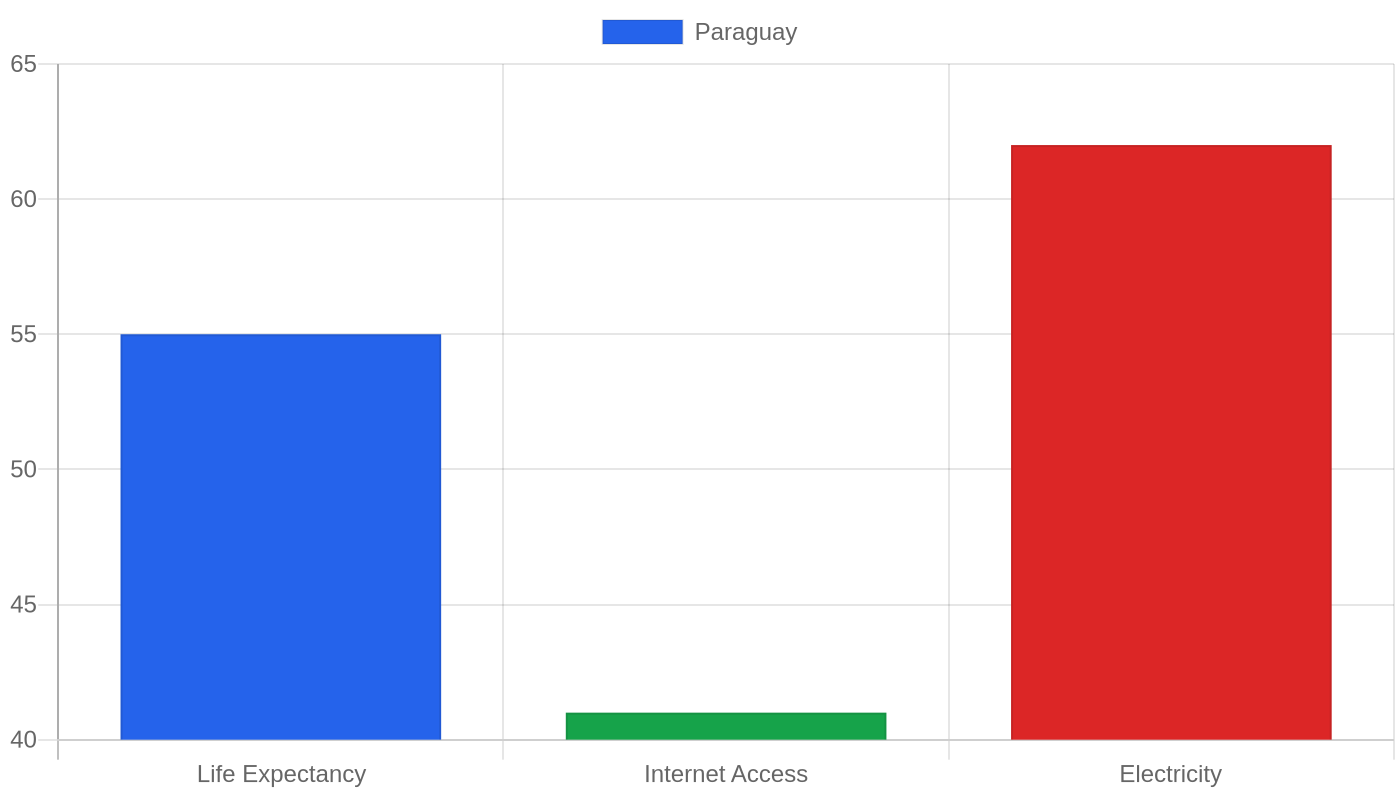
– Energy wealth is a structural advantage—as a co-owner of the Itaipu and Yacyretá hydroelectric dams, Paraguay generates far more electricity than it consumes, creating a massive export revenue stream.
– Political continuity under a multi-party system has provided policy predictability, but questions remain about corruption and the rule of law.
– Safety remains a concern, with crime indices that demand attention from both residents and foreign investors considering relocation or business operations.
The Soybean Engine — Paraguay’s Unheralded Economic Miracle
Paraguay’s economy, while lacking recent World Bank data on GDP growth, inflation, and unemployment, has historically been one of Latin America’s most consistent performers. The country’s economic model rests on three pillars: agriculture, hydroelectric energy, and a growing services sector. Paraguay is the world’s fourth-largest exporter of soybeans, and the agricultural sector drives employment across vast swathes of the country’s fertile eastern region.
The numbers that do exist tell a story of resilience—while the World Bank has not published the latest figures, Paraguay has maintained a reputation for single-digit inflation and steady GDP expansion even when neighbors like Argentina experienced repeated crises.
The energy sector deserves special attention. Paraguay is one of the world’s largest net exporters of electricity, thanks to its stake in the Itaipu Dam—the second-largest hydroelectric plant in the world by annual generation. This energy surplus not only powers Paraguay’s growing industrial base but also generates billions in revenue from sales to Brazil.
The country’s GNI per capita, while not specified in the current data, has historically placed Paraguay in the upper-middle-income category, and the GDP per capita (PPP) reflects a standard of living that has improved markedly over the past two decades.
Employment patterns in Paraguay are shifting. While agriculture remains dominant, the services sector—including finance, retail, and logistics—has grown substantially. The presence of major financial institutions like the Central Bank of Paraguay, Banco Itaú Paraguay, and Banco Amambay indicates a deepening of the financial system that supports both corporate investment and consumer lending.
Unemployment has historically been low by regional standards, though informal employment remains a persistent challenge, with many workers operating outside the formal tax and social security systems.
Asunción on a Budget — The Cost of Living in Paraguay’s Heartland
Paraguay offers one of the more affordable cost-of-living environments in South America, particularly when compared to neighbors like Brazil, Uruguay, or Chile. Housing in Asunción, the capital, remains accessible by regional standards. Renting a modern apartment in a desirable neighborhood is significantly cheaper than comparable properties in Buenos Aires or São Paulo, while purchasing property offers even greater value.
The market for homeownership is active, with many middle-class families able to acquire homes without the crippling debt burdens seen in more expensive markets.
Daily expenses—groceries, transportation, utilities—are generally low. Paraguay’s agricultural abundance means fresh produce, meat, and dairy are inexpensive and widely available. The state-owned utility ANDE provides electricity at subsidized rates, a direct benefit of the country’s hydroelectric wealth. Public transportation in Asunción is cheap but often overcrowded, leading many middle-class residents to rely on private vehicles or ride-sharing services.
While inflation data is not currently available from the World Bank, Paraguay has historically maintained price stability that protects household purchasing power—a sharp contrast to the hyperinflationary episodes that have plagued some regional neighbors.
Banking on the Future — Paraguay’s Investment and Business Climate
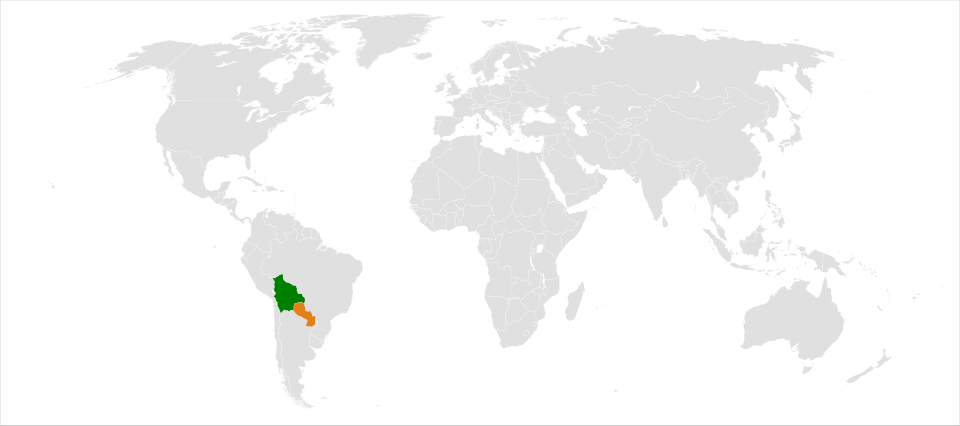
Paraguay’s business environment is defined by a paradox: a small domestic market but excellent regional positioning. The country sits at the heart of the Southern Cone, with easy access to Brazil, Argentina, and Bolivia. The presence of major financial institutions—including the Bolsa de Valores de Asunción, which provides a platform for capital raising—signals that the financial infrastructure is in place for more sophisticated investment activity.
Grupo Cartes, a powerful conglomerate, demonstrates that local capital has been able to build diversified business empires spanning agriculture, banking, and consumer goods.
The airline sector is worth watching. LATAM Paraguay and Paranair, along with Aerolíneas Paraguayas, indicate growing connectivity that supports both tourism and business travel. For foreign investors, Paraguay offers a relatively straightforward tax regime, no restrictions on foreign ownership of businesses, and a young, increasingly educated workforce.
The financial sector, anchored by Banco Itaú Paraguay and Banco Amambay, provides credit to both corporate and retail customers, though interest rates reflect the country’s risk profile. Sectors to watch include agribusiness, renewable energy, logistics, and financial technology—all areas where Paraguay has natural advantages or untapped potential.
Democracy and Danger — Navigating Paraguay’s Political and Social Landscape
Paraguay is a representative democratic republic with a multi-party system and separation of powers across executive, legislative, and judicial branches. The President serves as both head of state and head of government, while legislative power is vested in the two chambers of the National Congress. The judiciary, including a nine-member Supreme Court of Justice, is constitutionally independent.
This institutional framework has provided political stability, though Paraguay has a history of political volatility, including the impeachment of a president in 2012 and periodic protests over corruption and governance.
The crime and safety data is not currently available from the provided indices, but Paraguay faces well-documented challenges. Asunción and Ciudad del Este have reputations for property crime, and the country’s location in the heart of South America makes it a transit point for illicit goods. However, violence levels are generally lower than in neighboring Brazil or Colombia, and many expatriates and foreign investors live comfortably in secured residential compounds.
Quality of life for those who can afford security measures is high—Paraguayans are known for their warmth, the cost of domestic help is low, and the pace of life is relaxed compared to the region’s megacities.
The Itaipu Dividend — What’s Happening in Paraguay Right Now
Paraguay is currently navigating a period of economic recalibration. The renegotiation of the Itaipu Treaty with Brazil—which governs the sale of Paraguay’s surplus electricity—remains a defining issue. The current agreement, set for review, determines billions of dollars in annual revenue, and any change will have profound implications for Paraguay’s fiscal position and public investment capacity.
Policymakers are also grappling with how to diversify an economy still heavily dependent on agriculture and energy exports.
On the business front, the financial sector continues to modernize. The Bolsa de Valores de Asunción has been working to deepen capital markets, while banks like Banco Itaú Paraguay are expanding digital services. The airline sector is seeing renewed activity, with Paranair and LATAM Paraguay competing for regional routes.
Politically, the government of President Santiago Peña, who took office in 2023, has signaled a pro-business agenda focused on attracting foreign investment, improving infrastructure, and formalizing the economy. The challenge remains whether these reforms can translate into tangible improvements in employment and public services for ordinary Paraguayans.
The Bottom Line
Paraguay is not a flashy economy, but it may be one of South America’s most underappreciated opportunities. For investors seeking exposure to a stable, low-cost, energy-rich country with a growing financial sector, Paraguay warrants serious attention. For businesses looking to establish a regional manufacturing or logistics hub, the combination of cheap electricity, low labor costs, and trade access to Brazil and Argentina is compelling.
The country still faces real challenges—crime, political corruption, and a narrow economic base—but the trajectory is one of quiet, steady improvement. Paraguay is the tortoise in a region of hares, and that may prove to be its greatest advantage.
Sources & Methodology
This article is authored by Economic Pulse Net for informational and research purposes. Economic Pulse Net sources its data from multilateral institutions, national statistics bureaus, and proprietary databases. All data is believed to be current as of the date of publication.
Published: July 24, 2026 | Category: Research — Paraguay
Use these signals in your own platform
Economic Pulse publishes its live signal feed through a documented, read-only API. Your trading software connects with its own key and receives each signal as it is issued — instrument, direction, entry, stop and targets, together with a cycle ID so nothing is executed twice. The feed is independent of this website and cannot change it.
Signals are informational only and are not financial advice.