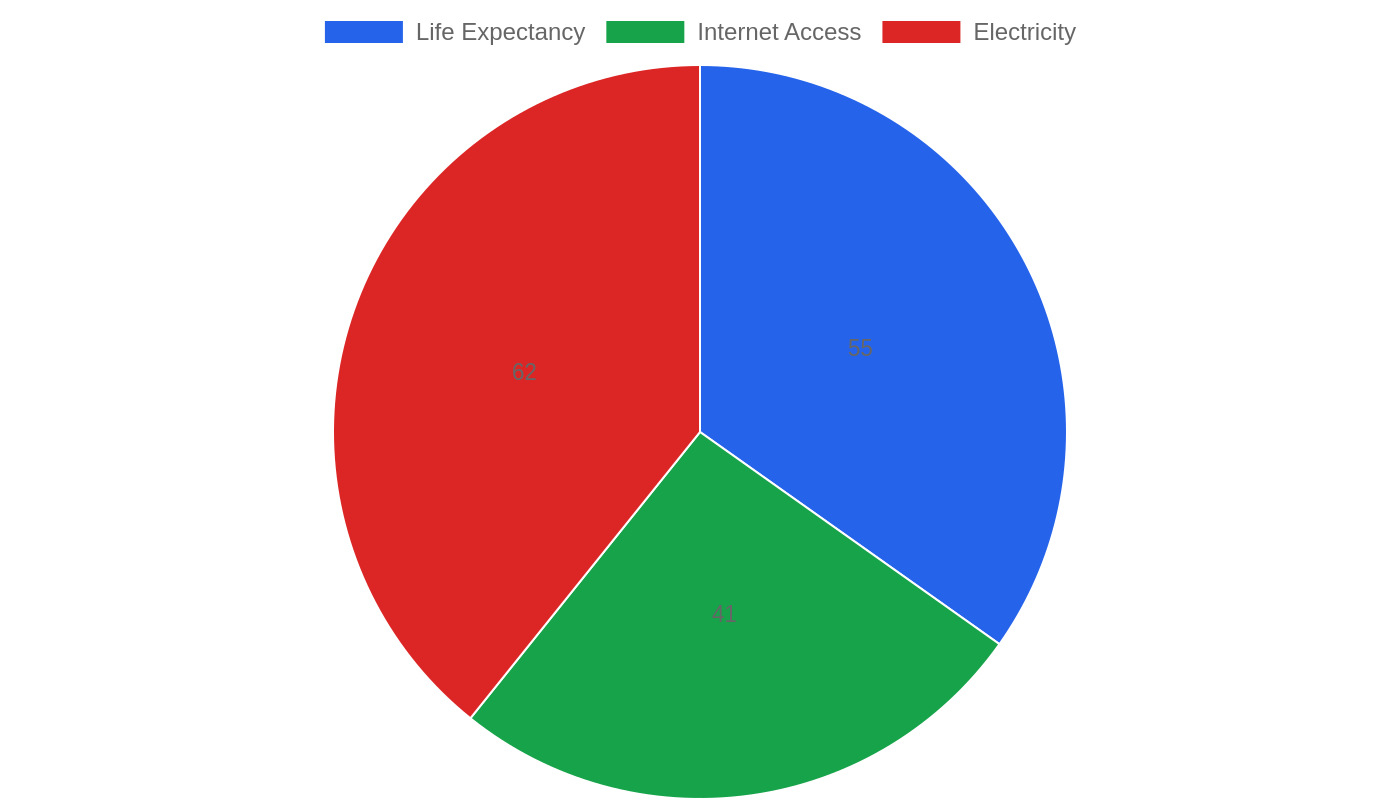
Economic Pulse Net | Sources: World Bank World Development Indicators, Government Sources | 2026
Key Takeaways
– Barbados has fully transitioned to a parliamentary republic, cutting colonial ties and electing President Jeffrey Bostic as head of state, a move that reshapes its political identity.
– The economy remains anchored by a mix of consumer goods, utilities, and emerging service sectors, though detailed World Bank growth and inflation data are currently unavailable.
– Major homegrown companies like Banks Barbados Brewery, Barbados Light and Power, and the Barbados Stock Exchange dominate the business landscape, signaling a resilient private sector.
– Safety and political stability are defining features, with a Westminster-style governance model providing continuity even as the nation redefines its global positioning.
– The republic status, adopted in 2021, continues to influence policy and investment sentiment as Barbados navigates post-pandemic recovery and climate vulnerabilities.
The Economy at a Crossroads — Growth Without a Map
Barbados steps into 2026 with an economic profile that is both familiar and opaque. The World Bank provides no current figures for GDP growth, inflation, or unemployment, leaving analysts to read between the lines of a small, service-driven economy. Historically, Barbados has relied on tourism, financial services, and light manufacturing, but the absence of hard data from the World Bank underscores a broader challenge: transparency in small island states.
What is clear is that the country’s main industries—consumer goods, utilities, and telecommunications—form the backbone of daily life and commerce. Companies like Banks Barbados Brewery and Barbados Ice Cream Company reflect a domestic consumer market that is active, while utilities such as Barbados Light and Power and Barbados Water Authority indicate a functioning infrastructure essential for both residents and tourists.
The lack of inflation or employment numbers from the World Bank means we cannot pinpoint the cost pressures or labor market tightness, but the presence of a domestic stock exchange and a national oil company suggests the government is trying to diversify revenue streams beyond sun and sand. For investors, the message is mixed: Barbados offers stability but not yet the data granularity needed for precise risk assessment.
Living in Paradise — The Price of Island Life
Cost of living in Barbados is a story of trade-offs. Detailed World Bank data on housing costs, rent, or daily expenses is not provided, but the island’s reliance on imports for everything from food to fuel means prices tend to run above regional averages for the Caribbean. Housing, whether rental or purchase, is shaped by limited land availability and demand from both locals and foreign retirees.
The presence of major utilities like Barbados Water Authority and Barbados Light and Power Company suggests that basic services are reliable, but the cost of electricity and water can be a significant monthly burden. For comparison, other Caribbean nations with similar profiles often see rent for a one-bedroom apartment in the capital, Bridgetown, consuming a large share of median income.
Without specific World Bank figures, the best assessment is that Barbados offers a high quality of life for those who can afford it, but the gap between wages and living costs likely pressures many households. The consumer goods sector, led by Banks Barbados Brewery and the ice cream company, indicates that discretionary spending exists, but it is probably concentrated among higher-income brackets.
Investment and Business — A Small Market with Big Ambitions
The corporate landscape of Barbados is dominated by homegrown champions. Bajan Helicopters represents a niche industrial play, while CariAccess and Caribbean Broadcasting Corporation show that telecommunications and media are active sectors. The Barbados Stock Exchange provides a formal capital market, though its size is modest by global standards.
For investors, the key sectors to watch are utilities—Barbados Light and Power and Barbados Water Authority are essential services with steady demand—and consumer goods, where Banks Barbados Brewery holds cultural and economic weight. The Barbados National Oil Company Limited suggests the government retains a hand in energy, a strategic move given global price volatility.
The business climate benefits from political stability and a legal system rooted in the British Westminster tradition, which offers predictability for contract enforcement and property rights. However, the small domestic market limits scale, meaning most growth must come from exports or tourism-related services.
The absence of World Bank data on GDP per capita or GNI makes it difficult to benchmark purchasing power, but the mix of companies listed signals an economy that is neither purely agrarian nor fully industrialized—it is a hybrid, adapting to its size and geography.
Politics, Safety, and the Republican Experiment
Since 30 November 1966, Barbados has been independent, but its most transformative political shift came in 2021 when it became a parliamentary republic. President Jeffrey Bostic, elected by the Parliament for a four-year term, now serves as head of state, advised by the Prime Minister. This move ended the country’s constitutional link to the British monarchy, a symbolic and practical assertion of sovereignty.
The political landscape remains stable, modeled on the Westminster system with 30 representatives in the House of Assembly and an appointed Senate. Safety indices from the World Bank are not provided, but Barbados has historically been considered one of the safer Caribbean nations, with low violent crime rates compared to regional peers.
The quality of life is enhanced by political continuity and a functioning legal system, though like all small island states, it faces challenges from climate change, external economic shocks, and emigration of skilled workers. The republican status has not disrupted governance; if anything, it has clarified the chain of command and national identity.
Current Affairs — Navigating the Post-Republic Era
Right now, Barbados is living the consequences of its republican choice. The transition has opened new diplomatic channels, particularly with nations in Africa and Asia that view the move as a decolonization milestone. Domestically, the government under the Prime Minister is focused on economic diversification, with the Barbados National Oil Company playing a role in energy security amid global price swings.
The Barbados Stock Exchange is likely seeing increased interest from investors curious about the republic’s long-term stability. Meanwhile, consumer-facing companies like Banks Barbados Brewery and the Barbados Ice Cream Company are adapting to shifting demand patterns as tourism recovers. The telecommunications sector, led by CariAccess, is crucial for connecting the island to global markets, while the Caribbean Broadcasting Corporation shapes public discourse.
A key ongoing challenge is managing the utilities—Barbados Light and Power and Barbados Water Authority—to ensure reliability without overburdening consumers. The political class, under President Bostic and the Prime Minister, is also navigating relations with international financial institutions, as the absence of World Bank data suggests reporting gaps that could affect credit ratings or investment flows. The republic is still young, and its economic story is being written in real time.
The Bottom Line
Barbados is a country to watch for investors and analysts interested in post-colonial economic transitions, small island resilience, and stable governance in a volatile region. The lack of comprehensive World Bank data is a frustration, but the presence of established companies and a clear political structure offers a foundation for cautious optimism.
For those seeking a Caribbean market with rule of law, domestic enterprise, and a redefined national identity, Barbados represents a unique case study—one that is still unfolding.
Sources & Methodology
This article is authored by Economic Pulse Net for informational and research purposes. Economic Pulse Net sources its data from multilateral institutions, national statistics bureaus, and proprietary databases. All data is believed to be current as of the date of publication.
Published: July 24, 2026 | Category: Research — Barbados
Use these signals in your own platform
Economic Pulse publishes its live signal feed through a documented, read-only API. Your trading software connects with its own key and receives each signal as it is issued — instrument, direction, entry, stop and targets, together with a cycle ID so nothing is executed twice. The feed is independent of this website and cannot change it.
Signals are informational only and are not financial advice.